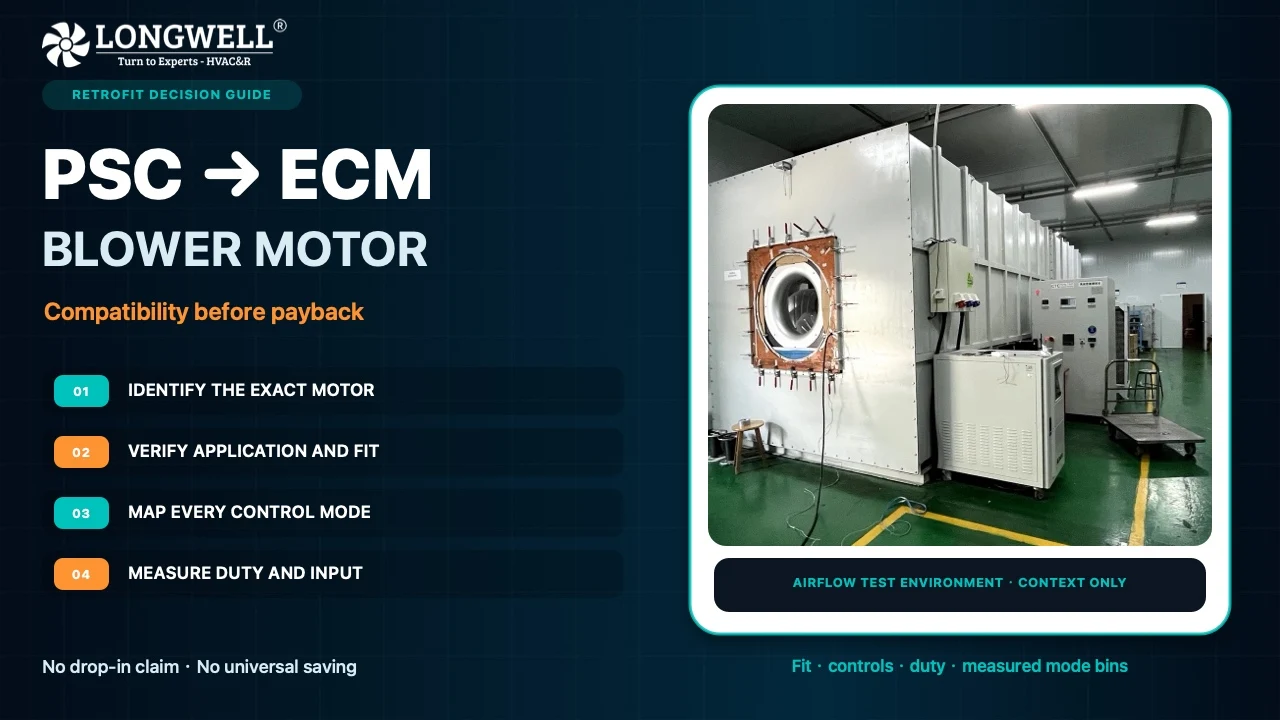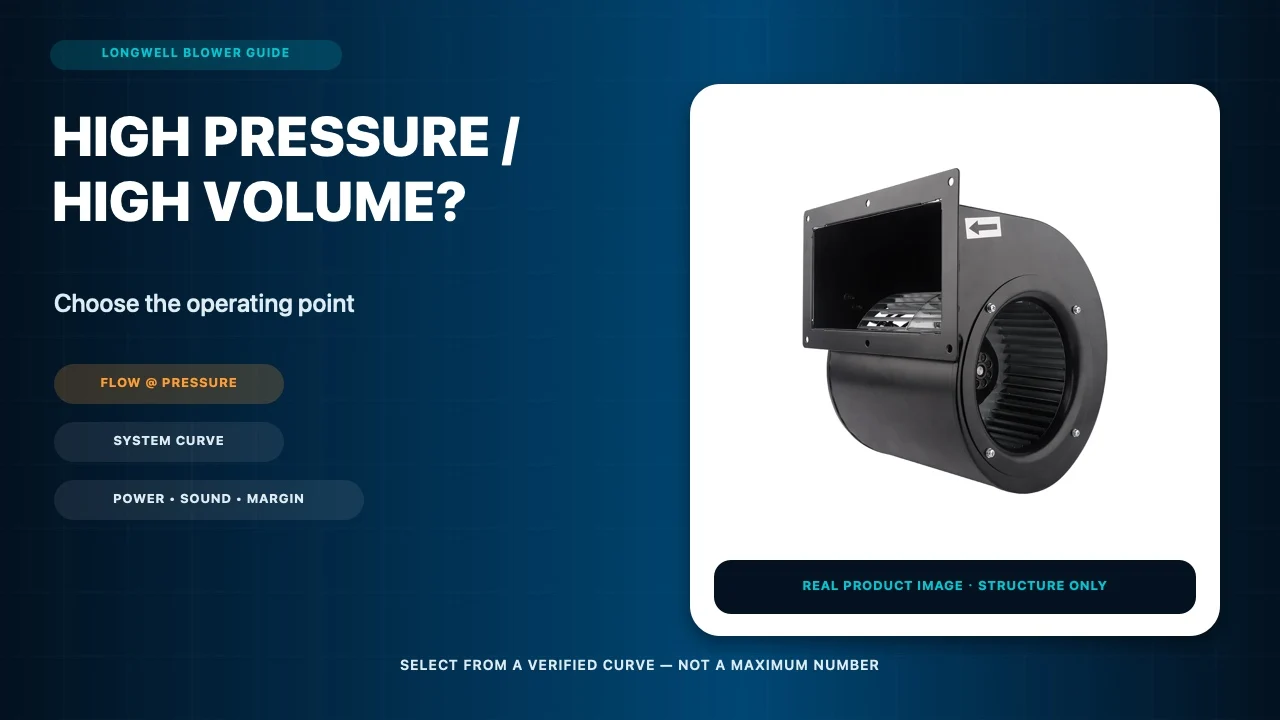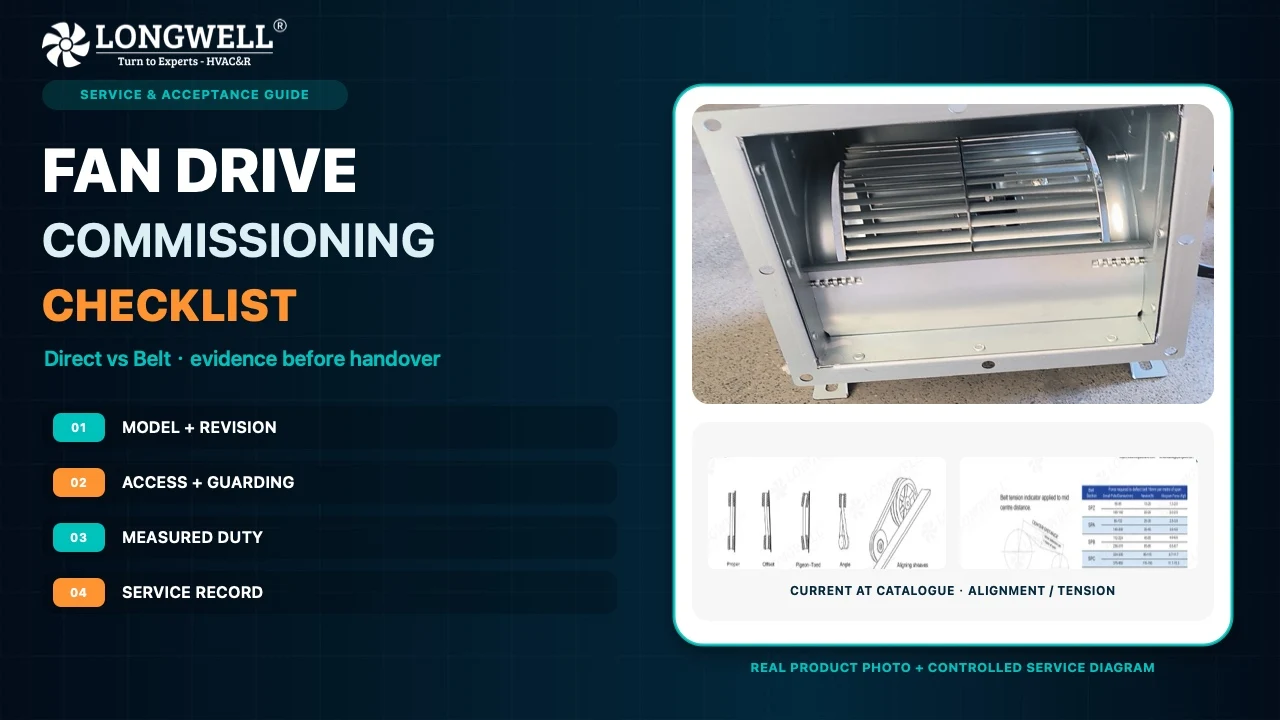
Is a PSC-to-ECM blower motor retrofit worth doing? Only after the replacement passes the fit and control checks for the exact indoor blower. An ECM label does not make a motor a drop-in substitute, and an advertised efficiency difference does not establish the installed saving. The practical order is compatibility first, commissioning second, payback last.
This guide is for a component-level replacement in an existing residential or light-commercial air handler. It is not a comparison of new AC and EC fan packages, and it does not claim that any LONGWELL motor is approved for a particular furnace or air handler. Use the equipment manufacturer’s service information and the replacement motor’s current application and installation documents.
Confirm that the existing motor is actually a PSC
Begin at the equipment, not at an online cross-reference. Record the air-handler or furnace model and serial number, blower wheel, motor nameplate, capacitor, wiring diagram, mounting arrangement, shaft, rotation, and every operating mode. A shaded-pole motor, an existing ECM, and a PSC motor are different replacement problems even when their housings look similar.
Capture the equipment board and harness before disconnecting anything. Note which terminals or taps run heating, cooling, and fan-only operation, and whether the equipment uses staging, delays, or other functions. If the motor identity or the equipment documentation is unclear, stop and resolve it with the manufacturer or a qualified HVAC technician.
Use the exact replacement application sheet
A visual match is not an approval. The proposed replacement must be listed or documented for the intended indoor-blower application by its own manufacturer, and the existing equipment still has to meet its original airflow and safety requirements. Check frame and mounting, shaft diameter and usable length, rotation, wheel position, cabinet clearance, motor cooling, and access for wiring.
Do not use a photograph, generic catalogue page, or nearby CAD model as compatibility proof. CAD can show visible geometry; it cannot establish a motor program, winding, controller, thermal limit, electrical interface, or furnace application. If a bracket, shaft adapter, or wheel change is proposed, include it in the fit review rather than treating it as incidental.
Map supply, controls, and every operating mode
Verify supply voltage, frequency, phase, current limits, grounding, protection, and the replacement maker’s instructions for the old PSC capacitor and unused conductors. Never infer a pinout from wire colour. Line-voltage taps, low-voltage commands, programmed connectors, and communicating controls are not interchangeable merely because they all select a blower mode.
Make a point-to-point table that maps each existing board output to an approved replacement input or setting. Include heating stages, cooling stages, continuous fan, start and stop delays, dehumidification or ventilation calls where present, and the fallback state after a fault. This is also the moment to decide who can program, diagnose, and replace the controller later.
Lock the air-side baseline before removal
Measure the existing system in a defined, serviceable condition. Record filter type and condition, open or closed dampers, blower tap, external static pressure or another declared pressure boundary, representative airflow, mains input watts, current, and the temperature checks required by the equipment manufacturer. Repeat the important readings in each heating, cooling, and fan-only mode.
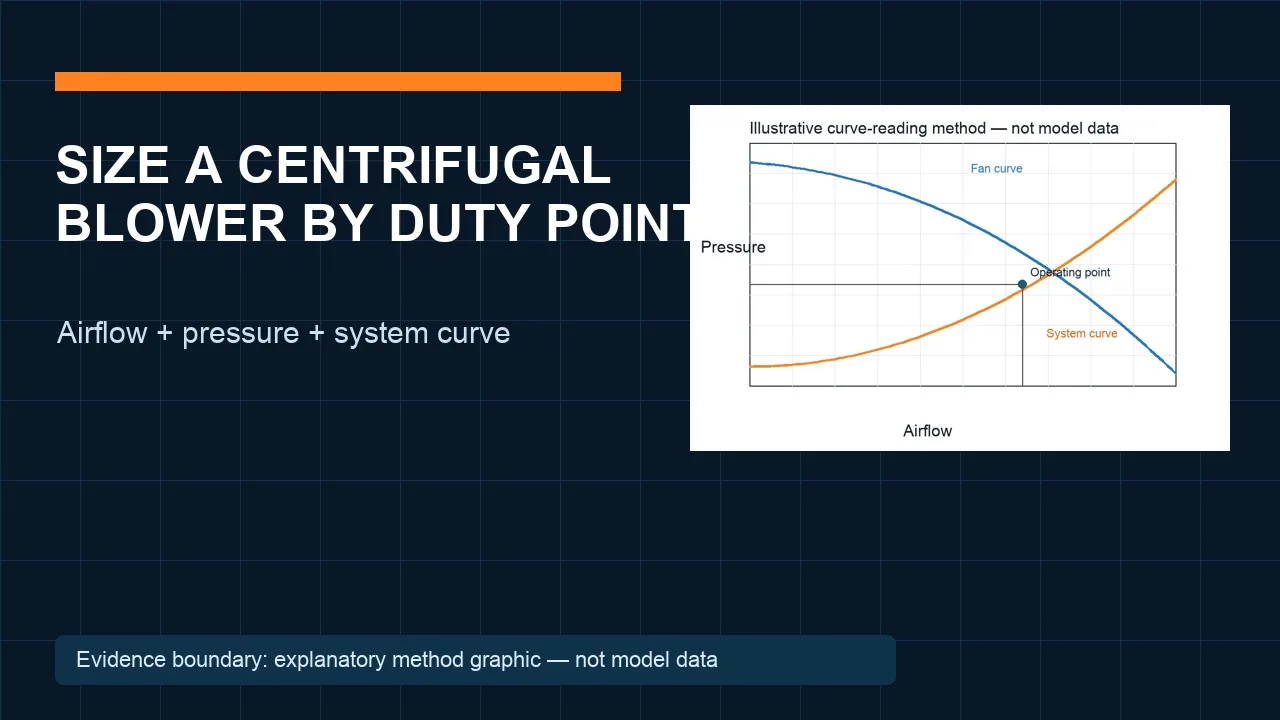
Use the same measurement locations and system condition after the retrofit. A lower watt reading with lower delivered airflow is not the same job. The centrifugal fan-curve guide is a useful orientation to duty points, but the air handler’s own instructions and field measurements govern this repair.
Do not let a loaded filter hide the decision
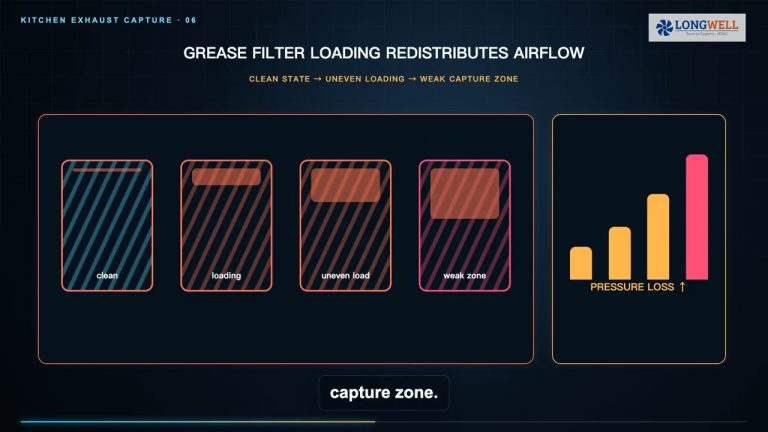
First commission against a clean, correct filter. Then consider the expected resistance range allowed by the equipment and replacement documents. A control designed to maintain airflow may command more speed or input as resistance rises, while another ECM control profile may respond differently. “ECM” alone does not reveal whether the motor is constant-airflow, constant-torque, or another programmed type.
The controller cannot remove a restriction. Confirm that airflow, static pressure, input, current, motor temperature, heating temperature limits, cooling performance, and sound remain acceptable across the documented service range. If the system needs an abnormal command to overcome a dirty coil, undersized return, or unsuitable filter, correct the air-side problem instead of pricing that command as a benefit.
Commission the replacement in all modes
After installation, verify rotation and wheel position before prolonged operation. Then run every required mode and compare the declared baseline: airflow or accepted proxy, pressure, mains input, current, temperature checks, vibration, sound, board sequence, delays, and fault behavior. A heating check and a cooling check answer different safety and comfort questions; one successful fan-only run is not enough.
Keep the installer’s settings, wiring map, measurements, replacement model and revision, and application document with the equipment. The EC motor overview can help non-specialists understand the architecture, but it is not a cross-reference or commissioning record.
Calculate payback from measured mode bins
Build the energy case only after both states meet the required duty. For each operating mode, subtract the proposed measured input watts from the baseline measured input watts, multiply by annual hours in that mode, divide by 1,000, and sum the results. Apply the site’s energy tariff to that annual difference.
Simple payback is the incremental installed cost divided by the verified annual cost reduction. Incremental cost means the difference from the real alternative: motor, approved adapters, wiring, setup, testing, access, and any service changes. Do not substitute a universal runtime, energy rate, saving percentage, or payback period. If the measured difference is small or the hours are uncertain, report a range or decline the economic claim.
Know when not to make a motor-only retrofit
Stop when there is no exact application documentation, the equipment board or safety sequence cannot be mapped, the required airflow and temperature limits cannot be demonstrated, the cabinet or wheel needs uncontrolled modification, or the condition of the existing unit makes the evidence unreliable. An OEM-equivalent repair or a complete equipment decision may be safer than forcing a component upgrade.
For projects that need a new complete air-moving package instead, the current EC forward-curved fan family is a discovery route, not proof of drop-in compatibility with an air handler. Send the existing equipment identity, replacement application sheet, wheel and mounting dimensions, wiring and mode map, baseline measurements, annual mode hours, tariff, and acceptance limits with the RFQ. That evidence is what turns “PSC versus ECM” into a defensible decision.
Choose the right blower
Longwell manufactures 247 blowers in-house. Send airflow, static pressure and voltage — an engineer replies with a matching model, performance curve and price within one working day.