Two fan proposals can each say “75 dB” and still describe different things. The first question is whether the figure is a sound-power level (Lw) or a sound-pressure level (Lp). Then ask which fan duty, frequency weighting, test boundary and receiver position produced it. A bare decibel number cannot answer whether the installed equipment will meet a room-noise requirement.
Identify the acoustic quantity before comparing decibels
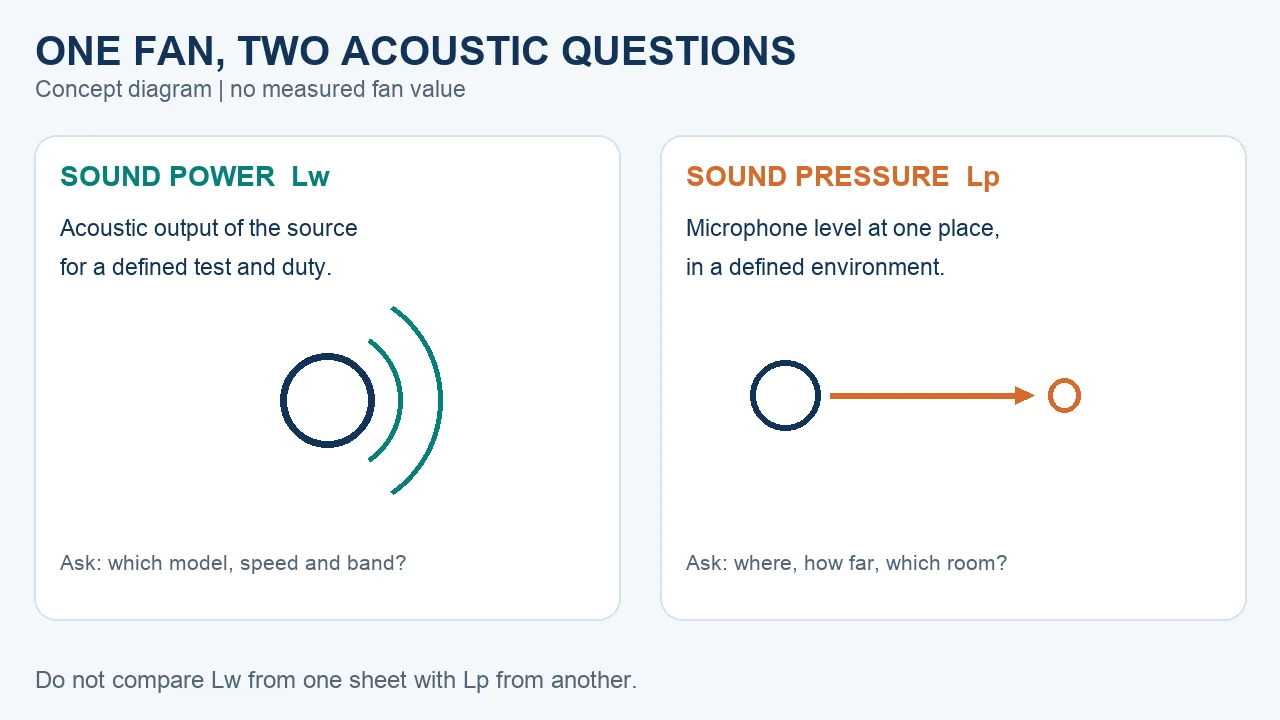
Sound power describes acoustic energy emitted by a source under a stated operating and test condition. Its level is conventionally referenced to 1 picowatt. Sound pressure describes the pressure fluctuation at a microphone or listener position; its usual airborne reference is 20 micropascals. Both are expressed in decibels, but their reference quantities and uses differ. A fan does not have one sound-power value independent of speed, airflow, pressure or installation boundary.
A microphone reading also includes the path between source and receiver. Distance, reflecting surfaces, room absorption, ducts and other nearby sources can change it. Ask whether a proposal reports inlet, outlet or casing sound, and whether it is a measured level or a calculated rating. The diagram below turns those questions into two separate evidence requests.
Match the fan duty and test boundary
Sound data become useful when tied to the exact model suffix, rotational speed, airflow and pressure point. The inlet and outlet arrangement matters too. ANSI/AMCA Standard 300-24 describes a reverberation-room method for determining fan sound power in a specified setup. A reference to that method is meaningful only when the offered data actually belong to the candidate configuration and stated rating conditions; a photograph or category name does not establish that.
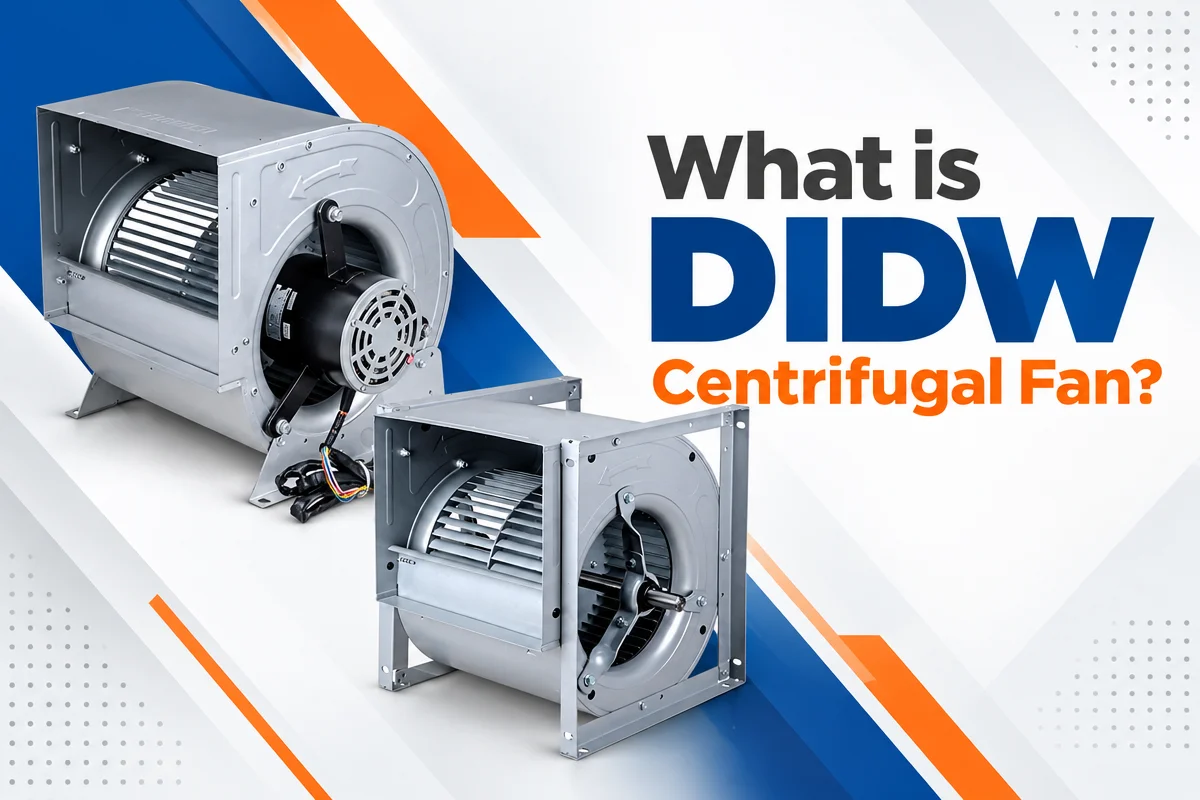
For example, LONGWELL’s backward-curved centrifugal fan family is a product-family starting point. It is not a single acoustic rating. Request the current acoustic data and duty curve for the proposed model and suffix, with the test arrangement and revision. A different size, motor or speed can change the comparison. Do not transfer a family-level “quiet” label to a project specification.
Read the octave-band profile
An A-weighted total can be useful as a summary, but it hides how energy is distributed by frequency. Two candidates with similar headline values may need different checks at the receiver. Ask for the octave-band sound-power levels, with the band centres, weighting and inlet or outlet scope identified. The bars below are qualitative examples; their heights are deliberately not dB results or a comparison of real fans.
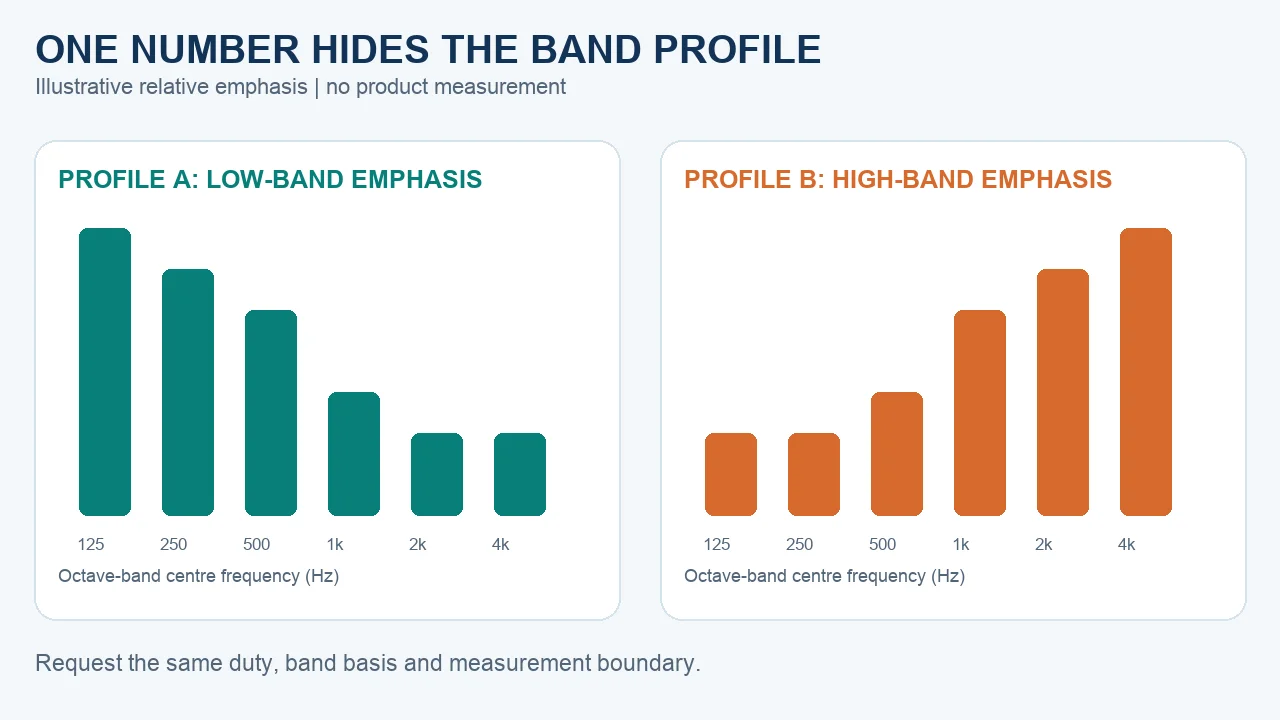
The suitable treatment depends on the path, frequency, enclosure and receiver requirement. Avoid a universal claim that a named frequency is always “easy” or “hard” to control. Duct lining, a silencer, enclosure work or a change to the fan operating point each has to be checked against the actual band data and airflow system. If a narrow tone or whistling dominates, use a diagnostic approach such as our fan-noise troubleshooting guide, then measure rather than guessing from the label.
Separate a test room from the installed room
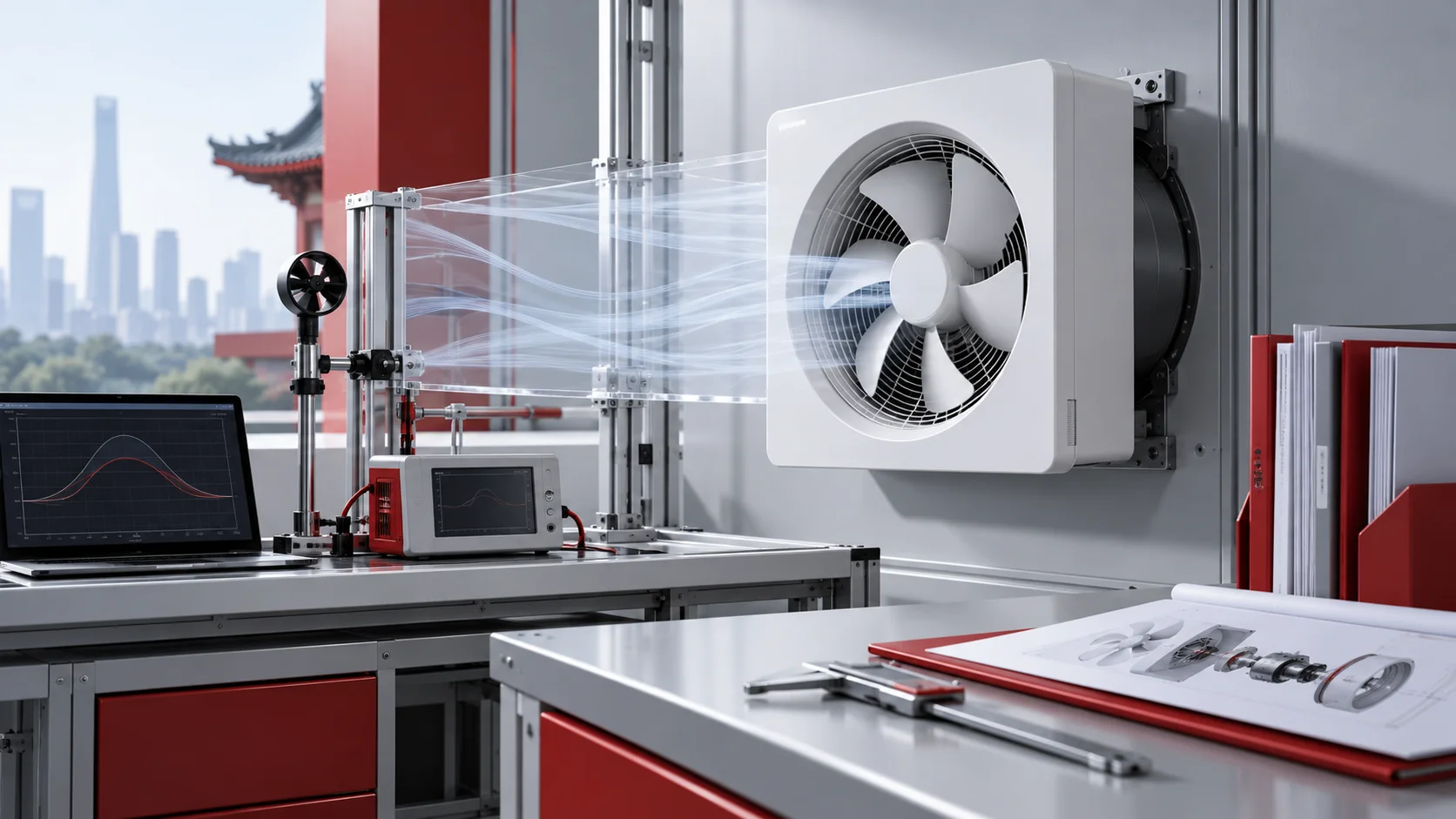
A controlled acoustic room helps define a repeatable measurement boundary. The company archive photograph below shows treated surfaces and microphone stands. It does not show a named fan under test, a measured level, calibration, accreditation or compliance with any test standard. Those require the actual test record and scope. A plant room adds walls, equipment, ducts, background noise and receiver positions that a laboratory rating alone does not describe.
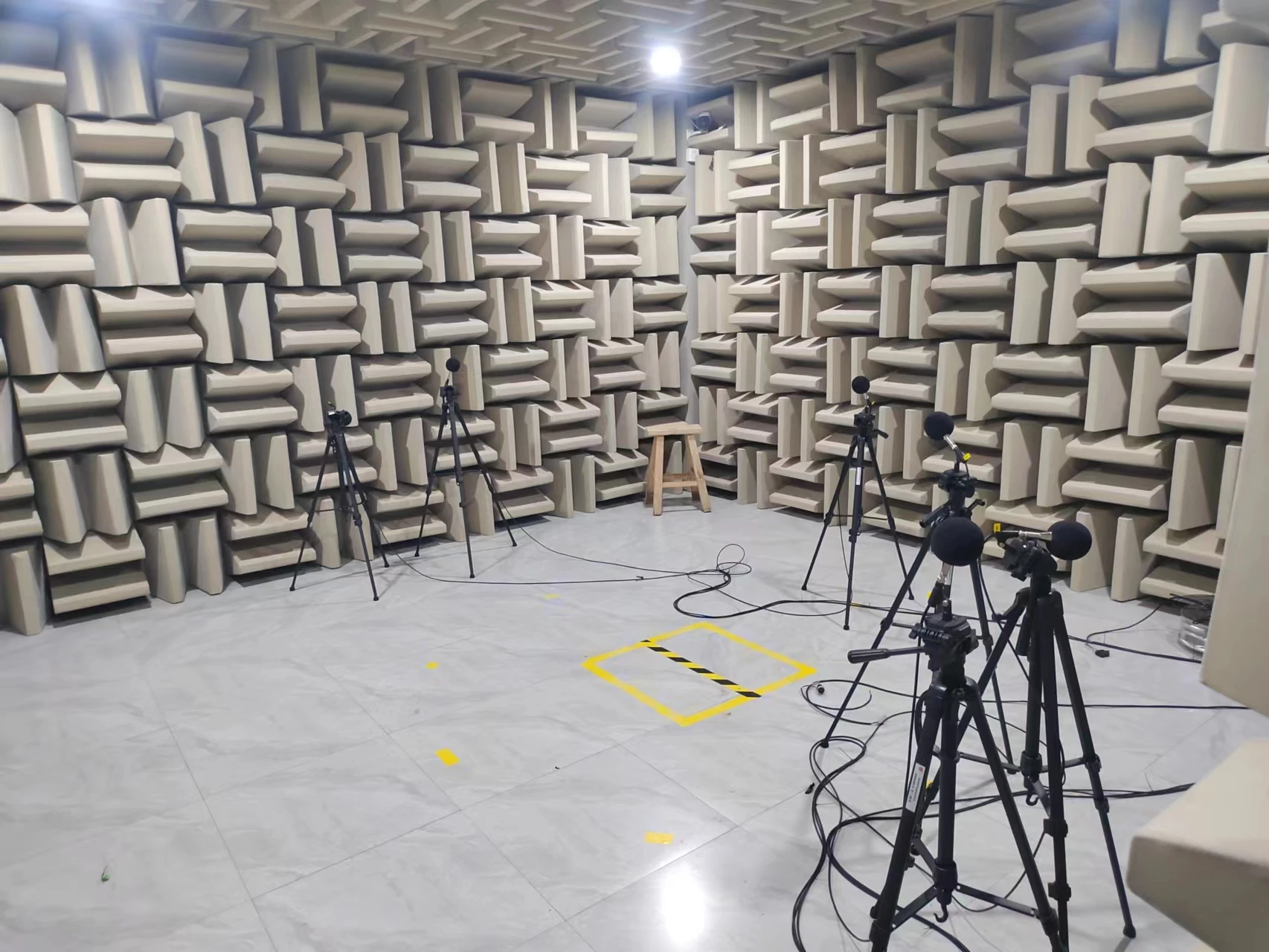
In an ideal free field, a point-source sound-pressure level falls by roughly 6 dB when distance doubles. That geometry is a limited calculation assumption. Reflections and reverberation can make the change different indoors, and a real fan or duct outlet is not always a simple point source. Do not use a fixed “Lw minus 8 to 14 dB” plant-room shortcut. State the actual receiver location and use an acoustic calculation or measurement suited to that space.
Write a specification that can be checked
Give each supplier one common acoustic request: the exact fan model and suffix; airflow and pressure duty; speed or control state; inlet, outlet and casing sound boundary where relevant; the test or rating method; and octave-band data at that duty. State whether A-weighting has been applied. If a room or operator position has a target, define the receiver positions, operating state, background contribution and acceptance method separately. This lets the designer calculate the path from source to receiver without pretending the two decibel quantities are interchangeable.
For a retrofit, include the existing duct and cabinet layout. An inlet restriction, discharge bend or speed change can alter both the operating point and the noise heard in the finished system. An acoustic comparison based only on a product-family page or a one-number brochure entry cannot approve a replacement. Keep the revision of the fan curve, drawing and acoustic table together so the selection can be independently checked.
Interpret dB changes without promising a listening result
A change of about 3 dB in sound-power level corresponds to roughly a factor of two in acoustic power when the reference and test conditions match. It does not mean every listener will hear a fixed change. Perceived loudness depends on frequency, duration, background and the person. Likewise, a measured sound-pressure change at one microphone is not automatically the same change in emitted power. When an acoustic claim matters commercially, request the underlying band data and measurement setup instead of a universal “half as loud” promise.
The practical order is simple: identify Lw or Lp, align the exact fan duty and test boundary, inspect the bands, then assess the actual receiver. That gives an engineer a defendable comparison and a useful next measurement if the data are incomplete.
Need an acoustic selection review? Send the model or duty point, installation drawing and receiver requirement to sales@longwellfans.com.