A furnace blower that keeps running is a symptom, not a failed-part diagnosis. It may be following a thermostat circulation command, completing a manufacturer-defined cool-down, responding to a protective condition, or receiving an unintended command. The useful first decision is whether the run is requested, expected for the present operating state, or unexplained. The exact furnace and control documentation determines the next test.
This guide is for homeowners making non-invasive observations and for qualified service personnel planning a documented diagnosis. It does not provide wiring tests, jumper instructions, replacement thresholds, or permission to bypass a protective control. If the furnace shows a fault, overheating, unusual noise, burning smell, or another unsafe condition, follow the appliance instructions and arrange qualified service.
Start with the fan command
Read the thermostat’s current fan mode and any circulation schedule. Many controls distinguish AUTO, which normally lets the equipment decide when to run the blower, from ON or a scheduled circulation mode. Note the setting before changing it. A blower running because ON was selected is different from one that continues after a setting has returned to AUTO. Record the time of the change and what the equipment actually does; do not assume every model responds immediately.
Also note whether there is a current heating or cooling request. A connected thermostat, zoning control, ventilation accessory, or other approved system control may be part of the request path. The furnace wiring and control sequence, rather than a generic terminal rule, establish which commands apply to this installation.
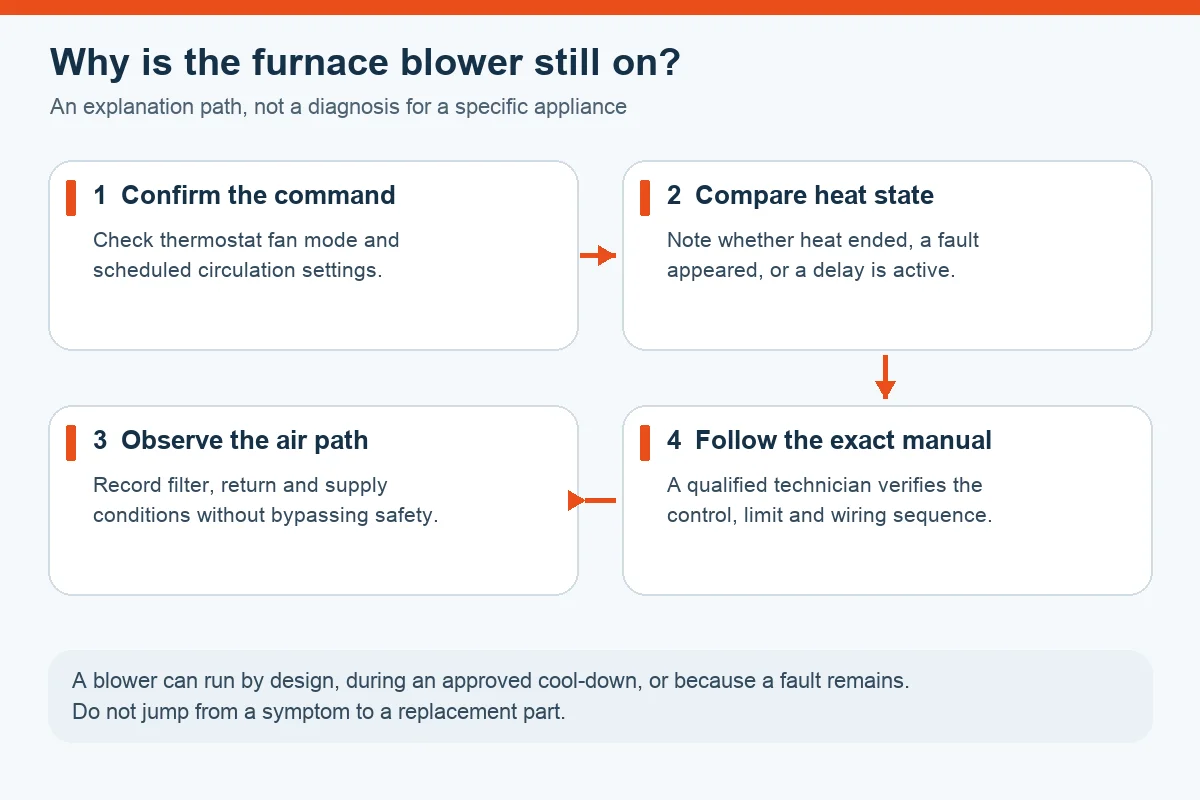
Compare the blower with the heat cycle
Observe whether the burner or other heat source has stopped, whether the blower remains on only briefly, and whether a displayed or stored fault is present. Some equipment uses a blower off-delay to move residual heat after a call ends. The permitted duration and behavior vary by model and settings; this article cannot supply a universal minute value. A recurring over-temperature protective event can also keep airflow running. The same outward symptom therefore needs the appliance-specific fault history and control sequence before anyone names a switch or board as defective.
Do not defeat a limit or safety control to make the blower stop. The Carrier explanation of furnace limit switches describes the protective relationship among heat, burner shutdown, and blower operation; it is general context, not a service manual for another brand. If a fault appears or heat stops unexpectedly, preserve the code and operating state for a technician.
Observe the air path without opening electrical boundaries
Write down the filter condition and any obvious return or supply obstruction that can be checked under the equipment instructions. A blocked or poorly installed filter is a useful observation, but it does not by itself prove a particular limit trip. Do not run the furnace with panels, filters, guards, or switches bypassed to see whether the blower changes behavior. An abnormal heat event calls for the exact manufacturer’s procedure and a qualified evaluation of the full air path, heat source, and controls.
The related blower-wheel cleaning guide gives broader maintenance context. Cleaning is not a substitute for establishing why a particular furnace is running continuously, and any disassembly must follow that appliance’s instructions.
Separate the control, protection, and motor boundaries
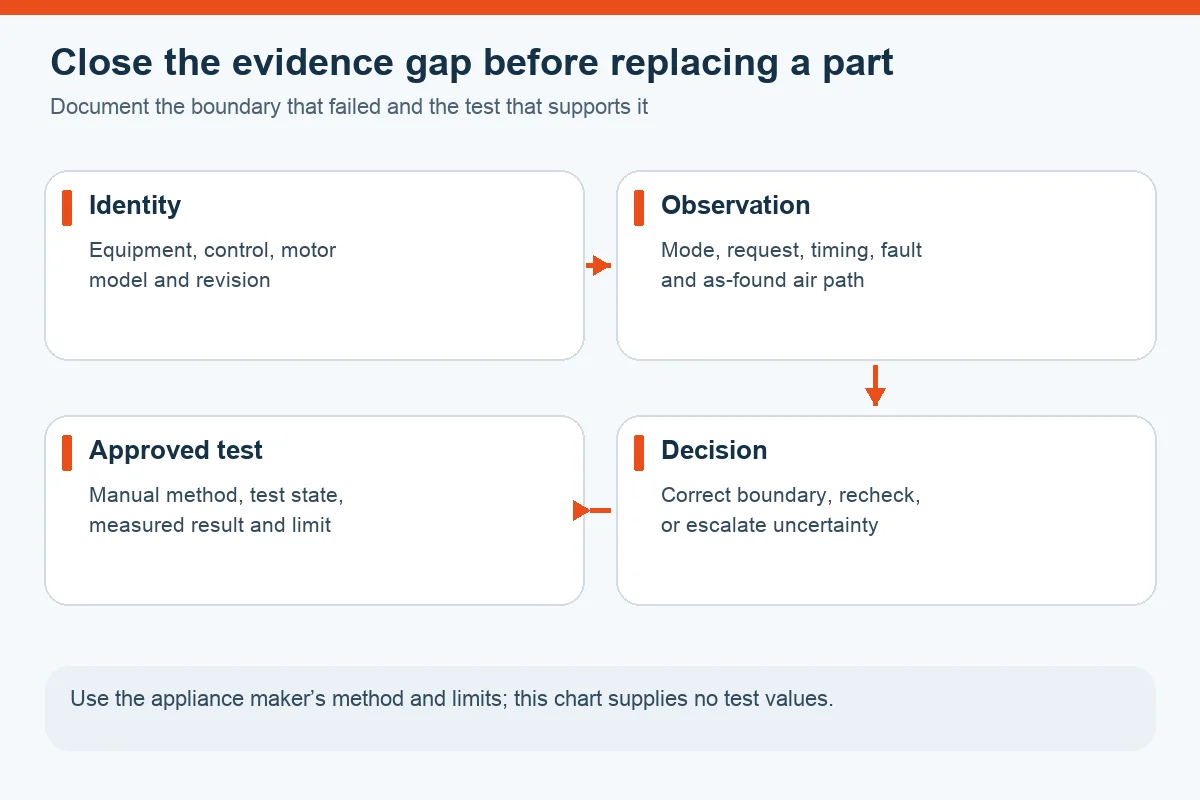
If the run remains unexplained, a qualified technician should identify the exact equipment model, control board, motor assembly, wiring revision, and documented operating sequence. The technician can then compare the observed command and fault state with the manual’s specified tests. A stuck relay, control-board fault, thermostat wiring issue, protective input, and motor control problem can overlap in symptoms; none is confirmed by continuous running alone. A component swap based solely on a familiar symptom can leave the original cause in place.
The test record should name the instrument, state of the appliance, approved test point, observed result, and reference limit from the correct service literature. If an energized test is required, it belongs to personnel qualified for that work under the site’s electrical-safety process. Homeowners should not remove an access panel or probe conductors to follow a web checklist.
Make the repair decision from the documented result
A useful service conclusion says which boundary was outside its specified state and which observations excluded the alternatives. If an airflow condition is found, correct it under the appliance instructions and verify operation again. If a control or motor test fails its exact published criterion, follow the manufacturer service path for that assembly. If results conflict or the manual is missing, preserve the uncertainty and escalate rather than inventing a universal limit or replacement rule.
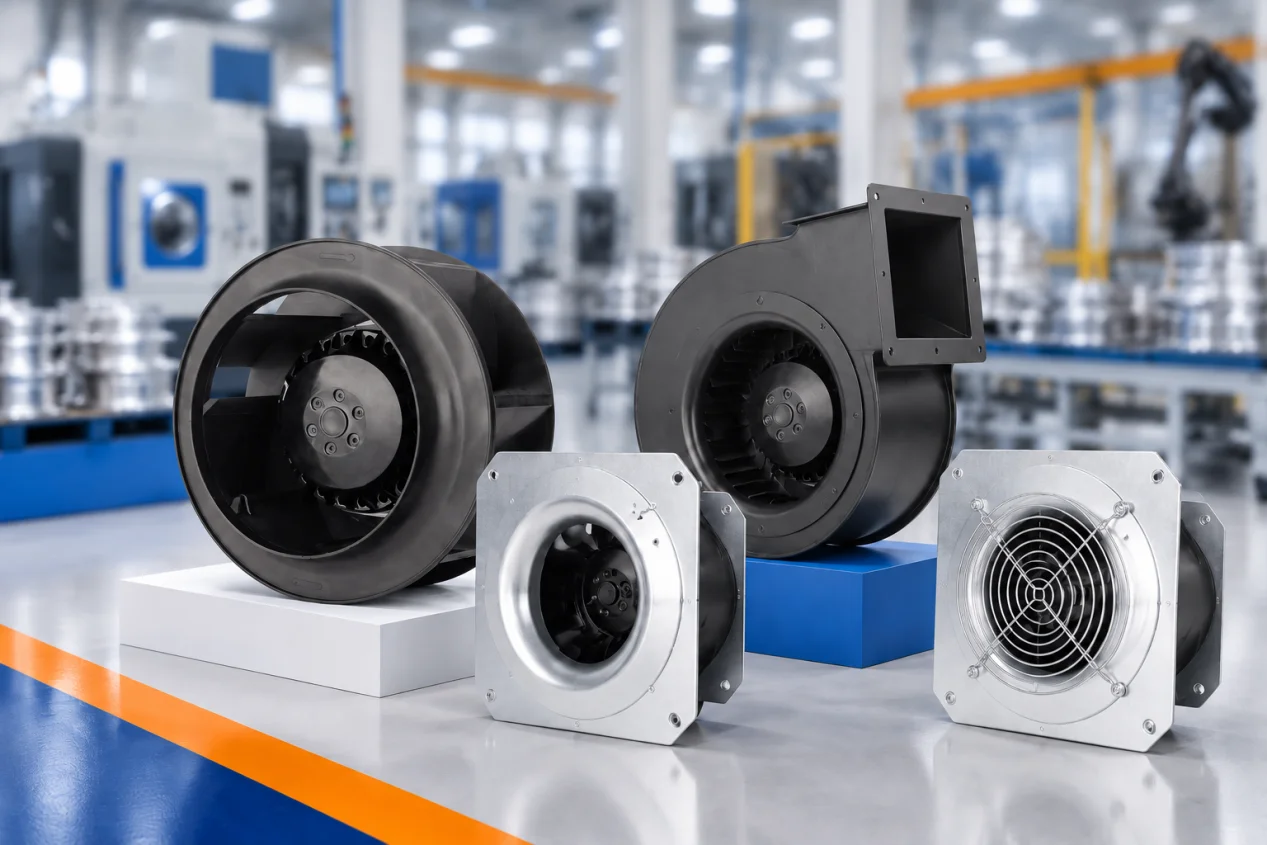
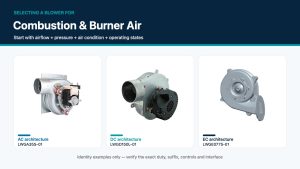
For an OEM air-moving component discussion, LONGWELL’s fan and blower family overview shows the types of assemblies the company offers. It is a family reference only. It does not establish that a pictured LONGWELL unit fits, replaces, or has been tested in the furnace described here. An engineering inquiry needs the full equipment and motor identities, suffix and revision, mechanical envelope, electrical and control interface, airflow duty, operating environment, and the validation method.
Close the record after the system is restored
Record the original symptom, thermostat mode, heat-call state, fault history, filter and air-path observations, exact document revision, tests performed, corrective action, and final operating check. Confirm that the system has been restored with the required panels and protections in place. A blower that stops once after a reset is not enough evidence that a recurring protective or control fault has been resolved; compare the final behavior with the appliance’s documented sequence.
Choose the right blower
Longwell manufactures 247 blowers in-house. Send airflow, static pressure and voltage — an engineer replies with a matching model, performance curve and price within one working day.