What the OEM wanted
An OEM building light commercial and residential HVAC systems ordered 850 cowls across three sizes. They wanted a powder coated weather cowl in white, not the usual stainless.
Initially their brief was short: ventilation covers with a white coated finish, plus a reference image.
Why the color mattered
Naturally these cowls terminate ducts on building exteriors, where they are visible. A stainless finish reads as industrial kit bolted to a wall. By contrast white blends into render, trim and window frames.
So for a manufacturer selling into high-end residential, that difference affects whether the product gets specified at all.
- First, duct connections at 98mm, 145mm and 195mm.
- Next, quantities of 300, 400 and 150 units respectively.
- Meanwhile the finish had to survive UV, rain and temperature swings for years.
- Finally, updated drawings for their own bill of materials.
Specifying a powder coated weather cowl
The requirement was cosmetic. However, the engineering was about making the cosmetics last, which is a different problem.
Why we rejected paint
Certainly liquid paint was the obvious answer. It was also the wrong one.
It cannot build enough thickness or resilience for years of UV, rain and thermal cycling. Consequently what follows is chipping at the edges, then fading, then peeling.
Furthermore, on a part everyone can see, that failure is worse than a mechanical one. It looks like the whole unit is failing, and it arrives as a warranty conversation the OEM has to have.
What we specified instead
Instead we specified an industrial polyester powder coating, over a multi-stage pre-treatment that cleans and etches the steel so the coating keys to it.
White thermosetting powder goes on electrostatically, then cures in an oven. Ultimately that gives a hard shell roughly 60 to 80 microns thick.
Consequently the powder coated weather cowl resists abrasion, chemicals and UV color shift far better than paint of the same color would.
Why pre-treatment matters more than the coating
Notably this is the part people skip when comparing quotes.
A powder coat on a poorly prepared surface looks identical on day one. However, it lifts within a year or two, usually starting at a cut edge. The multi-stage clean and etch is what stops that, and it is invisible in the finished part.
What it cost
Unit price and lead time, both modestly. A powder coated weather cowl adds a process step and a batch minimum that bare stainless does not have.
Furthermore it commits the customer to a color. Stainless suits any building, whereas white suits white ones. That is product positioning rather than engineering, and it belongs to them.
Technical Specifications
Three sizes appear below. Notably the finish is identical across all of them.
| Parameter | LW-WC100-45-01 | LW-WC150-50-01 | LW-WC200-60-01 |
|---|---|---|---|
| Duct Connection Diameter | 98 mm | 145 mm | 195 mm |
| Maximum Outer Diameter | 140 mm | 185 mm | 220 mm |
| Overall Height | 45 mm | 50 mm | 60 mm |
| Base Material | Stainless Steel (SUS304) | ||
| Finish | White Polyester Powder Coat (RAL 9010) | ||
| Features | Integrated pest screen, weather-proof design, drip-molded water outlet | ||
Technical Documentation
Here the following documents were produced during the project development and approval phase. They form the complete technical package for the custom weather cowls.

The image shows the final product, matching the customer’s initial visual requirement for a clean, white finish.
LW-WC100-45-01.pdf
The final approved engineering drawing for the 100mm model, used by quality control and the customer for incoming inspection.
LW-WC150-50-01.pdf
Here the spec sheet contains the dimensional data for the 150mm model, critical for system designers integrating the component.
LW-WC200-60-01.pdf
This document outlines the specifications for the largest model, the LW-WC200-60-01, for procurement and installation teams.

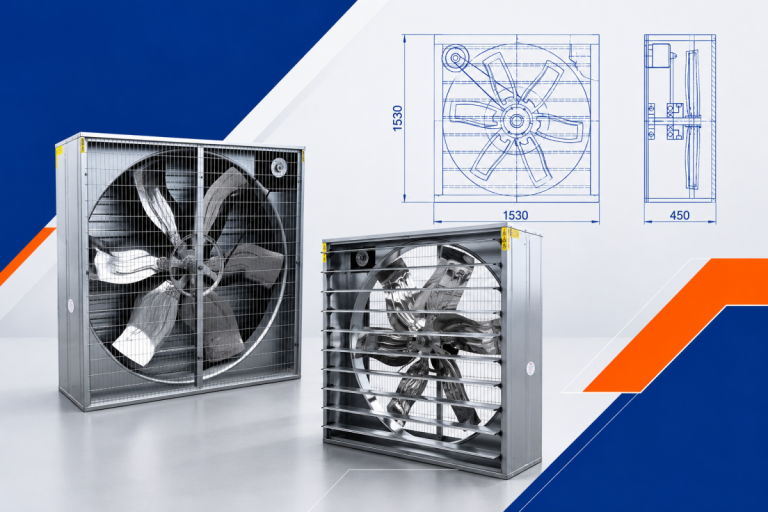
Above, the image shows the standard stainless steel product family from which the custom white versions were derived, demonstrating the range of available sizes.
If you are finishing an outdoor part
A powder coated weather cowl is where cost cutting shows up years later.
- Do not accept liquid paint on an exterior component. It cannot build the thickness needed, and it fails visibly. A powder coated weather cowl costs a little more and looks the same in year five, which is the comparison that matters.
- Ask about the pre-treatment, not just the coating. Adhesion comes from surface preparation. Two quotes can both say polyester powder and differ entirely in whether the coating is still attached after a few winters.
- Check the coating thickness in microns. Sixty to eighty is a working range for exterior use. Substantially thinner suggests a single light pass, which is where early chipping starts.
- Confirm the color is a specified standard. White is not one color. If the cowl has to match trim on the building, give a RAL or equivalent reference rather than a photograph.
See our fan accessories range, the duct fan section, or roof exhaust fans. Ingress ratings follow IEC 60529.
Questions about the finish
Is powder coating really better than paint outdoors?
For this application, clearly. It builds a thicker, harder film in one cured layer, and thermosetting polyester resists UV color shift far better than most liquid paints. The difference shows in years three to five rather than at delivery, which is why paint keeps getting specified.
Will the white yellow over time?
A polyester powder formulated for exterior use holds its color well, though no coating is entirely immune. If the cowls sit alongside other white components that must continue matching, say so, since color stability grade is something we can specify rather than leave to chance.
Can you match a specific RAL color?
Yes, and it is worth doing where the part sits against building trim. A photograph communicates intent; a RAL reference communicates a color. Specify one and the finished cowls will match each other across production batches too.
Does the coating affect airflow through the cowl?
Not meaningfully. At 60 to 80 microns the film is far too thin to change the free area of a duct termination. Anything that did affect airflow would be a design change to the cowl geometry, not a finish.
Technical Documentation & Resources
Need the same thing for your own unit?
Give us the numbers and the envelope, and you get a shortlist rather than a catalog. Meanwhile custom spec sheets and samples run to 90 days. Since 1990 Longwell has supplied EC fans and blowers to OEMs in HVAC, cold chain, data center and industrial markets.
Browse Related Products:
🏆 ISO 9001 / ISO 14001 / ISO 45001 | CE (TÜV) | UL/ETL | ATEX Zone 21/22 | AMCA 210/211 / ISO 5801 tested