A shaded-pole, permanent-split-capacitor (PSC) or electronically commutated (EC) motor can drive a small fan, but the motor name alone cannot tell an equipment buyer which complete assembly will cost less to operate. The useful decision is whether each exact motor, controller and fan combination can meet the same airflow duty, then what each tested combination consumes over the project’s real operating profile. Purchase price and annual hours matter only after that technical comparison is fair.
Compare assemblies at one air duty
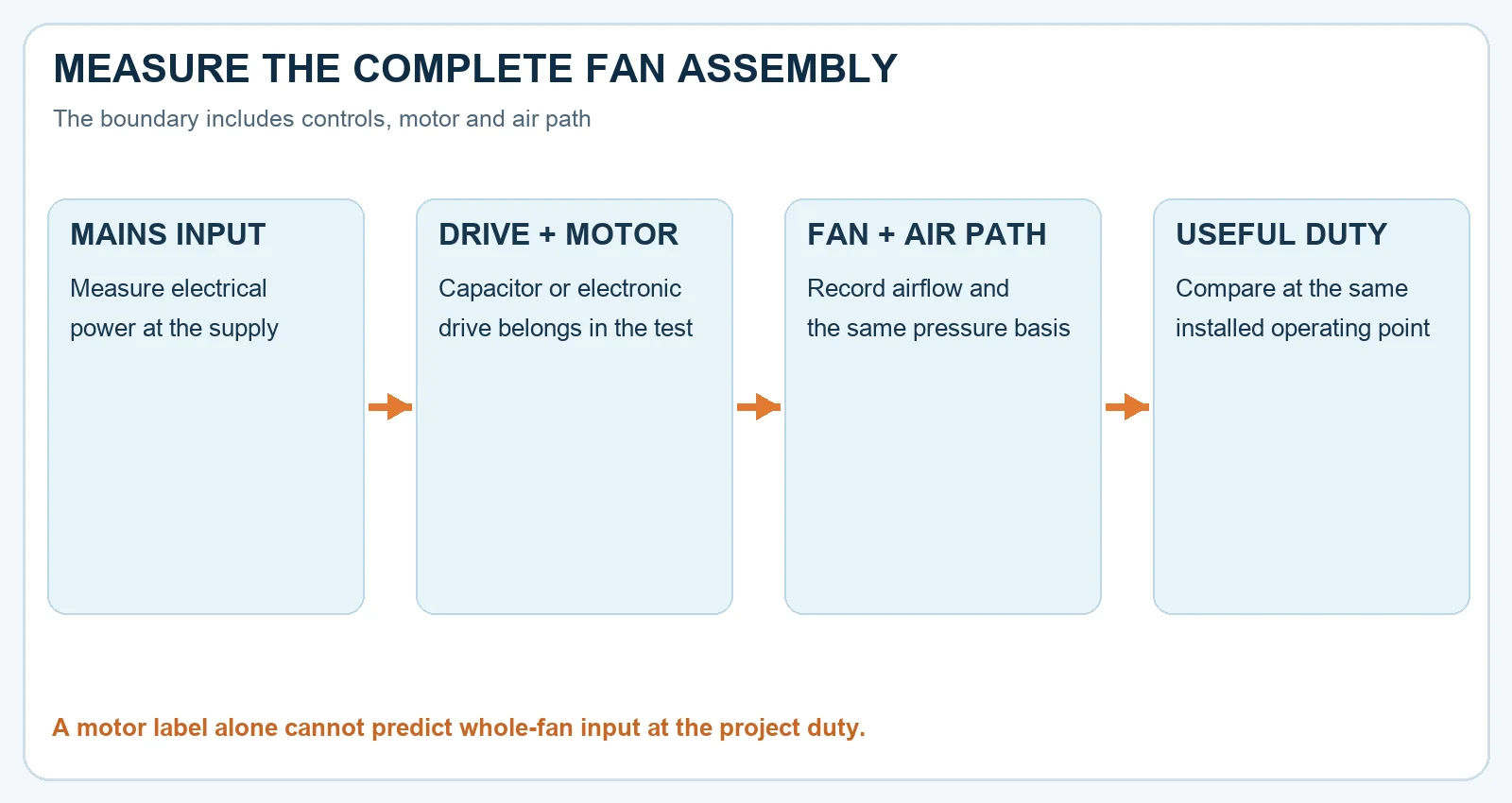
Begin with the required airflow and pressure, the pressure definition, air density, installation layout and expected filter or coil resistance. Ask for a test of each proposed fan at that same point. A nameplate motor wattage, free-air flow, or peak motor efficiency is a different measurement. A motor may look favorable on its own yet require another wheel, speed, controller or duct arrangement to deliver the project’s duty.
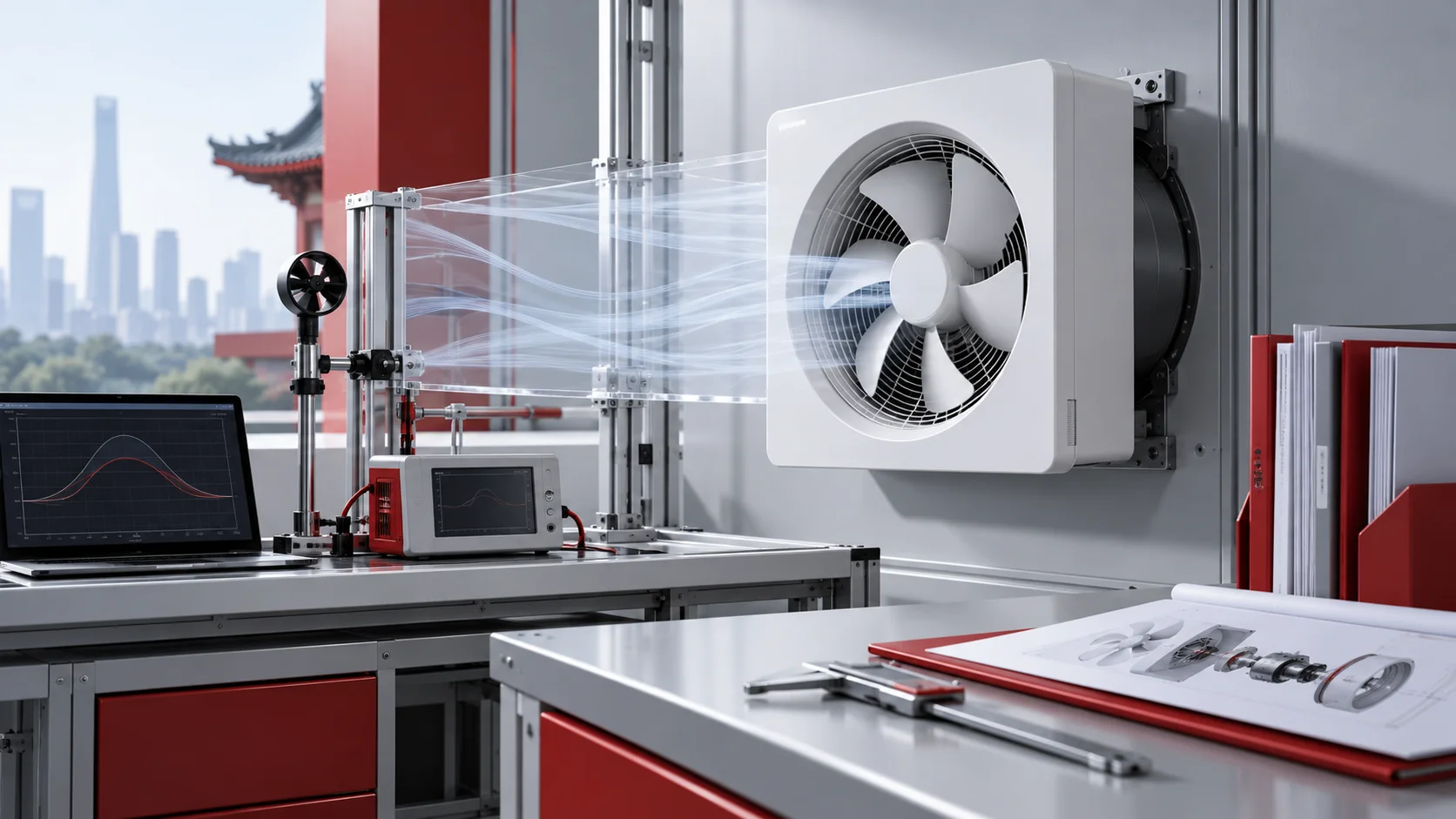
Measure electrical input at the supply terminals of the complete arrangement. For PSC, include the specified capacitor and its wiring. For EC, include the electronic drive and its configured control state. Then record airflow and pressure using the same method. AMCA’s fan energy explanation describes why a wire-to-air boundary includes the fan, motor and controller. It does not provide a performance rating for any candidate discussed here.
What the motor families actually identify
A shaded-pole motor is a simple single-phase induction construction with a shading ring that creates starting torque. A PSC motor uses a run capacitor with its auxiliary winding. An EC arrangement uses electronic commutation and a controller; the term spans multiple motor and control designs. Those descriptions identify construction and components. They do not assign a universal efficiency, sound level, starting margin, speed range or service life.
LONGWELL’s shaded-pole motor family is a catalog route for small fan projects. The reviewed company material shows an encapsulated shaded-pole product and a model table, but its image also contains broad marketing assertions without a matched comparison. We use it only to establish that product-family route, not to claim a fixed saving, certification scope or replacement fit. The EC fan family is another starting point for an electronically controlled fan assembly, not an exact substitute for an existing PSC or shaded-pole unit.
Use the operating profile to calculate energy
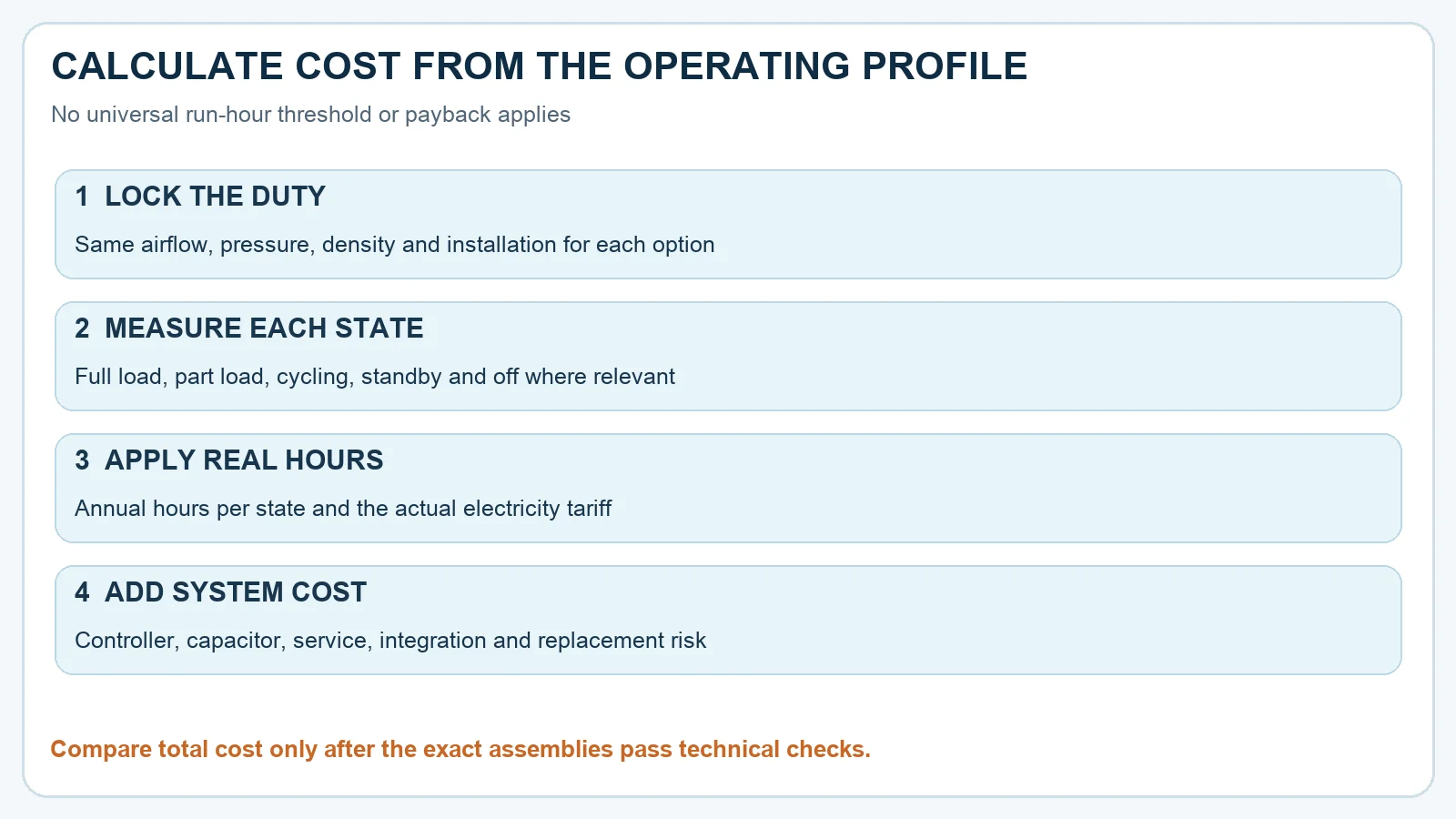
For each eligible candidate, request measured supply watts at the relevant full-load and part-load points. Add cycling, standby and off-mode input if the equipment actually spends time in those states. Annual energy is the sum of each measured input multiplied by its documented hours, divided by 1,000 to convert watt-hours to kilowatt-hours. Multiply by the applicable tariff only after the operating schedule is credible. If a value is missing, leave that portion of the estimate open instead of filling it with a family-wide efficiency percentage.
Run hours do affect the result, but they do not create a universal 500-hour, 3,000-hour or 4,000-hour crossover. The break-even point also depends on the measured watt difference, acquisition and integration costs, tariff, maintenance boundary and analysis period. An illustrative calculation can show the method, but it must be labeled as hypothetical rather than presented as a LONGWELL test. The guide below shows the information to collect before calculating a payback.
Include refrigeration and control conditions carefully
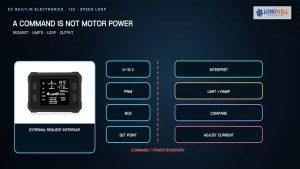
In a cooled enclosure, motor and fan heat can add to the cooling load. Its impact depends on where the motor and electronics sit, how heat leaves the space, the refrigeration system’s operating conditions and the fan’s actual schedule. Request a project-specific thermal balance before adding a fixed “extra half watt” or claiming that one motor technology doubles the savings. Likewise, a variable-speed fan can reduce input at some duties, but control range, stable airflow, electronics losses and the system resistance must be checked at each intended setting.
Starting torque, thermal protection, voltage tolerance, power factor, harmonics and electromagnetic compatibility remain separate checks. A PSC capacitor is a service component; an EC controller adds its own installation and fault-handling requirements. Neither detail alone proves that one design will fail sooner. Record the specified environment, access for service, control interface and required protection for the exact assembly.
Check replacement and document scope
A replacement is more than a shaft and bolt pattern. Confirm wheel and housing geometry, rotation, mounting, wiring, connector, capacitor or controller, control signal, supply, guarding and the new operating point. In a refrigerator or evaporator assembly, verify the cold-space arrangement and defrost or duty-cycle behavior as well. A visually similar motor is not proof of a safe drop-in replacement.
Ask for the current drawing, model and suffix, electrical specification, fan curve, measured supply input at the agreed point, environmental limits and any documents required in the destination market. Motor efficiency classes, fan energy metrics and product certificates can cover different boundaries. Read the actual document and applicable jurisdiction before making a compliance statement. A category page or unqualified logo cannot extend a certificate to every assembly.
Make a shortlist on evidence, then cost
Compare the three approaches only after the exact candidates meet the airflow, pressure, installation, control and safety requirements. Then place purchase cost, tested annual electricity, integration work, maintenance and replacement constraints into the same analysis horizon. The lowest upfront price can be sensible in one operating profile; another profile may justify a more controllable assembly. The calculation should show its assumptions so the buyer can change hours or tariff without rewriting the engineering evidence.
For a shortlist, send the duty point, system sketch, supply and controls, annual operating states and required documents to sales@longwellfans.com.
Choose the right ac motor
Longwell manufactures 22 ac motors in-house. Send airflow, static pressure and voltage — an engineer replies with a matching model, performance curve and price within one working day.