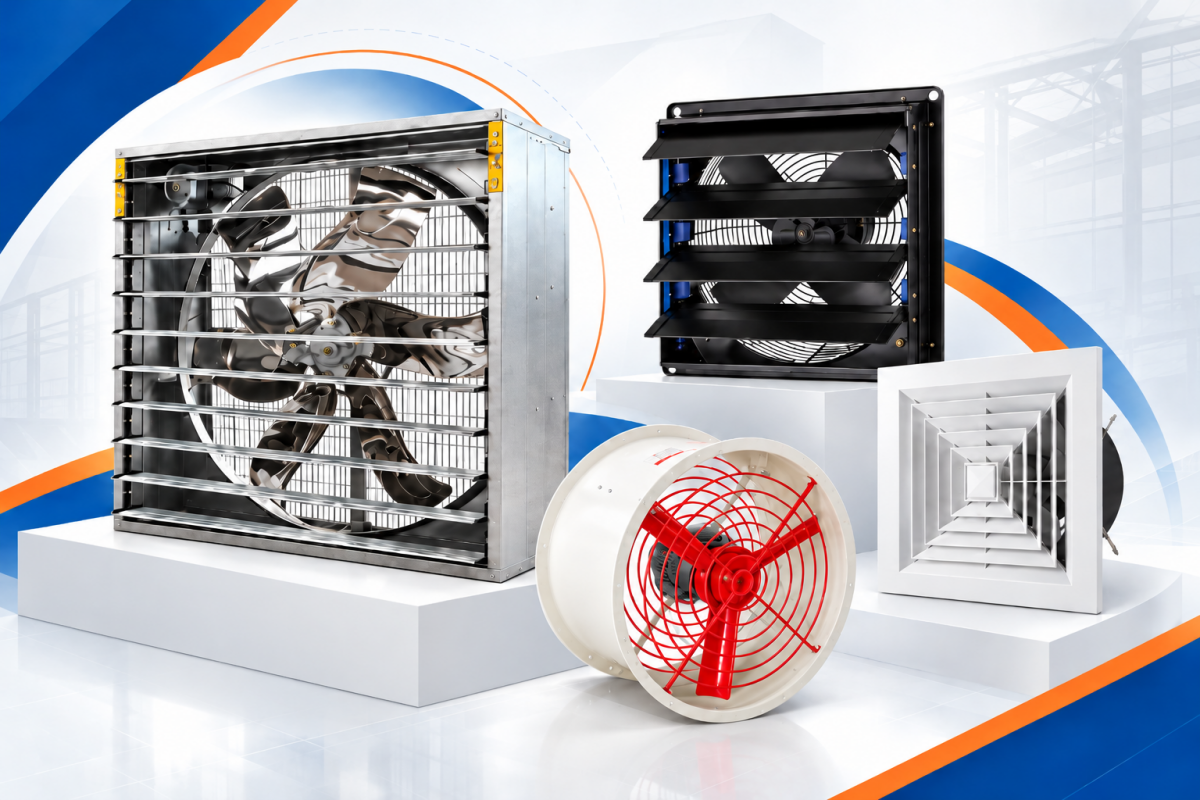
A grid of small fans and one large fan can both move air through an air-handling unit. The useful question is which complete arrangement meets the same duty with acceptable input power, sound, space, control and failure behavior. Fan count alone cannot settle efficiency. This comparison explains what to request before approving a fan-wall retrofit or a new AHU design.
Start with an equal air duty
Write down the required airflow, static pressure at the fan boundary, air density and the operating conditions. The single-fan and array options must meet those same points. If one option is compared at a lower pressure or cleaner filter condition, an apparent efficiency advantage says little about the proposed installation. Include the control range, expected filter loading and any minimum airflow requirement. Then ask for a performance curve or tested operating point for each candidate.
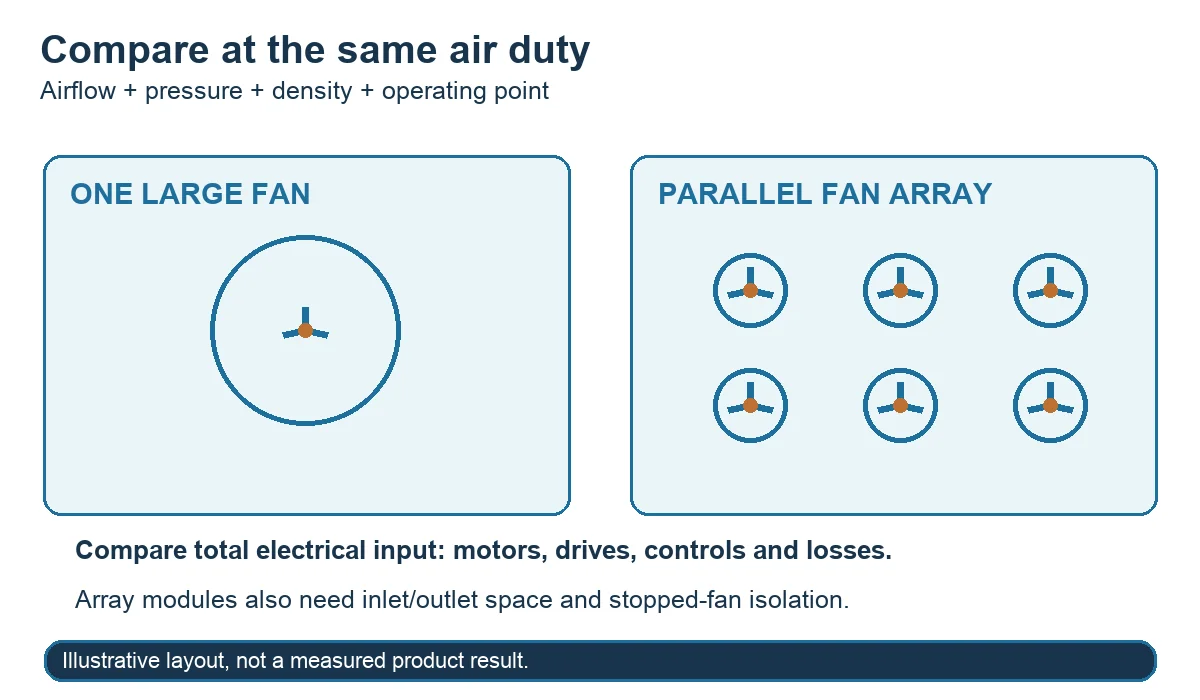
The illustration below shows two layouts that may serve the same system. It is a teaching diagram, not a Longwell installation drawing or a measured result. For the physical idea of a fan wall, see Longwell’s fan-wall explanation. That page helps identify the arrangement; it does not replace project duty-point verification.
Compare complete electrical input, not wheel size
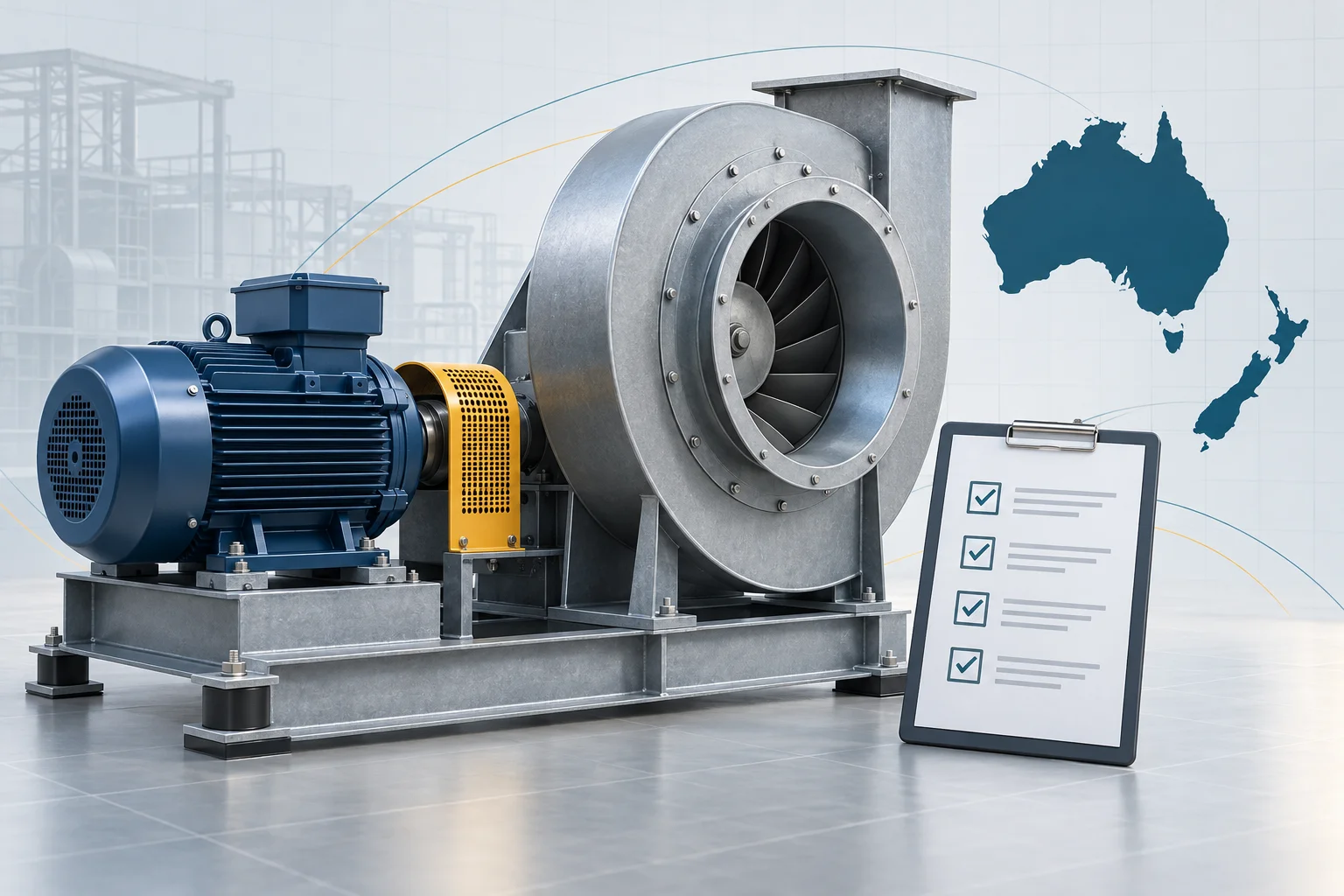
The fan wheel is only one part of the energy path. For each option, compare electrical input at the same duty after motor, drive or controller, and installation effects are included. A belt-driven single fan may have transmission losses; a direct-drive array may avoid those but add controller, inlet, outlet, frame or isolation losses. Neither conclusion applies to every design. Ask the supplier to state where the test or calculation boundary starts and ends.
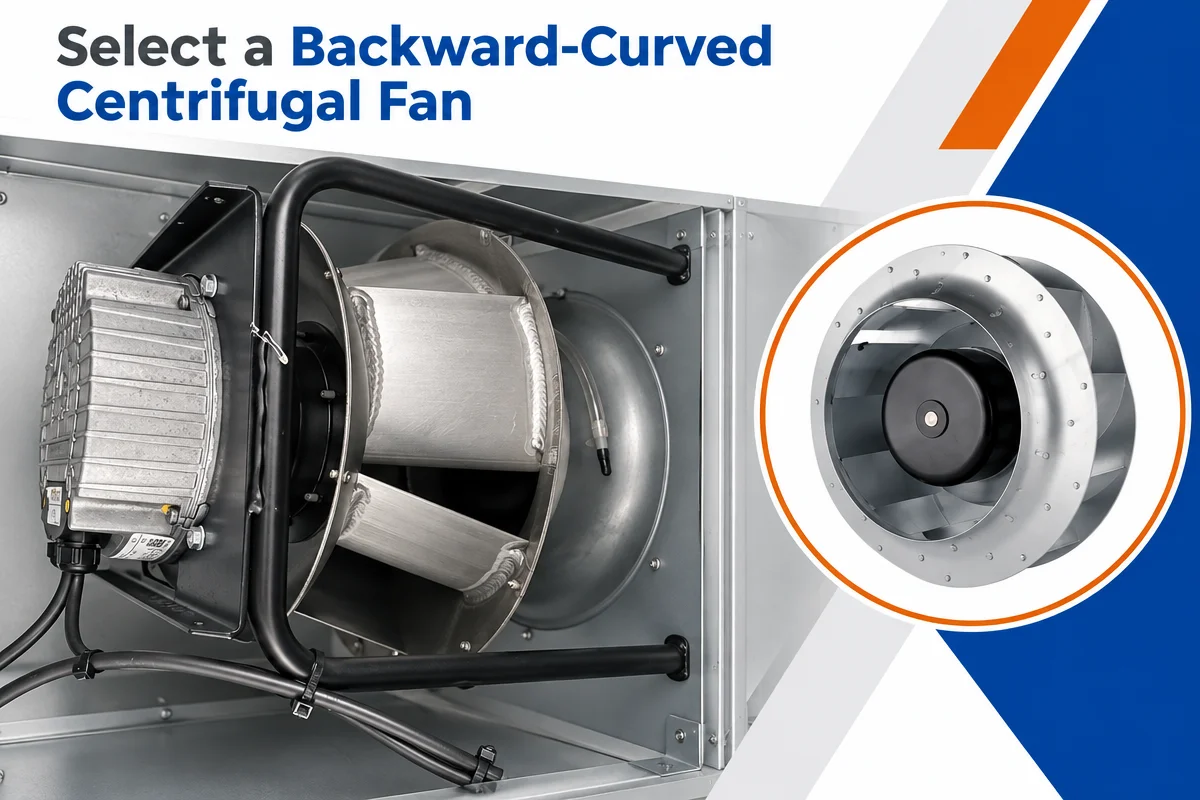
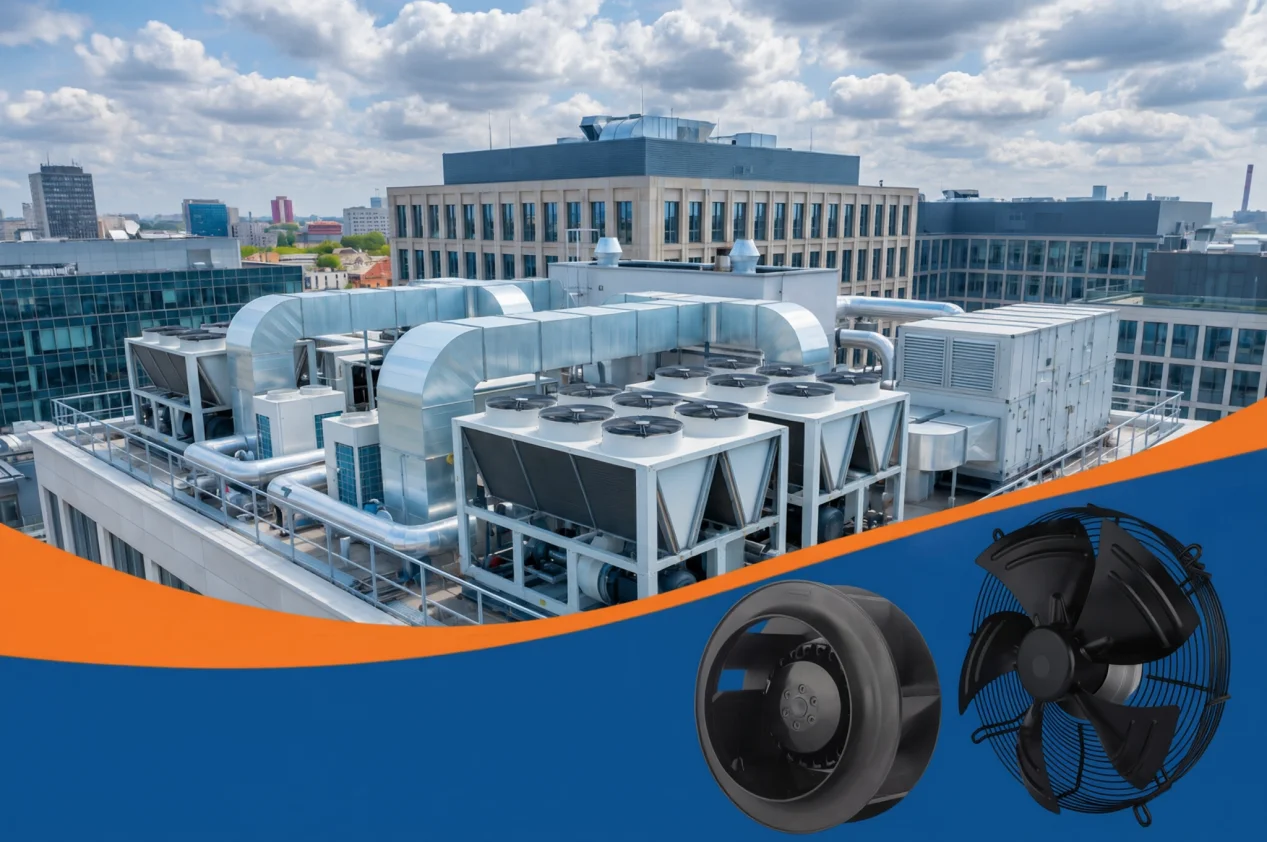
Longwell publishes an EC backward-curved centrifugal fan family that can be considered for an array concept. The family page establishes the available type and visible construction. It does not establish that any listed model fits this AHU or outperforms a single-fan alternative. That requires exact model curves, electrical data, geometry and the intended operating point.
Parallel curves need the system curve
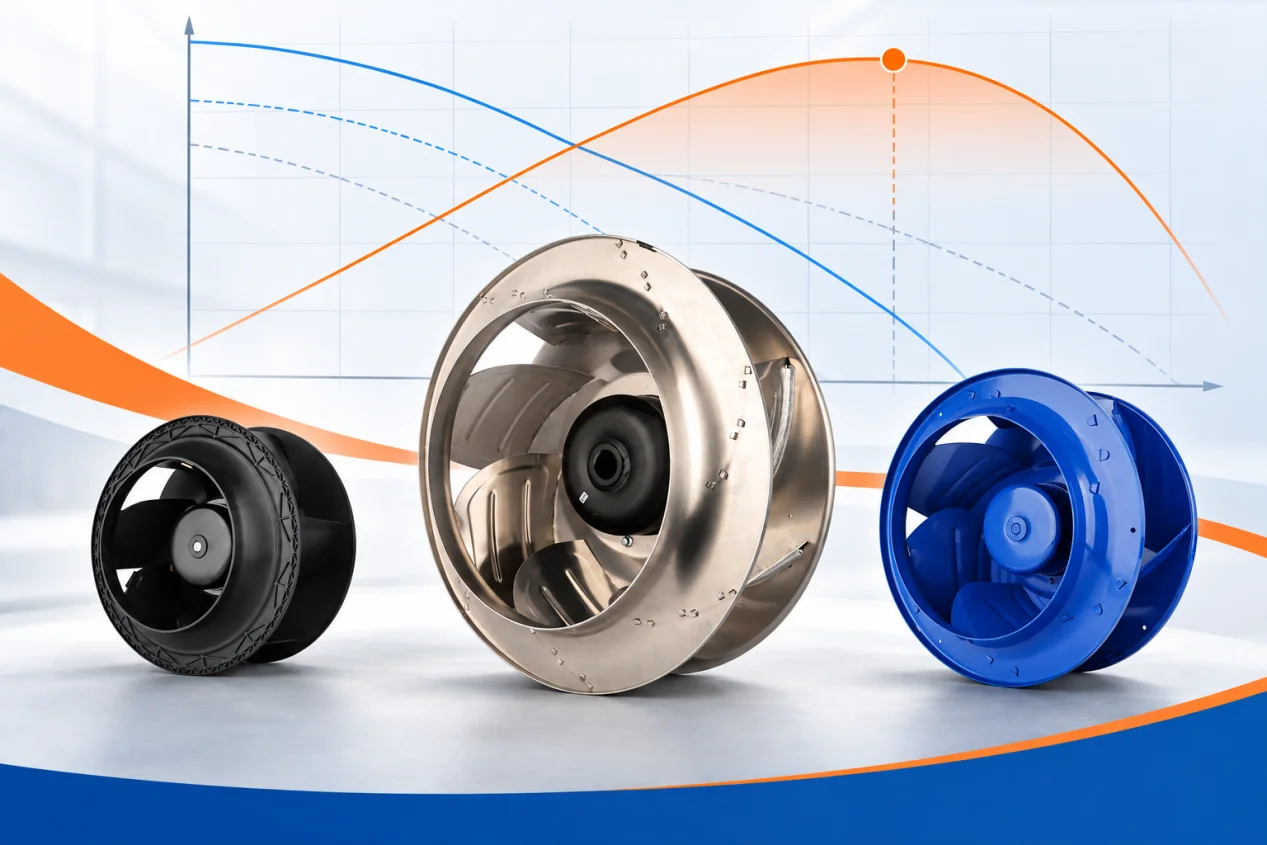
At a shared pressure, parallel fan airflow can be added when the modules operate together under the stated installation conditions. The array operating point is where its combined curve meets the system curve. It is not obtained by multiplying one free-air flow number by the number of modules. Frames, coils, filters, grilles, dampers and plenum geometry can move the actual duty away from a catalogue point. If a module is off, check whether reverse flow through that opening is controlled and how the remaining units are dispatched.
A useful submittal therefore shows the full array curve, the system curve, each module’s permitted speed range and the assumptions for inlet and outlet conditions. Compare that package with the single-fan curve under the same air density and pressure definition. If the curves are only estimates, identify the uncertainty before claiming a winner.
Part-load operation changes the energy comparison
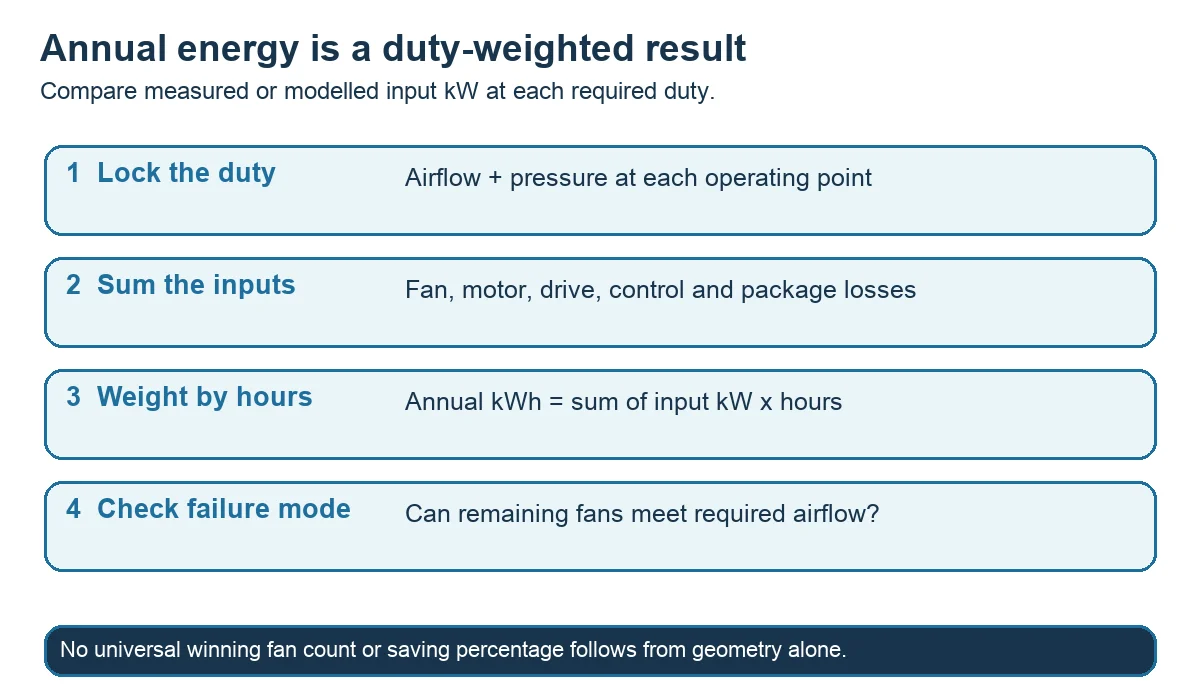
One design-day point is insufficient for a variable-airflow AHU. Divide the expected year into operating bins: for example, high, medium and low airflow, with hours assigned from the building’s control sequence or measured history. Estimate or measure the total electrical input at each bin for both alternatives. Multiply input kW by hours, then add the bins. The result is a comparable annual kWh estimate only if both options deliver the required duty in each bin.
Different control choices can reverse the ranking. An array might run all modules slower, stage some off, or keep extra capacity for resilience. A single fan with an appropriate variable-speed drive may also operate efficiently away from design. Use the actual candidate curves and controls; do not assume that EC electronics, a larger wheel or more fan cells guarantees an annual energy benefit.
Keep redundancy separate from efficiency
A parallel array can offer a way to keep some airflow if one module is unavailable. That is a design possibility, not an automatic N+1 guarantee. The remaining modules must still meet the required airflow and pressure within their permitted speed, power and temperature limits. Controls must detect the failure, isolate backflow as needed and command a safe response. The actual number of modules depends on those conditions, footprint, access and the acceptable degraded duty. There is no universal optimum such as six, ten or twelve fans.
Noise and maintenance also need their own checks. Compare sound at the relevant operating points and installation conditions, ideally by frequency band where the application requires it. Count service access, wiring, controller replacement and the ability to isolate a failed cell. A power advantage does not automatically mean a quieter or easier-to-maintain system.
What to request before choosing
Ask for the same-duty fan and system curves, total electrical-input data at several operating points, a dimensioned array and plenum layout, the control sequence, stopped-fan isolation details, sound data and a failed-module airflow check. Identify whether each item is measured, calculated or only conceptual. If an existing AHU is being replaced, capture baseline kW and airflow under comparable conditions before attributing later energy changes to the fan arrangement. Longwell’s family and layout material can begin product selection, while the final recommendation must be tied to the exact model and project conditions.
To discuss a same-duty fan-array comparison for your AHU, email sales@longwellfans.com with the airflow, pressure, layout and operating schedule.