A range hood can lose extraction even while its motor still turns. The useful first decision is whether the fault sits in the electrical command, rotating assembly or air path. Only then is it sensible to choose a motor, a blower assembly or another repair. The exact hood model, serial number and wiring revision govern that choice.
This guide is for owners planning a service conversation and for qualified technicians comparing replacement interfaces. It does not identify a universal range hood motor. The video shows the decision path; the two diagrams below make the diagnosis and matching checks easier to carry into an actual job.
Start with the symptom, not a parts order
“The hood is weak” and “the blower will not start” require different checks. A weak hood can involve a loaded filter, a wheel that cannot move air effectively, a closed damper or a duct restriction. A non-start can involve the supply, controls, connections, protection, a mechanical obstruction or the motor. None of those observations alone proves which part has failed.
Record the behavior at each available speed, whether there is rubbing or an unusual sound, and whether the discharge path is open. Keep the observation separate from a diagnosis. The following diagram is a triage map, not a frequency ranking or a live-electrical test procedure.
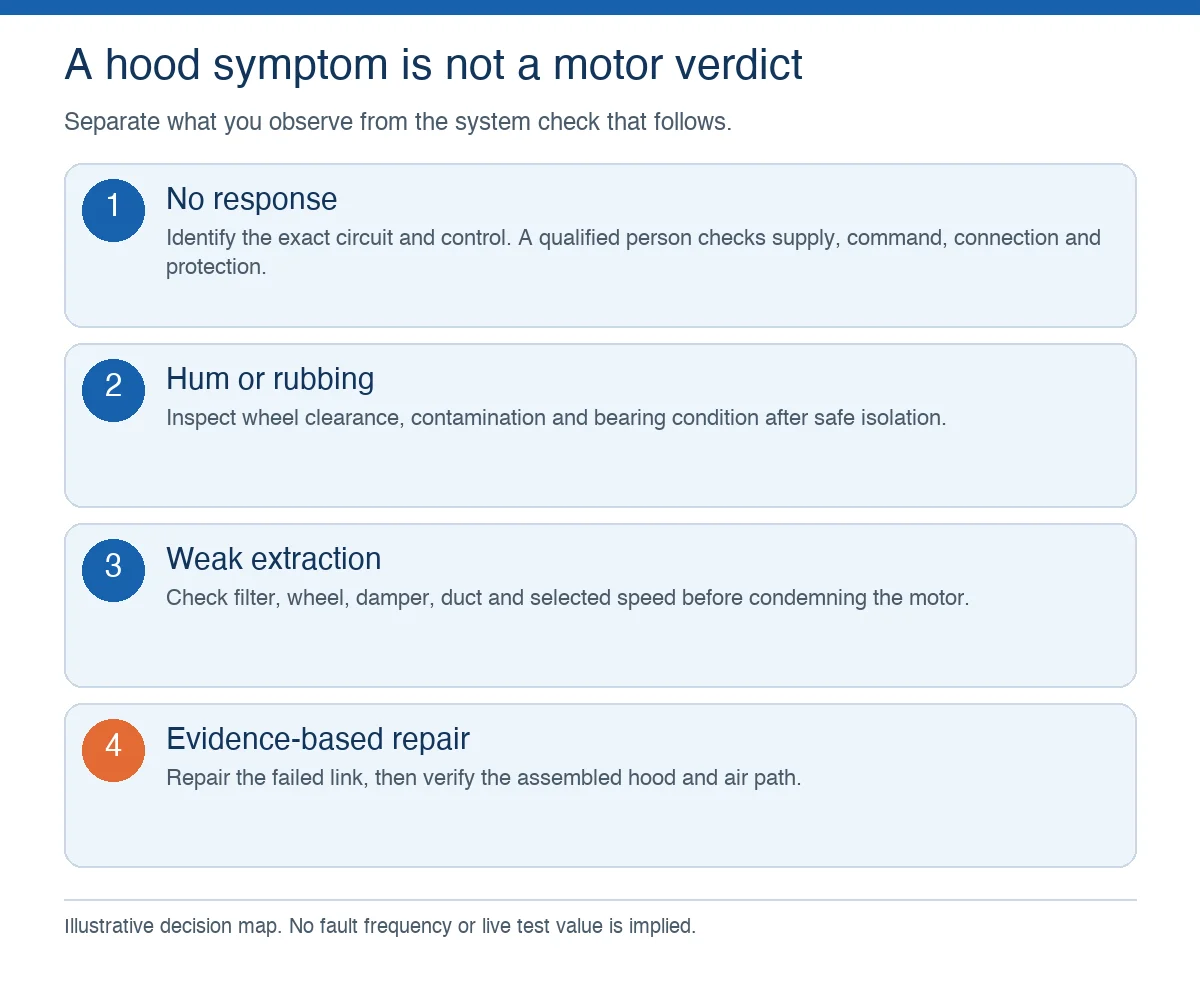
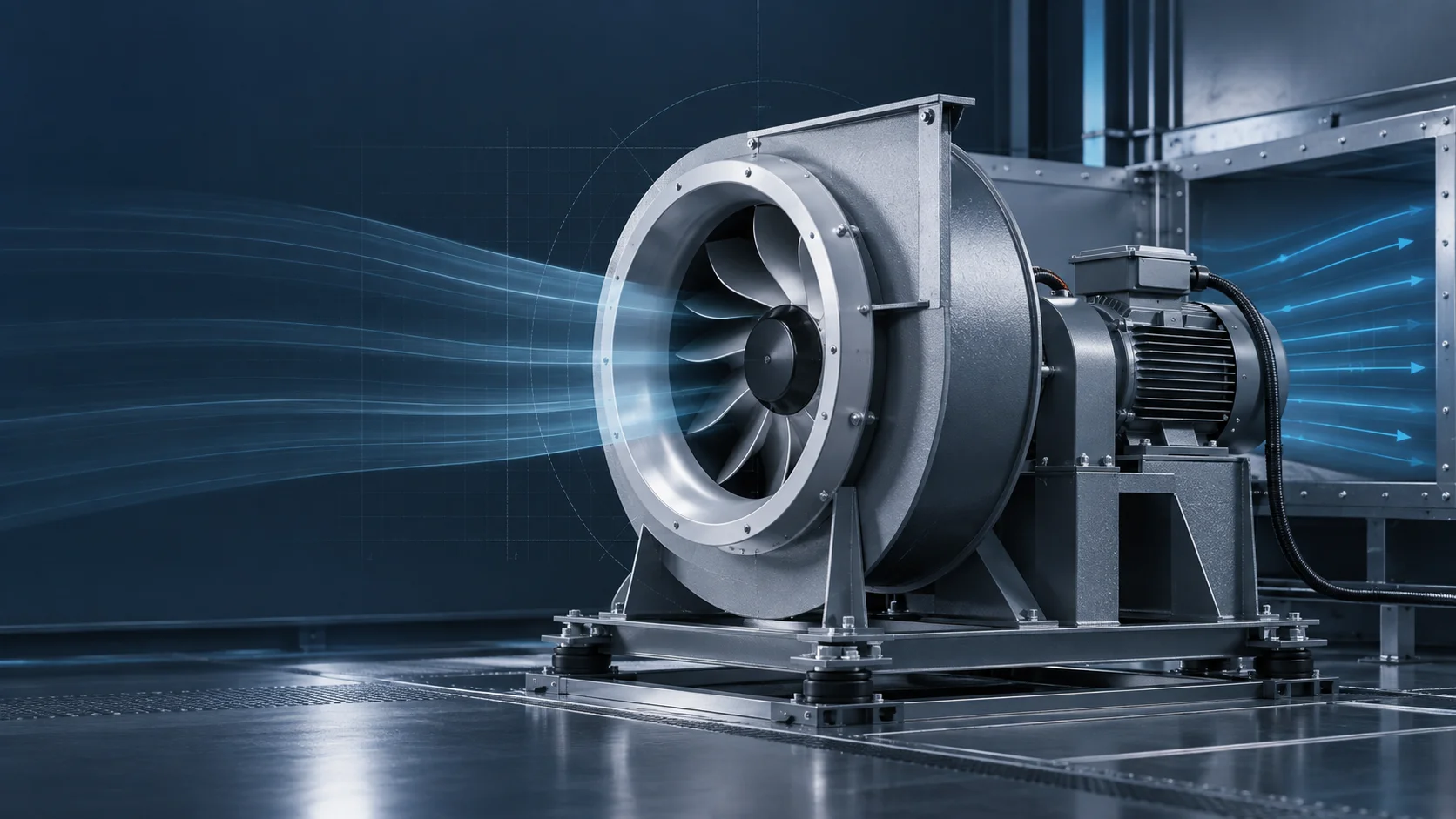
For the equipment context, LONGWELL’s range hood application page describes blower and filter roles. It is a family-level starting point; it does not establish that any listed component fits a particular installed hood.
Identify the installed blower configuration
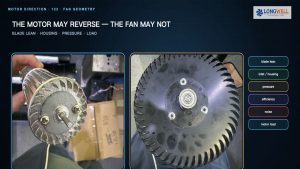
Before comparing parts, photograph the hood nameplate, blower label, wheel, motor bracket, connectors and any wiring diagram that belongs to the exact revision. Note whether the blower is internal or remote, whether it uses one or two inlets, and whether the motor receives simple speed taps or an electronic control signal. These are identification questions, not assumptions about every hood.
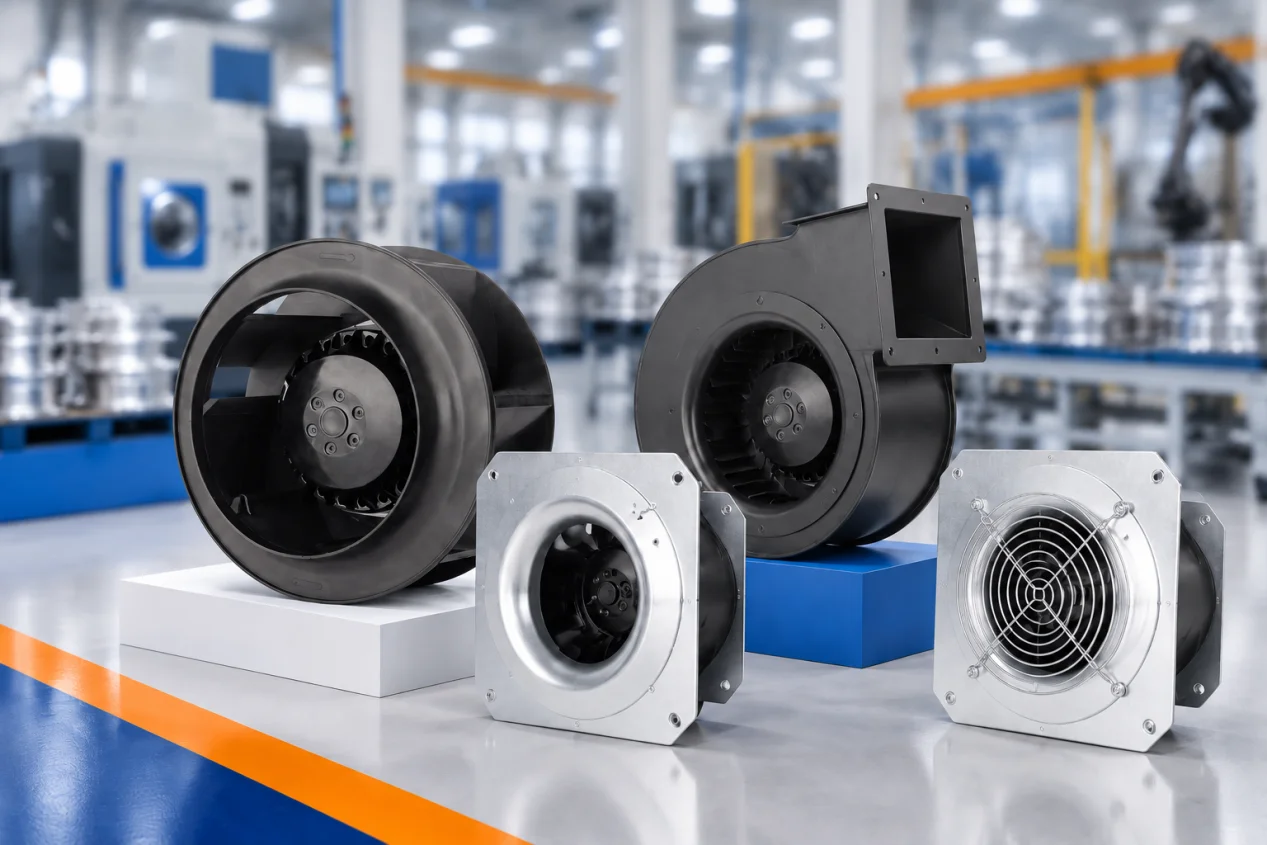
An apparent visual match can hide a different winding, control method, rotation reference, shaft position or mounting depth. LONGWELL’s broader fan and blower families show possible architectures, but the family page is not an approved replacement list. Ask for the controlled drawing and electrical definition for the exact candidate and the hood manufacturer’s service information.
Put electrical and mechanical work within the service boundary
A keypad set to OFF does not establish that the appliance is de-energized. Follow the manufacturer’s isolation procedure, identify the correct circuit, verify absence of voltage with suitable equipment and account for stored energy before opening a covered assembly. Support panels and motor plates, and protect hands from sharp edges and grease-contaminated parts. Electrical diagnosis or wiring changes belong with a qualified person.
Do not use a generic mains jumper, bypass an unknown controller or substitute a capacitor from appearance alone. Some designs do not use the same capacitor arrangement, and electronic drives may have a different service method. A run capacitor, when present, should be tested and replaced only to the exact approved specification if it is defective or the service instructions require replacement. Likewise, do not spin a loose powered wheel to “prove” compatibility.
Compare the whole interface before choosing a motor
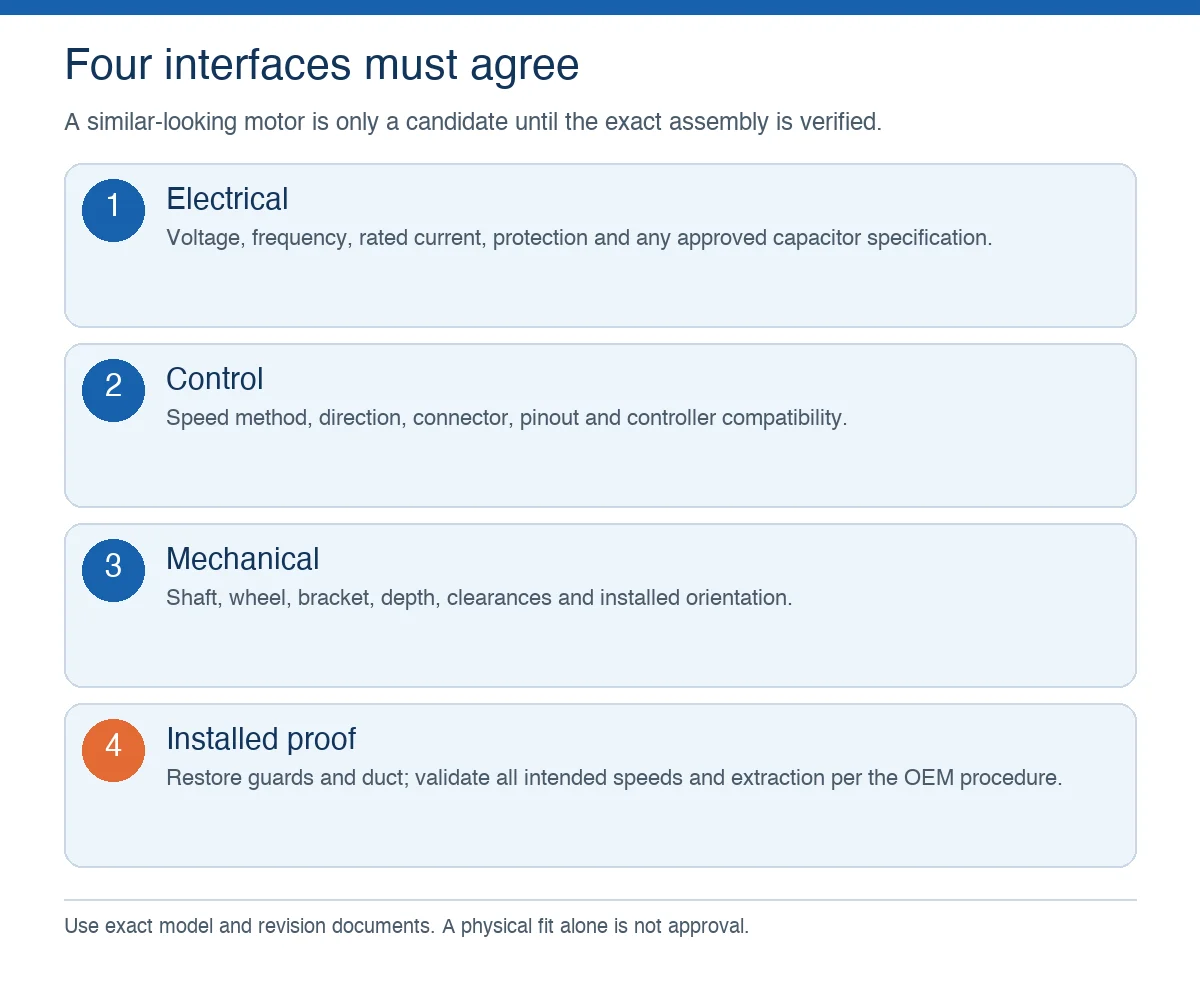
A candidate must be checked against the supplied voltage and frequency, rated current, protection, permitted speed or control scheme, rotation as viewed from the specified end, shaft and wheel interface, mounting geometry, clearances and the connector pinout. If a capacitor is specified, its required value and rating are part of that comparison. Grease exposure and the appliance’s approval or service requirements can also limit what may be installed.
The matching diagram separates those interfaces so a part cannot pass merely because its bolt holes line up. A motor sold as “universal” still needs evidence for each applicable interface and approval for the installed assembly. If that evidence is missing, obtain the hood manufacturer’s replacement list or ask the component supplier to review the exact drawings before purchase.
Restore the air path and verify the assembled hood
Once the correct repair is made, reassemble the guards, covers, grounding, filters and duct connection according to the manufacturer’s instructions. Check the wheel for rubbing and the damper for free movement. A qualified technician can then verify the available speed commands, rotation, current or other specified electrical checks, noise, vibration and extraction under the approved commissioning procedure. Do not rely on a bench spin as the final test.
A new motor cannot cure a blocked duct or a saturated filter. If the hood is configured for recirculation, confirm the correct filter path; if it exhausts outdoors, inspect the duct and outlet as the installation permits. The ducted versus ductless guide explains that distinction. Use the appliance manual for cleaning intervals and replacement instructions, because cooking load and hood construction differ.
What to send for a useful replacement review
Send the full hood and blower model identifiers, nameplate and wiring photos, the symptom at each speed, and clear views of the wheel, bracket, shaft and connector. Add the manufacturer’s approved part list or controlled drawing if available, plus the supply and control details. For an OEM design, include the required airflow and pressure operating point and the installation envelope. These inputs let an engineer distinguish a possible family from a verified fit.
The practical decision is to diagnose the failed link, compare every relevant interface and validate the assembled air path. That sequence prevents a visually similar part from being treated as proof of compatibility.
Planning a range hood blower or OEM motor replacement? Email the model, drawings and operating requirements to LONGWELL for a component review.
Choose the right blower
Longwell manufactures 247 blowers in-house. Send airflow, static pressure and voltage — an engineer replies with a matching model, performance curve and price within one working day.