A pond aeration blower is selected for a water system, not from pond area or blower name alone. The practical question is whether the air source can deliver the required volume at the pressure created by water depth, pipework and diffusers. Oxygen demand and mixing goals then determine how much air the system needs. This guide shows which inputs to collect and where a blower curve helps. It does not give a universal airflow allowance or promise a result for a particular pond.
Start with the water objective
Is the project trying to prevent low dissolved oxygen for fish, circulate a stratified recreational pond, or supply a process basin? These are different design tasks. Pond dimensions, depth profile, temperature, season, stocking or organic load, and measured dissolved oxygen at more than one depth all matter. A surface reading can miss a low-oxygen bottom layer. The Southern Regional Aquaculture Center’s pond-mixing guidance explains why a pond can have very different oxygen conditions from top to bottom.
Set a measurable objective with the pond or aquaculture specialist before selecting equipment. An air blower cannot be credited with a particular oxygen level, growth rate or water-quality improvement without a system design and field measurements. A diffuser layout that works in one basin may circulate a different pond poorly, even when the blower nameplate looks similar.
Trace the full air path to the diffuser
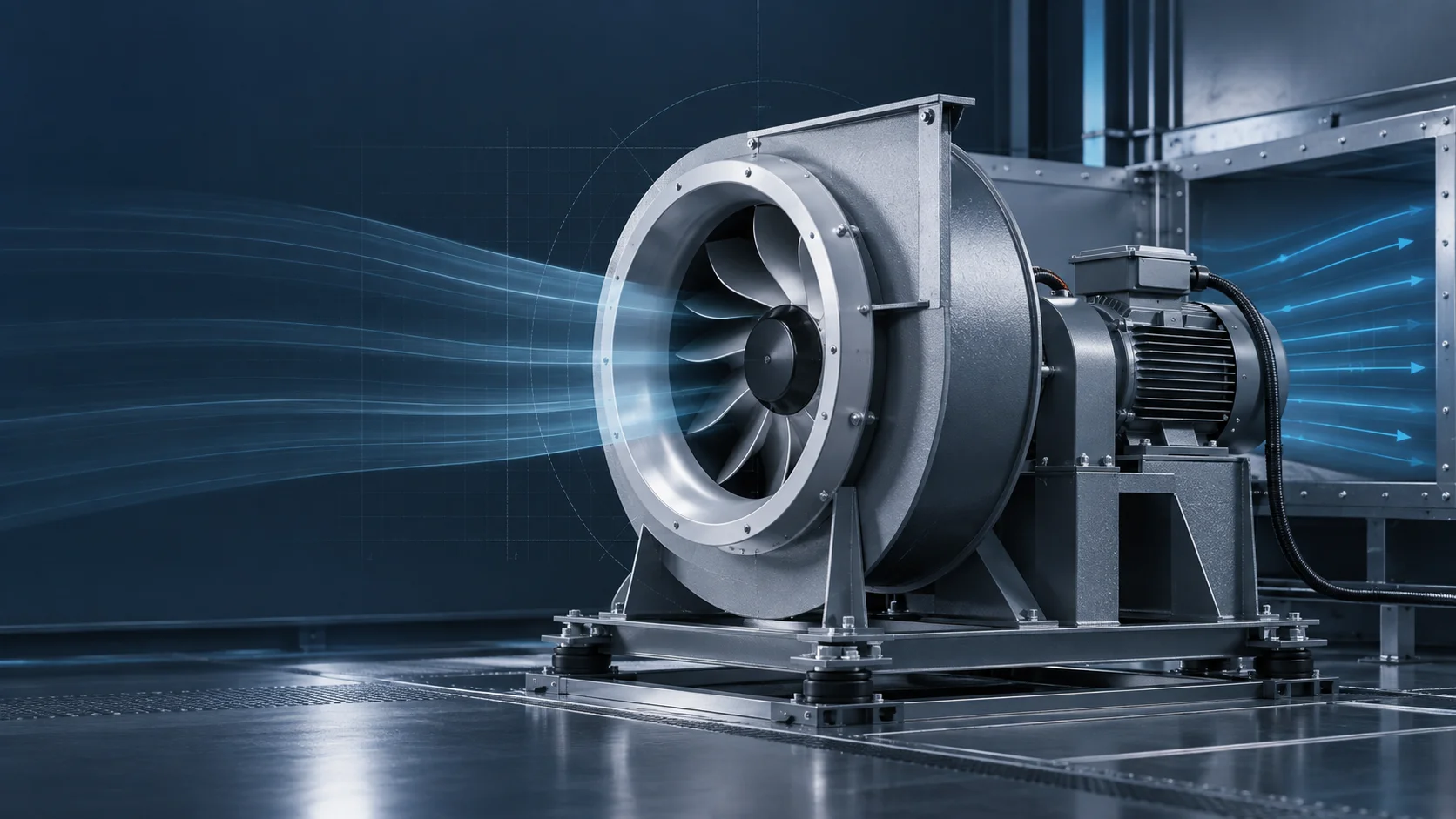
Air must leave the blower, pass through a filter, pipe and fittings, reach the diffuser, then emerge against the water pressure at the outlet. Submergence produces a hydrostatic head that increases with depth; pipe and diffuser losses add to it. That is why a free-airflow number cannot tell you the delivered airflow at the pond bottom. The relationship is a pressure budget, not a fixed percentage surcharge: the exact losses depend on pipe diameter and length, branches, fittings, diffuser model and condition.
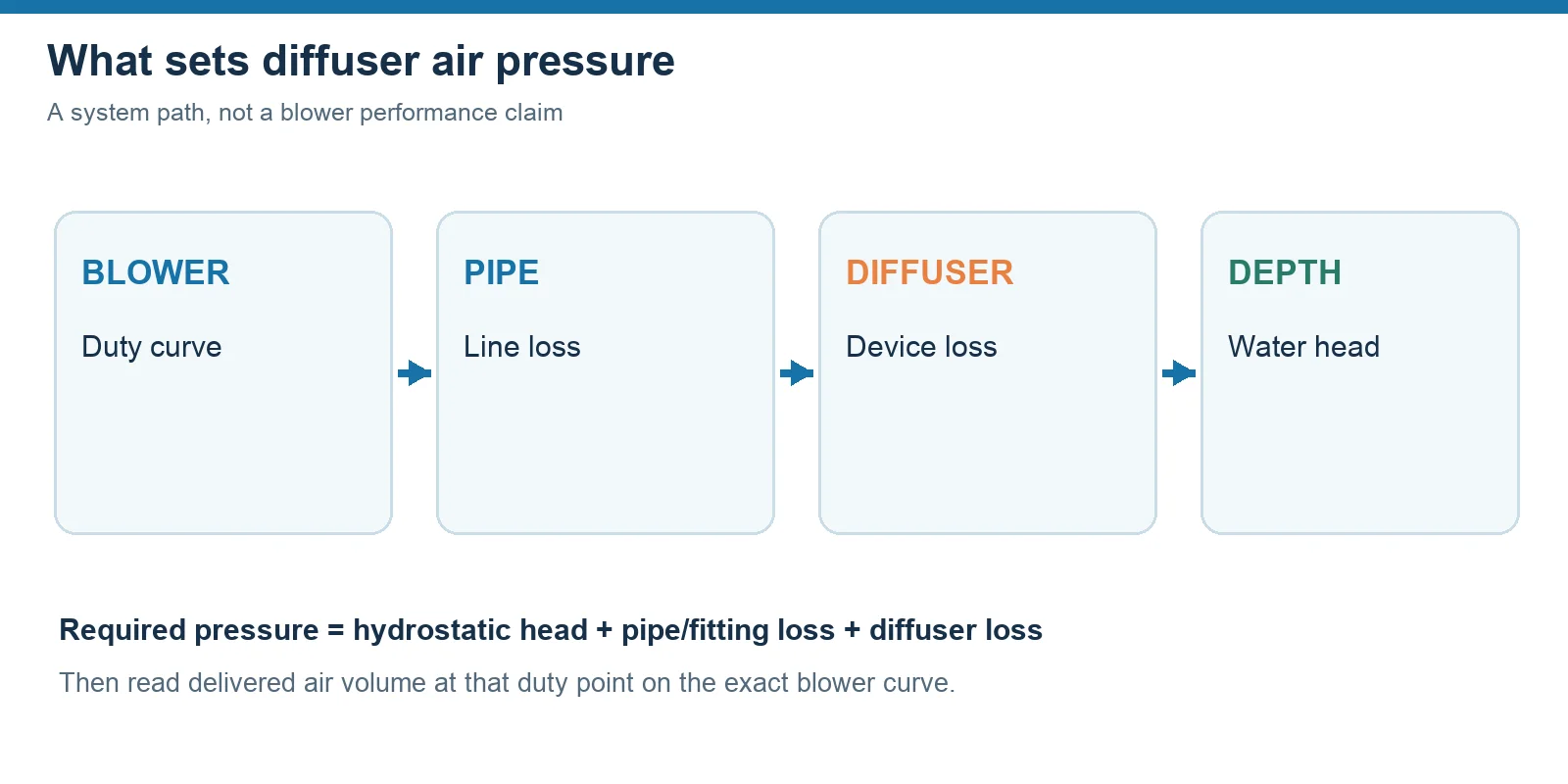
Measure the actual diffuser depth rather than using the pond’s maximum depth automatically. Ask the diffuser supplier for its pressure loss at the proposed air rate, and estimate line losses for the real layout. The first drawing is a conceptual map of the pressure sources; it is not a pressure curve or a claim about any LONGWELL model. If the pond changes seasonally, check the relevant operating water levels and how the system will be monitored.
Compare blowers at the same duty point
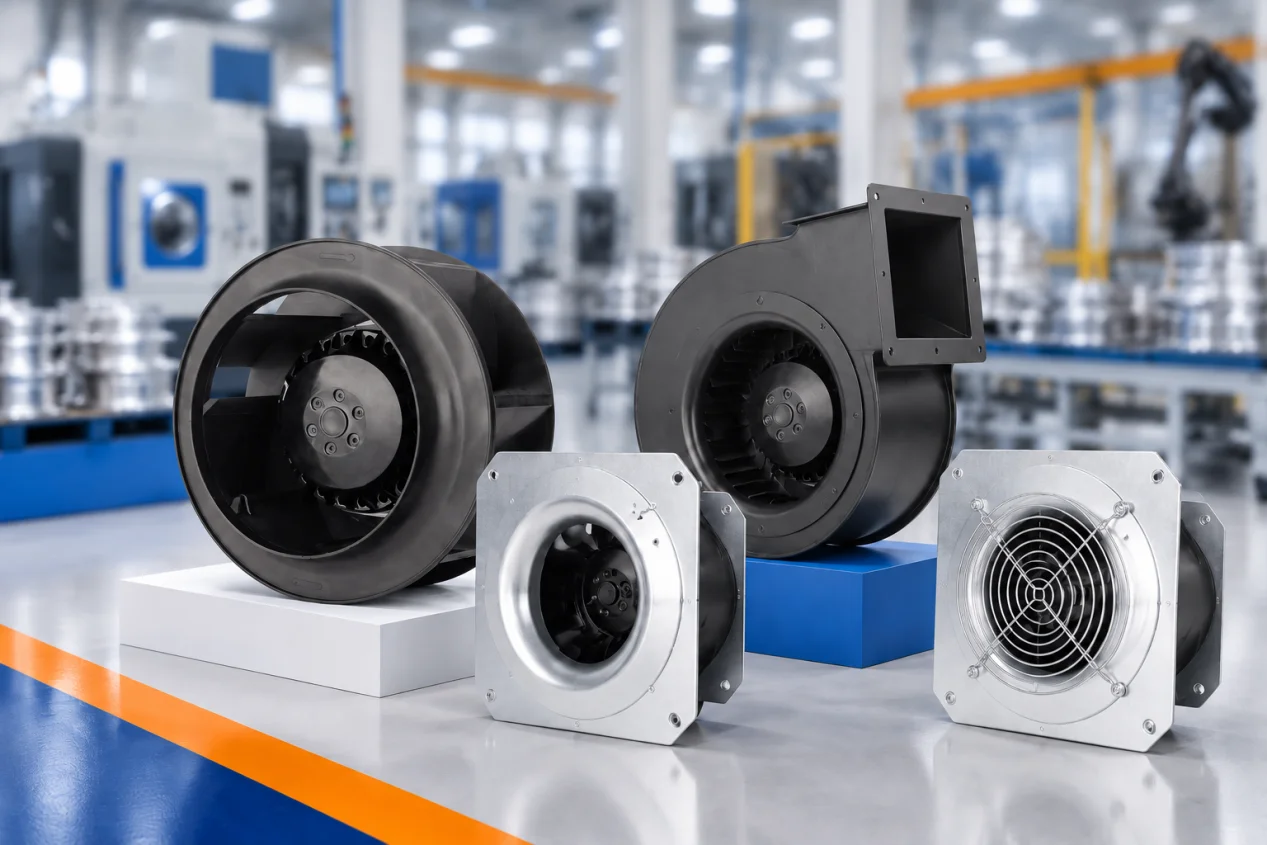
Once the required airflow and total pressure are known, compare candidates on their current, exact-model performance curves at the applicable frequency and inlet conditions. The operating point must fall within the manufacturer-approved region. Also confirm voltage, motor protection, enclosure ventilation, permitted ambient range and the intended operating schedule. A family photograph or a maximum-flow table is only a way to identify a candidate; it does not establish the delivered air volume at the system pressure.
LONGWELL publishes an oxygen-increasing blower catalog entry and a broader air-blower family. They show which family to investigate. An older LWHPF catalog inspected for this article lists several model suffixes and states conditions for its compression curves. That document is a candidate reference only: request the current exact-model revision and confirm that its curve and duty rating apply to the proposed equipment. For the mechanism distinction, see LONGWELL’s centrifugal and regenerative blower comparison; the article does not select a machine for this pond.
Size the diffuser network with the blower
Diffuser count and placement affect both circulation and the distribution pressure each branch sees. A network with branches of unequal length may need balancing; a fouled diffuser can change the operating point. It is therefore useful to evaluate the diffuser and air source as one system. Request the intended diffuser air range, pressure-loss data, maintenance instructions and layout assumptions. Then check the blower curve at the total expected pressure, including a documented allowance for foreseeable fouling if the project designer requires one.
Do not use a generic number of diffusers per area or a generic volume of air per pond volume as a purchase specification. Oxygen demand varies with the species, feed or organic load, temperature, water chemistry and management objective. The Southern Regional Aquaculture Center’s pond-aeration publication discusses the different aeration methods and why diffuser systems and surface aerators are not interchangeable for every task.
Check stratification before changing operation
A deep pond can separate into warm surface water and cooler bottom water with little oxygen. Mixing the whole water column changes the habitat, so start-up and seasonal strategy should be reviewed with a qualified pond specialist. Record temperature and dissolved oxygen at several depths and at relevant times of day. Do not assume that more bubbles automatically mean safer conditions for fish, or that the same run schedule suits both summer and winter.
For an existing system, record a clean-baseline discharge pressure and compare later readings at similar operating conditions. A rise may point to a clogged filter, line or diffuser; a fall may point to a leak or changed water level. Those are diagnostic prompts, not a complete fault diagnosis. Use the manufacturer’s maintenance guidance and inspect the actual air path before changing a blower.
Keep an evidence chain for the final selection
The second diagram shows the handoff information that makes a blower recommendation reviewable: water conditions, oxygen or mixing objective, diffuser and piping design, and the exact blower curve with electrical and operating limits. Each item has a different source. Pond measurements establish the water task; the diffuser supplier establishes device loss; a current manufacturer curve establishes the blower’s stated capability under its listed test conditions.
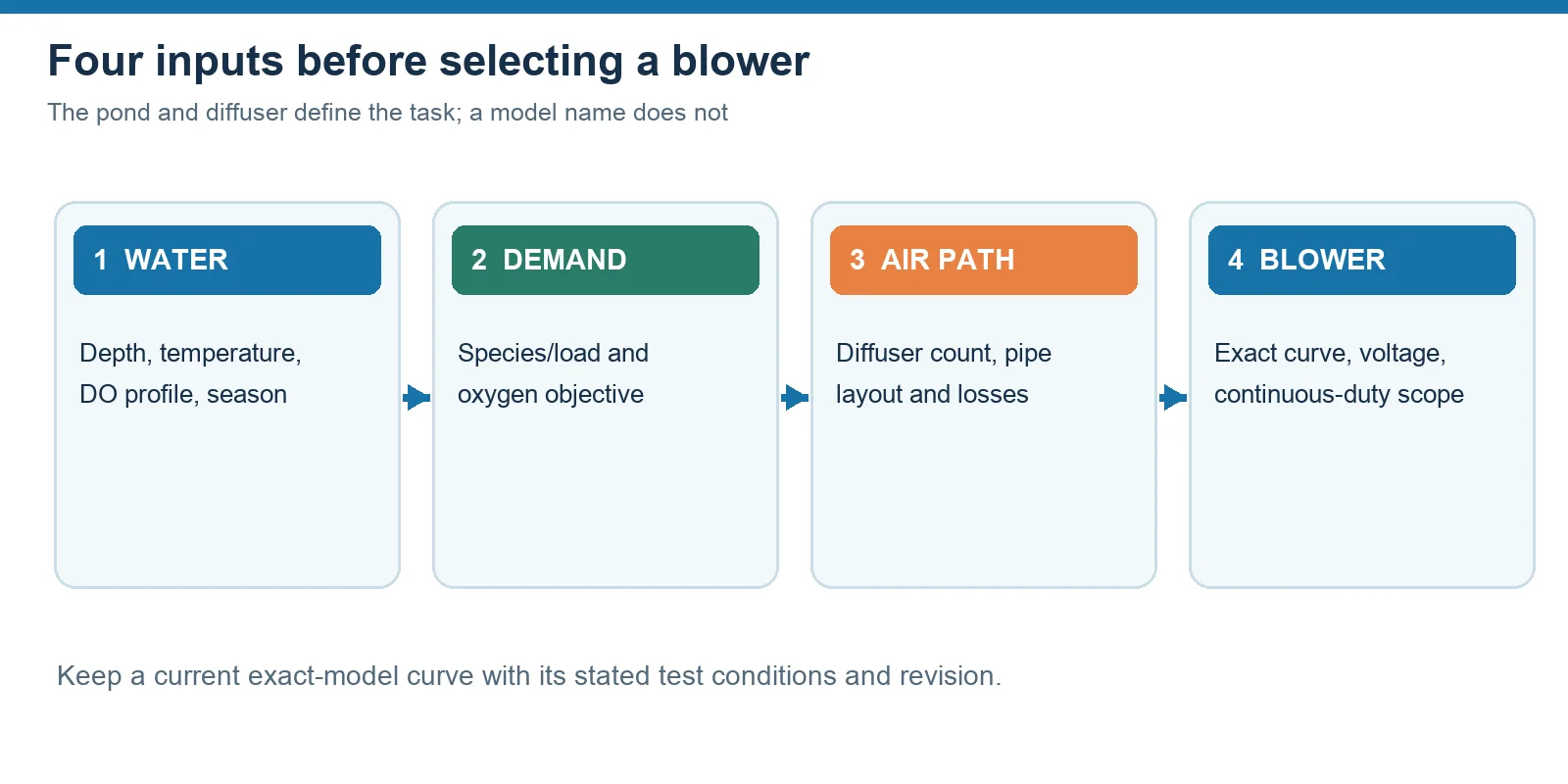
Before ordering, ask the equipment supplier to mark the proposed duty point on the exact current model curve and confirm the model suffix, frequency, voltage, connection and continuous-operation scope in writing. A sales image, historic catalog or article can help the discussion begin, but none verifies a finished pond installation or its biological outcome. Commissioning measurements and a site-specific maintenance plan close that remaining gap.
What to send for a useful engineering review
Send the pond’s size and depth profile, intended purpose, seasonal water measurements, expected oxygen demand or stocking basis, diffuser model and count, pipe layout, power supply and target operating hours. If a system already exists, add measured discharge pressure and the current equipment details. With those inputs, the team can discuss a candidate family and identify which exact documents are still needed for the duty-point review.
For a blower and diffuser-path review, email sales@longwellfans.com with your measured duty and installation details.
Choose the right blower
Longwell manufactures 247 blowers in-house. Send airflow, static pressure and voltage — an engineer replies with a matching model, performance curve and price within one working day.