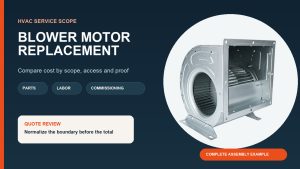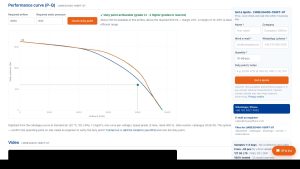
A centrifugal blower and a regenerative, or side-channel, blower can both have a rotating impeller. The difference that matters to a buyer is how air receives energy and where the proposed machine will operate on its own curve. A name, a motor rating, or a photograph does not answer the selection question.
Practical answer: Start with required airflow, pressure or vacuum at the actual inlet conditions. Request the exact model curve for each feasible design, then compare absorbed power, temperature, noise and operating limits at that same duty point. There is no universal pressure value at which one design automatically becomes the right choice.
What happens to the air inside each machine?
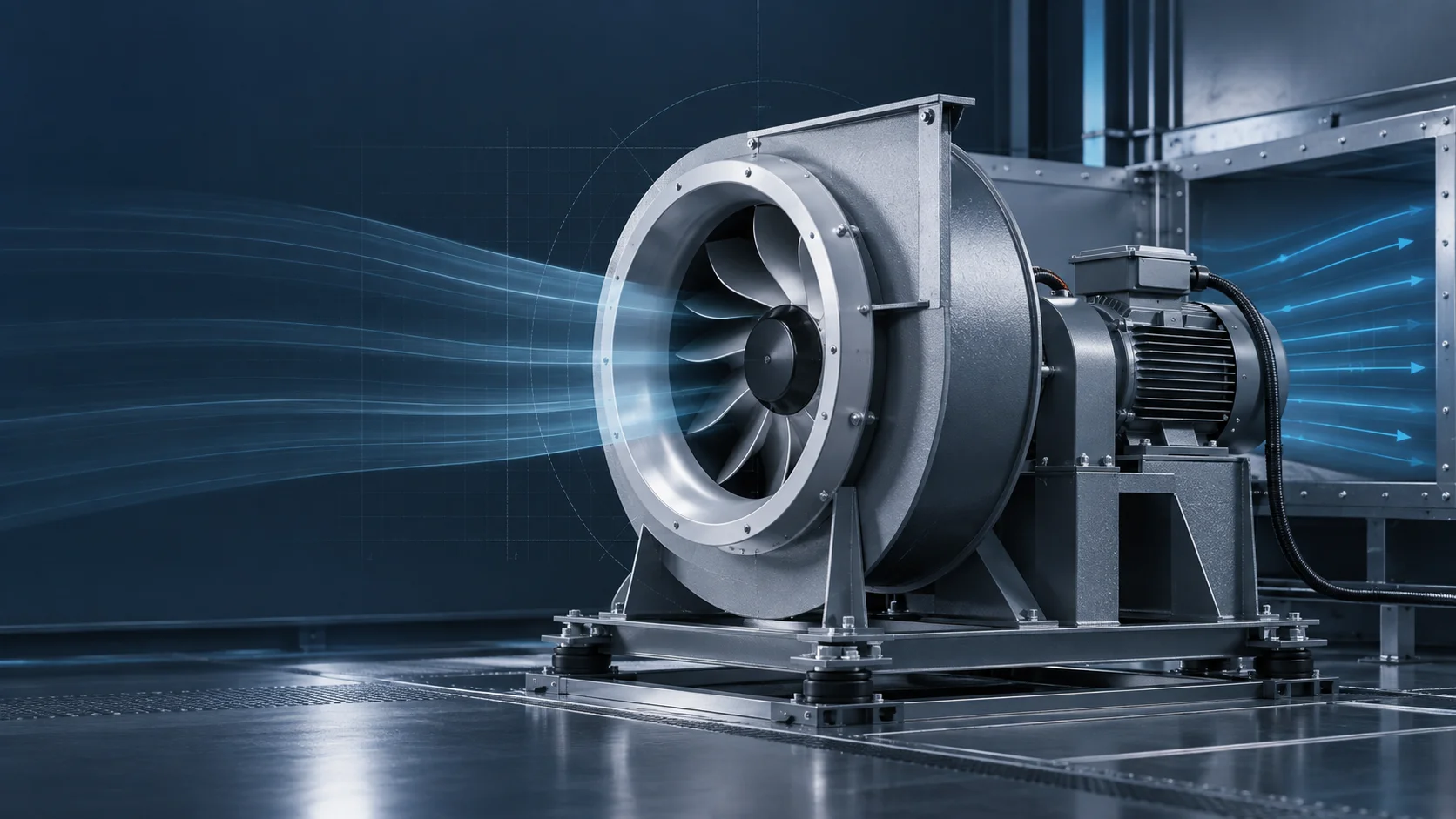
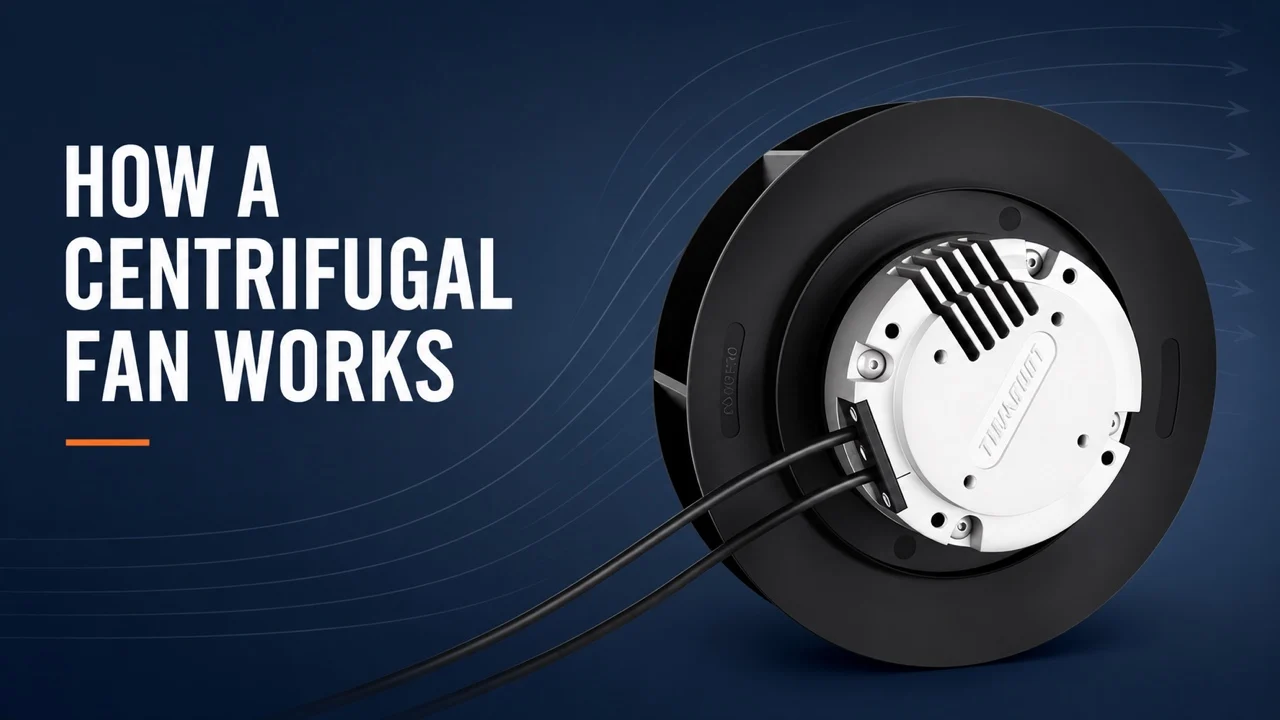
In a conventional centrifugal path, air enters the rotating impeller and travels outward. The surrounding casing or diffuser collects and directs it to the outlet. In a regenerative path, air enters an annular side channel and can circulate between the moving blade passages and the channel repeatedly before it leaves. Those repeated interactions make the side-channel machine a distinct pressure-building option. The number of interactions, losses and final operating point depend on the actual geometry and system; this sketch is not a product section drawing.
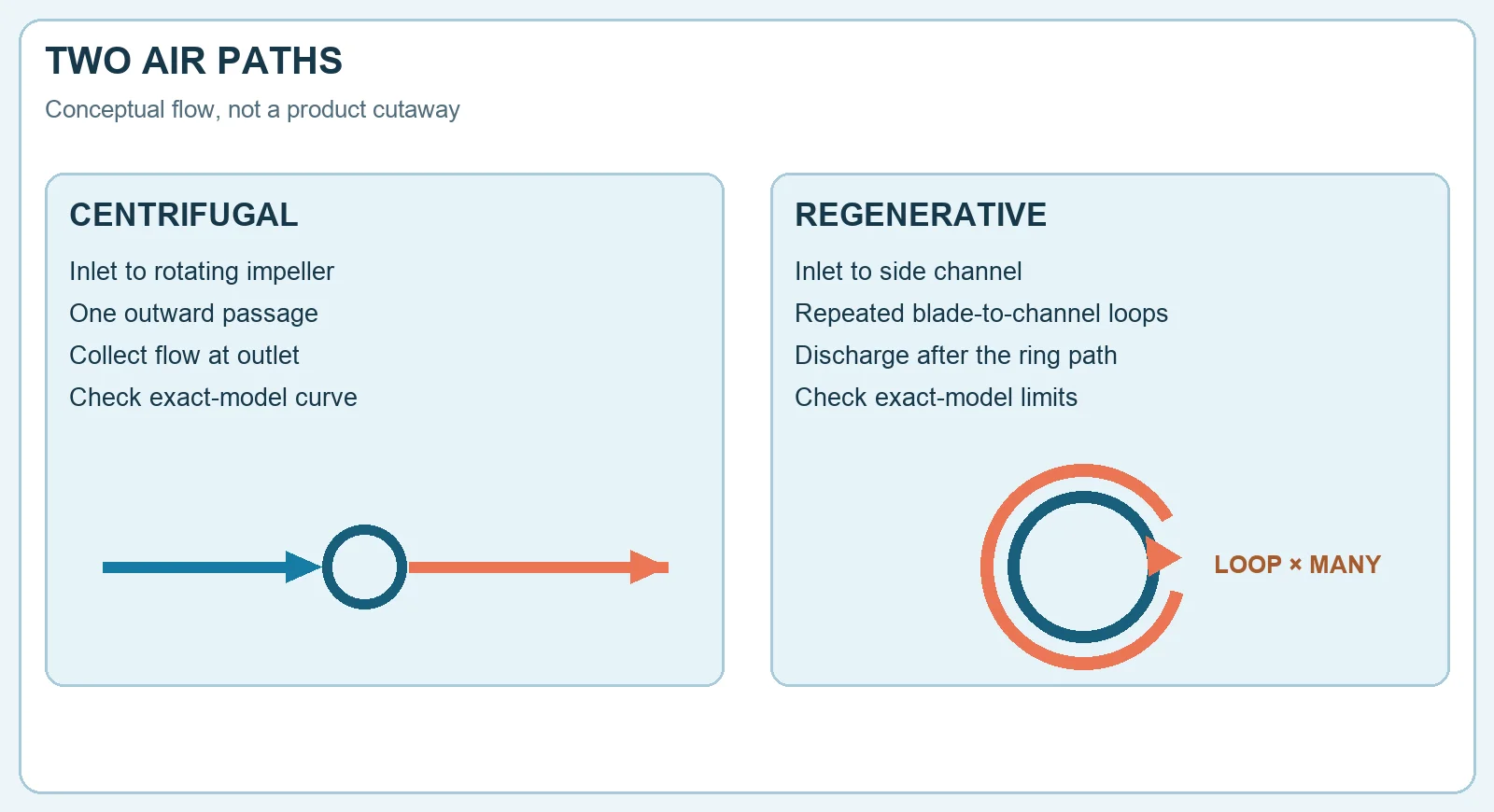
The mechanism explains why the two families deserve separate curves. It does not supply a safe pressure threshold, an efficiency ranking, or a vacuum rating. Both have variations in impeller, stages, motor and control. Use the manufacturer’s drawing to confirm the inlet, outlet and installation arrangement of the particular unit under review.
Why a pressure number alone misleads
A quoted maximum pressure may occur near a different airflow from the one your process needs. A quoted maximum airflow may refer to little system resistance. Neither headline number proves that the same machine can deliver both at once. Ask whether the requirement is positive discharge pressure or inlet vacuum, whether it is static or total pressure, and which inlet temperature, air density and altitude apply.
For a pond or aeration line, for example, water depth is only part of the required pressure. Diffusers, piping, valves and a fouled filter can add losses. Our aeration sizing guide helps map those system elements; it does not turn any family photo into a verified fit. The same method applies to suction holding, conveying and process-air duties: calculate the system and compare it with a complete exact-model curve.
How to compare centrifugal and side-channel options
Put the two candidate curves on the same flow and pressure basis. Mark the expected operating point and any reasonable range around it, including filter loading or process changes. Read absorbed power at those points, not only nameplate power. Confirm motor margin and the control arrangement against the model’s instructions. If a proposed unit has no curve for the required operating region, treat that as missing evidence rather than extrapolating from a family label.
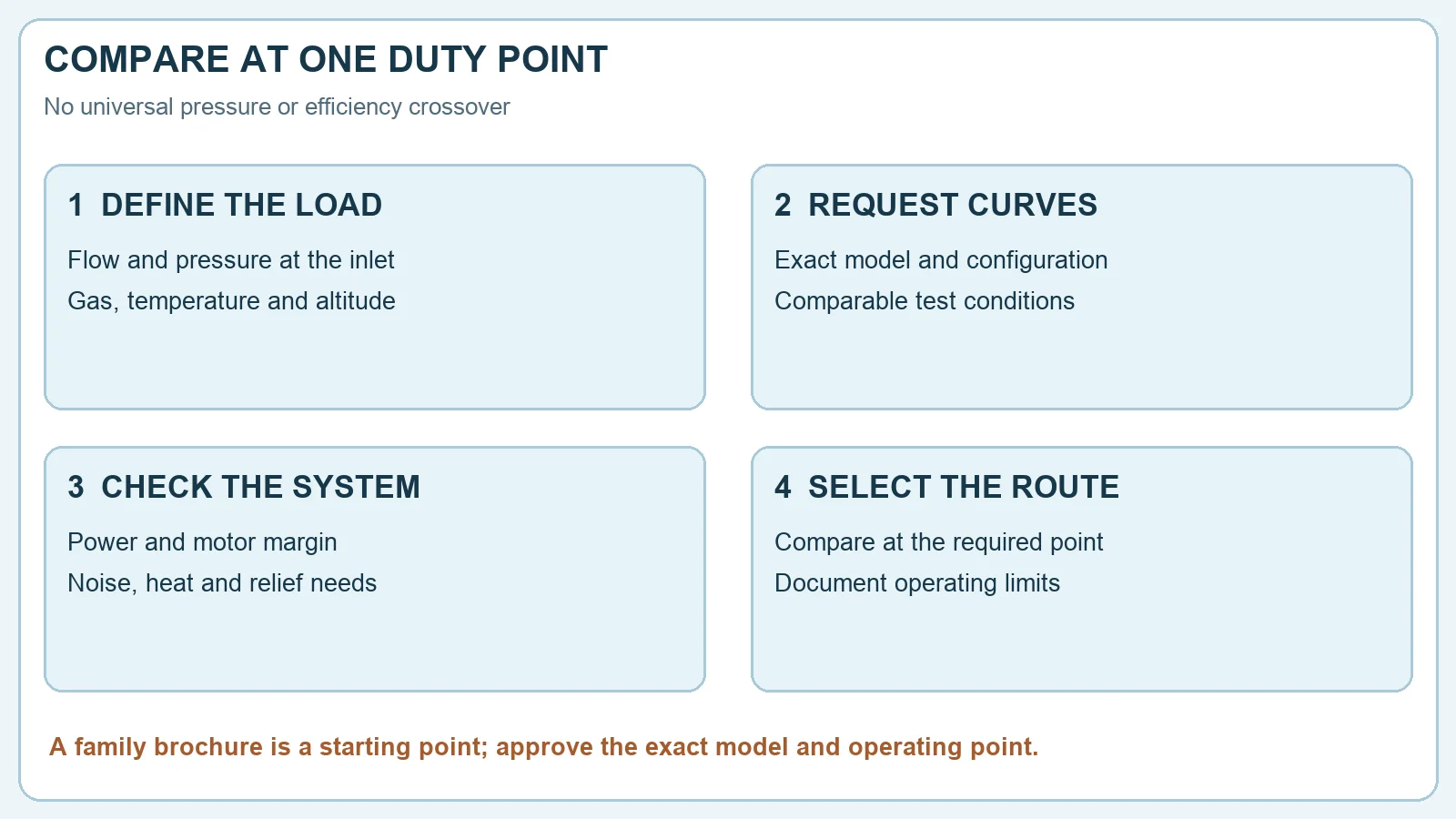
For side-channel equipment, check the allowable continuous pressure or vacuum, inlet filtration, heat rejection, and the manufacturer’s instructions for a blocked or throttled line. Whether relief protection or a silencer is required depends on the exact equipment and site. For a centrifugal option, check the same installation and safety questions as well as any unstable or prohibited operating region. Compare noise using like-for-like measured data and a defined distance or sound-power method, not adjectives such as “quiet.”
What the LONGWELL catalog actually identifies
LONGWELL’s current product-material index lists both single-stage and multi-stage regenerative blower families. The available LWHPF oxygen-increasing air blower brochure shows a model code, exterior views, a performance table and mounting drawings. That establishes the existence and visible configuration of that family. The two differently named catalog copies reviewed for this guide contain identical bytes, so they are one source rather than independent confirmation.
The catalog is a route into an exact-model discussion, not proof that a particular LWHPF variant suits your application. Its tabulated values must be checked against the correct suffix, frequency, voltage, inlet and test conditions before they enter a specification. You can locate the LONGWELL blower catalogs there. The catalog index includes oxygenating blower material; verify the actual document revision when requesting a quote.
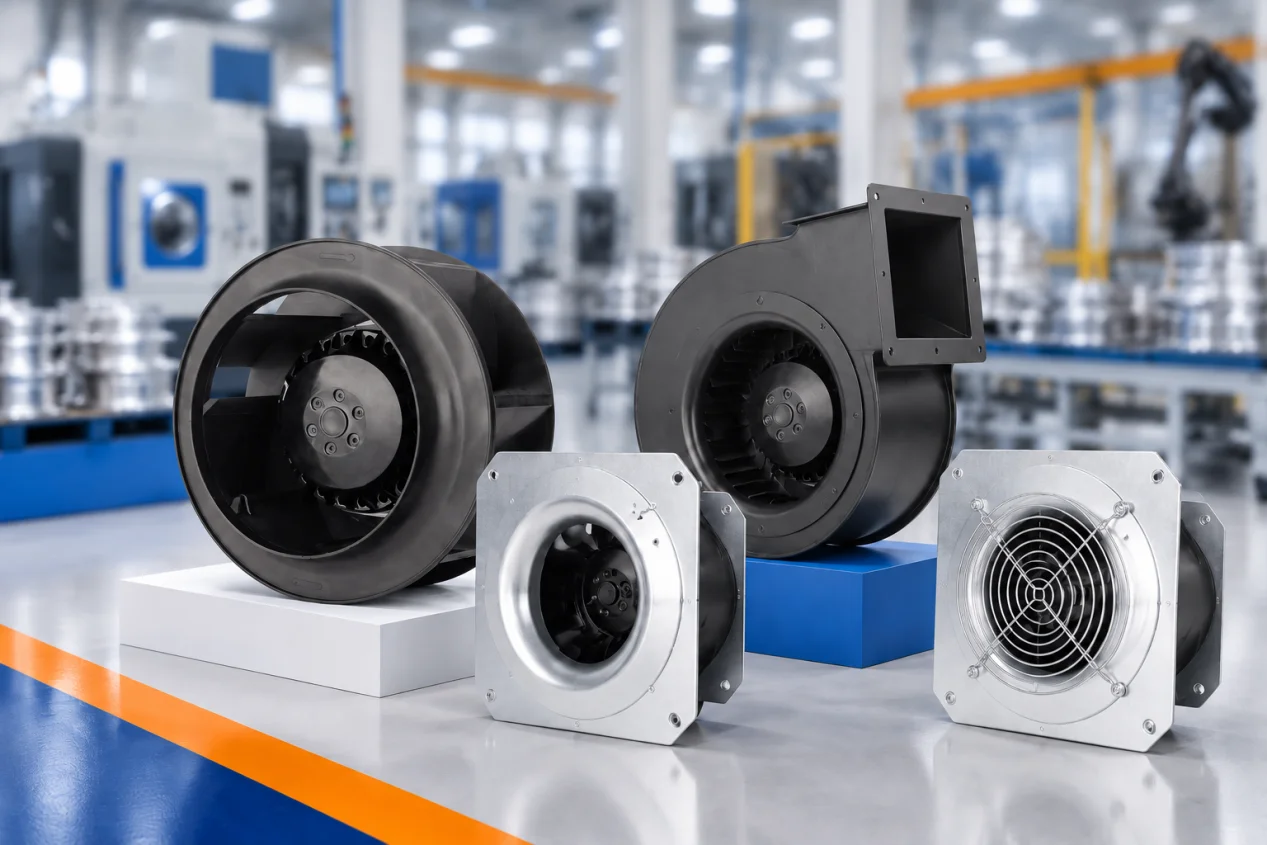
For a centrifugal alternative, the commercial centrifugal blower family is a family-level starting point. It is not an asserted substitute for an LWHPF model. Select from it only if an exact product curve, dimensions, motor and operating boundaries satisfy the same duty.
What to send for a defensible shortlist
Give the supplier the required flow range, pressure or vacuum definition, inlet conditions, duty cycle, gas condition, installation constraints and any noise limit. Include the system resistance estimate and how it changes over time. Ask for the exact model and suffix, curve and test basis, absorbed power at the required point, dimensional drawing, permitted operating range, and relevant installation instructions.
When reviewing the response, compare values measured on the same basis. A regenerative unit may serve a duty that a particular centrifugal candidate cannot, or the reverse may be true. The decision belongs to the intersecting system and machine curves, with the required margins and safety checks, rather than to a generic category slogan. This also prevents the false precision of a universal “below this pressure, choose centrifugal” rule.
The selection rule in one sentence
Use the mechanism to choose plausible families, then release a specific model only after its full curve and operating limits cover your real duty. A brochure, a maximum rating and a general application list are discovery aids; the exact configuration and system conditions complete the engineering check.
Choose the right blower
Longwell manufactures 247 blowers in-house. Send airflow, static pressure and voltage — an engineer replies with a matching model, performance curve and price within one working day.