A fan quotation can show a minimum order quantity, a sample date and a production lead time on one line. Those figures are useful only when they describe the same product revision and the same start and finish events. A “50-piece minimum” might apply to one electrical configuration, while the buyer reads it as 50 units across several variants. A “six-week lead time” might begin after a drawing is approved, while the buyer starts the clock at the first enquiry.
Use one shared quote map: define the quantity unit, identify what kind of sample will be delivered, and mark each approval and supply milestone. The map lets a buyer compare offers without assuming that any published MOQ or number of weeks applies to a particular Longwell fan. The video introduces the same decision.
Define what the minimum order quantity counts
Start with the exact model, suffix and drawing revision. Then list the voltage, control interface, cable, connector, label and packaging that belong to the offered configuration. Ask whether the minimum applies per variant, purchase order, scheduled release or shipment. These are different units: a blanket order may contain several releases, but the supplier must confirm which combinations can actually share material and setup.
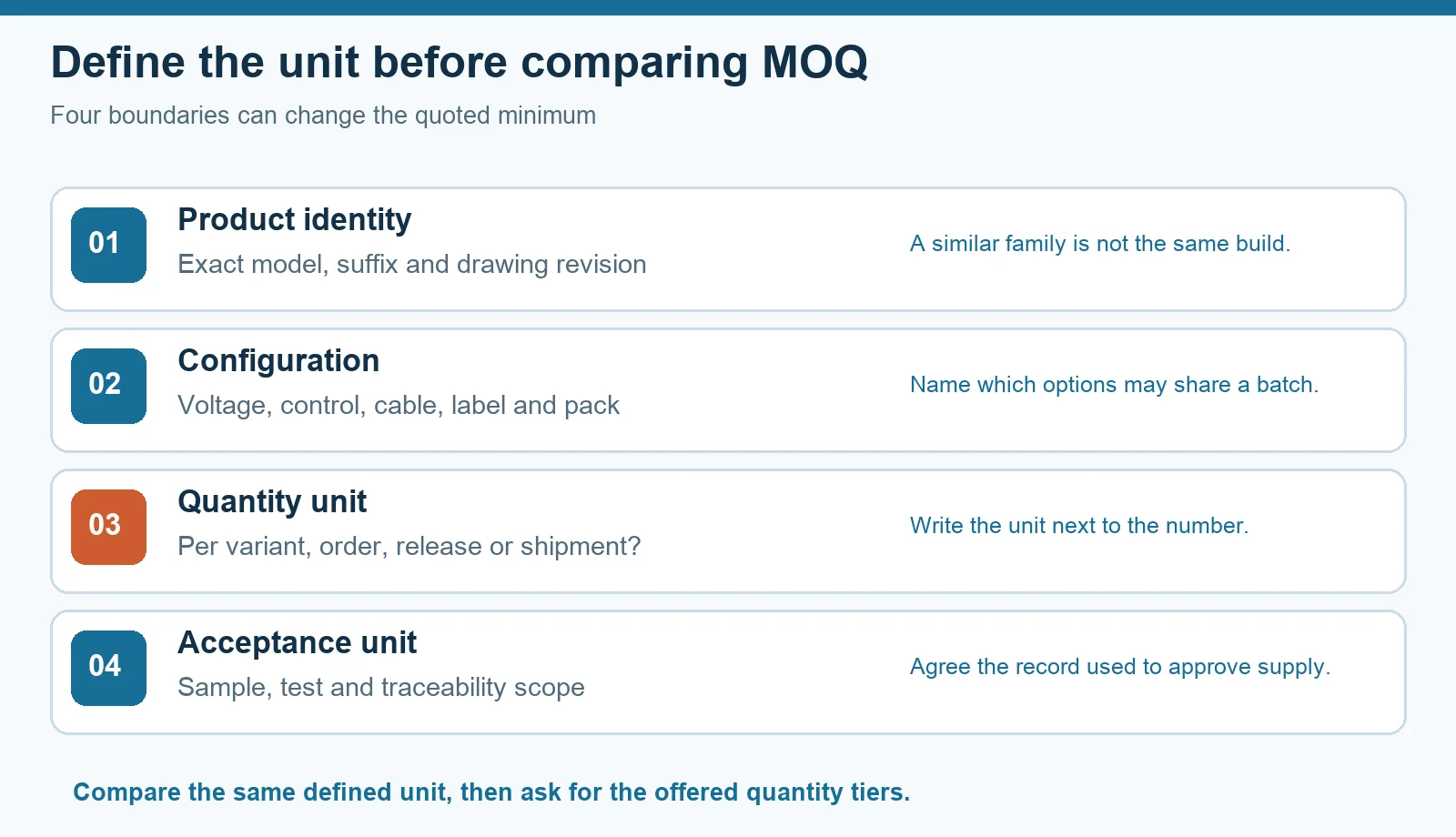
Do not infer that a small label change always requires a full new production batch, or that two voltage options may be pooled. Ask for the quantity tiers and the reason the proposed unit matters. Material purchase quantities, setup, packaging and test or documentation work can affect an offer, but their effect depends on the named build and the supplier’s current plan.
Separate the sample types before asking for a date
“Sample” can mean an available catalogue item, a configured example, an early geometry prototype or a production-representative unit. They answer different questions. An existing product may let the buyer check physical fit and installation quickly, provided its revision and electrical configuration match the project. A configured example can check an intended connector or control interface, but only if those changes are documented. A prototype can test a proposed geometry; its material and manufacturing process may differ from the eventual production part.
For a sample that needs motor or accessory matching, record who confirms the configuration, who performs the agreed checks and which revision is packed and shipped. The sample should have an identity that can be compared with the later production drawing. The useful question is not simply “When can you send one?” It is “Which decision can this particular sample support, and what remains to be verified?” The related OEM development guide outlines the broader brief-to-sample path; request the actual test and acceptance scope for your project.
Split lead time into clocks with named start events
Build a time map rather than adding generic weeks from a catalogue table. A usable map starts with a locked brief and checks material or tooling readiness, sample build, evaluation, buyer approval, production release, inspection, packing and dispatch. Each step needs an owner and an observable finish event. Some work may overlap, but the parties should confirm which tasks can run in parallel and which depend on an approved drawing or sample.
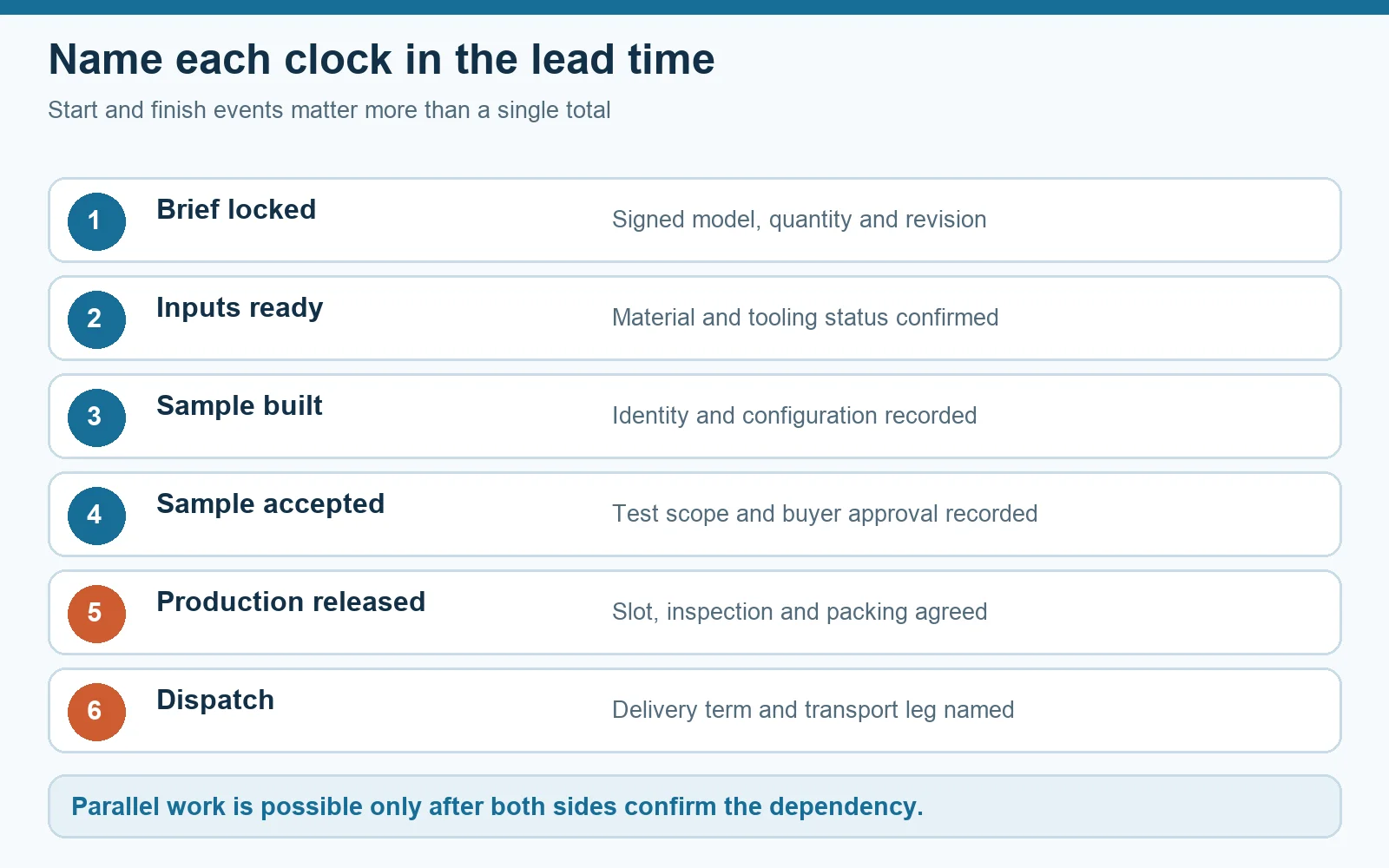
Clarify what the quoted lead time ends at. Factory dispatch, handover to a carrier and arrival at the destination are separate milestones. Shipping depends on the agreed delivery term and route; the delivery-terms guide and freight guide help frame those questions, but neither is a shipment promise for this enquiry.
Record how a design or quantity change affects the plan
A revised cable, motor option or quantity can affect more than the line item being edited. It may require a new component check, updated drawing, sample or test scope. It does not automatically reset every task either. The practical response is a change record: name the old revision, the new revision, the affected material and approvals, and the date from which the updated schedule is measured. Ask the supplier to reissue only the impacted quantity and time assumptions in writing.
Likewise, a forecast or scheduled release can help a supplier plan, but it is not evidence that a lower MOQ or faster delivery has been accepted. Confirm who carries any inventory, which orders are binding and whether a later variant change alters the arrangement. Those terms belong in the quotation or purchase agreement, not in a generic article.
Compare offers on one decision sheet
For each supplier, place the same fields side by side: exact model and revision; included configuration; MOQ unit and quantity tiers; sample type and purpose; tests and acceptance evidence; material or tooling assumptions; quote validity; schedule start and end; inspection point; delivery term and destination. A blank field is a question to resolve, not permission to assume the most favorable interpretation.
If one offer is quicker, ask which dependency changed. Is material already allocated? Is the proposed item a stock configuration rather than the requested variant? Is sample approval outside the quoted clock? A shorter number is useful only when it covers the same build and handover point. Where uncertainty remains, request a conditional date tied to the missing approval or component confirmation.
Send a brief that can be quoted without guesswork
Provide the target duty point and installation envelope, electrical supply and control requirement, desired model or drawing revision, quantity by variant, target sample purpose, test evidence needed, delivery destination and decision date. Mark any item that is still open. Ask for a response that states the exclusions and the next approval required. This gives engineering, purchasing and the buyer one common version of the request.
MOQ, sampling and lead time should be read as linked commitments for a named configuration. Once the unit, sample purpose and clock boundaries are explicit, the remaining discussion is about real options: change the configuration, change the order structure, or change the deadline with the trade-offs visible.