OEM, ODM and private label are useful words for opening a fan sourcing conversation. They are poor substitutes for an agreed drawing, a test plan and a responsibility map. Two buyers can use the same label while expecting different engineering work, tooling rights and market documentation. Choose the route by the work that must be done, then record who approves each result.
Start with the work package
A private-label discussion often begins with a controlled existing fan and changes to its commercial presentation. An ODM-style discussion may begin with a supplier platform that needs a defined engineering change. An OEM-style build may begin with buyer-led requirements, drawings or interfaces that call for a dedicated design. These are working descriptions, not universal legal definitions. A project can combine parts of all three.
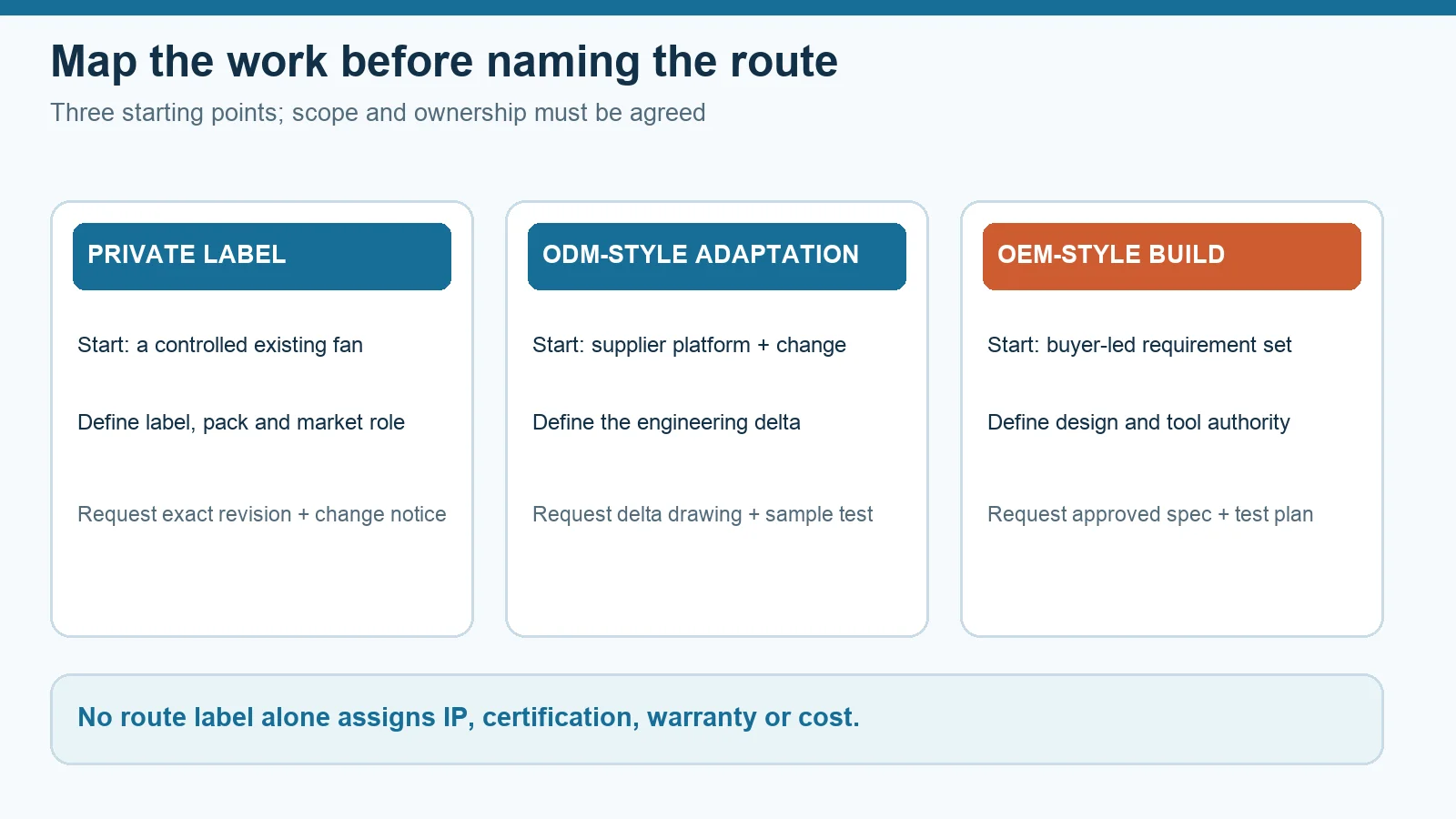
The diagram gives each route a different first question. For an existing fan, ask for its exact model and current revision. For an adapted platform, ask what changed from the baseline and how the change will be validated. For a buyer-led build, name the design authority and the evidence needed before release. That sequence is more useful than assuming every private-label order is cheap or every OEM order needs a new tool.
Lock the fan baseline before discussing branding
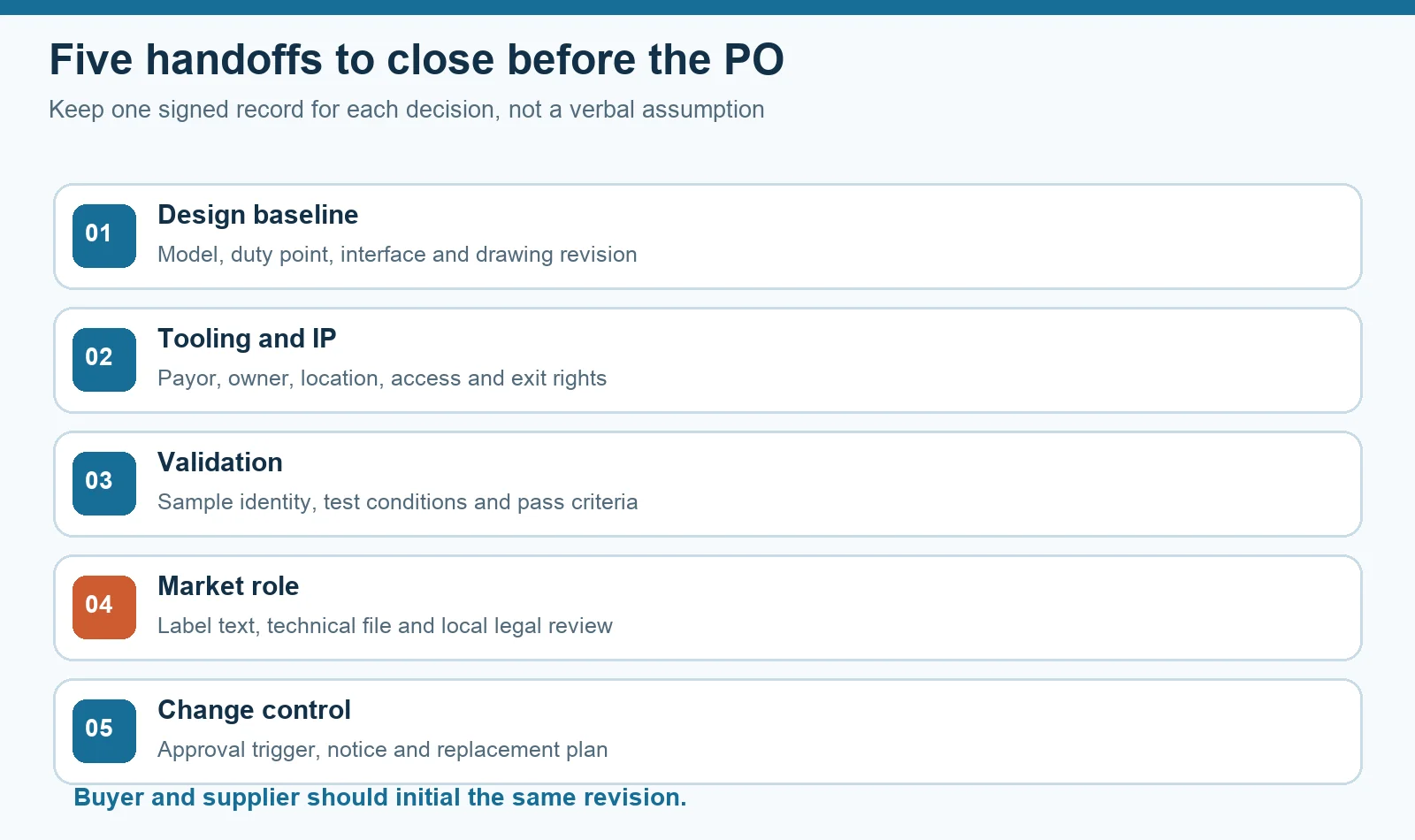
Write down the required airflow and pressure at the operating point, supply voltage, control method, operating environment, space envelope, mounting pattern, connector and cable arrangement. Ask the supplier to identify the candidate model, drawing revision and test conditions. A photo of a similar fan cannot establish the duty point or the fit of a particular suffix. The approved sample and the quoted production revision should refer to the same controlled package.
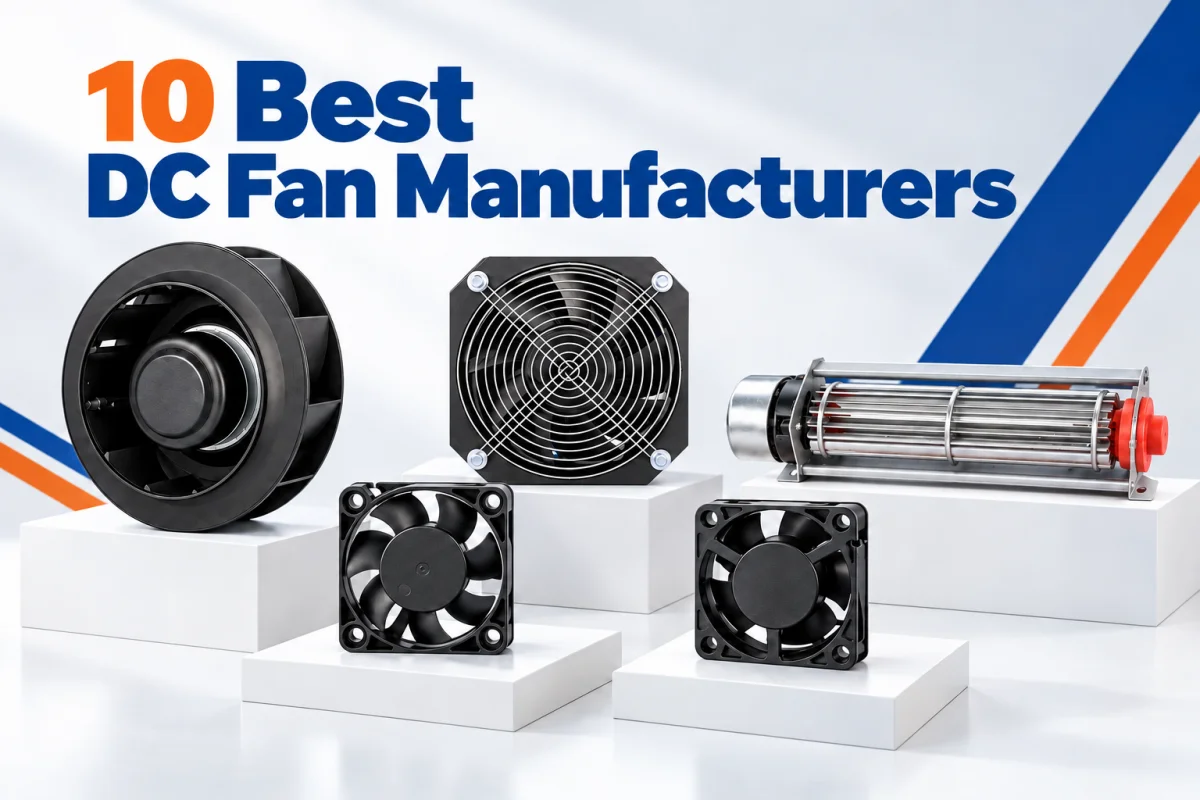
For example, Longwell’s cross-flow fan family is a family-level place to begin a wide-outlet discussion. It does not establish that a particular guard, bracket, voltage or enclosure is available for the buyer’s exact unit. The Longwell OEM partner page describes design and prototype review as possible project steps; request the applicable drawing and sample plan before making a model-level claim.
Define the adaptation, tooling and IP separately
If the supplier proposes an existing platform, request a change list against its baseline: for example, a connector, cable, mounting detail or control input. Mark which changes affect geometry, electrical interfaces, performance testing or market documentation. A small-looking change can still require a new sample and revised instructions. Conversely, an unchanged standard unit with new packaging may need no new engineering, but its label and documentation still need review.
Tooling payment and tooling ownership are distinct questions. Record who pays, who owns the drawings and physical tool, where it is held, who maintains it, whether the buyer may inspect or transfer it, and what happens at project exit. Do the same for firmware, test fixtures and any buyer-supplied design files. None of these rights follows automatically from the words OEM or ODM. The spec-to-sample guide can help frame the sequence, but the signed project documents must control the actual scope.
Treat validation and market access as separate gates
Agree what the sample has to demonstrate: test setup, supply condition, airflow and pressure point, noise measurement method if relevant, installation configuration, acceptance limits and who signs the result. Carry the sample identity and drawing revision into any production acceptance plan. A family brochure, an unlabeled curve or a test report for a different suffix is a lead to investigate, not proof for the proposed unit.
Then check the destination market separately. The party placing a product on a market, the brand on the label, the product classification and the applicable rules can change who must hold documentation and issue declarations. For one EU ecodesign context, the European Commission’s guidance shows why relabelling may change the manufacturer’s role. It does not decide every fan project or every market. Have qualified compliance counsel review the exact product, destination and commercial structure rather than assigning responsibility from the sourcing label.
Put change control into the purchase package
A golden sample is useful only when its identity is linked to a controlled drawing, bill of materials and agreed test record. State which material, motor, impeller, control, connector, firmware, label and packaging changes require notice or prior approval. Decide how replacement parts and end-of-life notices will be handled. For a branded unit, this protects the technical promise made to your customer as well as the artwork on the carton.
The practical sourcing decision is therefore conditional. Begin with a controlled existing model if it meets the duty and commercial needs after verification. Explore an adapted supplier platform if the required delta is narrow and can be demonstrated. Fund a dedicated design if the buyer needs a distinct architecture and can govern its drawings, validation and lifecycle. Compare complete project costs and responsibilities from actual quotations; there is no reliable universal ranking of unit price, minimum order or lead time across the three names.