A fan described as high efficiency can still fail a compliance review in Europe, the United States, China, or another destination. The problem may be product classification, market date, test procedure, duty point, documentation, or an incorrect assumption that one region’s rule applies everywhere. A single badge cannot create universal market access.
Compliance work must begin with the exact model and destination, then follow the applicable official text through scope, testing, calculations, declarations, and controlled updates. This guide helps design firms, compliance teams, and owners organize ErP, DOE, and FEI evidence without presenting educational summaries as legal advice or model-level approval.
Classify the Product, Market, and Date First
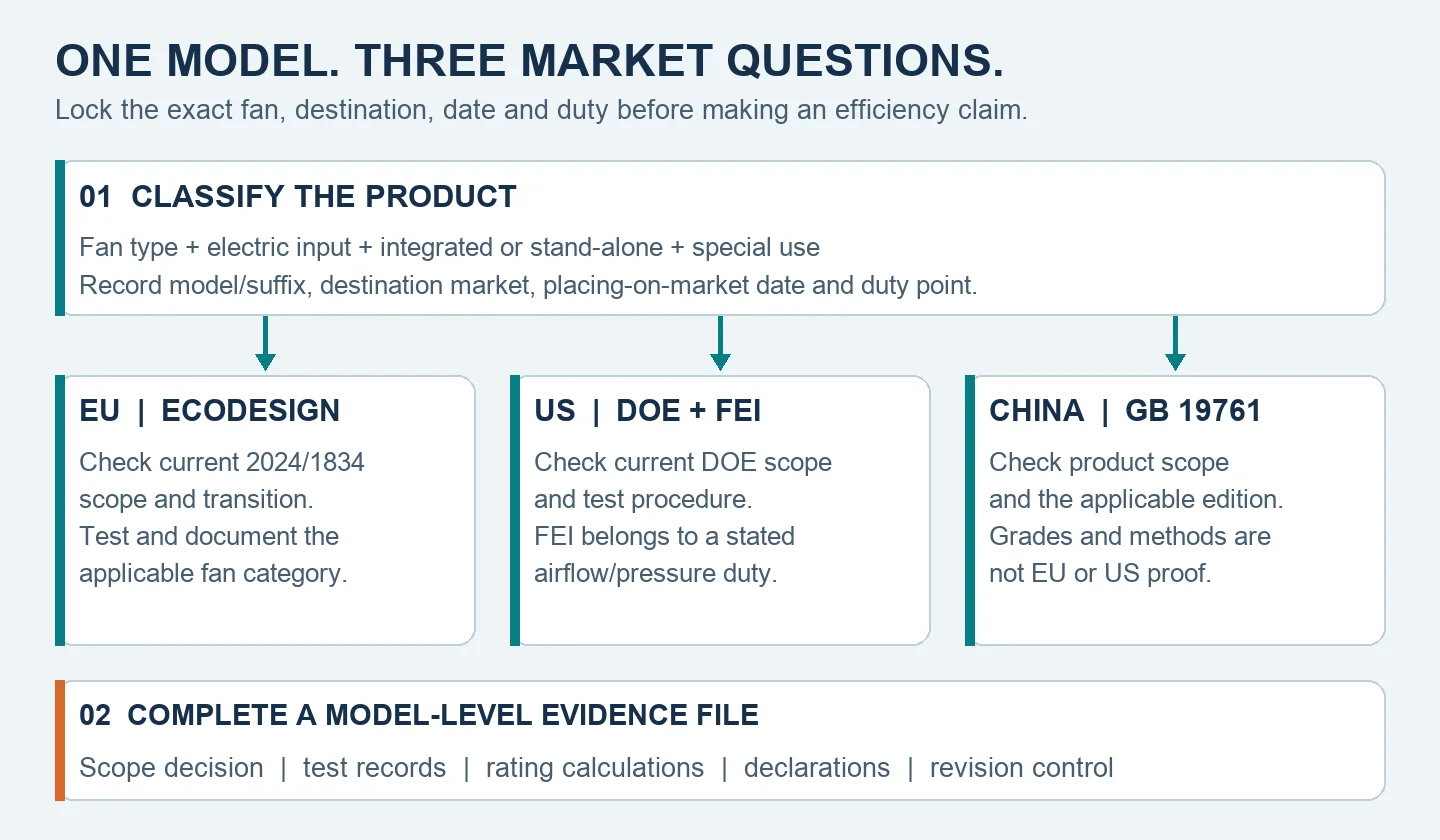
Identify the destination market, placing-on-market date, fan or blower definition, electric input power, fan category, stand-alone or integrated condition, special application, and replacement or spare-part status. Then define the exact model and duty using an EC fan selection workflow. Only after those boundaries are fixed can the team select the governing text, test procedure, efficiency metric, and required evidence.
Write a model-level scope decision that cites the current official source and records exclusions, transition provisions, and product-family mapping. Regulatory status can change, so the applicable edition and effective date must be verified before specification, declaration, import, or sale. This article provides a workflow, not a destination-specific legal conclusion.
Follow the Current European Union Route
The current consolidated text of Commission Regulation (EU) 2024/1834 applies from 24 July 2026 and covers defined fans driven by motors whose electric input power at the best efficiency point falls within its stated range. It also addresses fans integrated into other products. Exact definitions, exclusions, transitional treatment, spare-part routes, and safety-critical or special cases require a model-specific review.
The regulation does not reduce compliance to one peak-efficiency value. Its requirements distinguish the general path for most fans from separate treatment for jet fans and cross-flow fans. Product information, performance curves, applicable part-load information, resource-efficiency provisions, spare-parts obligations, and technical documentation can also matter. A rule or grade for one fan type must not be copied to another.
Older EU claims or portfolio labels do not automatically establish compliance under the current regulation. A valid transition or spare-part route must be demonstrated from the legal text and the model’s placing-on-market history rather than inferred from a brochure.
Separate United States DOE Status From FEI
At the time of this review, the US Department of Energy states that there are currently no federal energy-conservation standards for fans and blowers. That does not mean efficiency representations are unrestricted. Applicable claims about fan efficiency or energy use must follow the relevant federal definitions and test procedure, including the applicable provisions for the represented equipment.
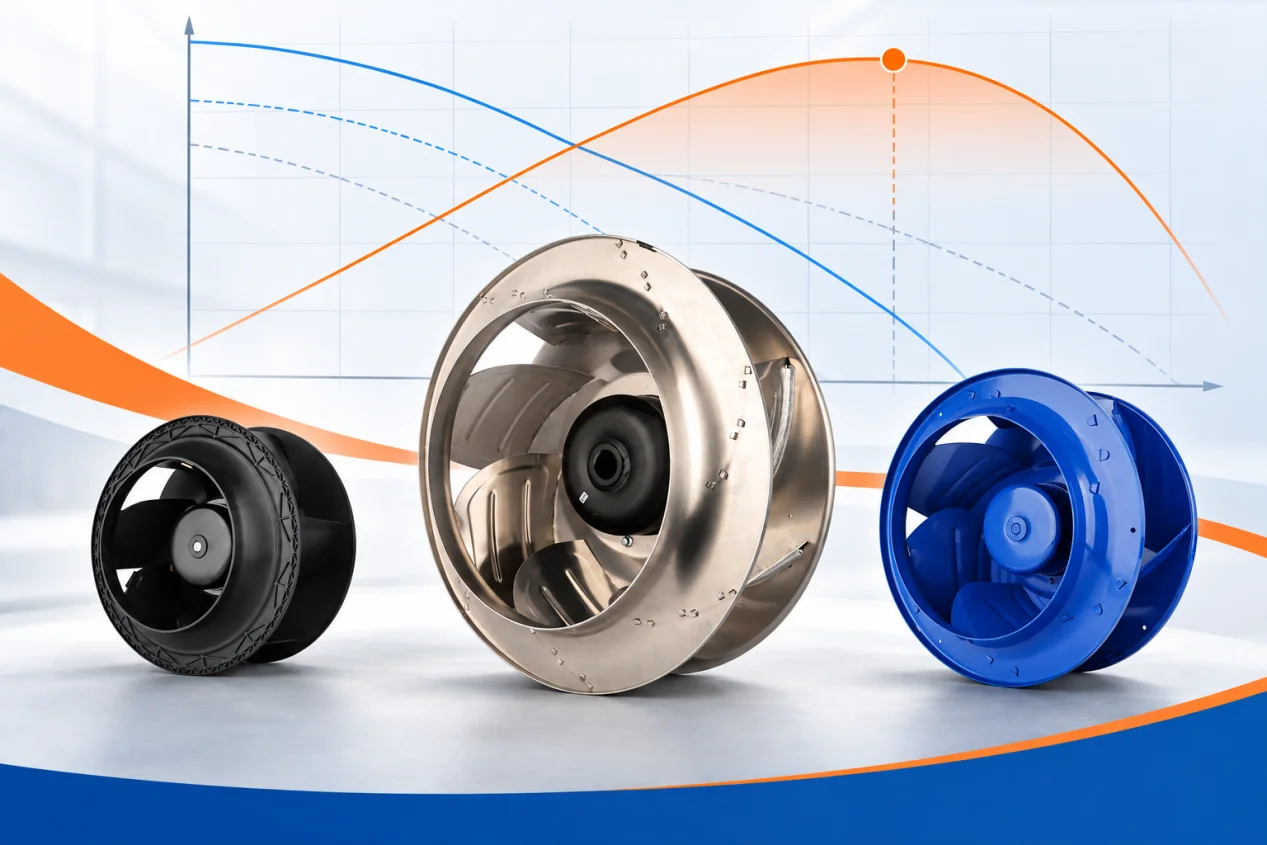
Fan Energy Index is a metric, not a universal certificate. FEI compares reference fan electrical power with actual fan electrical power at the same airflow and pressure duty point. A published value without its duty point is incomplete. A fan-curve reading guide can help teams preserve the airflow-and-pressure context, but it does not establish a regulatory result. Whether a minimum FEI applies depends on the relevant jurisdiction, energy code, program, procurement specification, and product scope.
A team should not write DOE certified unless a defined program, scope, test basis, reporting obligation, and model record support that statement. It should also avoid confusing commercial and industrial fans with separately regulated fan products that may follow different rules.
Treat China and Other Markets as Separate Branches
GB 19761-2020 provides documentary context for a Chinese fan-efficiency framework, with its own scope, exclusions, grades, and test methods. It is not authority for an EU declaration or a United States claim. Current official Chinese applicability, product category, and legal implementation must be confirmed independently for the exact model and transaction.
The same principle applies to any other destination. Do not transfer a threshold, efficiency grade, test report, or declaration across markets without a written mapping. Market-specific language, importer responsibilities, surveillance records, and engineering-change controls may be required even when the underlying hardware is unchanged.
Build a Model-Level Compliance Passport
Start the evidence chain with current official legal text and a written scope decision. Add the approved test plan, qualified test evidence, basic-model or family mapping, rating calculations, product information, declarations or filings, spare-part obligations, and market-surveillance file. Record who owns each document and how changes to the motor, impeller, control, materials, or ratings trigger reassessment.
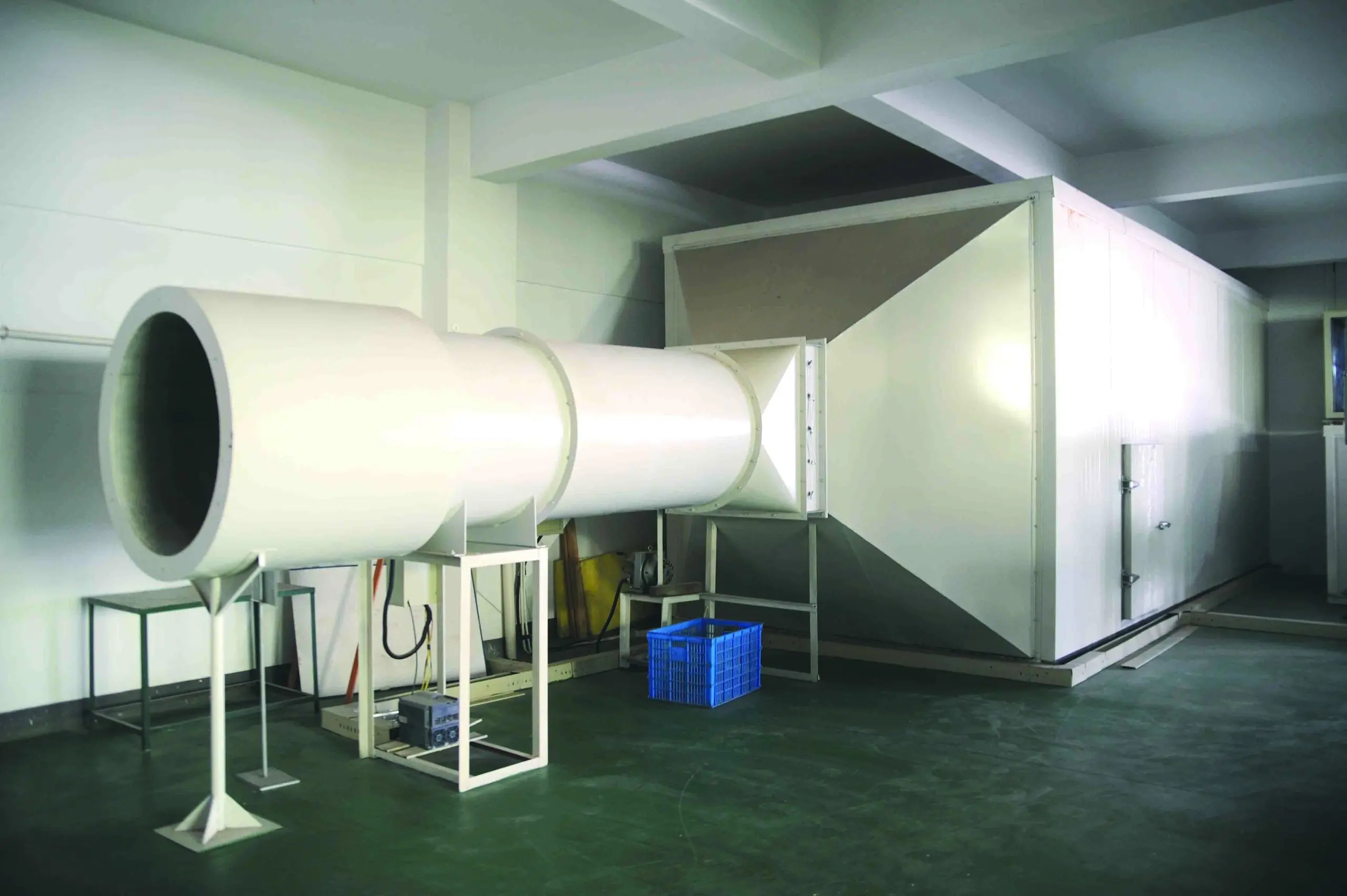
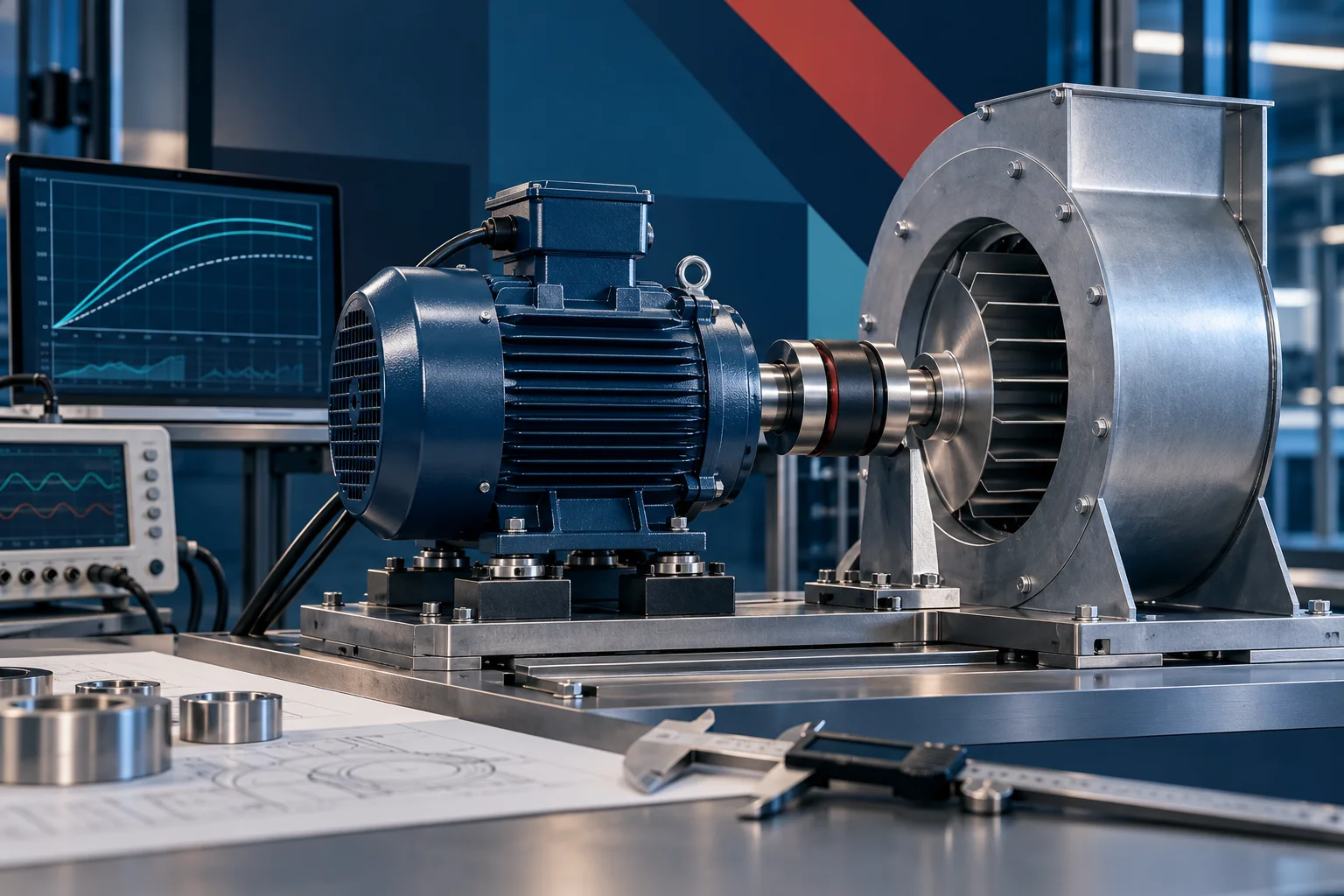
The airflow-test-room photograph shows visible physical test infrastructure only. It does not identify a method edition, accreditation, instrument chain, uncertainty, exact model, measured result, certification, or destination-market compliance decision. Those conclusions require the controlled records named in the passport.
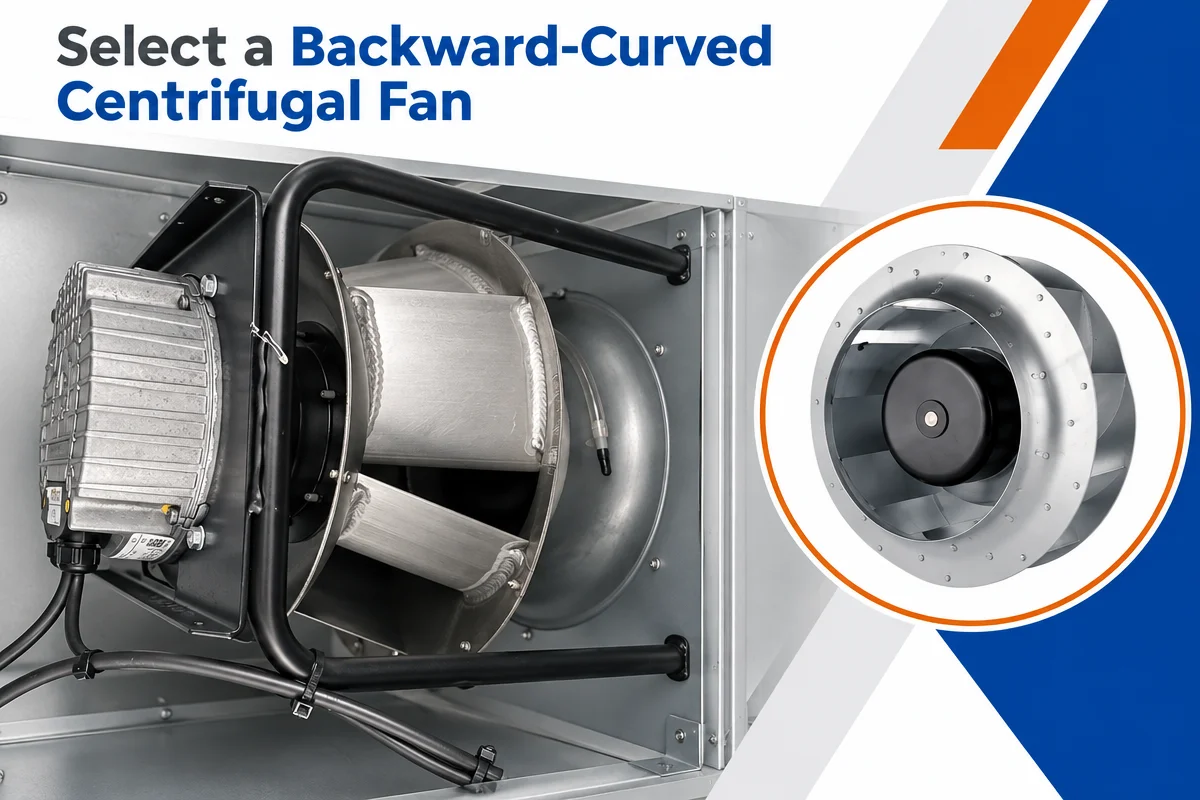
High-risk shortcuts include using a superseded rule outside a valid transition, publishing FEI without airflow and pressure, copying one market’s threshold into another, relying on a marketing badge, or claiming compliance without model-level evidence. After scope and duty are approved, the EC backward-curved fan family page can support series discovery only; it is not compliance, compatibility, certification, or performance proof. The deliverable is not one global label; it is a controlled passport for each destination, model scope, test basis, declaration path, and release date.