Impeller balancing can reduce vibration caused by uneven mass distribution. For an OEM buyer, the practical question is more specific: which rotating unit was tested, under which conditions, against which agreed acceptance criterion, and what result was recorded? A machine display or a correction weight by itself cannot answer all four questions.
This guide follows the production decision from the wheel to the release record. The accompanying video illustrates a balancing workflow. It is not a batch certificate or a measured result for every LONGWELL fan.
Decide what will actually rotate in service
First identify the tested item. A loose impeller, a wheel mounted on its shaft, and a complete fan assembly do not have identical boundaries. The hub, fasteners, shaft fit and final mounting can affect what happens after a wheel leaves the balancing fixture. Ask the supplier to state whether the balancing report belongs to the component or the assembled rotor, and whether a separate assembled-unit vibration check is part of the release plan.
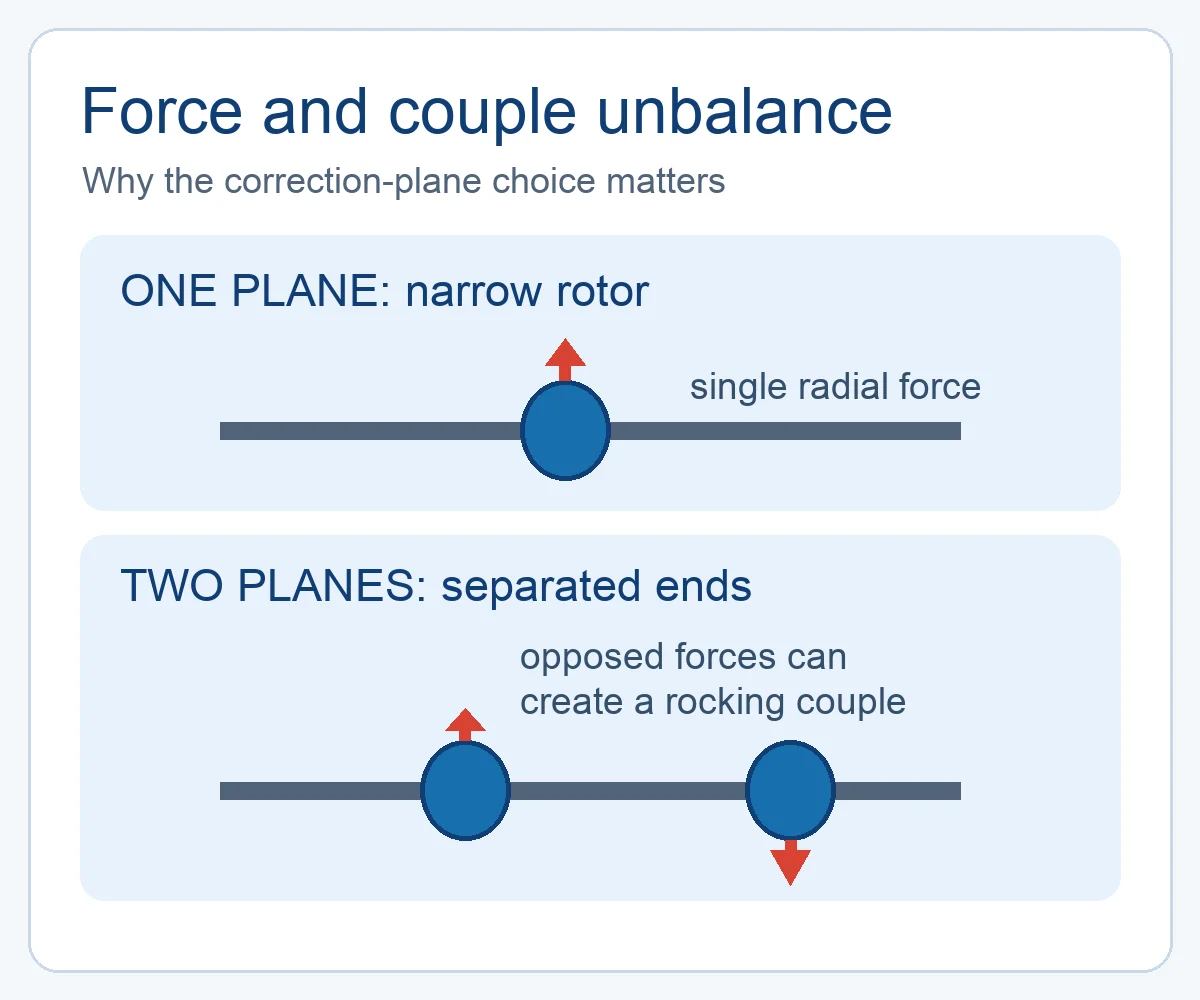
The engineering question behind one-plane or two-plane balancing is whether separated portions of the rotor can produce a rocking couple. Geometry, operating speed and the agreed method matter; a single universal width-to-diameter shortcut is not a substitute for a documented setup. The diagram shows the force concept, not a tested LONGWELL model.
Specify the correction method before the run
A balancing machine reports the magnitude and angular position of unbalance for its configured setup. A technician then applies an approved correction and measures again. Depending on the wheel design, the approved method might add a retained mass or remove material at a defined location. The method must respect blade integrity, attachment security, corrosion exposure and the final operating environment. No generic article can authorize drilling, grinding, adhesive weights or a particular placement on an unspecified wheel.
The buyer should therefore request the drawing or work instruction that defines permissible correction sites. If the rotor has more than one correction plane, the record should identify each plane. If the assembly changes after balancing, confirm whether another check is required. These are process boundaries to agree in the purchase specification, not claims that any pictured product was tested to a particular result.
Treat a balance grade as a specified criterion
Terms such as “balanced” or “precision balanced” are incomplete without a defined acceptance method. A grade, residual-unbalance limit or vibration limit needs a referenced standard or project specification, test speed, rotor mass or assembly definition, and units. The allowed residual is not one fixed correction weight for all sizes and speeds. Ask for the agreed criterion and the measured final value on the same record.
Do not assume that every ventilation fan uses one grade, or that a higher-speed machine always needs a particular named grade. The appropriate requirement depends on the application, rotor design and applicable specification. A product-family page can help identify candidate LONGWELL centrifugal fan configurations; it cannot stand in for the controlled balance and vibration records of a specific suffix and revision.
Read the release record from identity to result
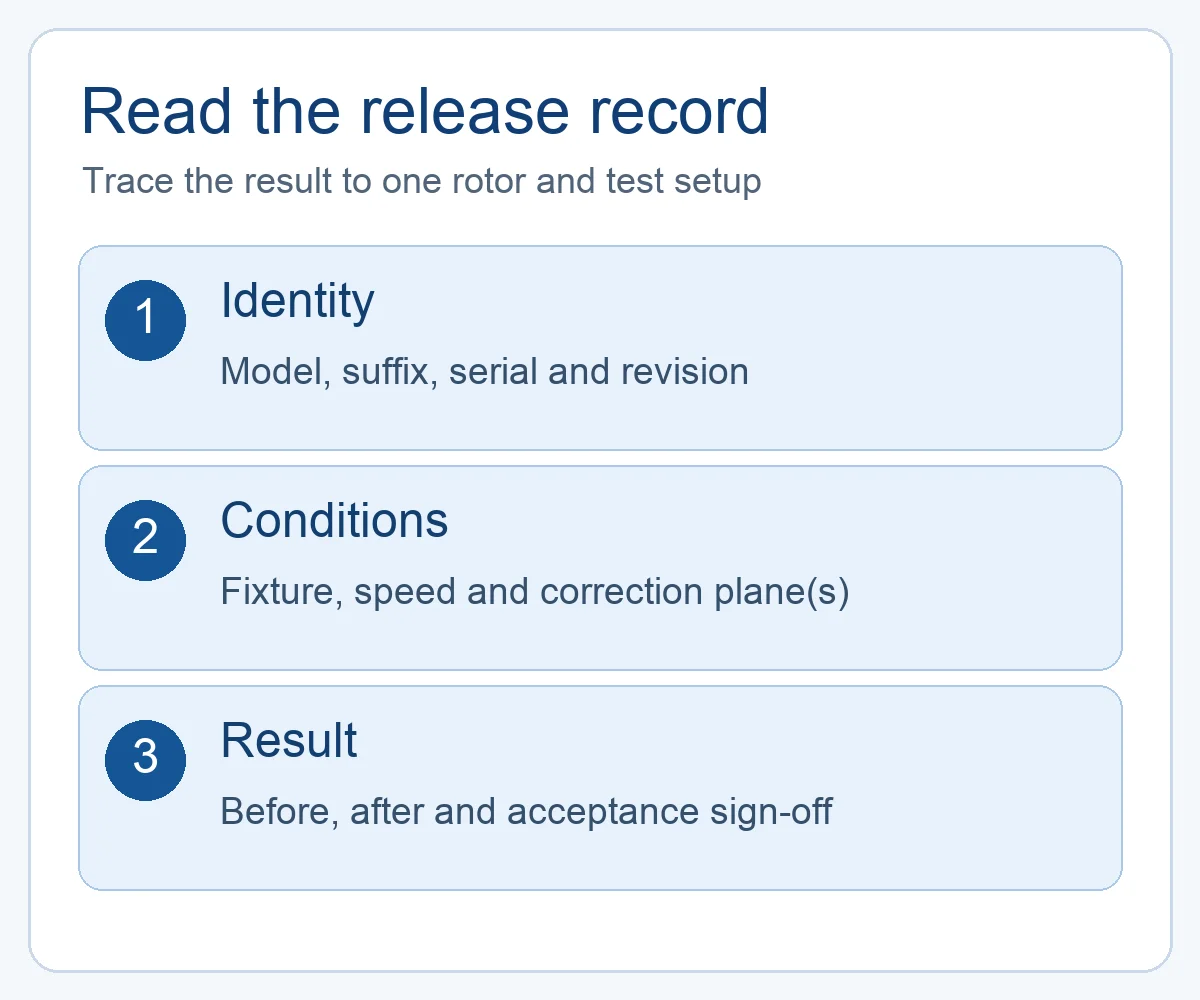
The most useful balancing evidence is traceable. Start with the complete model and suffix, rotor or lot identifier, drawing revision and test date. Then check the fixture, test speed, selected correction plane or planes, acceptance criterion and instrument context. Finally compare the initial and final readings and look for a clear disposition or sign-off. If a field is missing, ask for it before treating a screenshot as a release certificate.
A series of initial readings can be useful to an internal quality team when collected consistently, because a change may prompt review of forming, welding, hub fit or setup. It does not by itself diagnose which upstream operation changed. Likewise, a single corrected wheel cannot establish a stable production trend. A trend claim needs comparable records and an investigated cause.
Separate wheel balance from installed vibration
Balancing controls one source of vibration. After assembly or installation, vibration can also reflect alignment, mounting stiffness, bearings, electrical drive, airflow disturbance or resonance. A wheel that meets its balancing criterion can still need investigation in the final fan or machine. Keep the rotor balance result and the installed vibration acceptance test as distinct entries in the quality plan.
When the installed result differs from expectation, document the measured location, operating speed, control setting and mounting condition before changing the rotor. The impeller balancing field guide discusses the diagnostic workflow. Its general method does not prove a result for this production lot.
Put the acceptance evidence into the RFQ
For a useful supplier response, send the complete fan or rotor identity, intended operating range, mounting boundary and required documentation. Ask the supplier to state the balancing method and criterion, the item being tested, the correction plane or planes, and whether an assembled-unit test follows. Request the actual record for the delivered item or defined lot, with the final result and disposition. If the requirement calls for a particular standard, state its exact edition and scope rather than relying on a shorthand grade alone.
That request gives both sides a clear release decision. It also prevents a photo of a green display from being mistaken for evidence that a particular fan meets a project vibration, sound or service-life target. Those separate targets require their own controlled methods and records.
Quick review checklist
- Is the tested item the loose wheel, mounted rotor or assembled fan?
- Do the complete model, suffix, revision and serial or lot match the order?
- Are the fixture, speed, correction planes and acceptance criterion recorded?
- Are initial and final readings both present with units and sign-off?
- Is the installed vibration check specified separately when the project requires it?
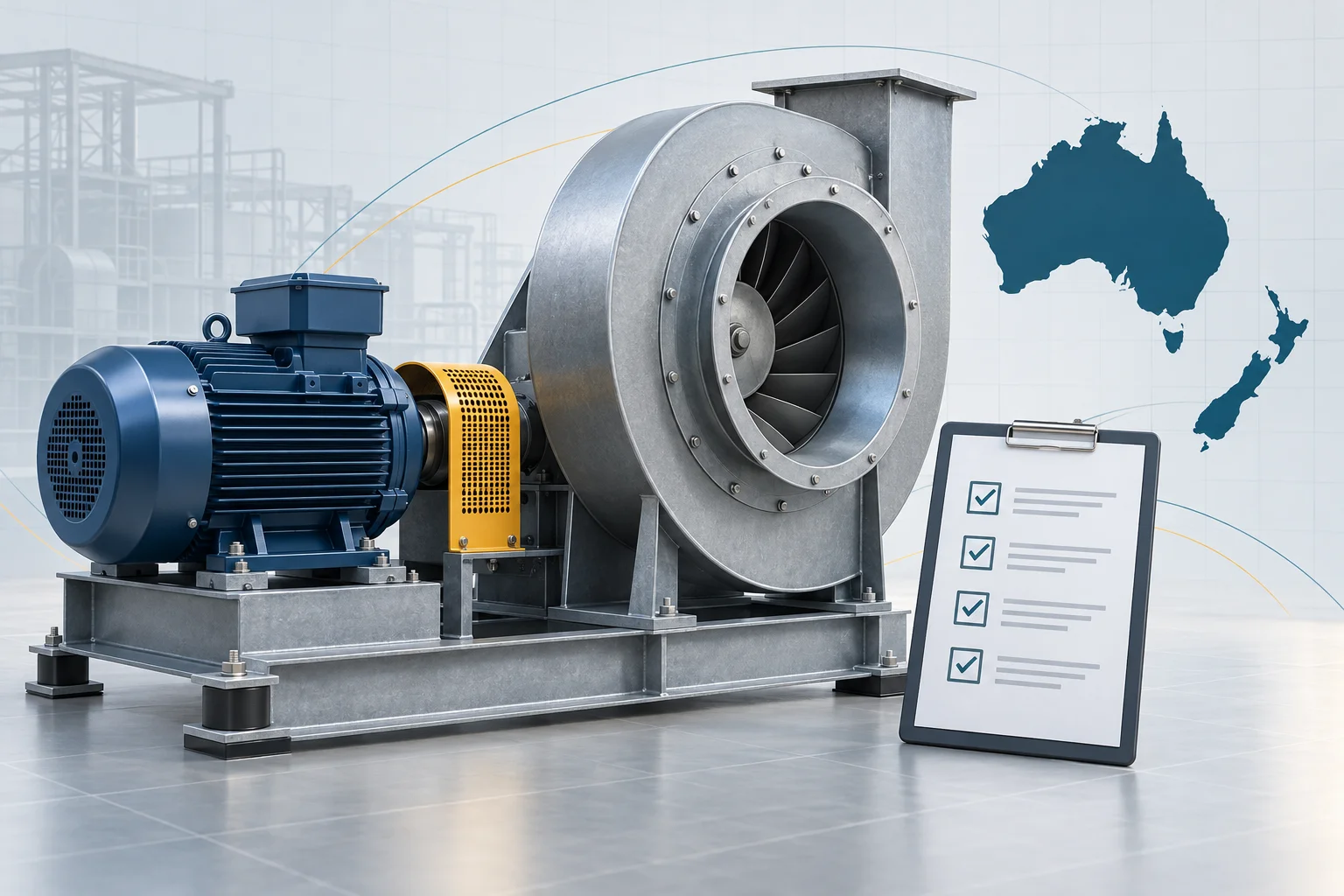
If any answer is missing, request the underlying record or drawing before approving the balance evidence. The checklist is a purchasing and review aid; it does not replace the project’s engineering specification.
For a project-specific review, send the rotor identity, speed range, drawing revision and required acceptance record to sales@longwellfans.com.
Choose the right fan impeller
Longwell manufactures 10 fan impellers in-house. Send airflow, static pressure and voltage — an engineer replies with a matching model, performance curve and price within one working day.