A backward-curved fan is not automatically a quiet fan. The blade form can be part of a low-noise design, but the result still depends on the selected duty point, diameter, speed, motor and drive, inlet flow, casing, mounting and the way sound is measured. The useful purchasing question is therefore: which complete fan is quieter at the same airflow and pressure, under the same acoustic boundary?
This guide turns that question into a comparison you can audit. It also shows why a single dB value, or the words “backward-curved,” are not enough to approve a fan for an AHU, FFU, air purifier or other installed package.
The short answer: compare assemblies, not blade labels
Backward sweep describes visible impeller geometry. It does not specify blade loading, tip speed, inlet clearance, motor tones, balance quality or cabinet radiation. Two fans carrying the same family label can therefore produce different spectra and different installed results.
Geometry still matters, but only as one design input. A fan operating in a stable part of its verified curve may avoid some of the disturbed flow found at an unsuitable operating point. That is a reason to inspect the complete selection, not a basis for promising that every backward-curved wheel will beat every forward-curved or radial design.
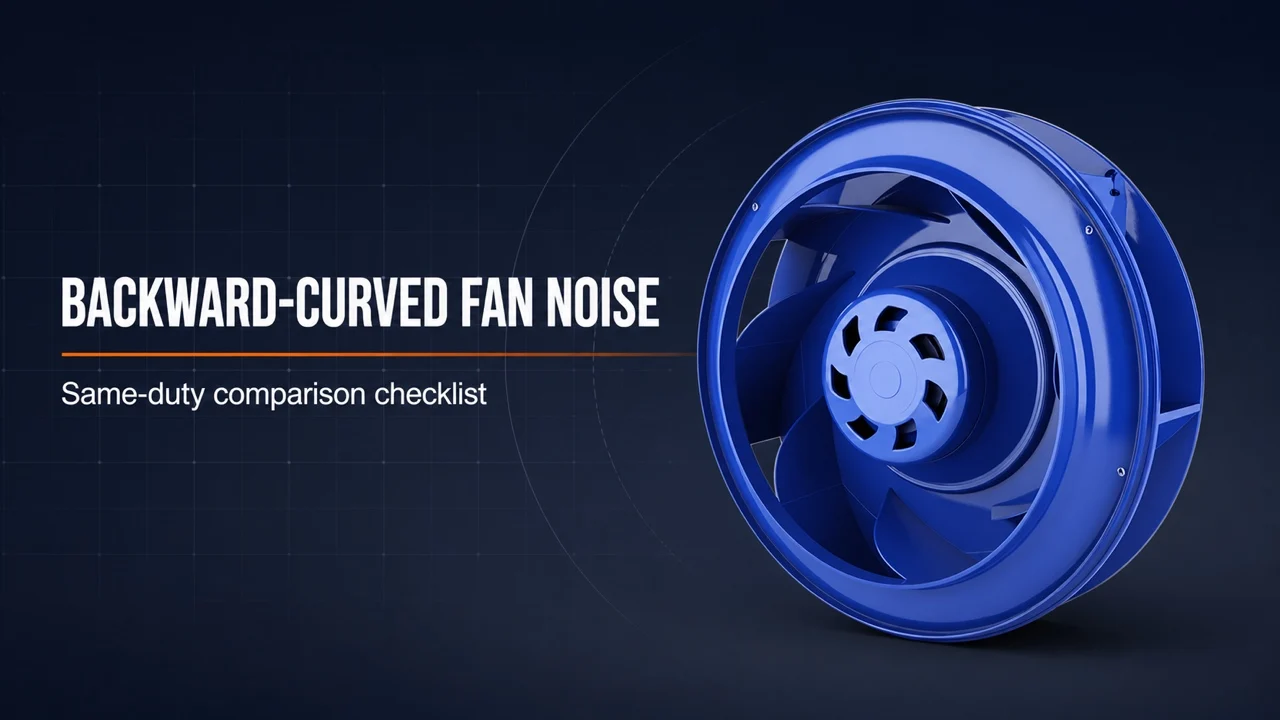
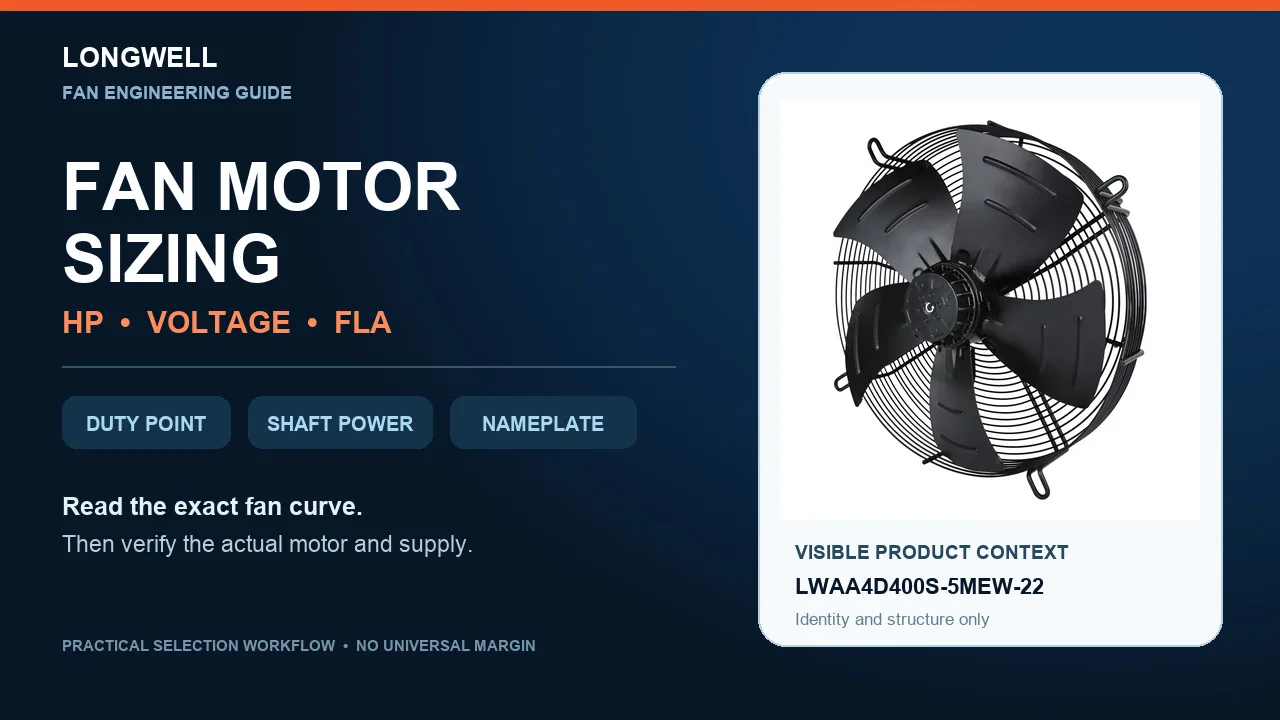
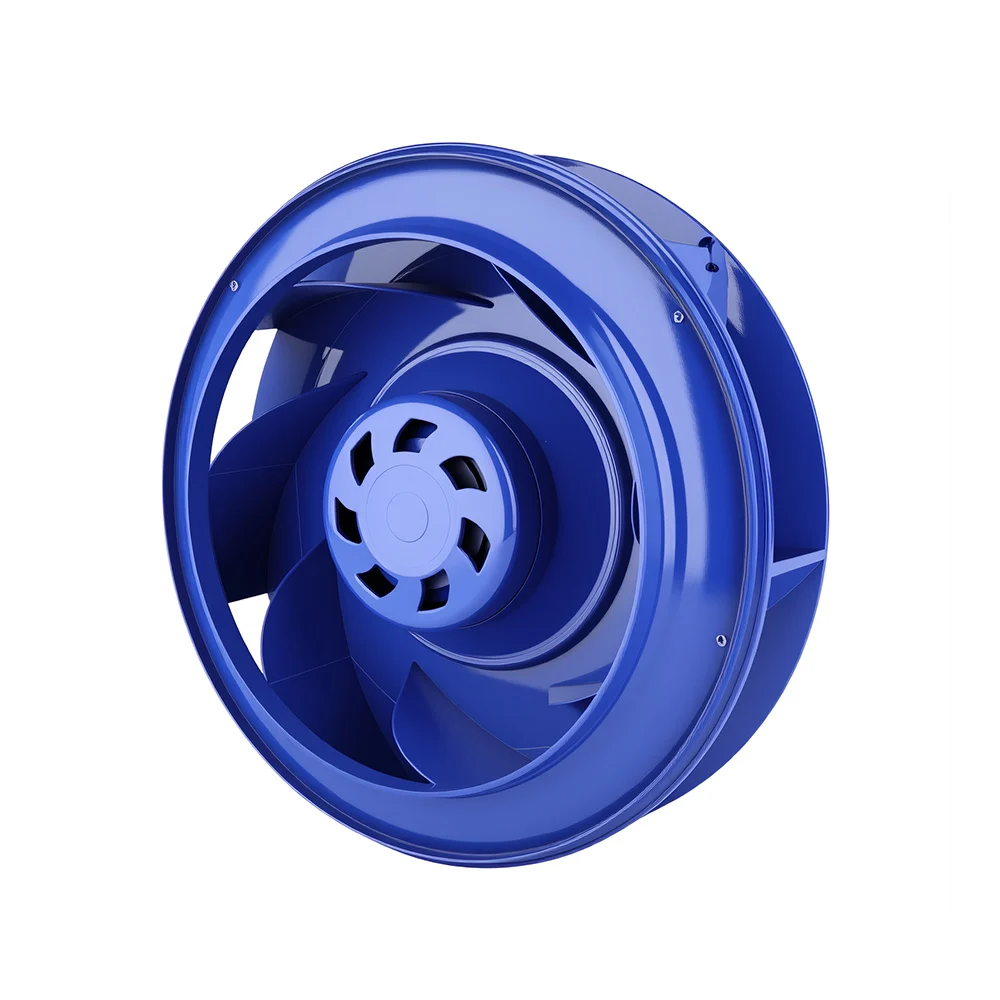
The photograph below is a current LONGWELL EC backward-curved product-family image. It proves visible form and product-family appearance only. It does not prove a noise level, efficiency, certification, application fit or result for your duty point.
First lock the same aerodynamic duty
Before comparing sound, put both candidates at the same airflow and the same pressure definition. Static pressure and total pressure are not interchangeable. Record air density, rotational speed, control command, motor and drive, inlet and outlet configuration, and whether guards, filters or other restrictions are fitted.
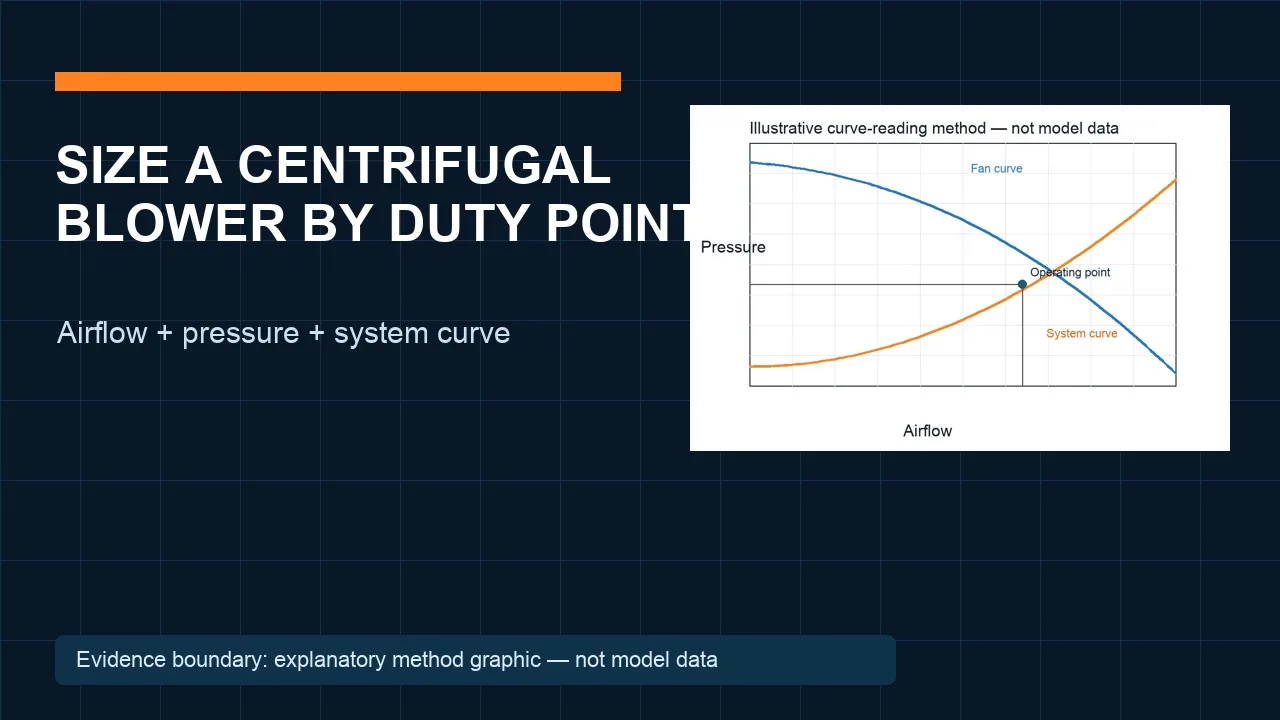
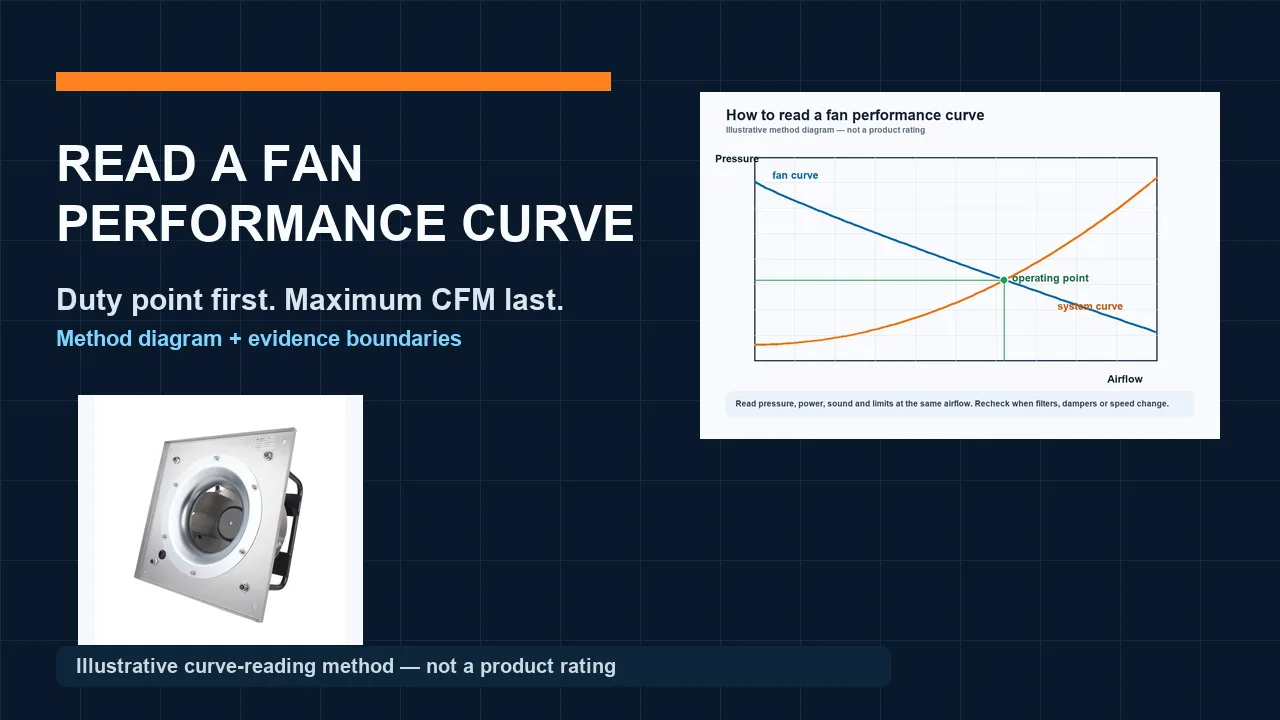
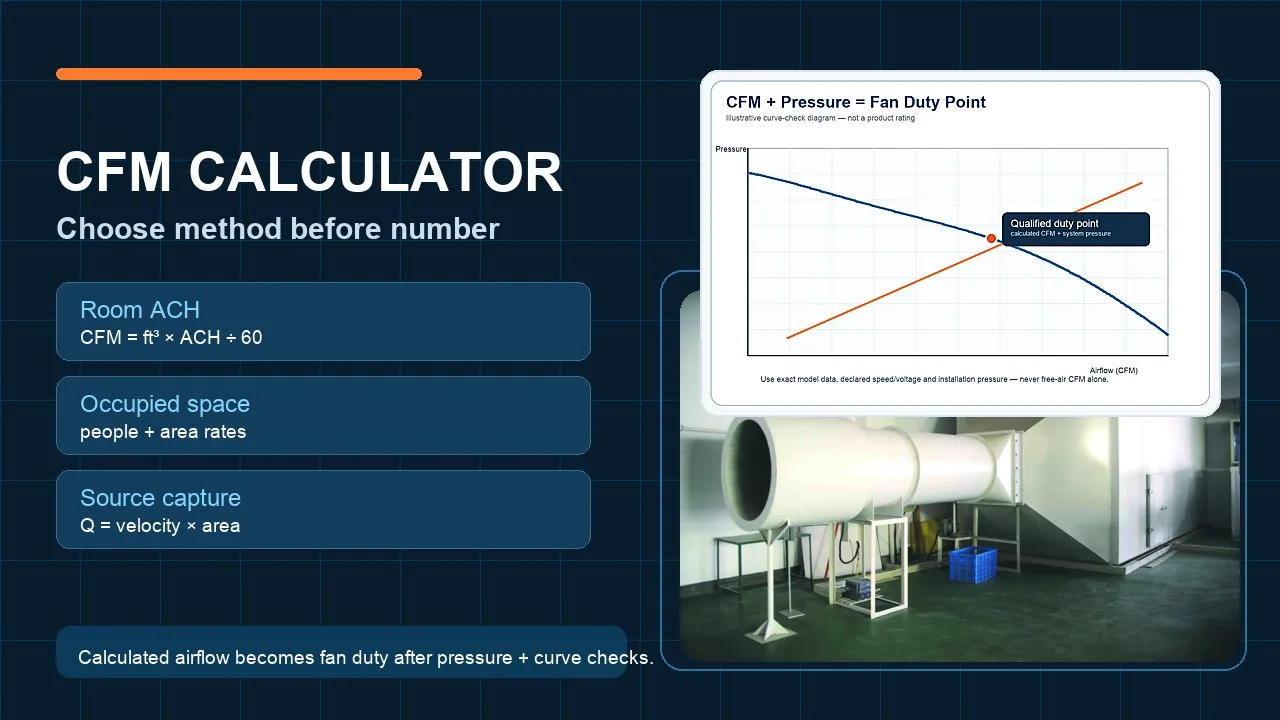
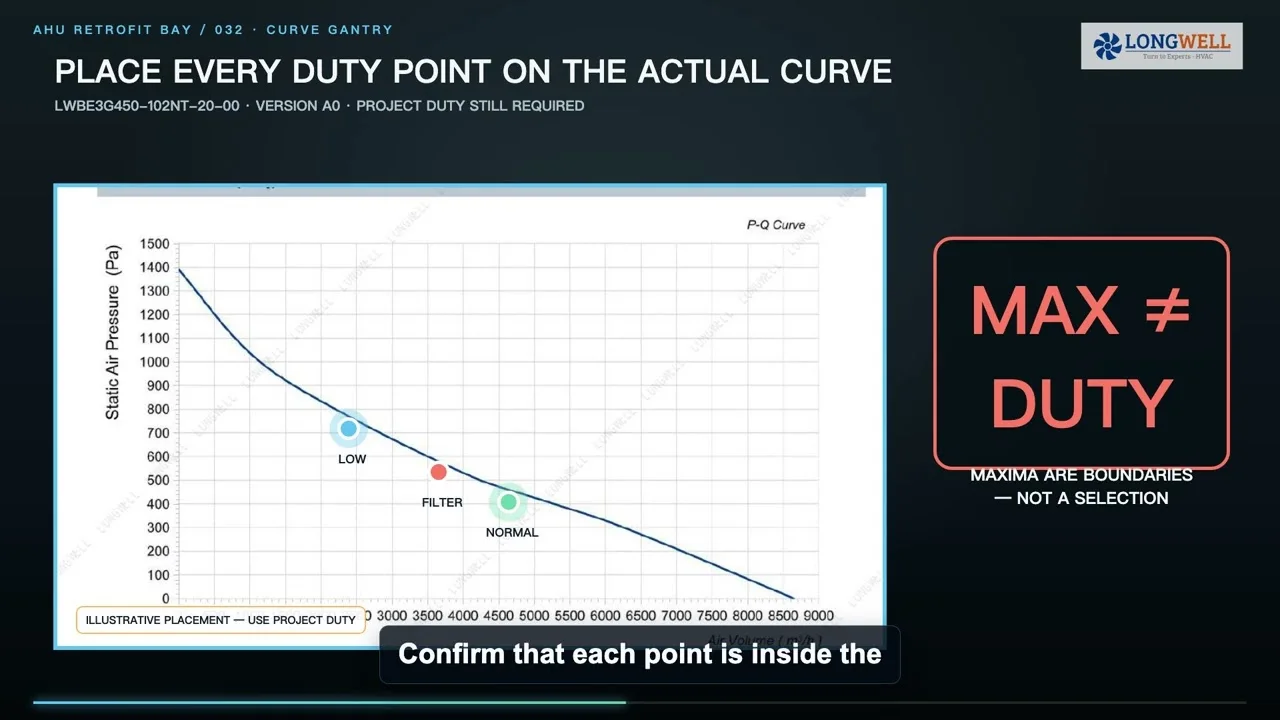
Do not compare one fan at free air with another behind a coil. Do not combine maximum airflow and maximum pressure as if they occur together. Use the exact model, suffix, speed and curve revision, then locate the operating point. The centrifugal fan curve guide explains that duty-point check.
If the equipment has clean-filter and loaded-filter states, compare both. A fan that looks acceptable at one point can move into a less suitable region as system resistance changes.
Ask what the sound number actually means
A report should identify the acoustic quantity, test arrangement and operating state. Sound power is a source rating determined under a defined method. Sound pressure is measured at a location and changes with distance, reflections, room absorption, background noise and mounting. A sound-power value for one fan cannot be ranked fairly against a sound-pressure value for another.
Also check whether the figure is an overall A-weighted value, an octave-band result or a one-third-octave spectrum. A single dB(A) number can hide a narrow tone or low-frequency content that matters in the finished machine. Ask for the inlet, outlet, casing or whole-fan boundary, because those are different reporting paths.
Finally, separate airborne sound from vibration. A fan sound test does not automatically qualify the mounting frame, cabinet panel or isolation system. If structure-borne noise matters, specify a vibration and installed-equipment acceptance boundary as a separate requirement.
Use blade-pass frequency as a clue, not a verdict
Blade-pass frequency is blade count multiplied by rotational speed and divided by 60. It indicates where a repeating blade-related feature may appear in the spectrum. It does not calculate the overall sound level, nor does it tell you how prominent that tone will be after installation.
Look for the blade-pass region, its harmonics, once-per-revolution content and motor or drive tones. Then compare them with the broadband floor. If the supplier gives only one overall number, ask for band data rather than guessing what the machine will sound like.
Inspect inlet flow, discharge geometry and panels
Laboratory ratings cannot describe every cabinet. A tight elbow, blocked inlet sector, grille, guard, coil edge or undersized plenum can feed uneven or swirling air into the wheel. That can change both aerodynamic performance and sound. The remedy is not always a different blade family; sometimes it is more inlet clearance or a better approach path.
At the discharge, abrupt geometry can add loss and turbulence. On the structural side, a flexible panel can radiate vibration even when the fan itself is unchanged. Record the mounting stiffness, isolators, panel construction and nearby resonances during prototype review.
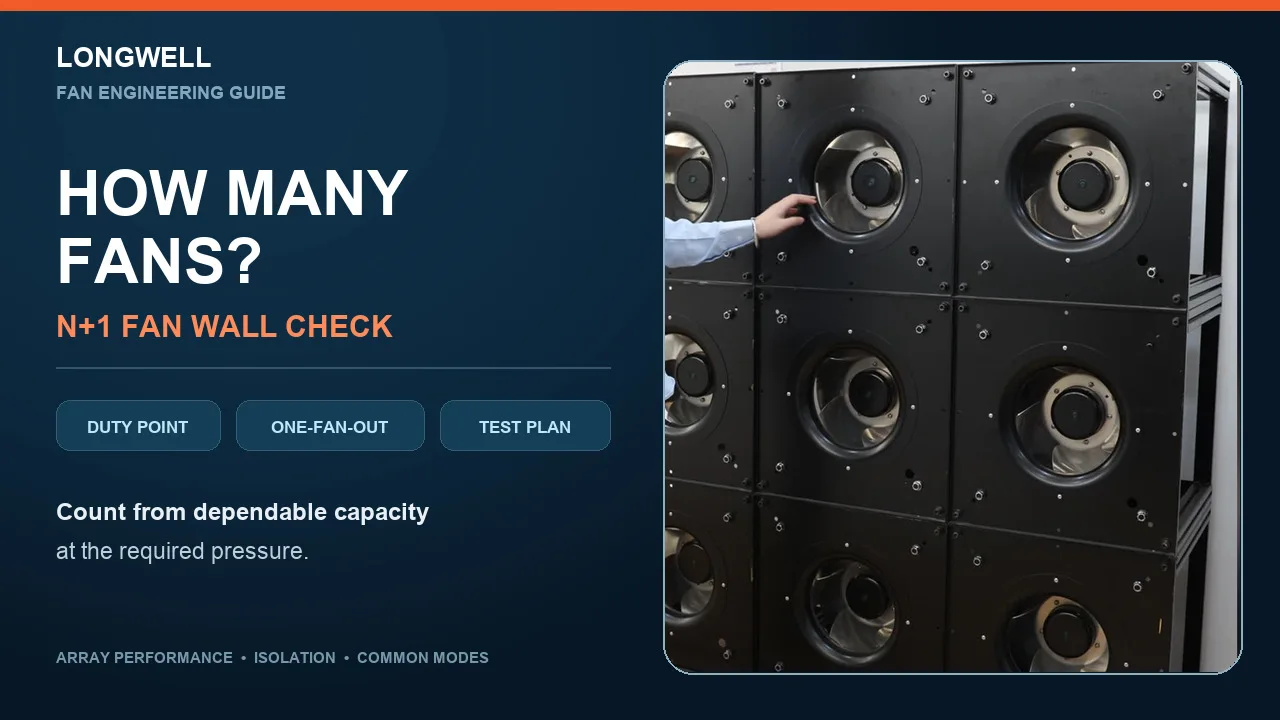
If your architecture is already confirmed as EC backward-curved, use the current EC backward-curved fan family as a browse route only. Final selection still requires an exact suffix, duty point, drawing and acoustic record.
A supplier comparison should fit on one page
- Exact model, suffix and revision for each candidate.
- Airflow, static or total pressure, density and speed at the comparison point.
- Inlet, outlet, guard, motor, drive and mounting configuration.
- Sound quantity, test method, boundary and background correction.
- Overall value plus octave or one-third-octave data where tonal character matters.
- Clean and loaded system states, control range and expected operating map.
- Prototype acceptance positions, instruments and pass/fail limits.
The eight-step centrifugal fan selection checklist can help you place this acoustic review inside the wider airflow, pressure, electrical and installation decision.
What to send with an RFQ
Send the complete duty map, air condition, available envelope, inlet and outlet sketches, control supply, speed range, mounting arrangement and required sound metric. Add the listener or microphone positions if the limit is an installed sound-pressure requirement. If the limit is a source rating, name the accepted test method and reporting boundary.
That package gives an engineer something testable. “Low noise” does not. A backward-curved fan may be the right architecture, but the defensible decision comes from a same-duty, same-boundary comparison of the complete assembly.
Choose the right backward curved centrifugal fan
Longwell manufactures 587 backward curved centrifugal fans in-house. Send airflow, static pressure and voltage — an engineer replies with a matching model, performance curve and price within one working day.