Addressing Fastener Degradation in Tube Axial Fans
Our customer builds large tube axial fans, and their fan motor mounting hardware was failing in the field. During routine service, they found a major problem in the field. They saw severe rust on the internal structural parts. Consequently, the heavy fans risked mechanical failure over time.
Therefore, they needed new fan motor mounting hardware to fix this flaw. They asked for 5000 sets of these replacement parts. The project had strict physical limits. First, the new parts had to fit inside a tight metal cylinder.
The motor attaches directly to a 260 mm wide steel plate. Next, long rods hold this plate securely inside the heavy main housing. The EC motor shakes continuously while it runs. So, the fasteners must stay completely tight.
Furthermore, the project parameters strictly mandated carbon steel construction. The customer asked for an M6x20 hex socket cap screw. They also requested a flat washer and a split spring washer. Space was very tight around the suspended motor.
A standard external hex bolt would block tools during assembly. Therefore, the new fan motor mounting hardware had to allow straight inline tool access. Finally, the parts had to survive damp air without rusting. The parts secure a thin 2 mm thick mounting bracket. In short, the design needed exact dimensions and strong rust protection.
Selecting the fan motor mounting hardware Motor Mounting Hardware
We looked at several ways to build this fan motor mounting hardware. First, we thought about using solid stainless steel. Stainless steel stops rust completely in wet areas. However, this choice costs a lot of money.
The customer needed a high-volume production run of 5000 units. Therefore, the high price made stainless steel a bad choice. Instead, we picked strong carbon steel. We then applied a specific blackening treatment to the surface.
This black oxide finish fights off rust from ambient humidity. Most importantly, it costs materially less than marine-grade alloys. The parts met the baseline environmental requirements perfectly.
Mechanical Clearance and Tooling Access
Next, we checked the physical fastener profile inside the duct. A standard external hex bolt needs wide radial clearance for a wrench. By contrast, a hex socket head cap screw lets a tool point straight down. This inline capability proved absolutely critical here.
The 260 mm wide octagonal mounting disk sits deep inside the restrictive galvanized fan tube. So, the fan motor mounting hardware technicians must drive the M6 screws straight down. They work directly alongside the motor housing. They cannot strike the metal casing walls during assembly. Therefore, we firmly chose the hex socket head profile.
Managing High-Frequency Vibration
Furthermore, we had to stop the motor vibration from loosening the screws. The EC motor generates high-frequency mechanical oscillation during active operation. If we used a single integrated flange bolt, the vibration would win. The fastener would eventually overcome the static friction holding the head.
Consequently, we specified a discrete three-part mechanical assembly. First, a 1.52 to 1.68 mm thick flat washer spreads the heavy clamping load. This protects the 2 mm thick steel plate from bending. Next, a 1.5 to 1.7 mm thick split spring washer adds steady mechanical tension.
It pushes against the screw threads constantly. Finally, we engineered the precise dimensions for the entire 5000-piece batch. The M6-1 thread pitch provides the perfect balance of clamping force. The overall screw length remains strictly controlled between 19.6 and 20.4 mm.
So, the fastener fully engages the receiving threads. However, it never bottoms out against the motor block.
Technical Specifications
| Thread Specification | M6-1 |
| Screw Length | 19.6 – 20.4 mm |
| Head Diameter (dk) | 9.78 – 10 mm |
| Head Thickness (t) | Minimum 3.0 mm |
| Hex Key Size (s) | 5.02 – 5.14 mm |
| Flat Washer Outer Diameter | 11.57 – 12 mm |
| Flat Washer Thickness | 1.52 – 1.68 mm |
| Spring Washer Thickness | 1.5 – 1.7 mm |
| Mounting Disk Width | 260 mm |
| Mounting Disk Thickness | 2.0 mm |
| Mounting Flange Depth | 38 mm |
| Flange Hole Spacing | 64 mm |
| Component Material | Carbon Steel |
| Surface Finish | Blackening treatment |
| Order Quantity | 5000 sets |
The thread pitch and screw length dictate the secure attachment of the heavy disk. Meanwhile, the washer dimensions spread the clamping force. Therefore, the thin metal bracket stays safe from stress fractures.
Reference: ISO 21940 covers the test method behind these figures.
Technical Documentation
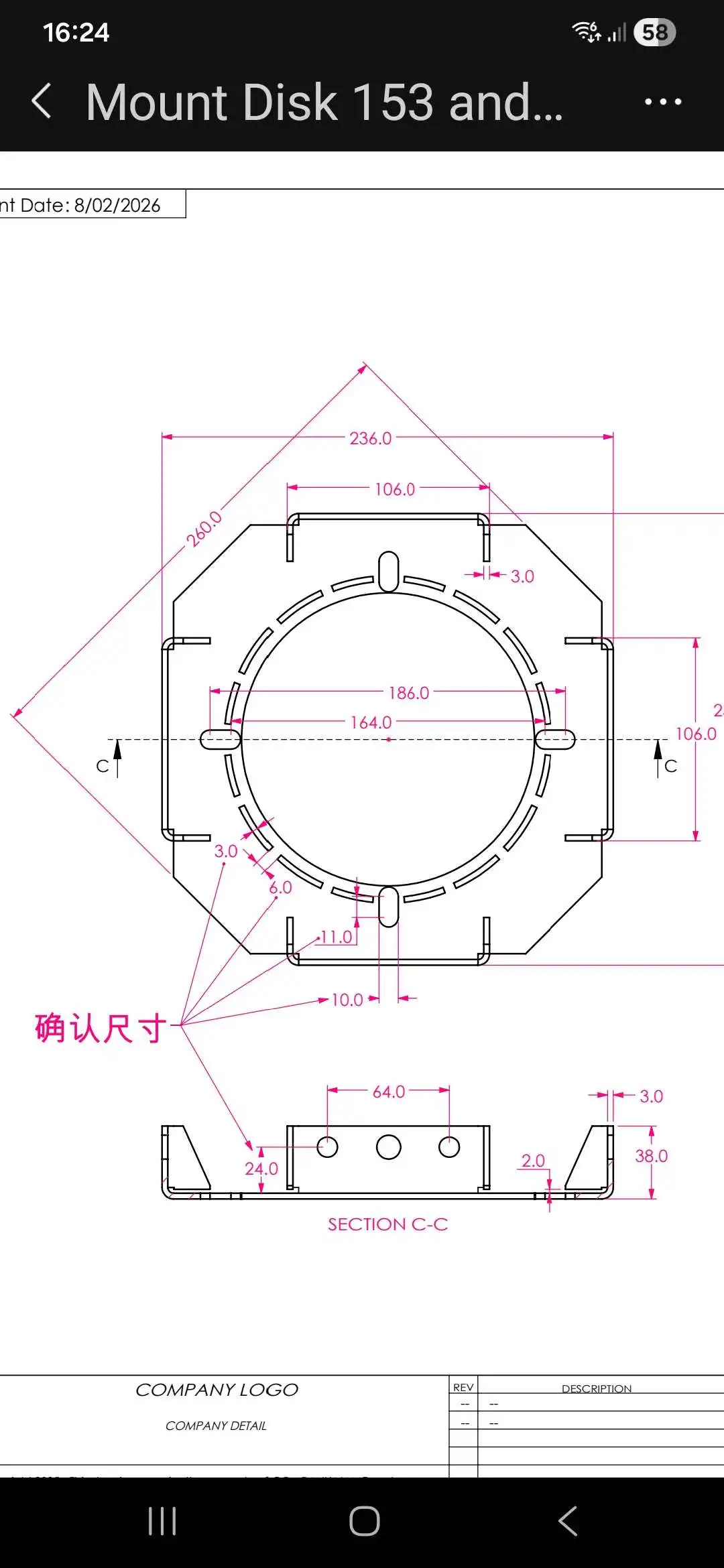
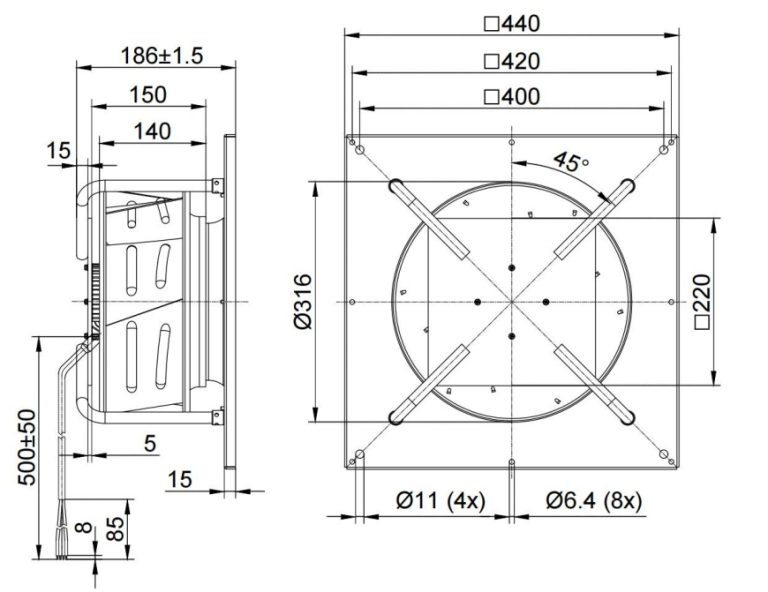
The mechanical drawing specifies the 260 mm octagonal mounting disk. Furthermore, it highlights the exact 64 mm flange hole spacing.
M6x20 Fastener Specification Document
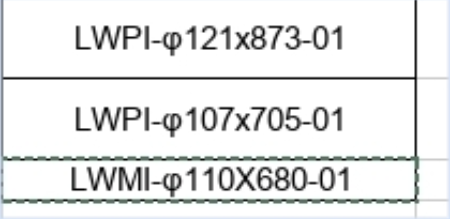
This specification sheet details the precise tolerances for the new parts. It lists the M6-1 thread, flat washer, and spring washer.
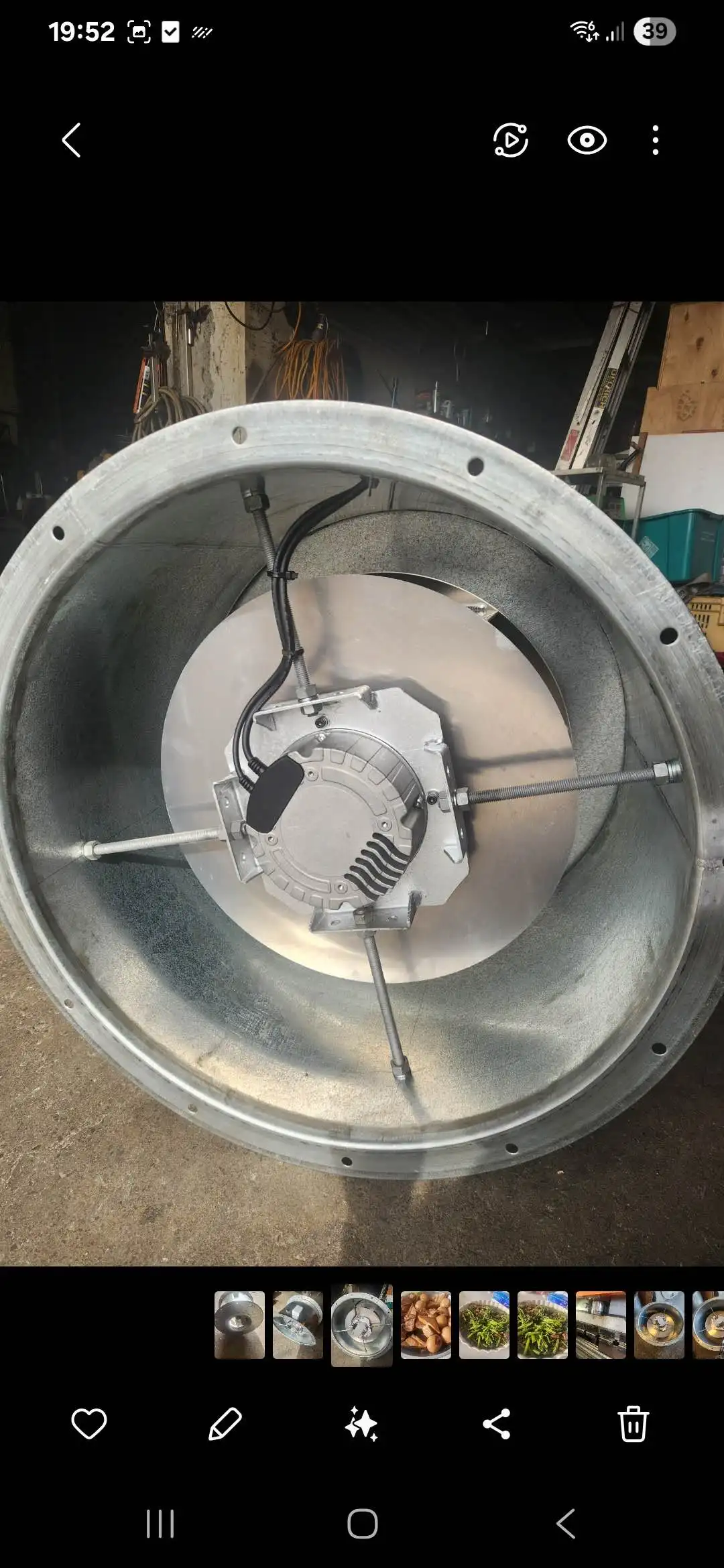
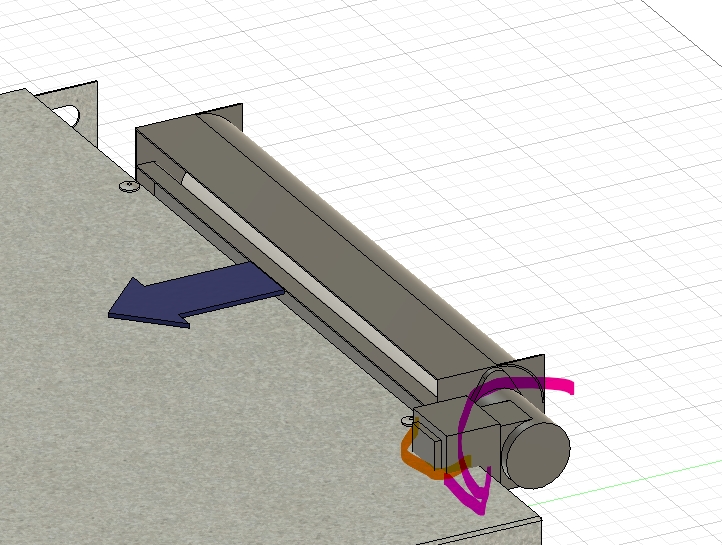
The field photograph shows the target application clearly. It reveals how the motor suspends inside the tube via threaded rods.
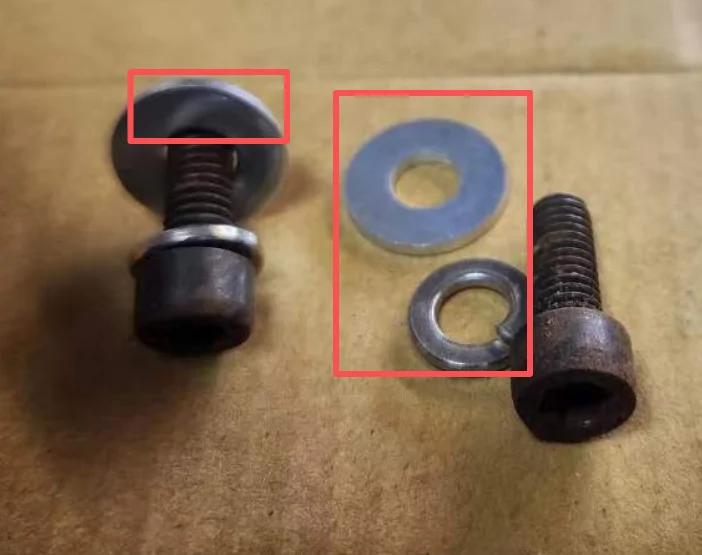
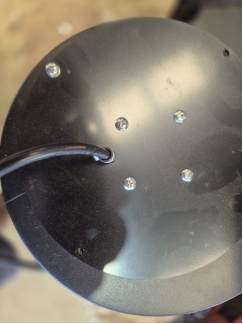
The initial hardware photograph highlights the heavy oxidation problem. Consequently, this rust necessitated the new blackening treatment specification.
Specifying Fasteners for Confined Ventilation Casing
When you engineer replacement fan motor mounting hardware, you must check the mechanical load. You must also check the operational environment.
- First, always match the fastener drive style to your assembly clearance. Hex socket heads work best inside tight structural casing walls. A normal wrench often gets stuck.
- Next, separate the vibration management from the load distribution. A split ring washer maintains thread tension reliably. However, it can bite into thin sheet metal. Therefore, use a distinct flat washer to protect the metal from galling.
- Furthermore, evaluate the cost penalty of materials carefully. A blackening treatment on carbon steel stops basic rust. It provides sufficient protection for enclosed indoor environments. Most importantly, it costs materially less than marine-grade stainless alloys. We routinely process these specialized finishes for high-volume custom runs at our Ningbo factory.
- Finally, verify the exact thickness of your mounting flanges. The bolt length must clear the combined thickness of the bracket and both washers. Even so, it needs enough thread left to hold firmly without hitting the motor block.
Related: Fan Accessories.
Engineering Questions
Technical Documentation & Resources
Browse our axial fans range, the AC axial fans section, or EC axial fans.
Have a Similar Fan Requirement?
Longwell’s engineering team delivers custom spec sheets and samples within 90 days. Since 1990, we have supplied EC fans and blowers to OEMs across HVAC, cold chain, data center, and industrial applications worldwide.
Browse Related Products:
🏆 ISO 9001 / ISO 14001 / ISO 45001 | CE (TÜV) | UL/ETL | ATEX Zone 21/22 | AMCA 210-16 / ISO 5801 tested
Choose the right axial fan
Longwell manufactures 1,086 axial fans in-house. Send airflow, static pressure and voltage — an engineer replies with a matching model, performance curve and price within one working day.