Six frame sizes and a hard proof requirement
A high-volume HVAC maker needed drop-in blowers for their fan coil units, in six frame sizes, built to the incumbent supplier drawings they sent us. On top of the dimensional match, their quality team demanded a fan overspeed test: eight straight hours at 2200 RPM.
The blowers run at 1300 to 1400 r/min in service. So the test spins them at more than half again their working speed.
The scope
- First of all, six blower frame sizes from 145x160mm to 225x250mm, one full container of each.
- Next, a 12.7mm shaft bore held to +0.027/-0mm, because the fans mount on motors the customer already owns.
- Meanwhile aerodynamic equivalence to the legacy AMCA 210 Installation Type B curves.
- Finally, acoustics per AMCA 301 and dimensions inside the stated tolerance class.
Why the customer kept their AC motors
We raised an integrated EC option and they declined it, for a reason that deserves respect. Thousands of AC motors already sit in their stock, and a change of electrical design would trigger recertification their launch date could not carry.
So the whole project stayed mechanical. Sometimes the right answer is the one that leaves the customer system alone.
What a fan overspeed test demonstrates
A fan overspeed test is not a performance test. It is a structural probe, and it asks one question: where is the margin?
What 2200 RPM does to a 1400 RPM part
Spin load rises with the square of speed. Consequently, at 2200 RPM the wheel carries roughly two and a half times the stress it sees in service.
Eight hours at that load shows what a brief spin cannot: rivets that walk loose, hubs that fret on the shaft, blades that start to yield. Fatigue takes time. That is exactly why the duration is part of the requirement.
Why an FCU blower deserves this
A fan coil unit hangs above an occupied room and runs for years with nobody watching. Meanwhile the realistic failure is not routine running but the abnormal day: a control fault, a voltage spike, a wrong replacement motor.
In short, a wheel that survives eight hours at 2200 RPM will not shed a blade because a technician fitted a faster motor by mistake.
The choices the test drove
We looked at plastic impellers to cut the 3.75 kg mass of the largest unit, then set them aside. Galvanized sheet steel held the fan overspeed test across all six sizes with even margin. Besides, one material across the range keeps production and the customer spares simple.
Here the 12.7mm bore tolerance mattered just as much. A bore loose by a few hundredths passes every static check, then frets under load. That is precisely the loosening the eight-hour run exists to catch.
Matching curves, not just dimensions
A blower can match every dimension and still cool differently. Therefore we reverse-engineered the airflow channels against the legacy curves and verified the results to AMCA 210 methods.
Technical Specifications
The operating speed and the test speed sit far apart in this table. The distance between them is the margin being purchased.
| Model Number | Impeller Diameter (mm) | Max Operating Speed (r/min) | Weight (kg) | Shaft Bore Tolerance (mm) | Material Construction | Testing Standard |
|---|---|---|---|---|---|---|
| LWFC-145×160-03 | 145 | 1300 | 1.01 | 12.7 (+0.027/-0) | Galvanized Sheet | AMCA 210 / AMCA 301 |
| LWFC-145×190-03 | 145 | 1300 | 1.01 | 12.7 (+0.027/-0) | Galvanized Sheet | AMCA 210 / AMCA 301 |
| LWFC-180×200-03 | 180 | 1400 | 1.76 | 12.7 (+0.027/-0) | Galvanized Sheet | AMCA 210 / AMCA 301 |
| LWFC-200×190-04 | 200 | 1400 | 2.40 | 12.7 (+0.027/-0) | Galvanized Sheet | AMCA 210 / AMCA 301 |
| LWFC-200×190-05 | 200 | 1400 | 3.49 | 12.7 (+0.027/-0) | Galvanized Sheet | AMCA 210 / AMCA 301 |
| LWFC-225×250-01 | 225 | 1400 | 3.75 | 12.7 (+0.027/-0) | Galvanized Sheet | AMCA 210 / AMCA 301 |
Technical Documentation
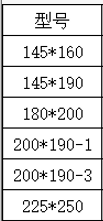
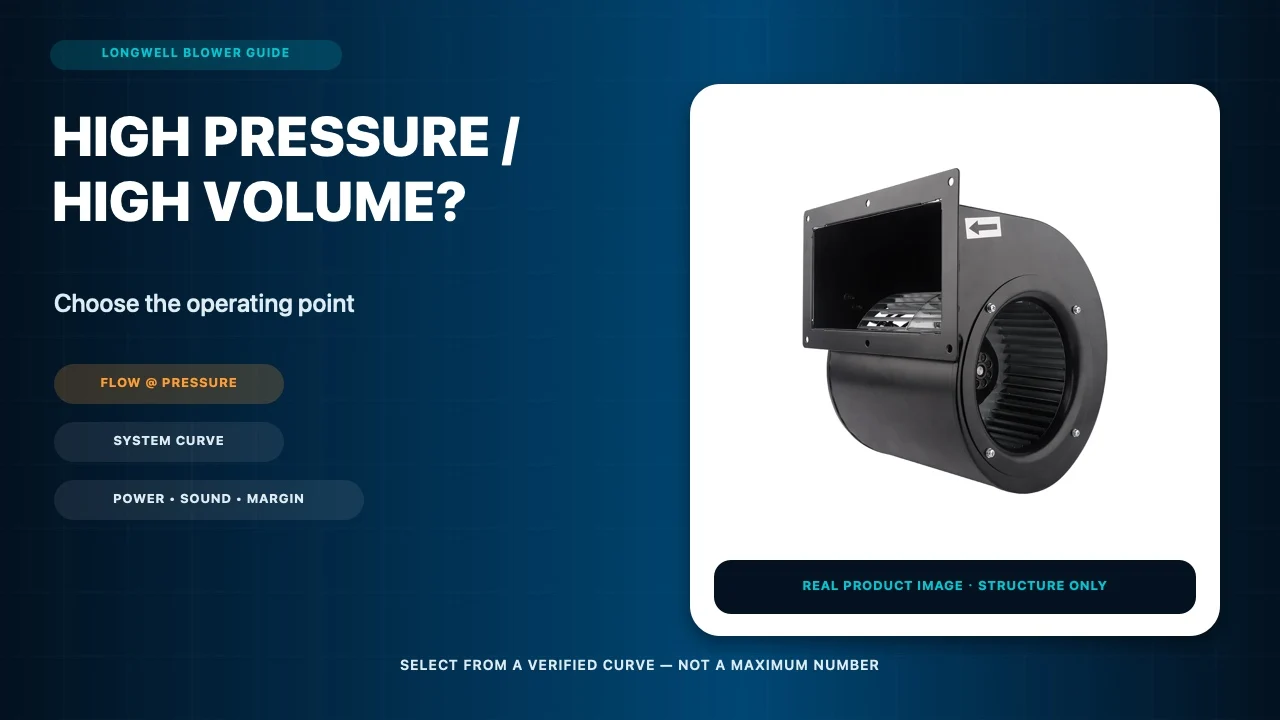
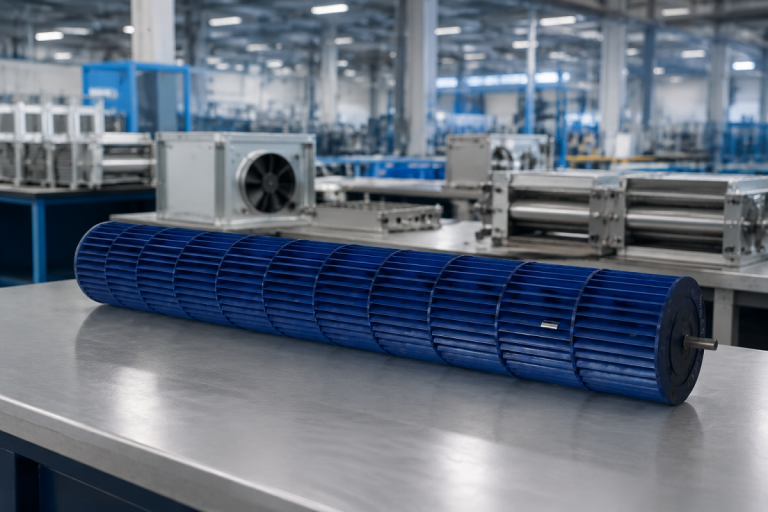
Meanwhile the reference image documents the customer’s initial request matrix outlining the six distinct footprint sizes needed to replace their existing supplier’s stock.
Open LWFC-145×190-03 Engineering Drawing and Curves (PDF)
Contains the dimensional layout and Installation Type B acoustic data for the 145mm diameter high-speed configuration, required by system integrators checking duct mating alignments.
View LWFC-180×200-03 Engineering Drawing and Curves (PDF)
Provides the static pressure curve up to 220 Pa for the 1.76 kg mid-size unit, essential for application engineers balancing airflow across branched ductwork.
Get LWFC-200×190-04 Engineering Drawing and Curves (PDF)
Details the specific geometry for the lighter 200mm diameter variant, designed to handle up to 2200 m³/h without exceeding motor load limits.
Download LWFC-200×190-05 Component Drawing (PDF)
Displays the mechanical tolerances and the 12.7mm (+0.027) bore detail for the heavier 3.49 kg version built for high-static environments.
Open LWFC-225×250-01 Engineering Drawing and Curves (PDF)
Outlines the maximum performance profile for the 225mm blower, showing capacity up to 3600 m³/h and documenting compliance with CB/T1804-2000-C tolerance codes.
Writing a proof test into your order
A proof test only protects you if it is specified properly. Four rules make a fan overspeed test worth its cost.
- Set the test speed from your worst credible event, not a round number. After all, a useful fan overspeed test represents the fastest the wheel could ever turn: wrong motor, control failure, 60 Hz on a 50 Hz design. Derive the speed from that event and the margin means something.
- Specify duration, because fatigue needs time. A ten-minute spin finds gross defects. However, loosening, fretting and crack growth appear over hours, so the eight-hour figure in this order was buying information a short test cannot produce.
- Define pass and fail before the test runs. Notably, no mechanical loosening is measurable: torque marks, bore condition, balance retained after the run. Agree the acceptance evidence in writing, or the result becomes a negotiation.
- Test the assembly you will ship. An impeller alone behaves differently from an impeller on its volute and shaft. Run the proof on the production configuration, including the fastening method, because that is what your product ships with.
See our centrifugal fans range, the forward-curved fans section, or fan impellers.
Questions about overspeed testing
How much overspeed margin is normal?
Common practice runs a fan overspeed test between 110% and 160% of top operating speed, depending on what a failure would cost. This order sat near the top of that band because the blowers hang over occupied rooms and the customer wanted fatigue evidence, not just a stress check.
Does an overspeed test damage the fans that pass?
No. A properly designed wheel takes the proof load within its elastic range and comes out unharmed. Instead, what the test consumes is any hidden defect: a marginal rivet or an off-tolerance bore fails on the rig rather than in the field, which is the entire point.
Why test for eight hours instead of a few minutes?
Because the failure modes that matter in service take time. For example, fretting between bore and shaft, fastener loosening under vibration and early fatigue all need sustained cycles to show themselves. Duration is not caution; it is what makes the result meaningful.
Should overspeed testing be on every production unit?
No. Rather, it is a qualification test for the design and a batch test where specified, not a 100% production step. Routine units are protected by process control and balancing, with the overspeed evidence standing behind the design itself.
Technical Documentation & Resources
Project Gallery & Technical Drawings
Got a duty point you need matched?
Tell us the airflow, the pressure and the space you have. Then we mark your duty point on a tested curve and send the drawing back. Meanwhile samples and custom spec sheets take up to 90 days. Since 1990 we have supplied OEMs across HVAC, refrigeration and industry.
Browse Related Products:
🏆 ISO 9001 / ISO 14001 / ISO 45001 | CE (TÜV) | UL/ETL | ATEX Zone 21/22 | AMCA 210/211 / ISO 5801 tested
Choose the right centrifugal fan
Longwell manufactures 1,127 centrifugal fans in-house. Send airflow, static pressure and voltage — an engineer replies with a matching model, performance curve and price within one working day.