For a fast CFM-to-m³/h conversion, multiply by 1.699. For CFM to L/s, multiply by 0.4719. So 850 CFM is about 1,444 m³/h or 401 L/s. That is the short answer. The harder part is keeping the original value, using the factor in the right direction, and checking that both documents describe airflow at compatible conditions.
This airflow unit conversion guide stays deliberately narrow. It translates volume-flow units; it does not turn a free-air rating into installed performance, convert pressure, or invent a universal correction between standard and actual flow.
Airflow conversion factors you can audit
| From | To | Multiply by |
|---|---|---|
| CFM | m³/h | 1.6990108 |
| CFM | L/s | 0.4719474 |
| m³/h | CFM | 0.5885778 |
| m³/h | L/s | 0.2777778 |
| L/s | CFM | 2.1188800 |
| L/s | m³/h | 3.6 |
Keep extra digits while calculating, then round the final result to the precision of the source measurement. A catalogue value shown as 850 CFM does not become more accurate simply because a converter displays 1,444.159176 m³/h. Record the original value beside the rounded conversion.
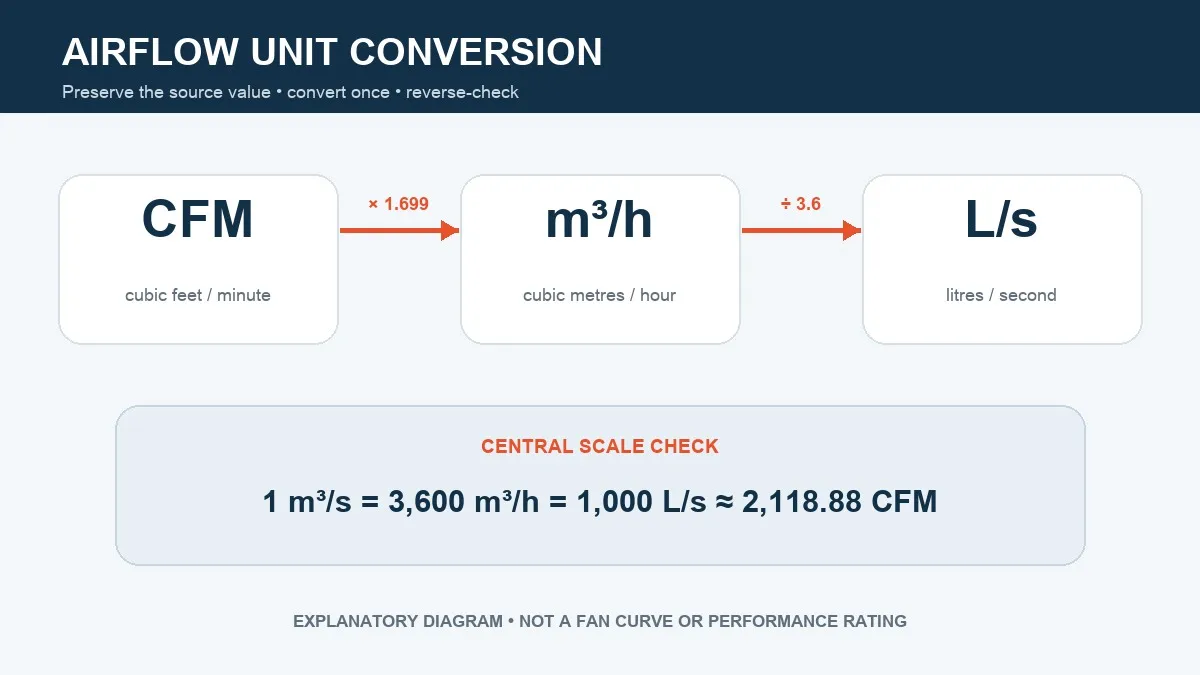
Why the CFM, m³/h and L/s factors work
The arithmetic starts with exact definitions. The international foot is 0.3048 metre, one minute is 60 seconds, one hour is 3,600 seconds, and one litre is 0.001 cubic metre. Cubing the length conversion gives the volume of one cubic foot.
For CFM to m³/h, calculate (0.3048)³ × 60. The result is 1.69901079552 m³/h for every CFM. For CFM to L/s, calculate (0.3048)³ × 1,000 ÷ 60. The result is 0.4719474432 L/s.
A useful scale check is 1 m³/s = 3,600 m³/h = 1,000 L/s ≈ 2,118.88 CFM. If a conversion lands thousands of times away from that relationship, look for a misplaced decimal or a minute, second, and hour mismatch before sending the RFQ.
Worked example: convert 850 CFM
Start with the value the supplier actually stated: 850 CFM. Multiply 850 by 1.69901079552 to get 1,444.159176 m³/h. Multiply 850 by 0.4719474432 to get 401.155327 L/s. For a practical comparison sheet, write 850 CFM ≈ 1,444 m³/h ≈ 401 L/s.
Now reverse-check it. Dividing the unrounded 1,444.159176 m³/h by 1.69901079552 returns 850 CFM. A reverse-check made only from the displayed 1,444 m³/h will return a slightly different number; that small drift is ordinary rounding, not a new airflow.
Worked example: convert 5,000 m³/h
For m³/h to CFM, multiply by 0.5885777787. A 5,000 m³/h requirement therefore becomes 2,942.888893 CFM. Dividing by 3.6 gives 1,388.888889 L/s. A sensible published line is 5,000 m³/h ≈ 2,943 CFM ≈ 1,389 L/s.
The common trap here is confusing m³/h with m³/s. Those time bases differ by a factor of 3,600. Put the unit in every spreadsheet input, calculation column, quotation, and test record rather than relying on a heading several screens away.
SCFM and ACFM need conditions, not another shortcut
CFM, m³/h and L/s are volume-flow units. Their dimensional conversion factors do not change with temperature or altitude. Labels such as SCFM, ACFM, Nm³/h, or a named standard condition add another question: which temperature, absolute pressure, humidity basis, and reference convention does the document use?
Do not erase that information and compare the bare numbers. NIST notes that even familiar standard-flow abbreviations can use different reference temperatures. Ask each supplier to state the condition definition, then reconcile the physical basis separately. A correct unit conversion can still compare unlike conditions.
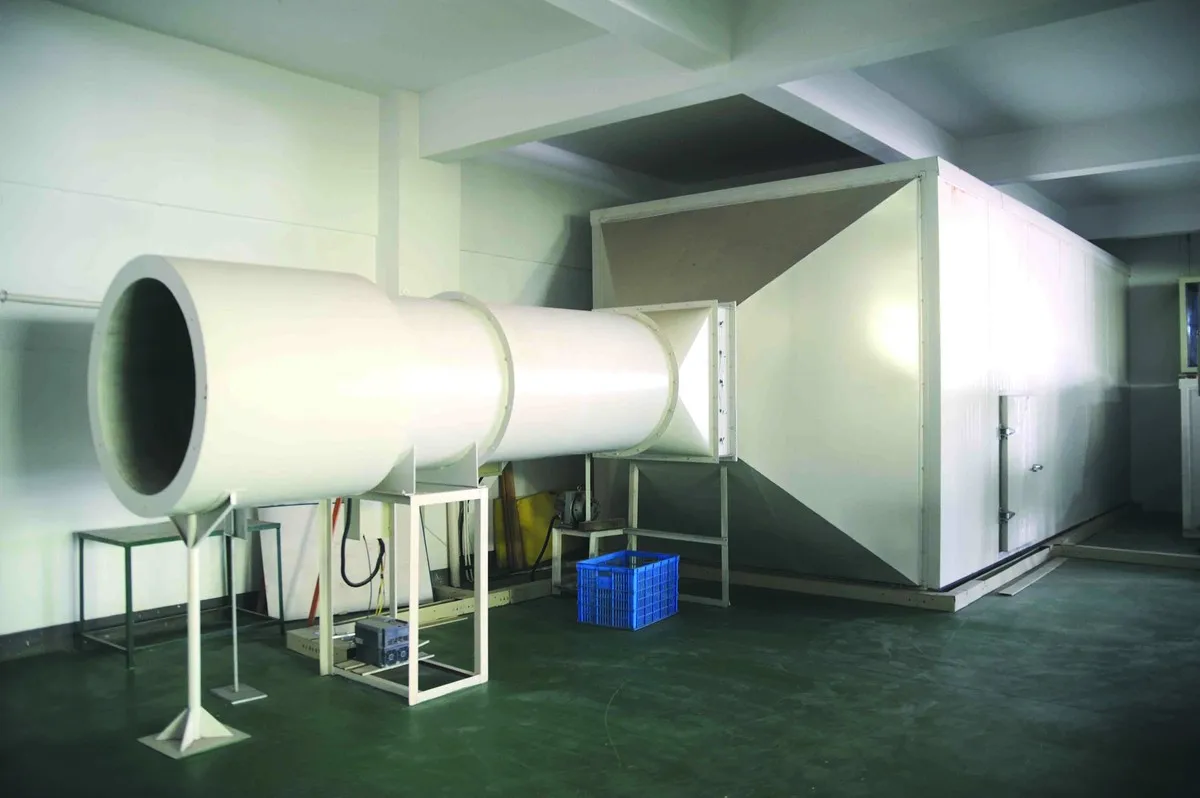
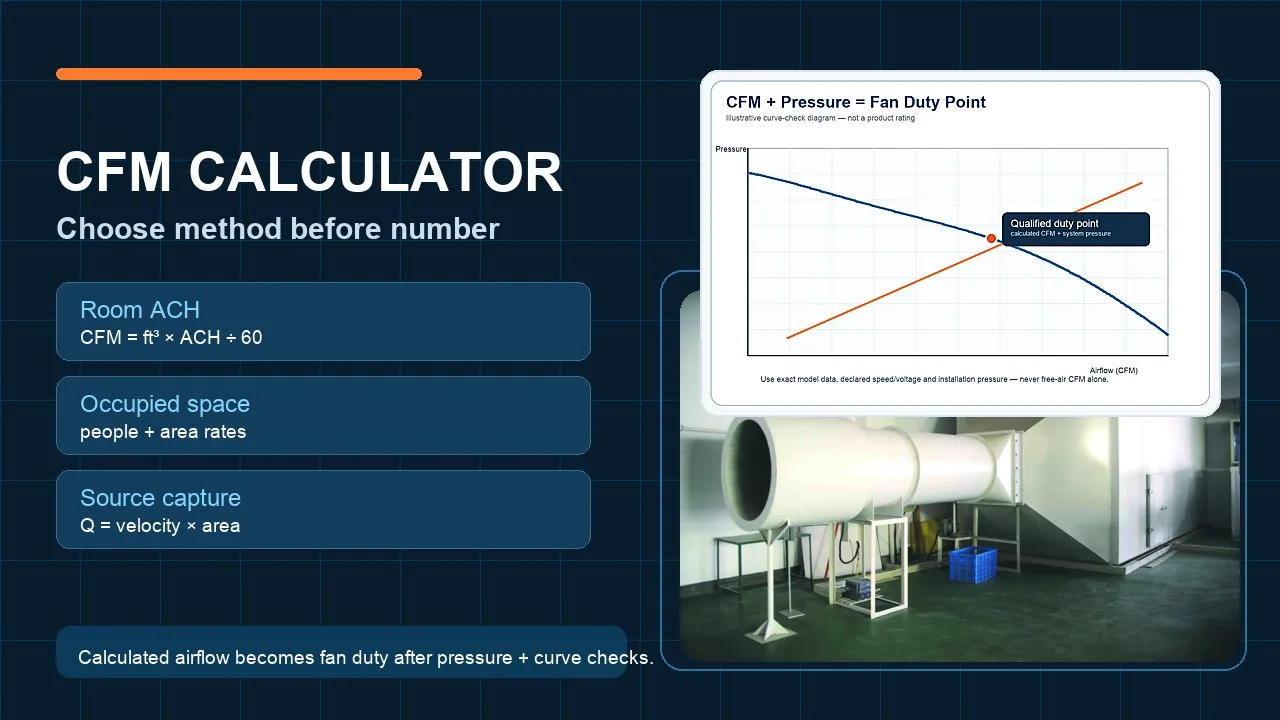
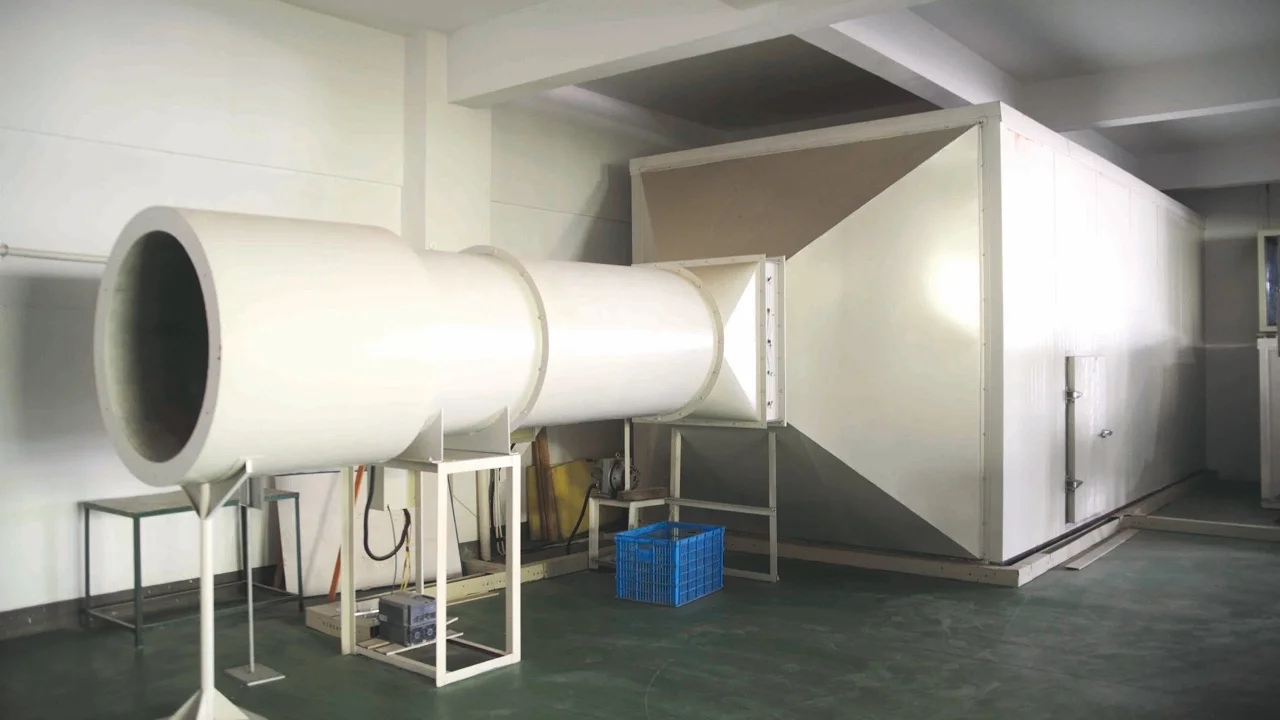
The Longwell test-room photograph above is useful installation context: it shows a real duct, transition, and chamber environment. It is not evidence of accreditation, a conversion factor, or a result for the airflow examples on this page.
Turn the converted number into a purchase-ready duty
A converted airflow is only one field in a fan requirement. Keep the original value and source, the converted value and factor, the air-condition definition, required static or total pressure, operating point, curve revision, voltage and controls, installation geometry, and acceptance method together. That record gives engineering and procurement a shared basis for comparing quotations.
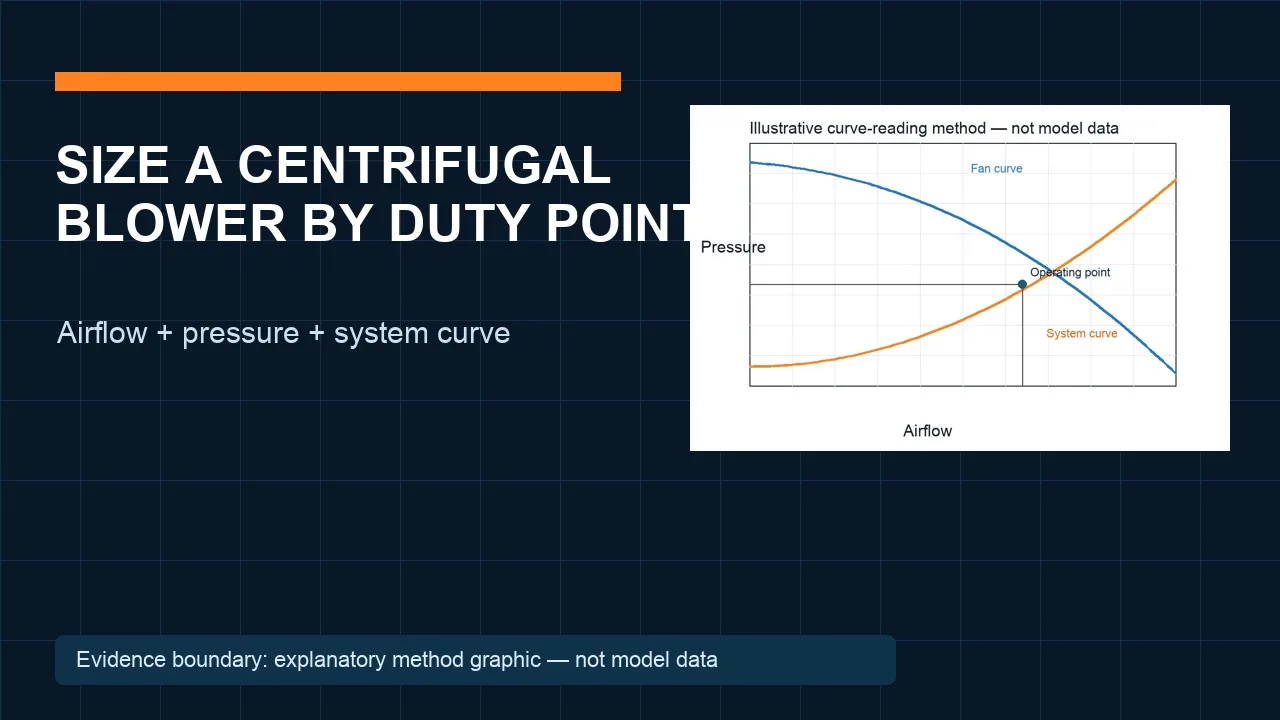
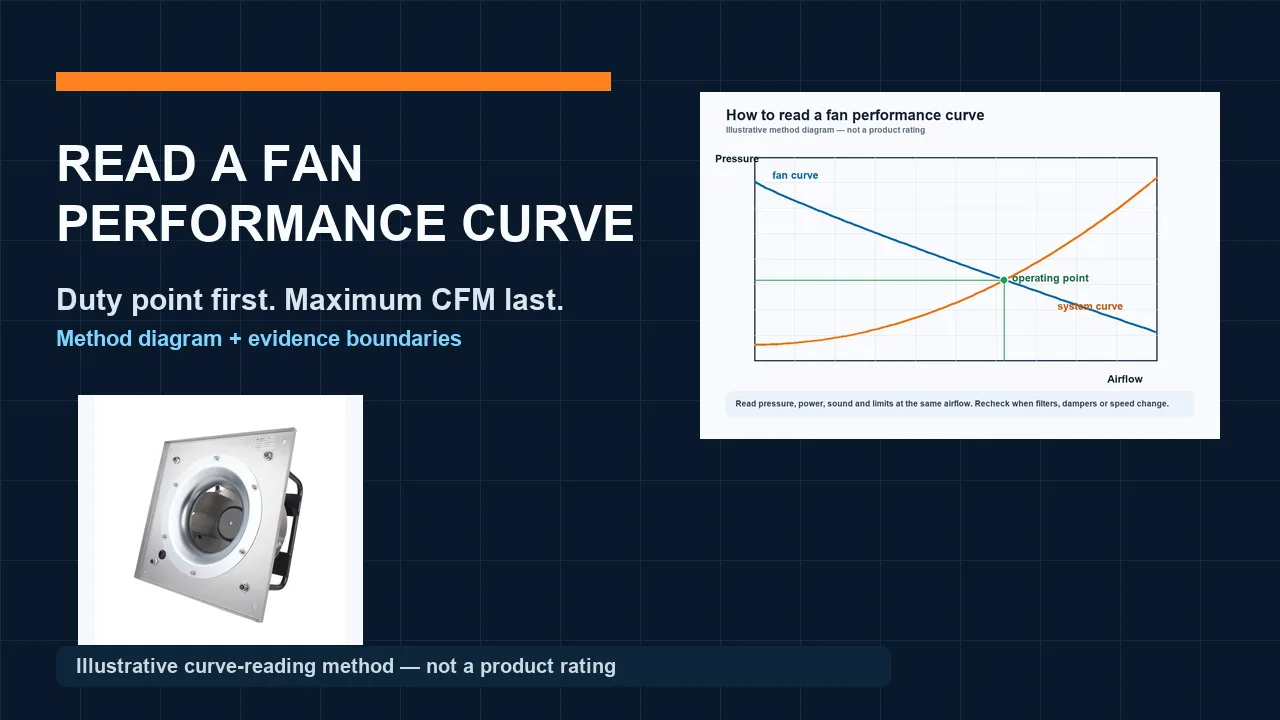
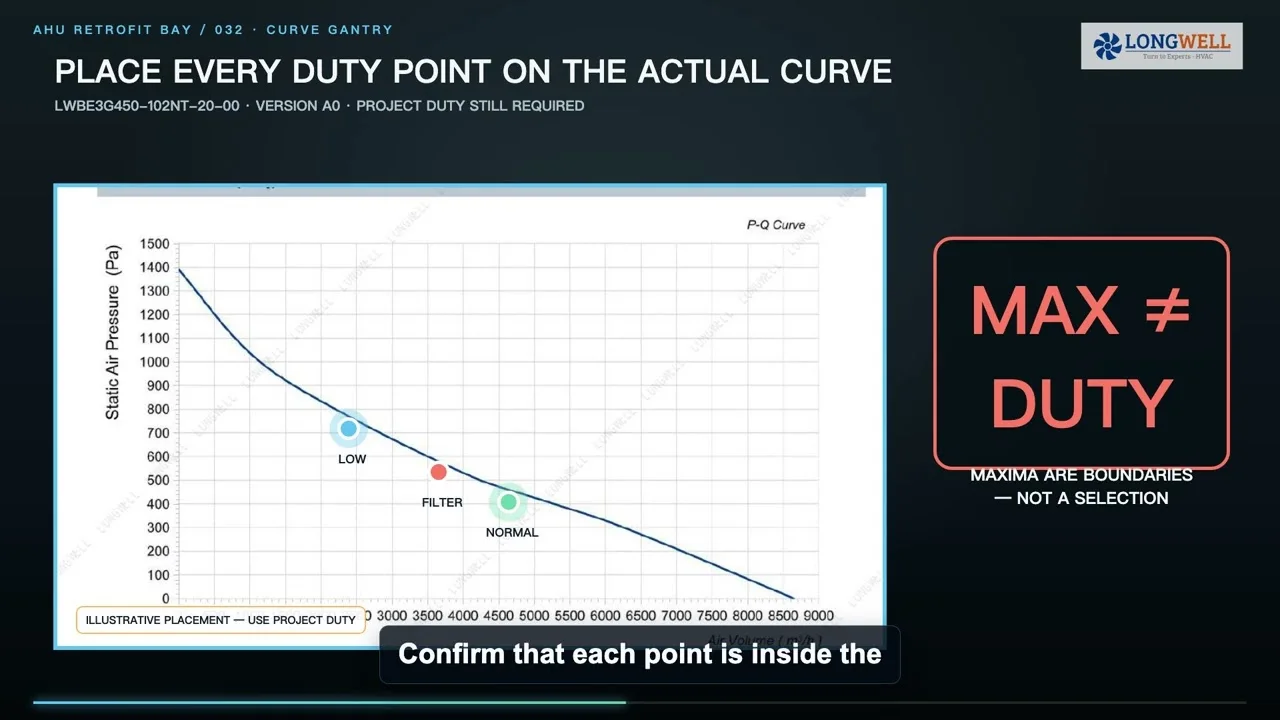
Once those boundaries are clear, the Longwell centrifugal fan family is a useful architecture-discovery route. It does not prove that a model meets the converted duty. Use the fan curve guide to carry airflow and pressure to the exact operating point before narrowing a selection.
The final check is simple: translate the unit once, reverse-check the arithmetic, and keep conditions and pressure attached. If any of those fields is missing, label the result as a conversion for discussion rather than an approved fan selection.