An air curtain is not an invisible wall. It is a moving sheet of air that works only while it keeps enough momentum, direction, and width to oppose the forces across an open doorway. If the jet breaks early, leaves a weak edge, or bends under wind and building pressure, outside air can cross even while the fan runs at full speed.
This guide helps commercial-building, door, and HVAC teams define the application before choosing a blower or complete unit. The useful output is not a guessed model size. It is a duty and acceptance package that a supplier, installer, and commissioning team can all test against.
Treat the Blower, Plenum, and Nozzle as One System
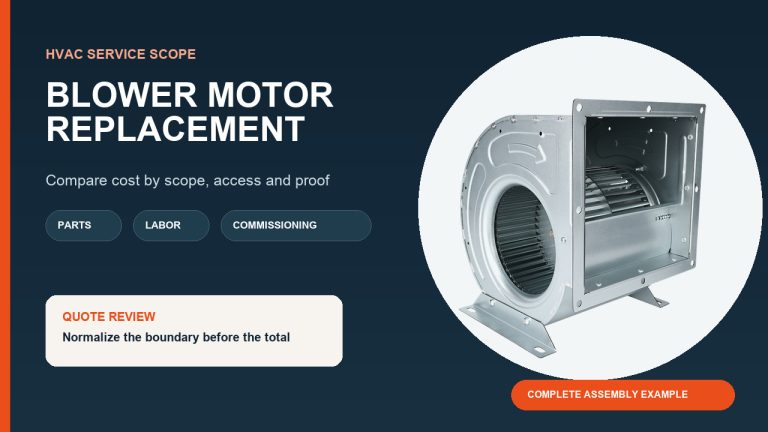
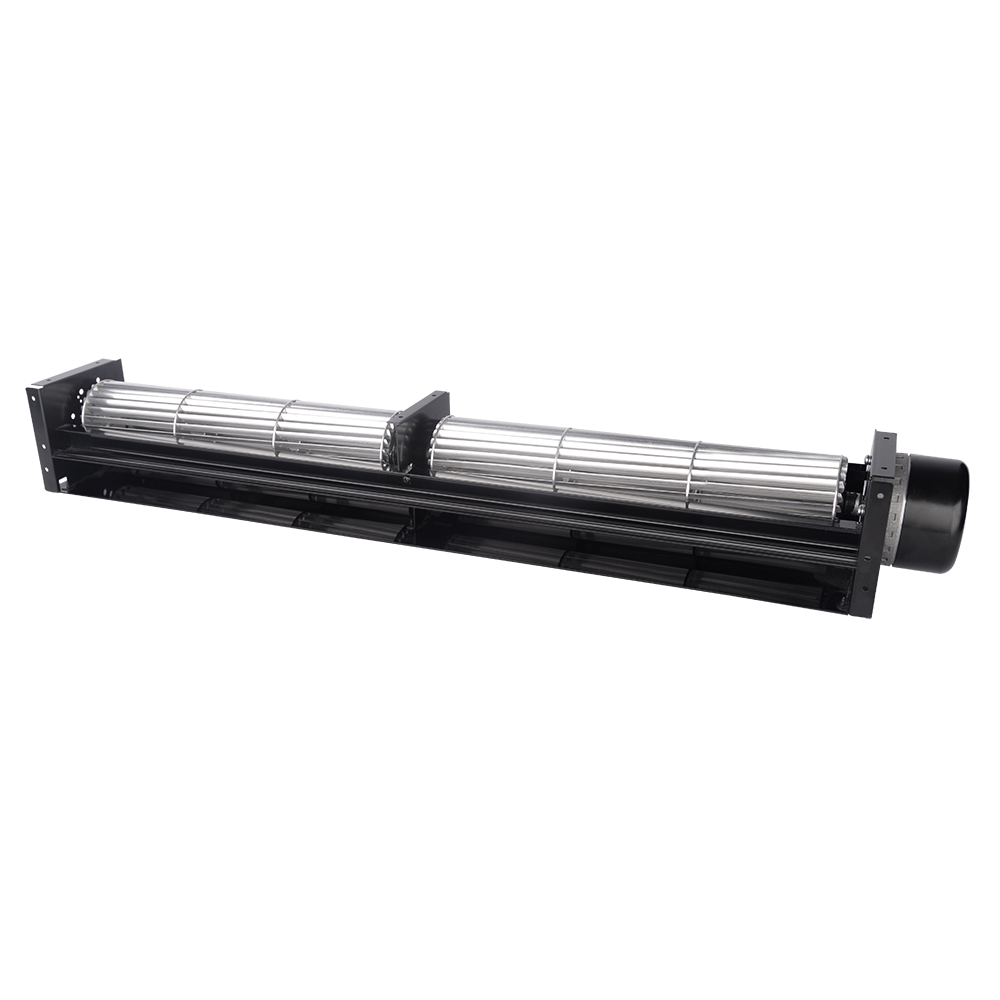
The blower draws room air through the inlet, adds energy, and sends it through a long housing to a narrow discharge nozzle. The nozzle organizes the flow into a planar jet across the opening. That jet can reduce exchange while people or goods pass; it cannot provide the airtight separation of a closed door.
As the jet travels, it entrains surrounding air, spreads, and loses core velocity. Free-air volume at the blower is therefore not a doorway rating. Whole-unit assessment should include average outlet velocity, uniformity across the clear width, nozzle angle, velocity projection, electrical input, and sound at a declared configuration.
Define the Opening and the Forces Acting Across It
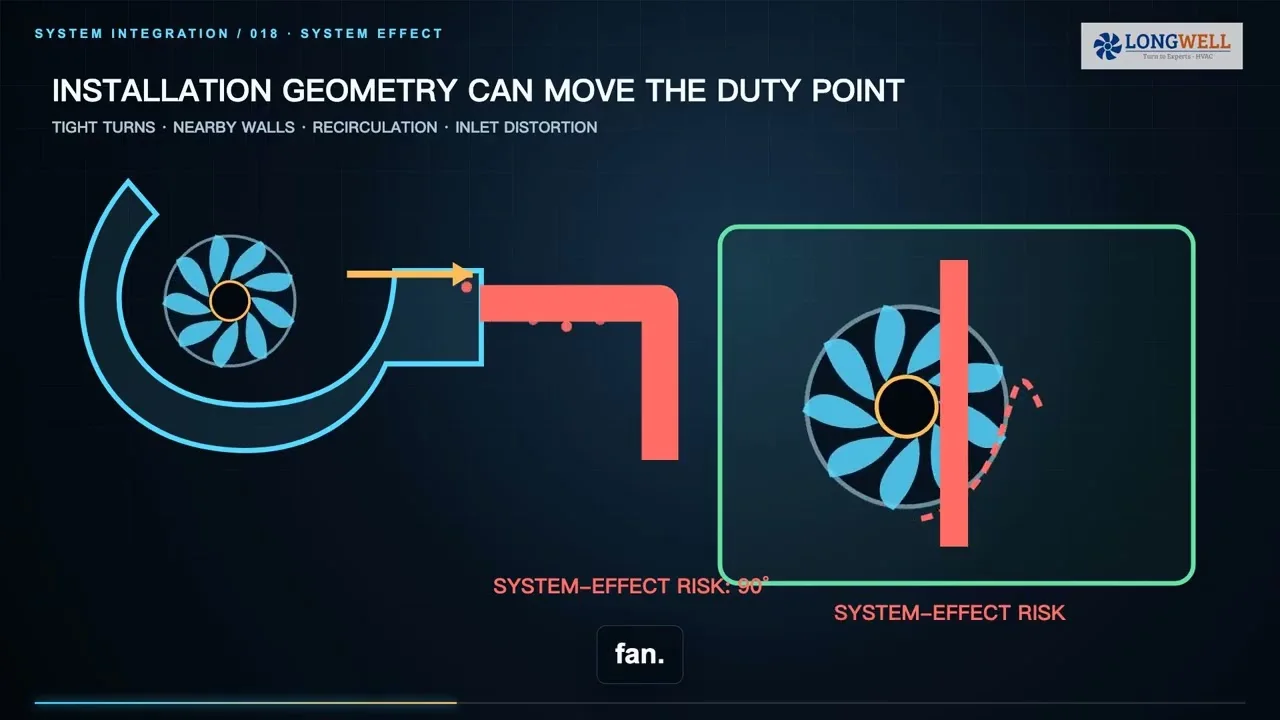
Record the clear width and height, mounting position, setback, header depth, inlet clearance, and any obstruction. Outdoor wind may drive the jet inward or sideways. Building pressurization can push it outward, and stack effect changes with height, weather, and season. Exhaust systems, adjacent openings, vehicle movement, and frequent traffic can also shift the pressure field.
The discharge must cover the full clear width without an unprotected edge. Mounting height sets the projection distance, while setback and nozzle geometry affect where the sheet enters the opening. A nozzle angle is a project adjustment, not a universal number: it should oppose the expected cross-door force without producing an unacceptable occupied-zone draft.
Separate Component Data from Complete-Unit Ratings
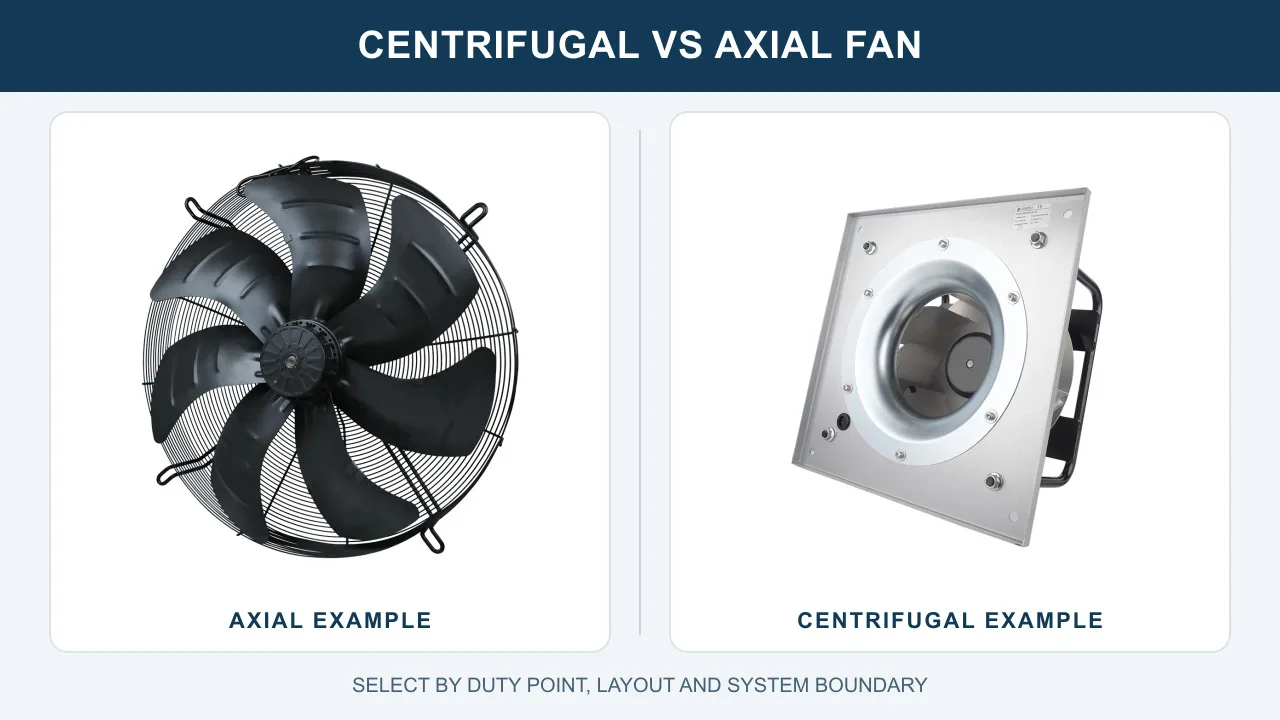
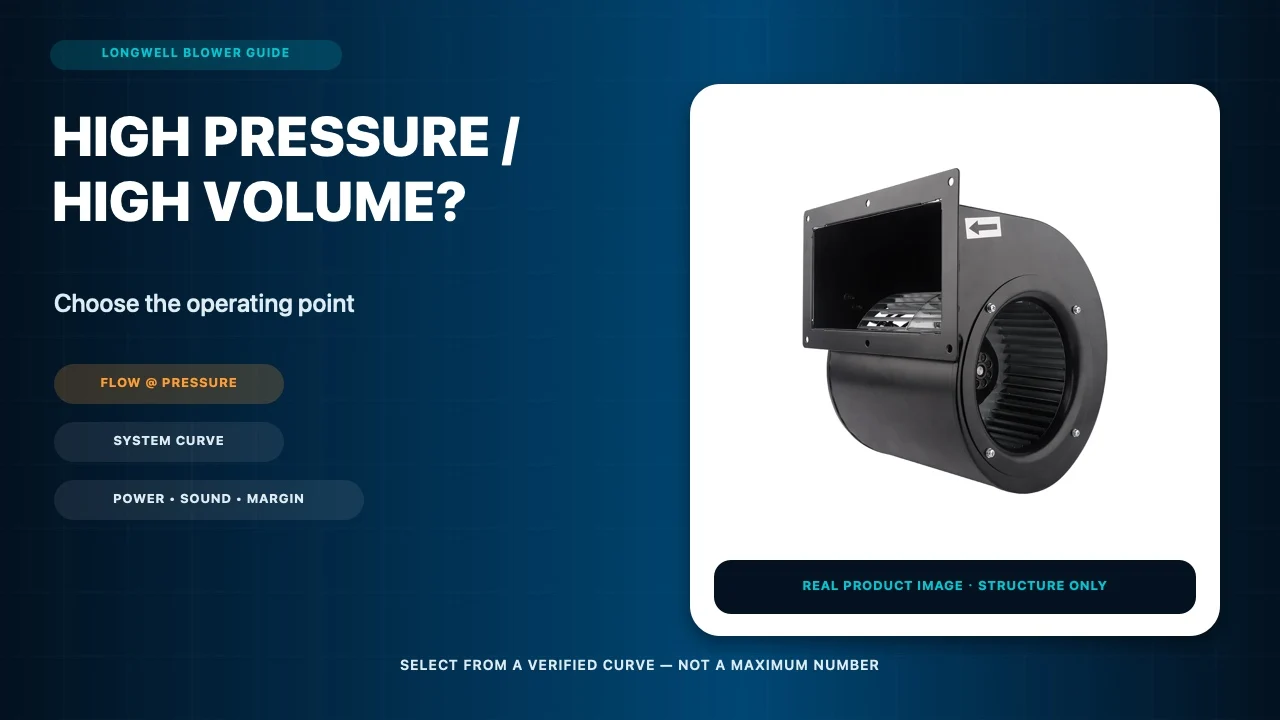
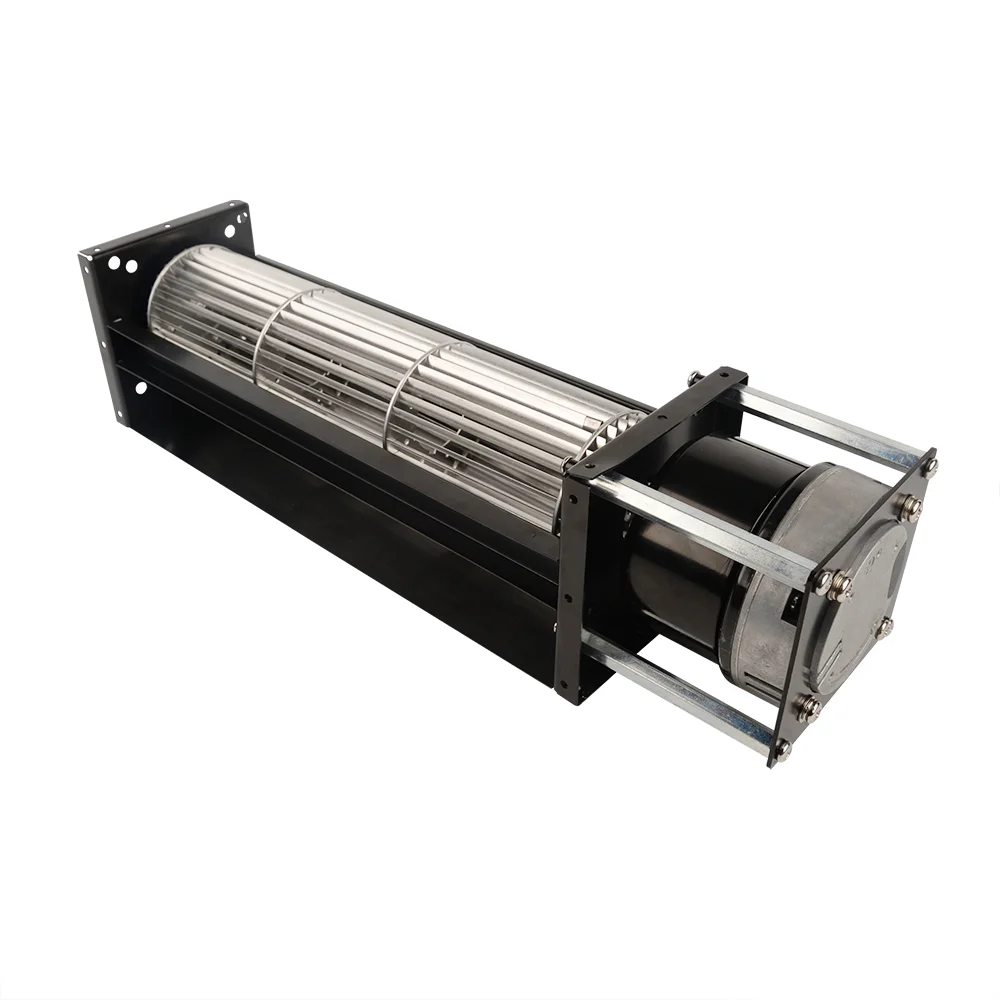
Cross-flow blowers can support a wide outlet in a shallow enclosure. Centrifugal blowers may suit a different resistance path, modular layout, or discharge geometry. Neither architecture wins by name alone. Use a cross-flow fan family or blower family page to identify candidates, then qualify the exact component and the complete air-curtain assembly.
| Component example | Published electrical and control fields | Published component fields |
|---|---|---|
| LWCD-60870MN-06 | 24 VDC, 1.25 A, 0–10 V/PWM | 1,800 r/min; max air volume 693 m³/h; max static pressure 32 Pa; 50 dB(A) |
| LWCE-80520SN-06 | 230 VAC, 50/60 Hz, 23 W | 1,500 r/min; max air volume 650 m³/h; max static pressure 59 Pa; 53 dB(A) |
These current Longwell catalog examples show why the exact suffix and data sheet matter. Maximum airflow and maximum static pressure are curve endpoints, not a simultaneous operating point, and component sound data does not establish installed entrance sound. Neither row proves floor coverage, throw, energy savings, or suitability for a particular door. The LWCD-60870MN-06 air-curtain engineering case is useful for component identity and interface context only.
Select and Specify the Complete Unit at Installed Duty
The useful operating range lies between two failure modes. Too little momentum lets the jet drift or break before the project-defined capture plane. Excessive speed can create drafts, noise, greater electrical input, and more entrainment. Ask for a whole-unit curve or rating at the selected nozzle and speed, not a single maximum number.
Use the cross-flow fan selection guide to structure component questions, then reconcile every candidate with the assembled unit’s resistance, nozzle, speed range, controls, and acceptance method.
Where a recognized test basis applies, request results under the stated edition of ANSI/AMCA 220 or ISO 27327-1 and confirm exactly which outputs are rated. Laboratory data does not replace field acceptance. Heating is also a separate decision: it may improve entrance comfort, but it does not substitute for jet momentum and adds resistance, load, temperature limits, interlocks, and safety devices.
Coordinate Controls with Door and Heating Operation
The control sequence should follow the doorway and selected unit. Project functions may include a door switch, off-delay, speed stages, seasonal mode, building-control enable, temperature control, heater interlocks, and fault feedback. Define the timing and fail-safe state rather than accepting a generic feature list.
Commission what happens when the door opens and closes, after power returns, when a command or sensor fails, and when heat is requested without proven airflow. Confirm that the intended speed and nozzle condition establish quickly enough for the operating scenario, then fall back without leaving heat energized or creating an unnecessary draft.
Verify the Full Opening and Hand Over the Evidence
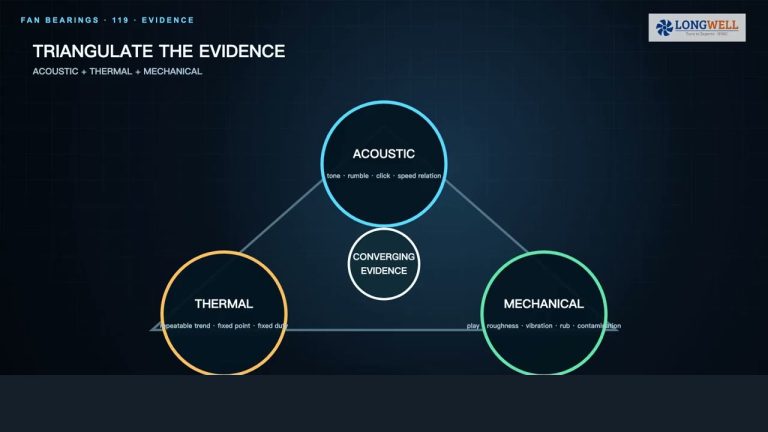
Agree on a measurement and visualization method before installation. Inspect the entire width and the project-defined capture plane under relevant calm, windy, pressure-imbalance, seasonal, and traffic conditions. Side gaps, early jet breakup, short-circuiting, unstable deflection, excessive sound, and occupant discomfort are different symptoms; they may trace to selection, mounting, nozzle, inlet, controls, or the building pressure balance.
The final handover should record the opening geometry, installation position, indoor and outdoor design conditions, exposure, heat option, electrical supply, control sequence, exact unit and nozzle configuration, test instruments, operating states, sound target, service access, and acceptance results. That package makes later troubleshooting reproducible. There is no universal throw distance, nozzle angle, velocity, or blower size for every doorway.
Choose the right cross flow fan
Longwell manufactures 495 cross flow fans in-house. Send airflow, static pressure and voltage — an engineer replies with a matching model, performance curve and price within one working day.