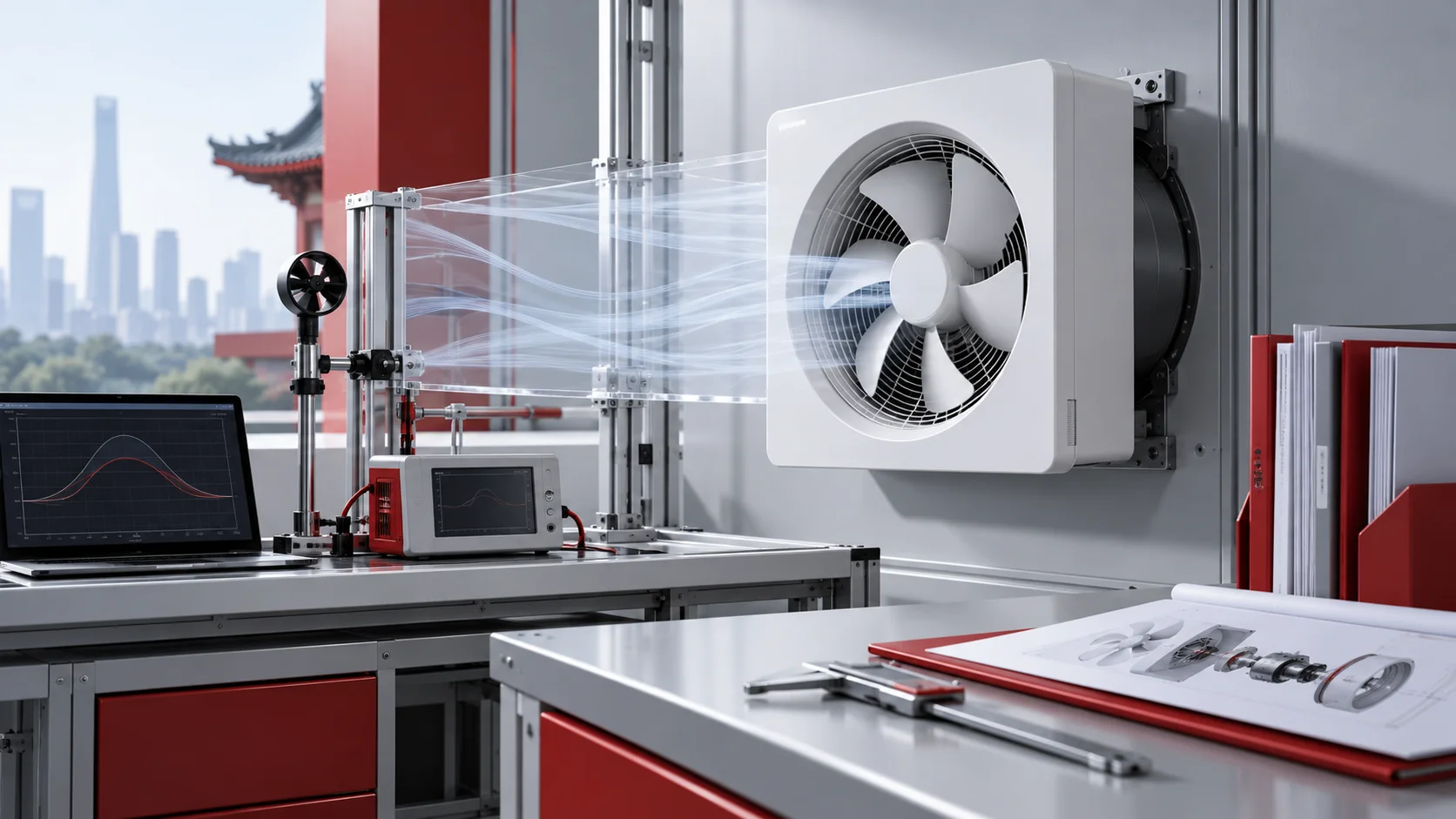
Read a fan or motor nameplate as a set of linked ratings. The full model and suffix identify the unit. Voltage, current, speed, duty and thermal limits mean something only for the matching supply and operating conditions. A similar-looking plate can belong to a different motor or a different revision. Use the plate to locate the exact datasheet and wiring instructions before choosing a replacement.
Start with identity, then read the rating clusters
Record the complete manufacturer name, model, suffix, serial or lot identifier, and any drawing or revision reference. Photograph the entire label in a safely isolated, stopped condition; do not remove a guard or approach a moving impeller to take the picture. If a character is illegible, mark it as unknown. A partial model is a research lead, not authority to copy ratings from a nearby catalogue entry.
Next group the data into supply, operating duty and limits. An AC induction motor may show voltage, phase, frequency, full-load current, shaft output and rated speed. A BLDC or EC assembly may instead have a DC supply, control input and a speed range in its model-specific document. A fan assembly can carry its own label with different fields. The diagram below is a reading sequence; it is not a specimen plate for every product.
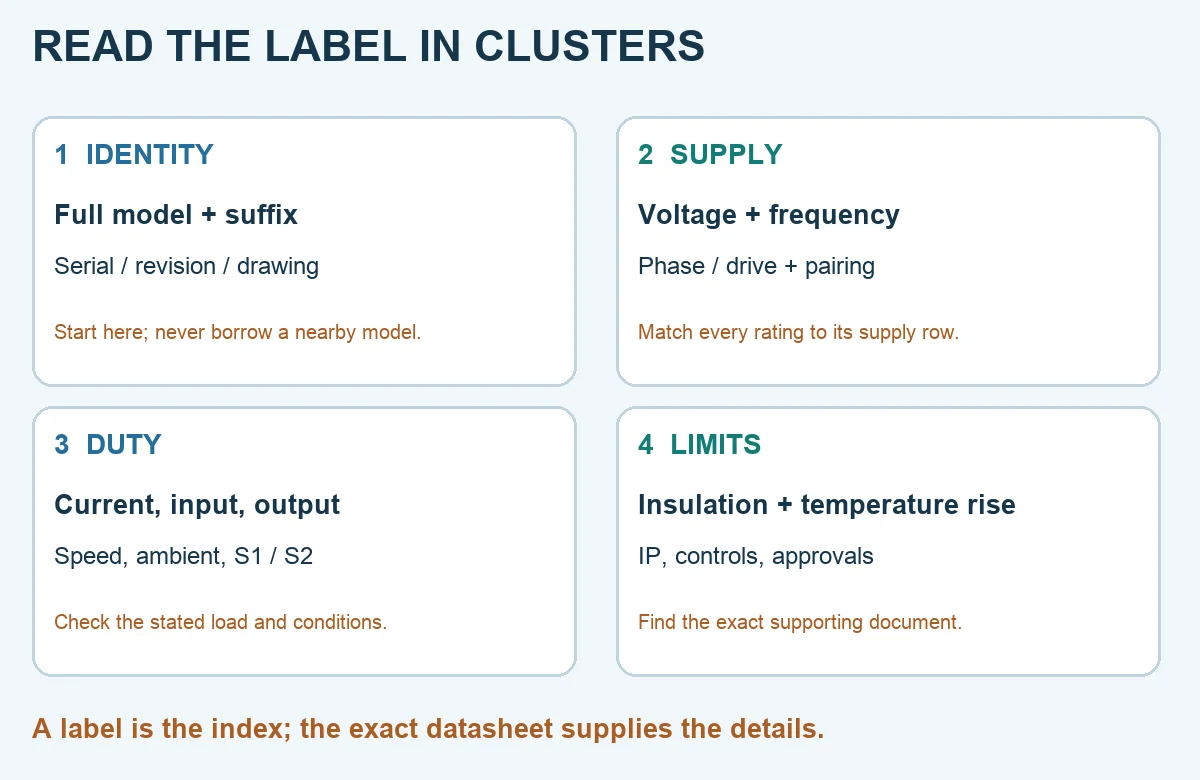
Pair voltage, frequency and current with the right row
For a rated AC motor, a current value belongs with the rated voltage, frequency, connection and output condition stated for that row. Where the plate shows multiple voltages or 50/60 Hz entries, keep each current and speed with its corresponding supply. Do not mix a 50 Hz current with a 60 Hz speed. ABB’s NEMA nameplate guide explains why rated parameters must be read under their stated voltage and frequency.
Full-load amps are a rated condition, not an energy meter. Motor input power, shaft output and useful fan air power are different quantities. A shaft-output rating in kW or horsepower is not necessarily the electrical power drawn by the full fan assembly. Measured voltage, current and real power at the installed duty, together with the correct motor or controller documentation, answer a different question from the plate. A qualified electrical designer must size wiring and protection for the exact equipment and installation rules; this article does not prescribe breaker or overload settings.
Do not infer an AC pole count or fan duty from one speed
On an AC induction motor, rated full-load speed is normally below synchronous speed because the rotor has slip. The pole count and supply frequency determine synchronous speed; the actual nameplate value also reflects the motor design and rating. A controlled EC or BLDC motor can be governed by its electronics, so the induction-motor shortcut does not identify its poles or controller settings. A change in motor speed can change fan loading, but a replacement still has to be checked against the actual fan curve, electrical limits, housing and control system.
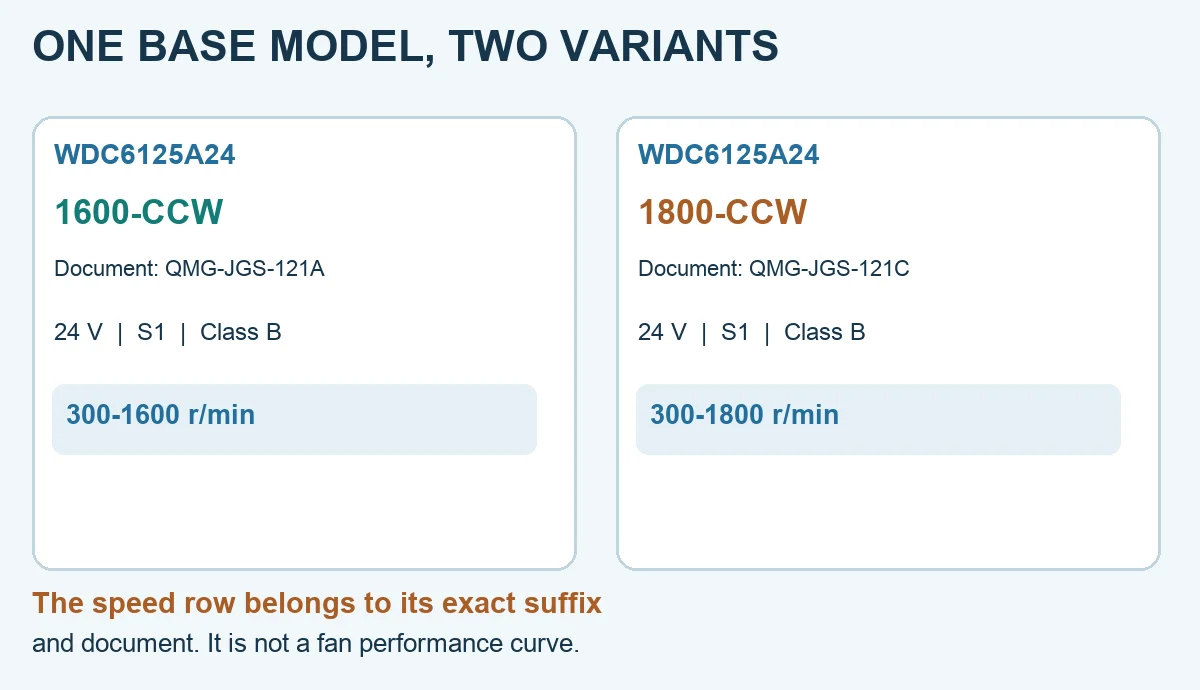
The same basic motor designation can have different documented variants. Two supplier specifications for a motor used in a LONGWELL fan project carry the base designation WDC6125A24. The 1600-CCW document is QMG-JGS-121A and lists a 300-1600 r/min loaded range; the 1800-CCW document is QMG-JGS-121C and lists 300-1800 r/min. Both specify 24 V, S1 duty and Class B insulation. These are document-bound motor examples, not fan airflow curves or evidence that the two variants are interchangeable.
Keep thermal, duty and ingress fields separate
Insulation class describes the thermal capability of the winding insulation system; temperature rise describes heating under specified test conditions. Ambient limit, cooling method and duty are separate inputs. A Class F designation alone does not promise a particular operating temperature or service life. The original article used a fixed life multiplier from a temperature margin; that shortcut cannot predict the life of a particular installed fan. Compare the exact motor’s rise, ambient, insulation and cooling information instead. The insulation and temperature-rise guide gives further context, but the model document controls the selection.
IEC 60034-1 identifies S1 as continuous running duty and defines other duty types under their own conditions. A label that says S1 does not, by itself, certify the whole fan assembly for every ambient, speed or enclosure. An S2 or S3 marking needs its stated duration or cycle details. IP describes a defined level of protection against solids and water for the marked enclosure; it is not a blanket approval for outdoor use, washdown or a corrosive environment. Confirm the complete assembly, wiring entry and application with the applicable technical document.
Read controls and marks by their actual scope
A rotation arrow, control-voltage note, capacitor value or terminal symbol can be useful, but it is not a universal wiring diagram. Identify whether the label belongs to the motor, drive, fan assembly or another component, then match the exact wiring sheet and revision. The example WDC6125A24 supplier document specifies VSP control and FG feedback for that motor variant; it does not authorize copying those connections to another model. Work on electrical equipment only under the site’s isolation and verification procedure.
Certification marks also have a scope. Record the mark, standard or file number, covered model and destination market, then inspect the corresponding current certificate or declaration. A mark visible on a motor or a family webpage is not proof that every fan configuration is covered. LONGWELL’s document center provides a route to request model-specific technical and certification records; send the full nameplate information to obtain the right document.
Make a usable nameplate passport before replacement
Save a clear label image with the complete model and suffix, supply and paired ratings, speed or speed range, duty, ambient and thermal limits, enclosure or IP code, control notes, approval identifiers, and any serial or revision reference. Add a separate record of the installed fan housing, impeller, mounting, electrical supply and operating duty. If the label is absent, faded or inconsistent with the machine, do not guess missing fields from a product-family photograph. Trace the original purchase or drawing and ask for the exact document. A discontinued-fan replacement guide can help organize that comparison.
The safe decision is often to pause selection until the missing suffix, wiring sheet or fan curve is recovered. That is more useful than treating a nominal kW, approximate rpm or matching frame as a complete replacement specification. With the full identity and operating conditions, a supplier can check both electrical compatibility and the actual fan duty.