Defining the 120mm Cross Flow Fan Constraints
First, the customer submitted a new project for a custom 120mm cross flow fan, requesting a total volume of 50,000 units. Their equipment chassis had very little internal room. Consequently, the physical space limits were incredibly strict. The complete assembly length could not exceed 510mm, while the actual rotating impeller had to measure exactly 390mm long. This left very little space for the external motor housing.
Next, the electrical inputs required careful planning. The design called for a standard 220V, 50Hz AC motor. Furthermore, the machine needed two different operating modes. The motor had to reach 1300 RPM on the high wire setting. Instead, the middle wire setting required a strict 1100 RPM limit. Even so, the total power draw was strictly capped at 28W.
Finally, the buyer needed a flexible supply approach. They requested separate quotes for three different components. First, they wanted the price of the standalone metal rotor. Next, they asked for the cost of the bare motor. Finally, they requested pricing for the complete assembled unit. Therefore, we assumed they were testing their own factory assembly costs against ours. The mechanical design also demanded left rotation and an oblique air flow pattern. In short, hitting the 510mm length while building the 120mm cross flow fan defined the whole project.
Engineering the 120mm Cross Flow Fan Unit
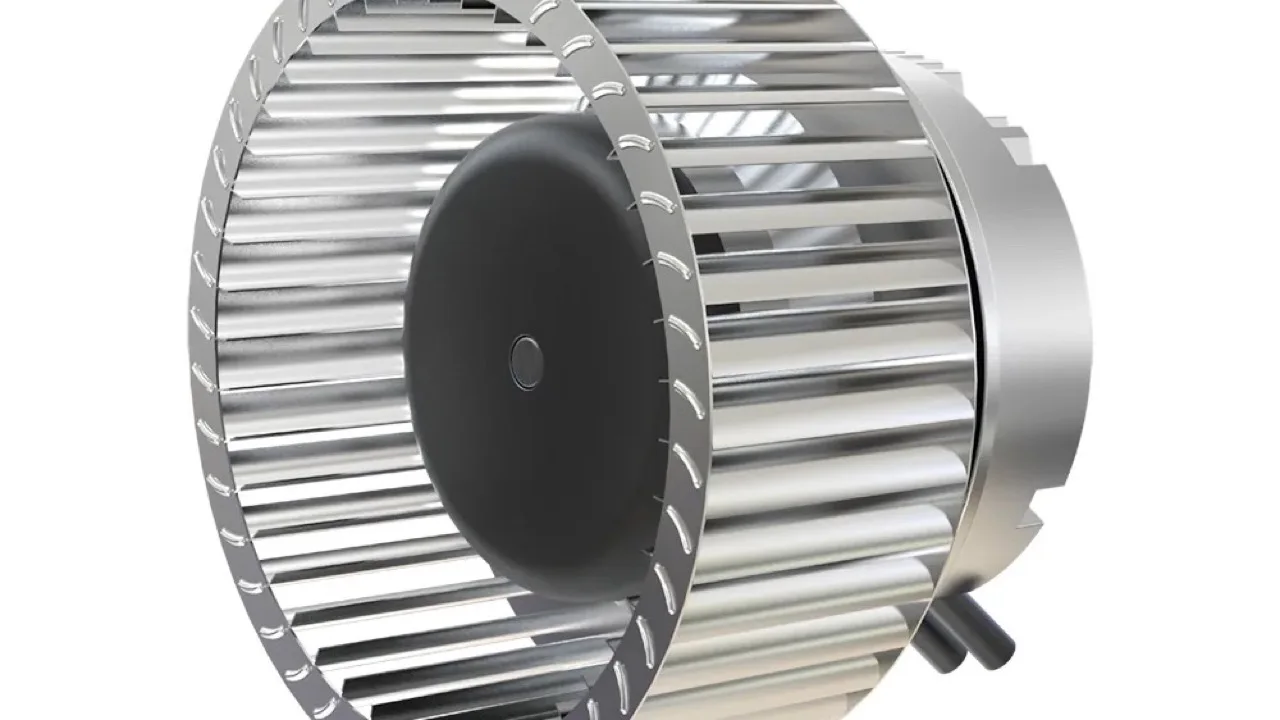
We faced multiple mechanical choices when designing this 120mm cross flow fan. First, we looked at the rotor material. We rejected standard plastics right away because a 390mm plastic cylinder bends easily across that distance. At 1300 RPM, that bending causes massive failure. Therefore, we selected an aluminum construction featuring 48 individual metal blades.
Selecting the Bearing Type
Next, we evaluated the shaft supports. Standard sleeve bearings cost materially less money. Even so, we rejected them quickly. A long metal rotor places a heavy load on the shaft, meaning standard supports would wear out too fast. Therefore, we chose premium ball bearings.
Ball bearings support horizontal weight much better, and they extend the operational life of the entire unit. However, this choice comes with a real cost. Ball bearings create slightly more noise than sleeve types, and they increase the total assembly price. We accepted these trade-offs to guarantee long-term reliability.
Designing the Support Structure
Consequently, we had to design a highly rigid frame. The aluminum rotor is heavy. So, we added a solid 8mm steel shaft to stop the unit from twisting under high physical loads. Next, we finalized the side plates. We specified SGCC for the housing materials. SGCC is a hot-dip galvanized steel that provides extreme strength while stopping rust from forming over time.
Finally, we built the right side plate, left side plate, and air plates from this specific steel. The metal frame locks the moving parts firmly in place. In short, the rigid housing prevents vibration damage. The completed fan perfectly meets the 510mm length limit, and it safely delivers 1300 RPM while consuming only 28W of power.
Technical Specifications
| Voltage | 220 V |
| Frequency | 50 Hz |
| Power | 28 W |
| Speed (High / Middle) | 1300 / 1100 RPM |
| Impeller Diameter | 120 mm |
| Impeller Length | 390 mm |
| Total Length | 510 mm |
| Bearings | Ball bearing |
| Impeller Material | Aluminum (48 blades) |
| Housing Material | SGCC |
| Shaft | 8 mm steel |
The 390mm aluminum impeller dictates the mechanical stability of the 120mm cross flow fan. Furthermore, the strict 28W power limit forced us to optimize the external rotor motor heavily. Therefore, reaching the 1300 RPM target required very precise electrical tuning. Consequently, the 8mm steel shaft was vital to prevent long-term vibration damage.
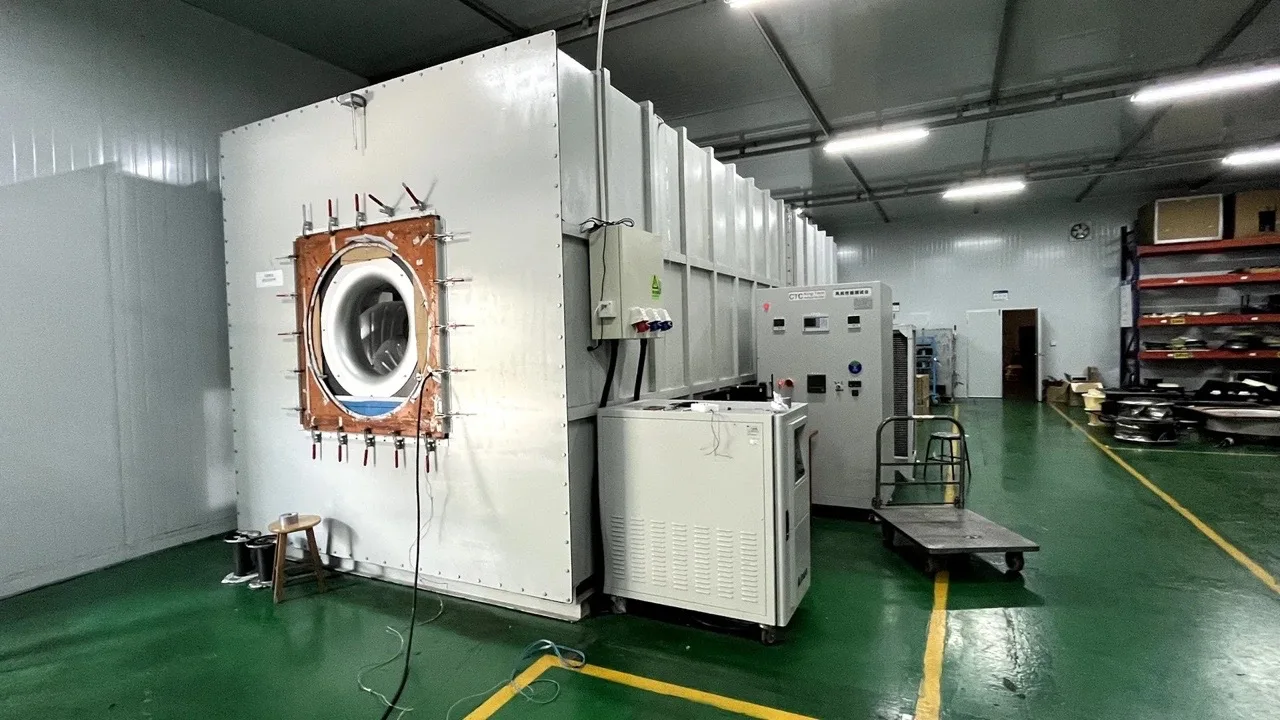
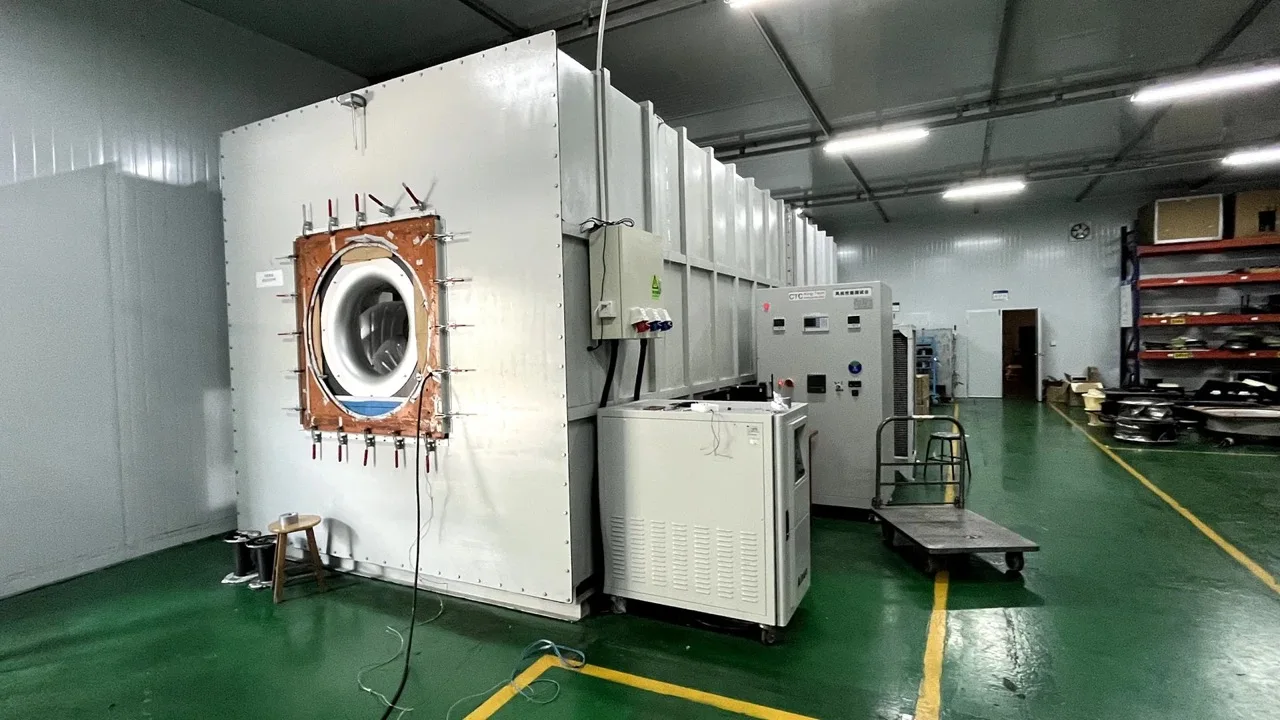
Reference: AMCA 210 covers the test method behind these figures.
Technical Documentation
Engineering Drawing (LWCA-120390SN) shows the exact layout dimensions, including the rigid 510mm length limit.
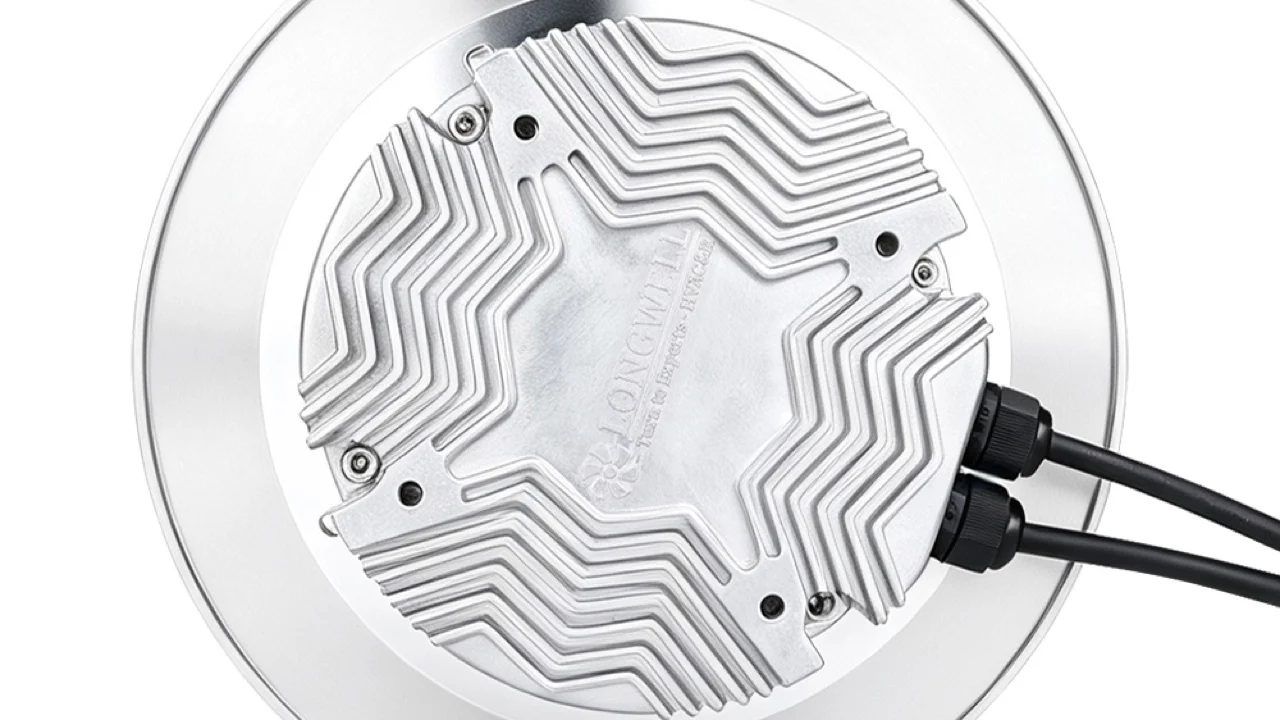
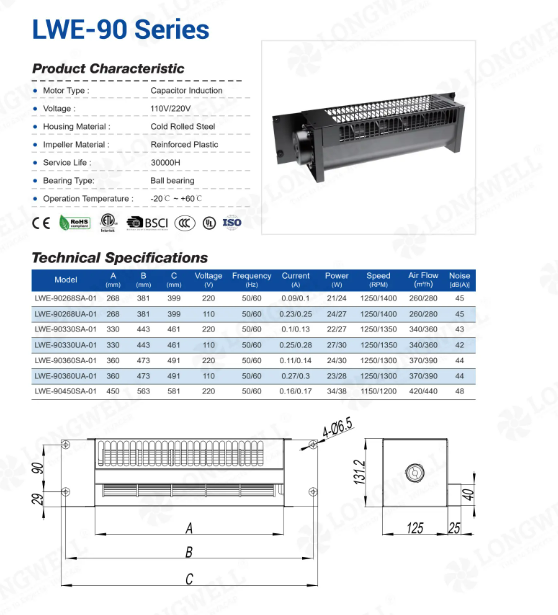
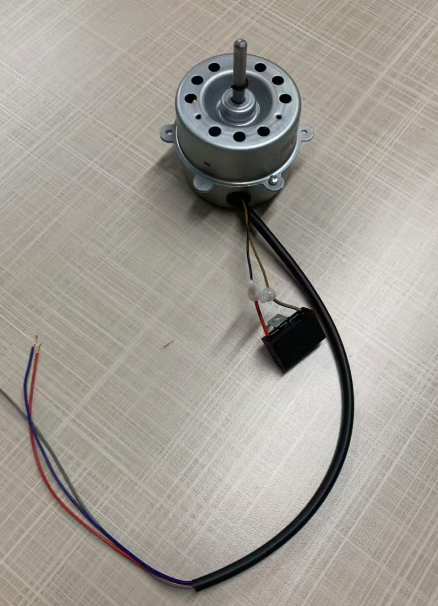 displays the external rotor motor and the attached dual-speed wiring harness.
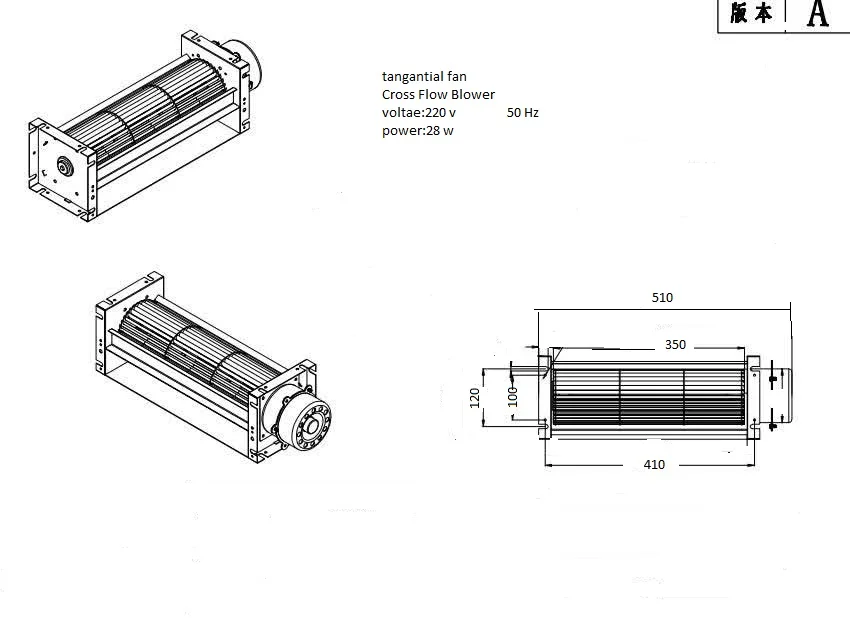 illustrates exactly how the thick SGCC steel plates hold the aluminum rotor.
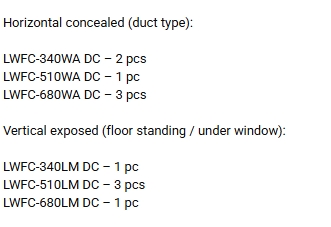
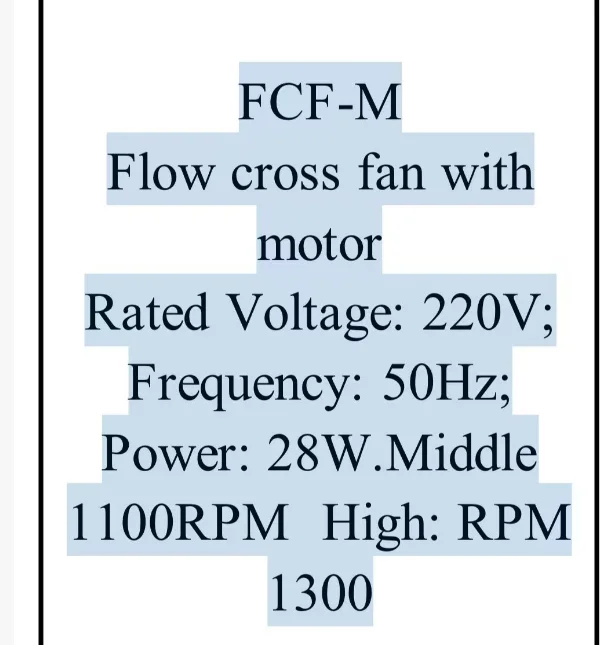 highlights the core two-speed electrical demands from the original customer brief.
Specifying Tangential Blowers for Equipment
When you face a similar cooling design challenge, measure these specific details early:
- First, calculate your actual physical boundaries. The total fan assembly always extends past the bare rotor length. Therefore, you must allow extra chassis room for the metal side plates and the motor housing.
- Next, pick your rotor materials based on the total span. Any rotor longer than 300mm requires rigid metal construction. By contrast, long plastic parts warp over time and cause severe system failures.
- Furthermore, clearly define your expected running speeds. Dual-speed setups demand specific internal motor wiring. So, you must evaluate both the high and middle RPM settings during your early testing phase.
- Finally, verify your intended mounting orientation. Ball bearings support vertical installations very well. Instead, standard sleeve bearings wear out quickly under vertical physical loads. Longwell tests unit performance TO AMCA 210-16 methods, ensuring your airflow numbers remain accurate across all mounting angles.
Related: Cross Flow Fans.
Technical Documentation & Resources
Browse our cross-flow fans range, the AC cross-flow fans section, or cross-flow impellers.
Have a Similar Fan Requirement?
Longwell’s engineering team delivers custom spec sheets and samples within 90 days. Since 1990, we have supplied EC fans and blowers to OEMs across HVAC, cold chain, data center, and industrial applications worldwide.
Browse Related Products:
🏆 ISO 9001 / ISO 14001 / ISO 45001 | CE (TÜV) | UL/ETL | ATEX Zone 21/22 | AMCA 210-16 / ISO 5801 tested
Choose the right cross flow fan
Longwell manufactures 495 cross flow fans in-house. Send airflow, static pressure and voltage — an engineer replies with a matching model, performance curve and price within one working day.