One chassis, three performance points
A Singaporean OEM asked for a series of cross-flow fans in three sizes: 80mm, 90mm and 100mm cross-flow impeller diameter. All three share a fixed length of 520mm.
That fixed length is the interesting part, because it was never an aerodynamic requirement at all.
Why hold the length constant
They design the chassis once. So holding 520mm across the range means one set of end brackets, one cut-out, one assembly fixture and one service part.
Consequently the OEM gets three performance points in their product line without three product designs behind them. That is a manufacturing decision wearing engineering clothes.
The rest of the brief
- First, an EC motor on 230 VAC at 50 Hz.
- Next, temperature-controlled speed modulation, so output tracks thermal load.
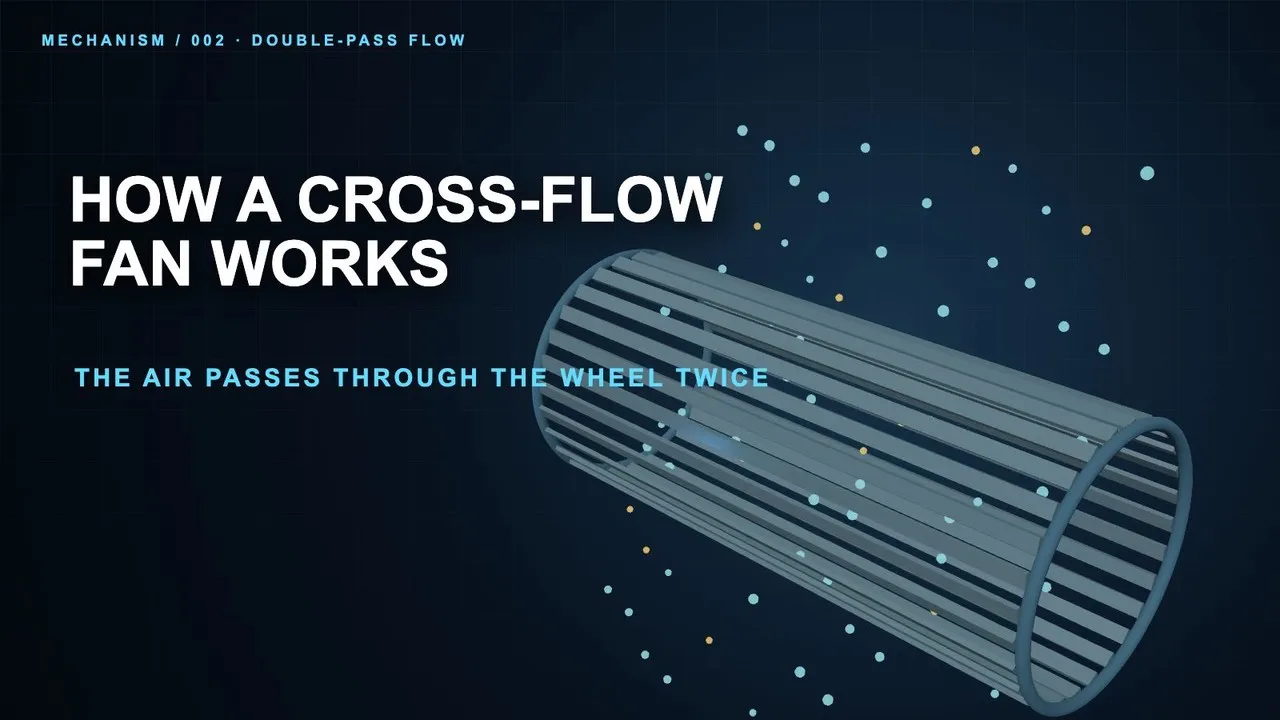
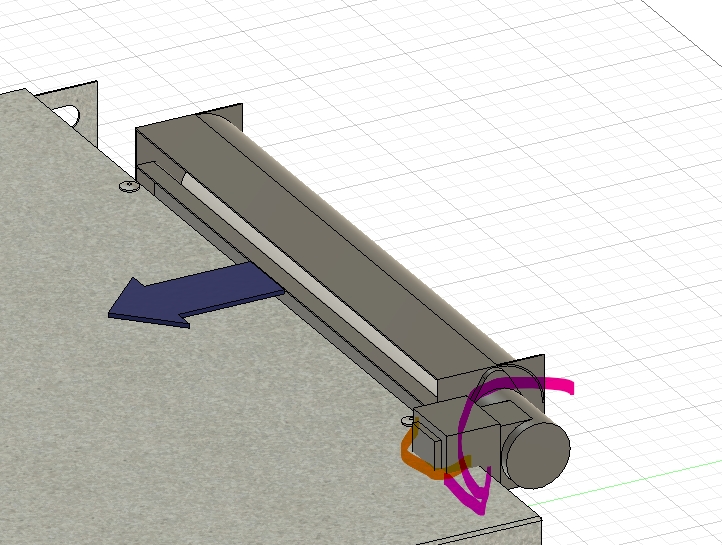
- Meanwhile a diagram showing air pulled horizontally through a cooling coil.
- Finally, an evaluation of aluminum against industrial plastic for the impeller.
They planned a staged ramp: one sample of each size, then 50 units a month, then volume. Sensible, and it tells you they intend to sell all three rather than pick one.
What changes with diameter, and what does not
Three cross-flow impeller diameter options on one platform is light development rather than three projects, provided the shared parts really are shared.
What cross-flow impeller diameter actually buys
A larger cross-flow impeller diameter at the same length moves more air and develops more pressure at the same speed. It also takes more torque to turn.
So the three sizes are not three trim levels of the same fan. They are three duty points, and the motor sizing has to follow the largest one rather than the middle.
Why EC was the right call here
The customer wanted speed to follow temperature, and an EC motor takes that signal directly.
Doing the same with AC needs a phase-angle controller, which is a separate component, is less efficient, and controls speed by degrading the supply rather than by commanding it.
Across a three-model family the EC choice compounds, because one motor platform serves all three variants and one control interface documents them.
The material question, answered honestly
Here the customer asked us to compare aluminum alloy against industrial plastic, and the honest answer is that at 520mm both work.
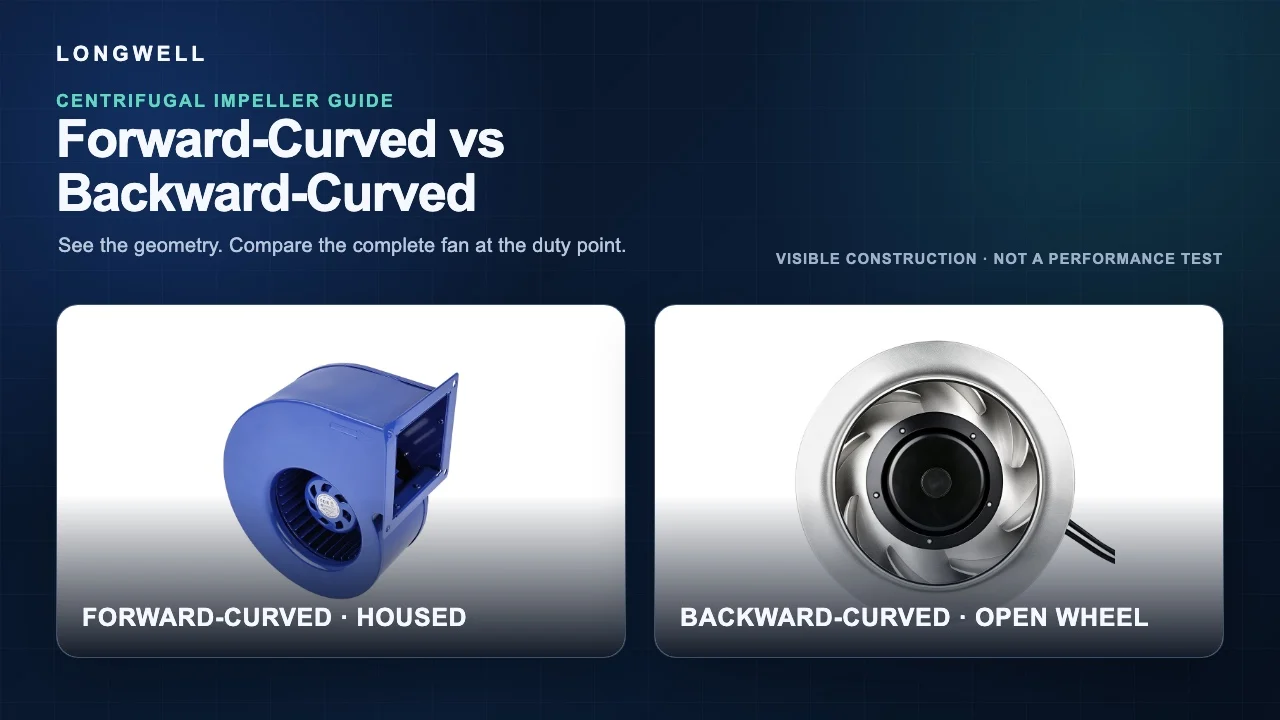
We produce glass-filled plastic impellers considerably longer than this, so rigidity alone does not decide the material at this cross-flow impeller diameter. What decides it is speed, temperature and acoustics.
Aluminum is stiffer and takes more heat, which matters above roughly 1600 RPM or in a warm airstream. Filled plastic damps vibration better and is quieter, which matters in occupied spaces. Meanwhile plastic is lighter, so it loads the bearings less over a long span.
For a fan coil application indoors at moderate speed, filled plastic is usually the better answer. We would move to aluminum if the speed or the air temperature rose.
For rotating assemblies, balance grades come from ISO in ISO 21940.
Technical Specifications
One number below is deliberately identical across all three variants. That is the whole point of the request.
| Parameter | Value |
|---|---|
| Model Numbers | LWCE-80520SN-07-00, LWCE-90520SN-07-00, LWCE-100520SN-08-00 |
| Impeller Diameter | 80 mm / 90 mm / 100 mm |
| Impeller Length | 520 mm |
| Voltage | 230V AC |
| Frequency | 50 Hz |
| Motor Type | EC (Electronically Commutated) |
| Control Input | 0-10V / PWM / RS485 (SmartEC™) |
| Impeller Material | Aluminum Alloy |
Technical Documentation
The following documents were generated and approved during the engineering phase to validate the design and provide the customer with necessary integration data.
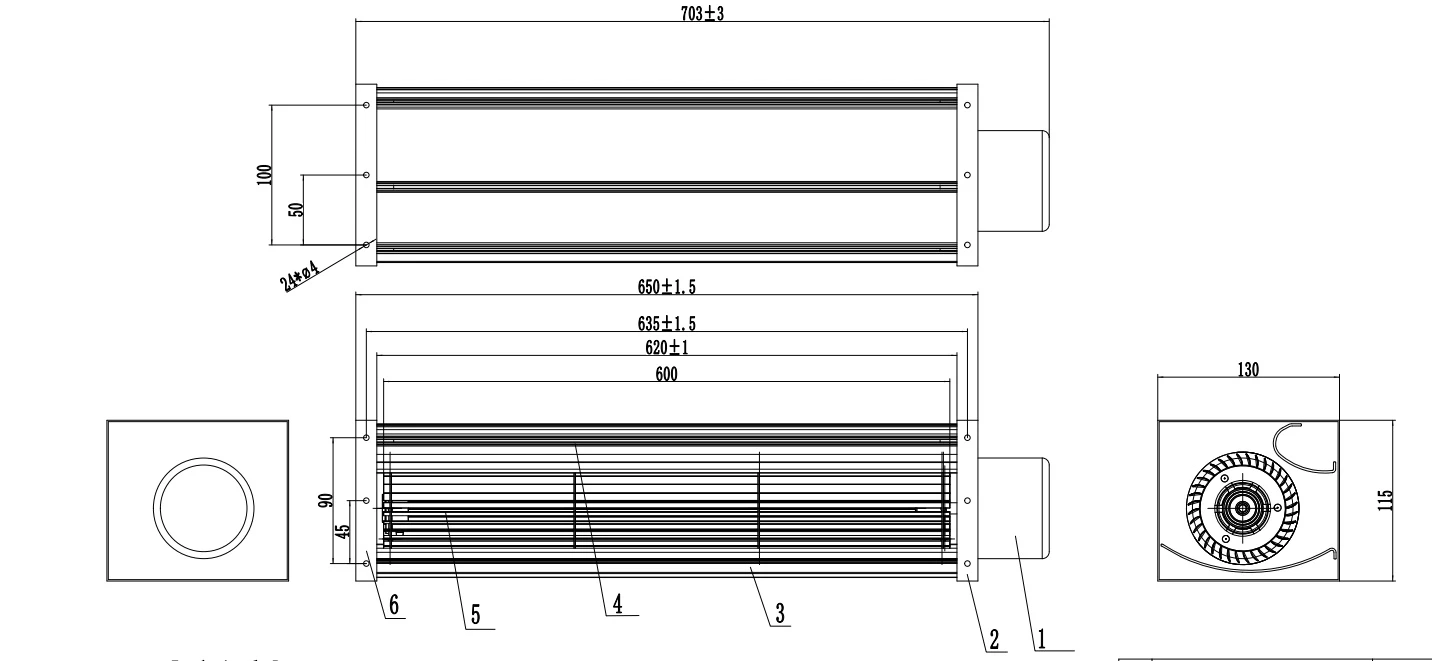
Meanwhile the engineering drawing for the 100mm diameter base model provided the dimensional foundation for the custom 520mm variants requested by the client.
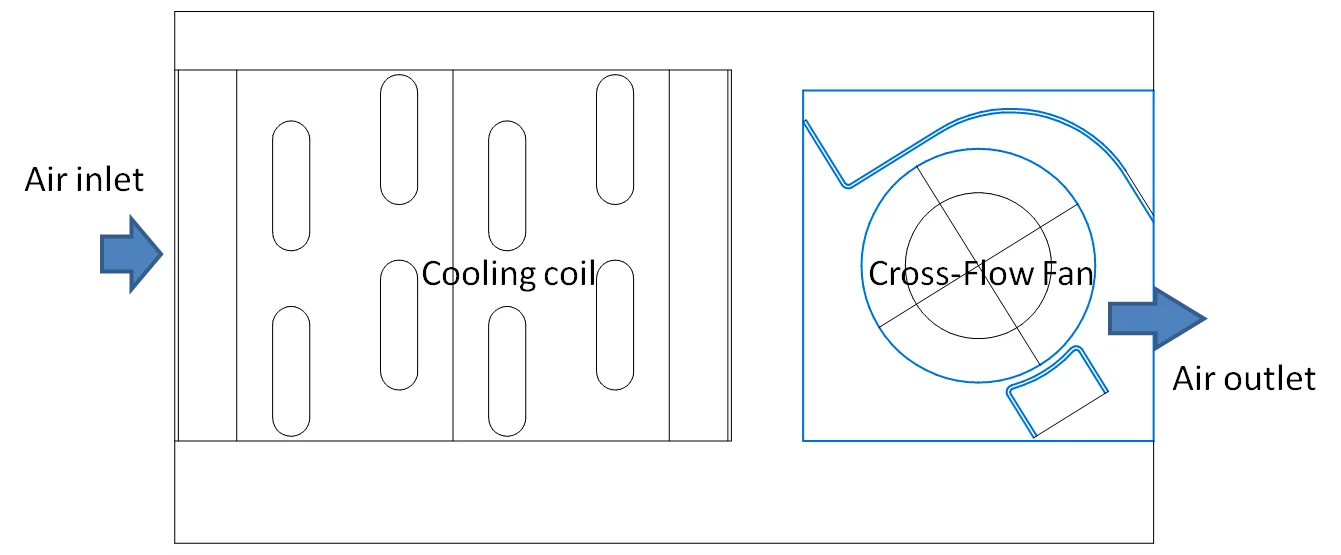
The application schematic from the customer shows how the cross-flow fan integrates with a cooling coil, a common configuration in compact air conditioning units.
OEM system integrators can use the following 3D models for precise fitment checks within their own CAD assemblies:
- LWCE-80520SN-07-00.stp (80mm Diameter Model)
- LWCE-90520SN-07-00.stp (90mm Diameter Model)
- LWCE-100520SN-08-00.stp (100mm Diameter Model)
Planning a fan family
If you are planning a fan family rather than a single fan, these four points are worth settling early.
- Fix the dimension your chassis cares about, and vary the other. Holding length constant and changing cross-flow impeller diameter gives you a performance range from one mechanical design. Changing both gives you three separate products to tool, document and stock.
- Size the motor for the largest variant. The biggest diameter demands the most torque. Specifying the motor around the middle model leaves the top of the range underpowered, which usually surfaces at the worst moment during sample testing.
- Balance every variant, not just the first. A long rotor can be balanced at each end and still bend in the middle, and that behavior changes with diameter. Ask for a stated balance grade on each size rather than on the family.
- Decide impeller material from speed and temperature, not span alone. Long plastic impellers are routine. The real questions are how fast it turns and how warm the air is, so put those numbers in the enquiry rather than asking which material is stronger.
See our cross-flow fans range, the EC cross-flow fans section, or cross-flow impellers.
Questions about impeller sizing
Does a larger impeller always mean more airflow?
At the same length and speed, yes, and it also raises the pressure the fan can develop. What comes with it is more torque demand and usually more noise, so the largest variant in a family is rarely the best one for every application in it.
Can one motor serve all three diameters?
Often, provided you size it for the largest. An EC motor helps here because its speed is commanded rather than fixed by the supply, so the same motor can be programmed to a different curve for each variant instead of being replaced.
Is plastic strong enough for a long cross-flow impeller?
Yes, routinely. We make glass-filled plastic impellers at spans well beyond 520mm. Rigidity becomes the deciding factor only at higher speeds or in hot airstreams, where aluminum starts to earn its extra weight and cost.
Why does a fixed length matter so much to an OEM?
Because it collapses three mechanical designs into one. The same brackets, cut-out, fixture and service part serve the whole range, which reduces tooling, inventory and documentation at once. The saving is in the chassis, not in the fan.
Have a fan requirement like this one?
Send the datasheet you are working against, or simply the duty point. Then our engineers tell you what fits and what does not. Meanwhile custom spec sheets and samples take up to 90 days. Since 1990 we have been building fans for OEMs worldwide.
Browse Related Products:
🏆 ISO 9001 / ISO 14001 / ISO 45001 | CE (TÜV) | UL/ETL | ATEX Zone 21/22 | AMCA 210/211 / ISO 5801 tested