Application engineering note
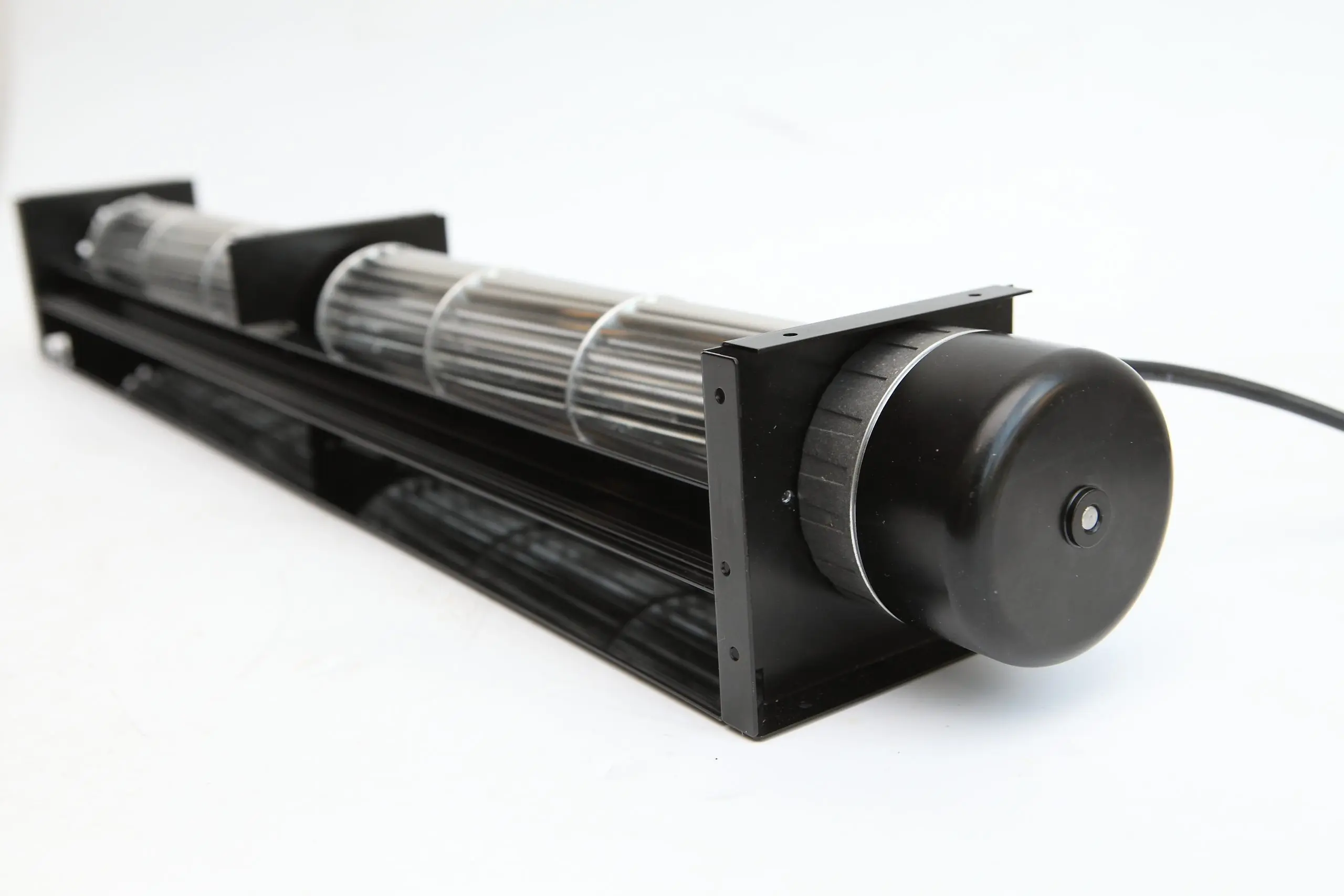
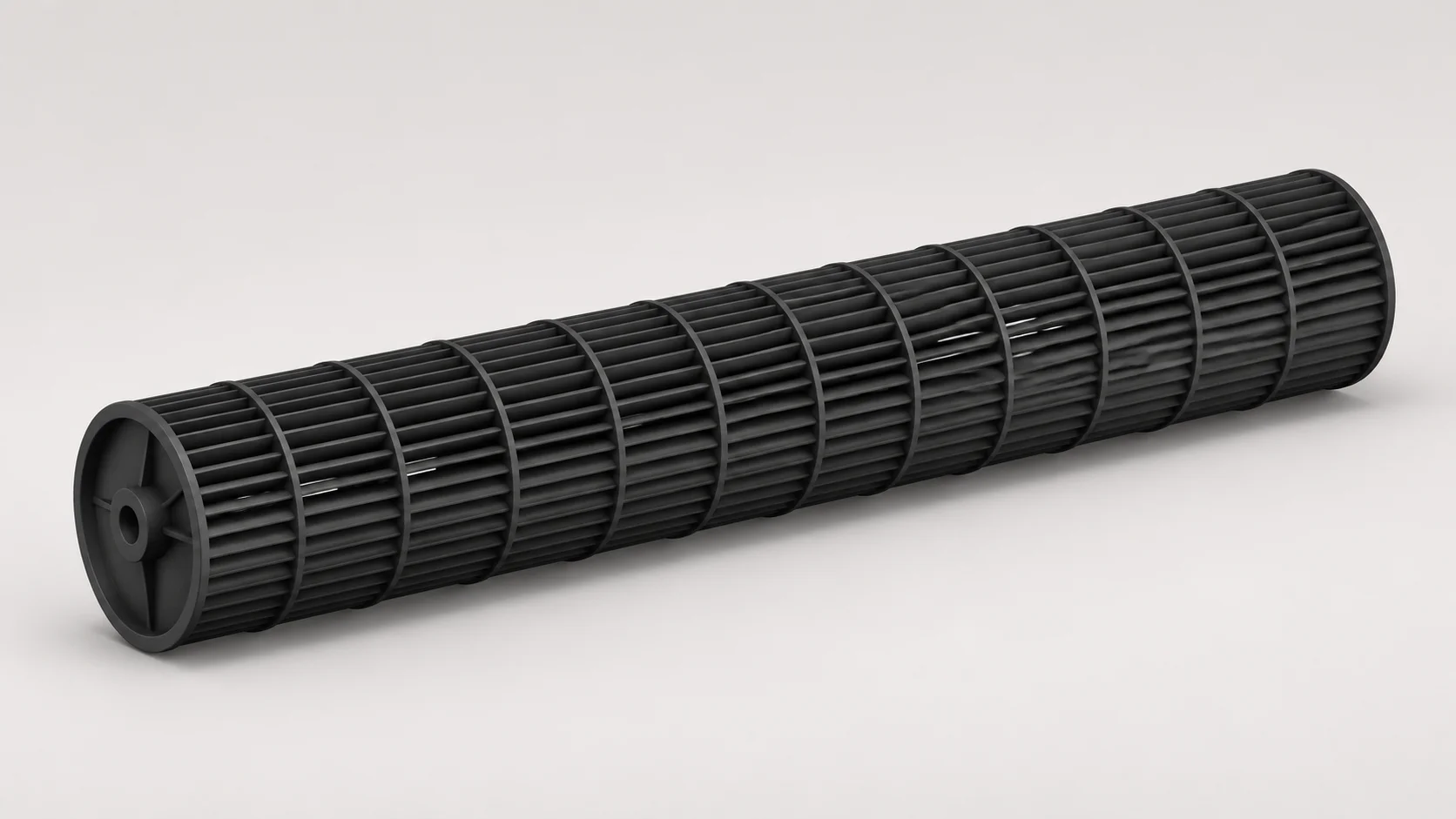
A trench heater combines a long, shallow enclosure with a heat exchanger and an outlet grille. An elongated cross flow fan can be evaluated against that layout when the equipment needs airflow distributed along the heating section.
A documented LWCE configuration
The LONGWELL LWCE-100520SN-08 specification identifies an EC cross flow fan with a 230 VAC nominal supply and 50/60 Hz frequency. Its control input accepts 0–10 VDC or PWM. The mains supply and the low-voltage speed command are separate connections.
The model sheet lists a maximum airflow of 1100 m³/h and a maximum static pressure of 100 Pa. These are separate maximum ratings; the required airflow through a heat exchanger and grille must be checked at the relevant system resistance.
Fit the fan to the complete heater
Provide the trench cross-section, heat-exchanger length, inlet opening, discharge grille and motor-end clearance. Check the mounting points and cable exit on the selected fan drawing before completing the equipment layout.
Agree the intended speed range with the heating controller and identify any feedback it needs. The room-side acoustic assessment should use the assembled heater and its intended operating modes. Heating output, window condensation performance and room comfort depend on the complete heater design and its operating conditions.
Discuss your fan requirement
Send LONGWELL your airflow and pressure duty point, power supply, available installation space, control requirements, operating environment and drawings. Contact our engineering team to discuss a suitable configuration.
Choose the right cross flow fan
Longwell manufactures 495 cross flow fans in-house. Send airflow, static pressure and voltage — an engineer replies with a matching model, performance curve and price within one working day.