Buying an industrial fan from China is an engineering purchase and a transaction with several parties. A convincing factory video, a low price, or a certificate screenshot may be useful starting points, but none identifies the exact fan you will receive. Overseas equipment makers can reduce uncertainty by asking for records that connect the seller, manufacturing site, technical revision, inspected batch, and shipment.
This guide is for a buyer preparing a real fan inquiry. It offers a sequence of checks to agree with the supplier and your own technical, logistics, and compliance advisers. The accompanying video shows procurement and inspection context; it does not establish that every product or shipment has passed the same checks.
1. Confirm who is selling, making, and receiving payment
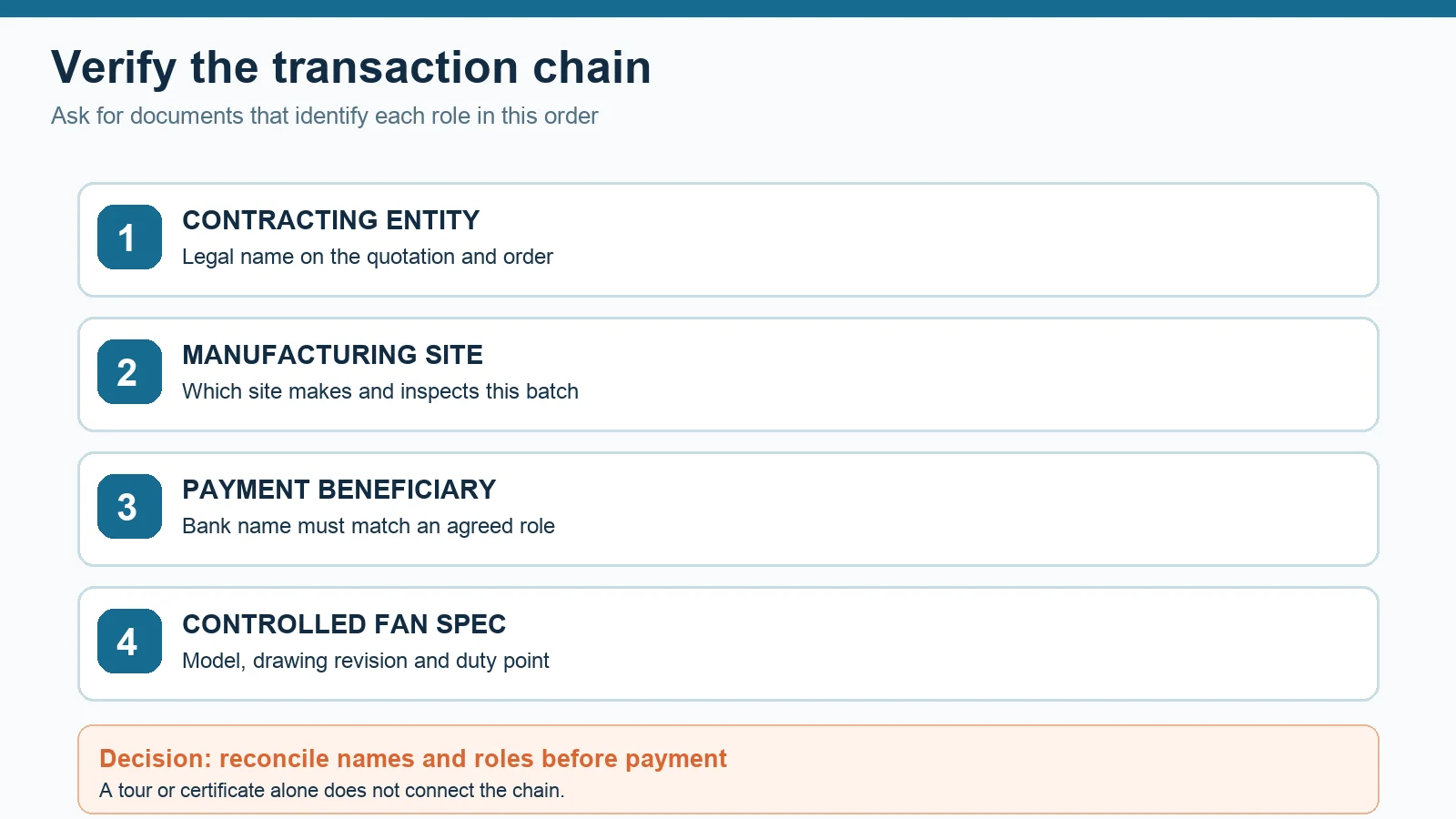
Ask for the legal name on the quotation and purchase order, the site that will manufacture or assemble the fan, and the proposed payment beneficiary. Compare the names and ask the seller to explain any difference in writing. A trading company can be a legitimate supplier; what matters is clarity about its role and responsibility. A tour can show a facility, but it cannot by itself prove that the facility will make your order or that a particular bank account belongs in your transaction.
2. Freeze the fan duty before comparing prices
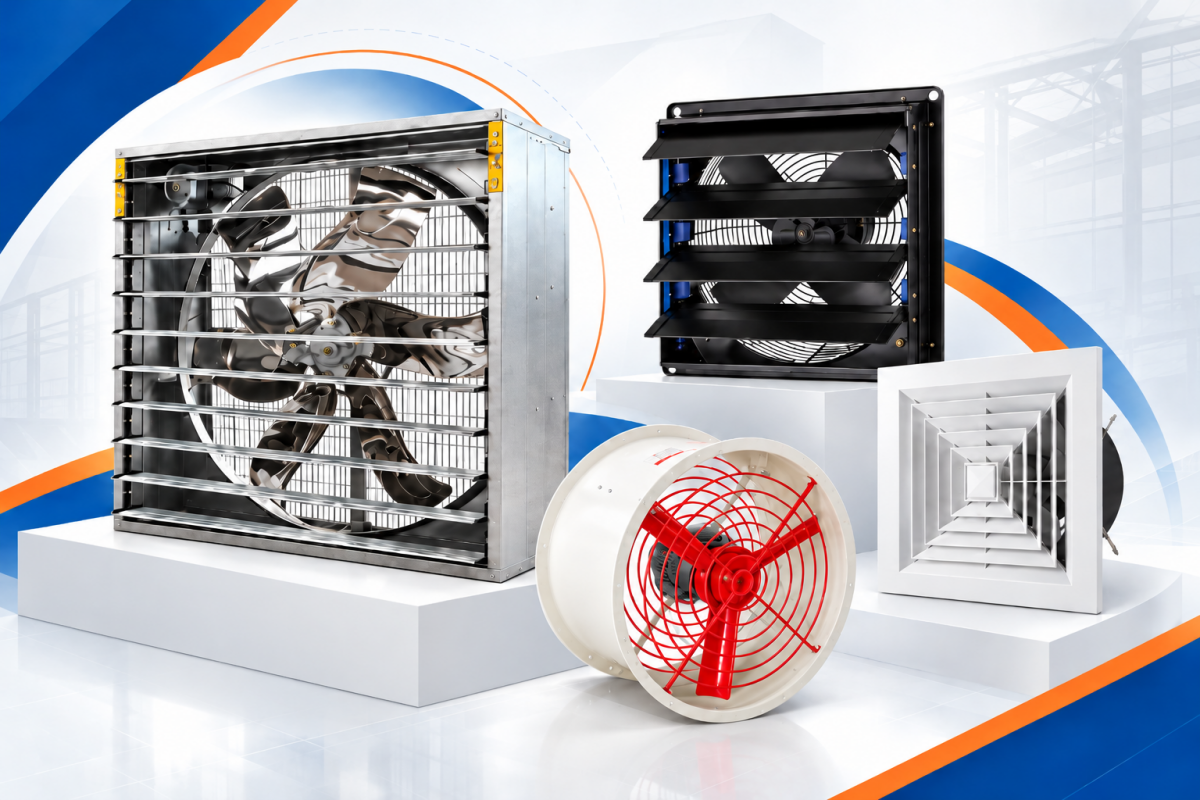
State the required airflow and pressure at the installed operating point, supply voltage and frequency, speed-control interface, space limits, mounting, environment, and any safety or market requirements. Request a drawing with model suffix and revision, plus a deviation list for anything the offered unit cannot meet. A price for a different operating point or connector is not an apples-to-apples comparison. If your need is still exploratory, a LONGWELL industrial axial fan family or centrifugal fan family can help identify possible architectures; neither family page proves a specific model fits your duty. For custom interfaces, the OEM versus standard fan guide explains what may need a controlled drawing.
3. Read test evidence within its actual scope
For a duty-point decision, request the relevant fan curve or test report with model, configuration, test conditions, and method. Mark your proposed operating point on the curve and ask how the installed inlet, outlet, filter, grille, or enclosure changes the system resistance. A single free-air number cannot establish performance in your equipment. Likewise, a sound figure without distance, operating point, and test setup is difficult to compare. If the supplier presents a certificate, check the issuing body, legal entity, covered product or model, standard, validity, and any exclusions. A family brochure or facility image is useful for orientation, not a substitute for exact-model evidence.
4. Approve a sample against the same revision
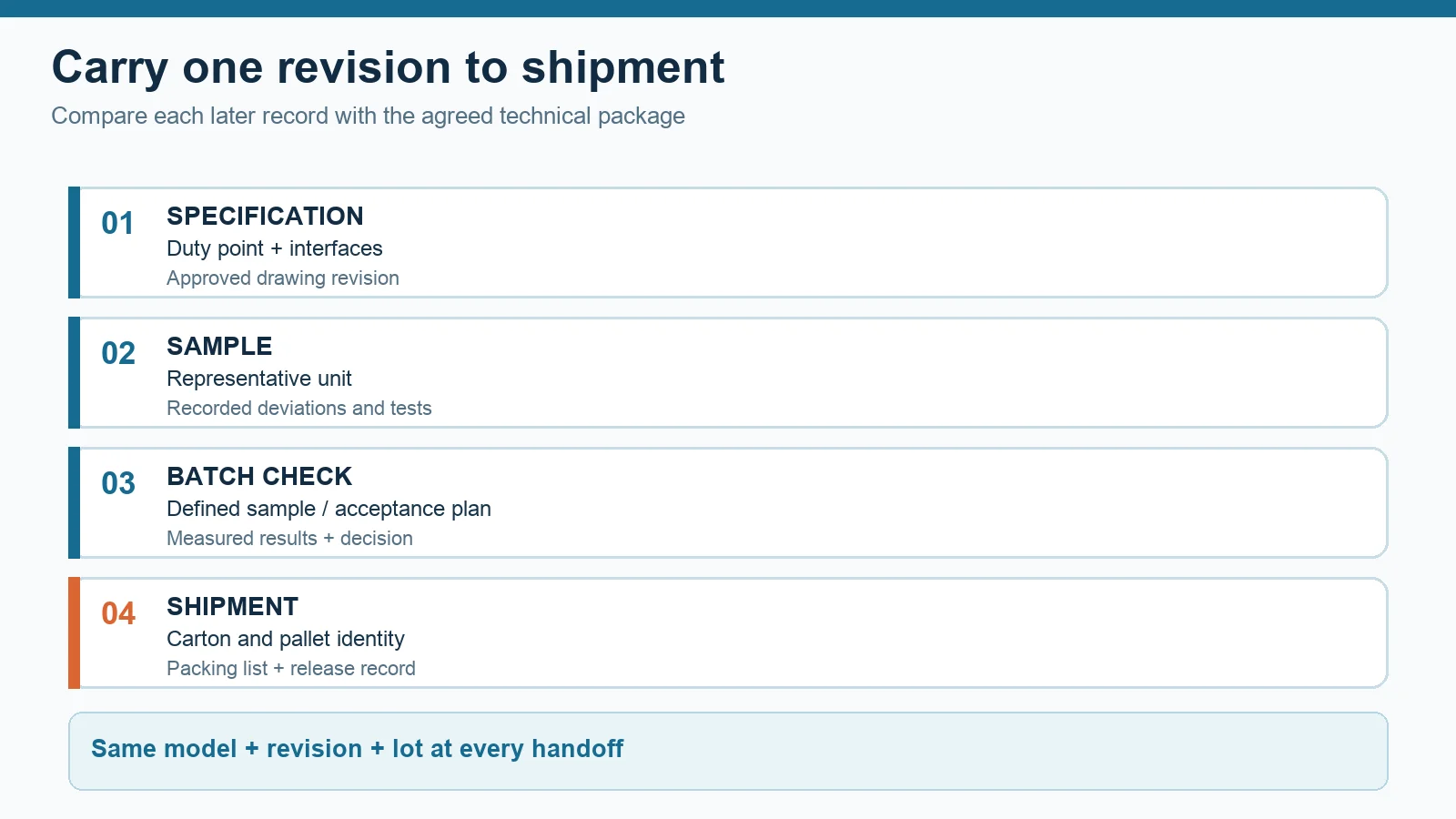
Record the sample’s model and suffix, drawing revision, key electrical and mechanical interfaces, test conditions, and accepted deviations. Test it in the intended assembly when the system interaction matters. Keep the approved sample or a measured reference record, but do not assume that sample approval automatically covers later production. Specify which characteristics must be checked again for the batch and what change requires renewed approval.
5. Define inspection before the batch is ready
Write the inspection plan into the order: which units or cartons will be sampled, which dimensions and labels matter, what electrical or functional checks apply, the acceptance limits, who records results, and who can release a deviation. Inspection records should name the batch and approved drawing revision. A pass label without the underlying criteria is weak evidence; a report for a different model is weaker still. LONGWELL’s public manufacturing and quality overview describes general capability, while a buyer still needs the actual records for the quoted item.
6. Reconcile the shipment and payment evidence
Before the agreed release milestone, match the inspected lot to carton labels, pallet counts, packing list, invoice, and shipping documents. Confirm how rejected or reworked items are segregated and documented. Set payment milestones, inspection rights, shipping terms, and required import documents in the contract with qualified advisers for the destination market. The right arrangement depends on the transaction; there is no universal deposit percentage, inspection sample rate, customs document set, or Incoterms choice that makes every purchase safe.
The practical next step
Send one controlled requirement pack when requesting a quotation: duty point and operating conditions, interface and drawing constraints, target quantity, destination, and the evidence you need at sample and batch release. Ask the supplier to respond with a model and revision, exceptions, relevant test scope, and a proposed inspection plan. That gives engineering and procurement the same version to evaluate.
Choose the right industrial fan
Longwell manufactures 38 industrial fans in-house. Send airflow, static pressure and voltage — an engineer replies with a matching model, performance curve and price within one working day.