An off-the-shelf fan is not automatically the cheap compromise, and a custom fan is not automatically the better-engineered answer. The useful question is narrower: does a qualified standard platform clear the constraints that matter in the equipment?
Start there. A connector beside a service panel, a mounting hole that lands on a weld, an unsupported control signal, or an inlet starved by the cabinet can all stop a project. Customization is justified when the blocking constraint is valuable, stable and likely to repeat. It is not justified by a vague hope that a special drawing will make the product “more optimized.”
Do Not Start With an Annual-Volume Rule
There is no universal order quantity at which custom suddenly wins. Tooling is only one line in the decision. Engineering time, samples, approval testing, inventory, revision control, inspections and spares also belong on the custom side. The standard side may carry adapter parts, unused cabinet space, awkward service access or recurring assembly work.
Build the comparison around the expected program life and show the uncertain inputs as ranges. If the equipment design is still moving, preserving flexibility may be worth more than removing one bracket. If the interface is frozen and the same problem will be built repeatedly, a controlled change becomes easier to defend.
Screen a Standard Platform Against the Real Constraints
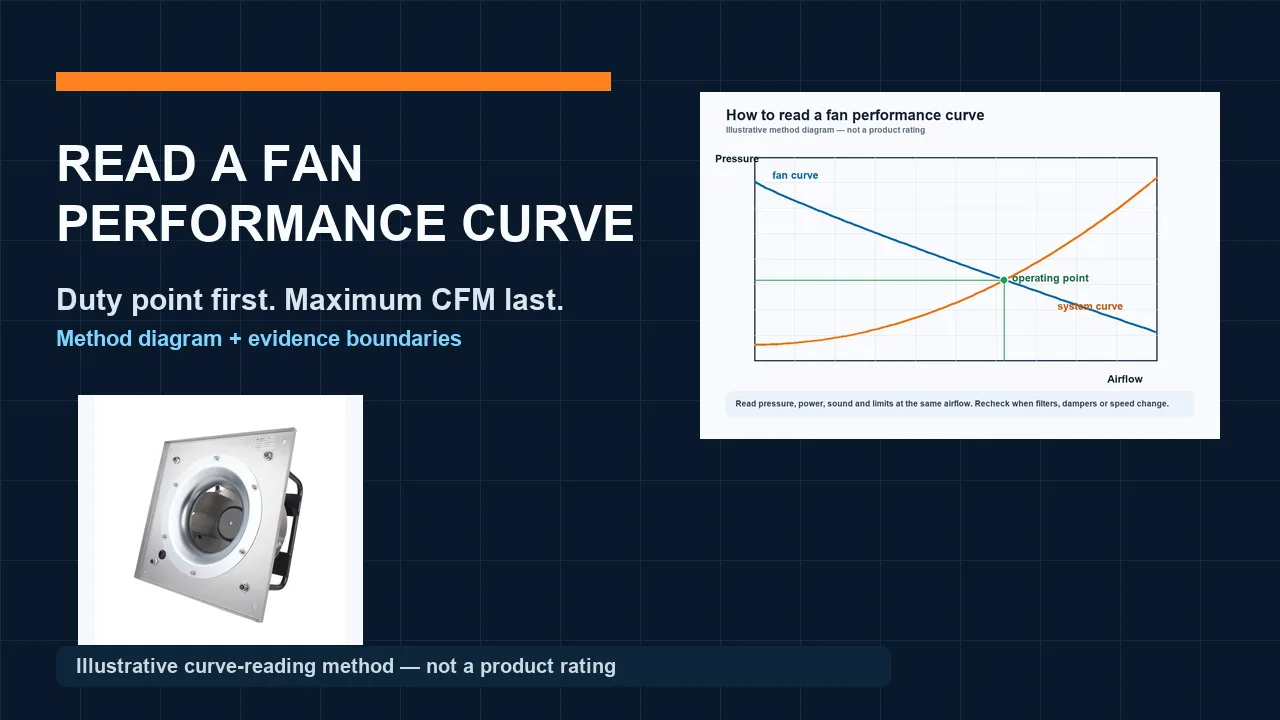
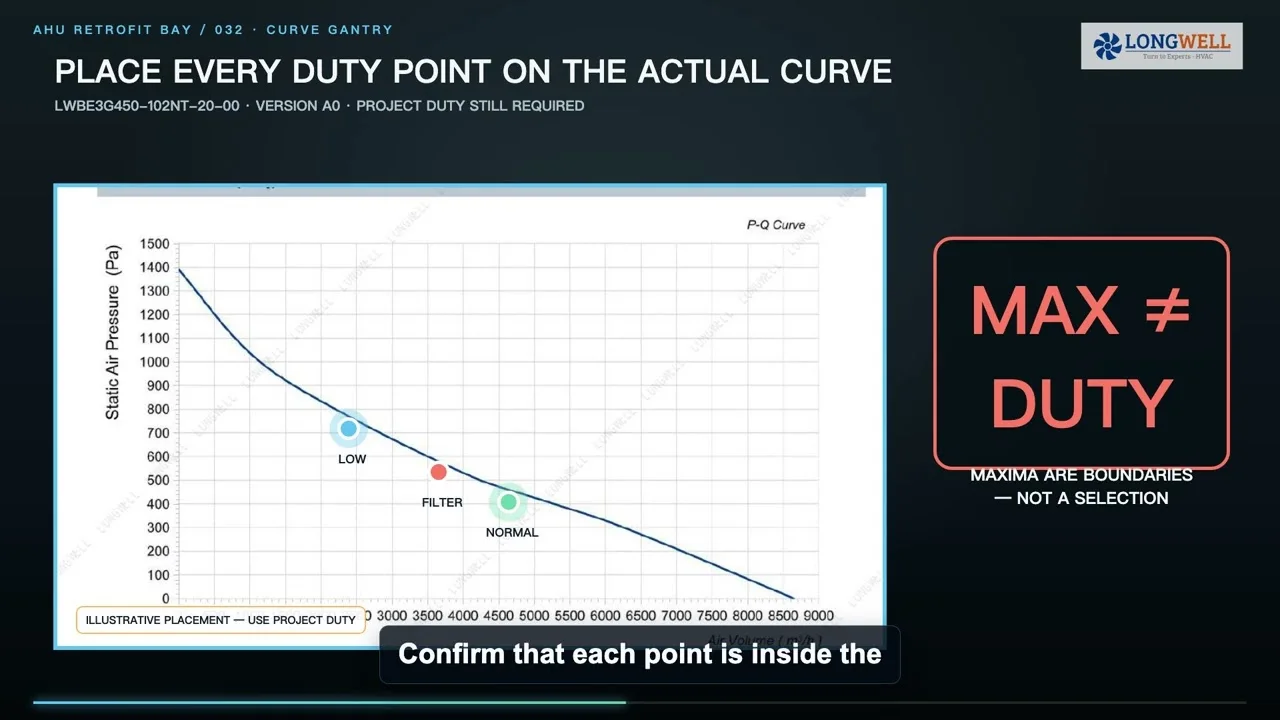
Do the standard-product review before requesting a new design. Record the full duty map, not only a free-air headline. Then check the installation envelope, inlet and discharge conditions, supply, protection, control behavior, environment, sound boundary, service access and required documents.
A useful screen has seven questions:
- Does the exact fan cover every required airflow-and-pressure point?
- Can it be installed and removed without colliding with the equipment?
- Do voltage, frequency, current, grounding and protection agree?
- Do command, feedback, alarms and failure behavior match the controller?
- Are materials and protection suitable for the declared environment?
- Can sound be assessed at the same duty and measurement boundary?
- Can the supplier provide the exact drawing, curve, instructions and approvals the project requires?
The fan engineering buyers’ guides can help organize early questions. Use the centrifugal fan index as one family-discovery route, then return to the controlled documents for the exact model and suffix.
Use a Three-Step Customization Ladder
Move only as far up the ladder as the constraint requires. First is a standard product. Second is a configured platform: an approved cable, connector, label, controller setting or mounting option that the platform already supports. Third is an engineered variant or a clean-sheet product, where a housing, wheel, motor, electronics, material system or other controlled characteristic changes.
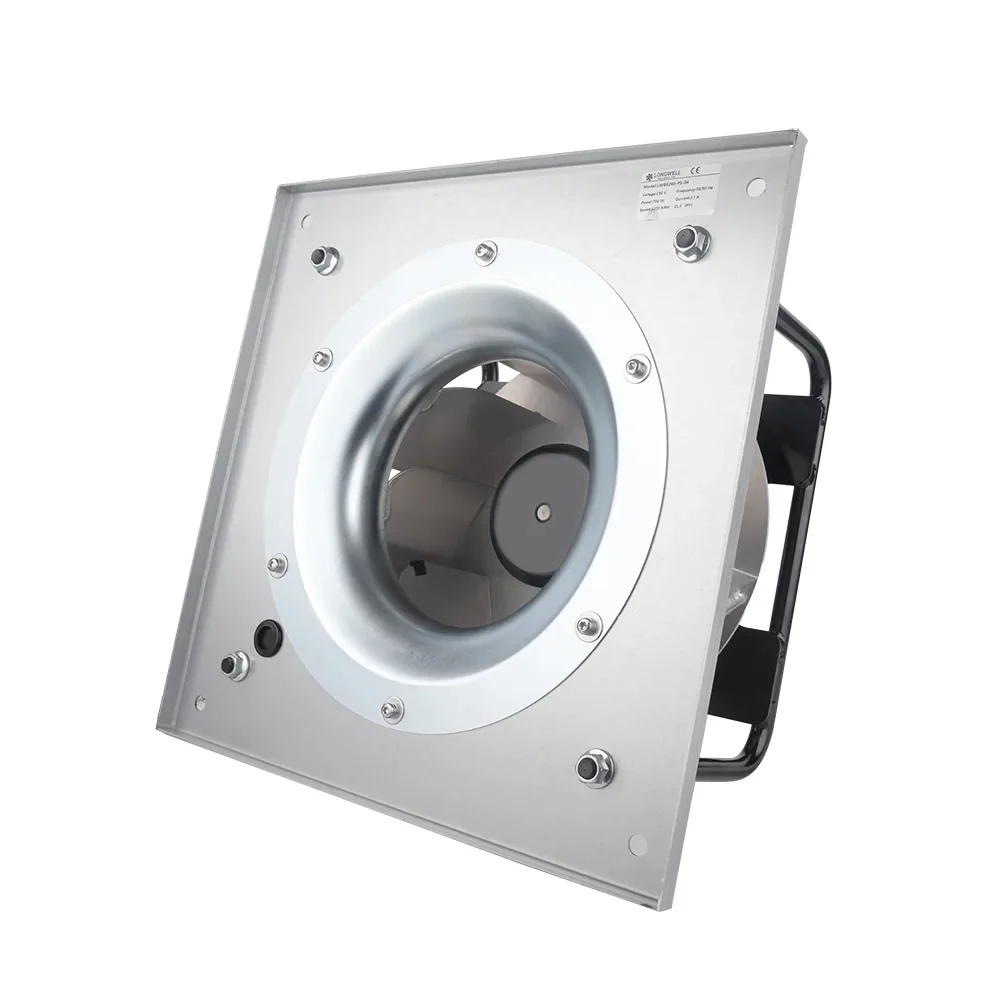
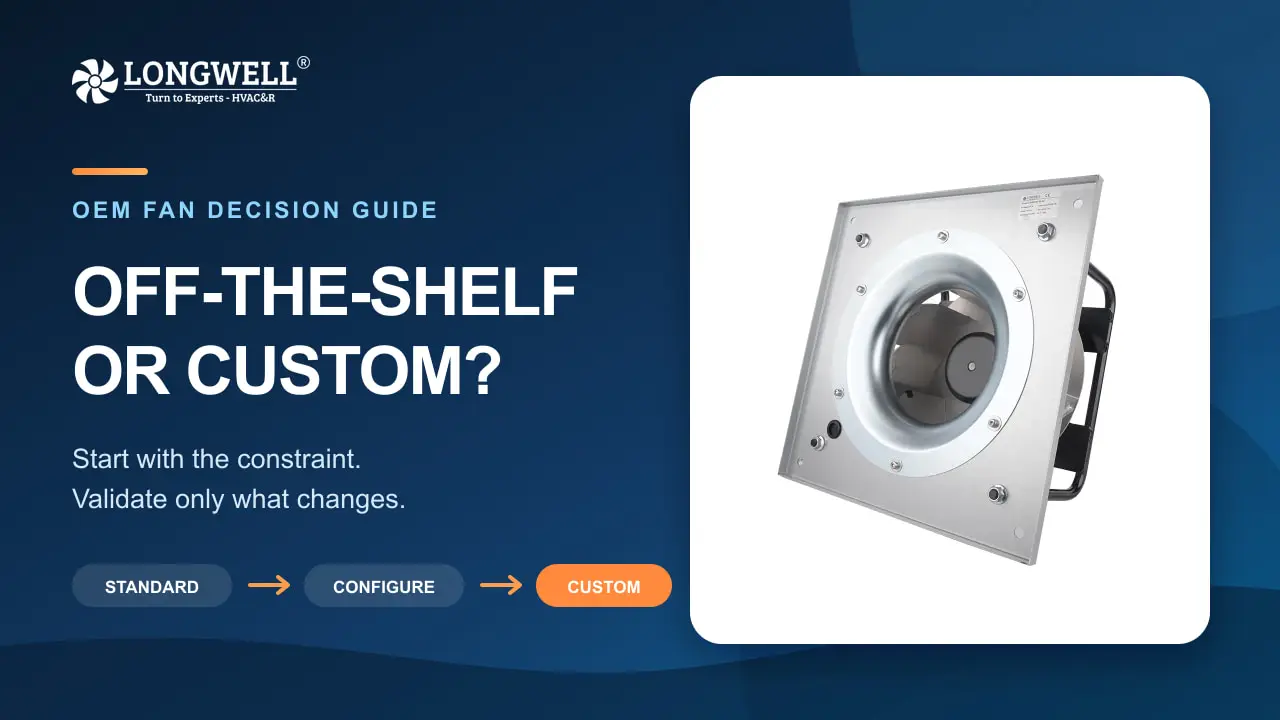
The product photo above is useful for seeing visible mounting and inlet interfaces. It does not establish a project duty, certification or fit. That distinction matters because a configuration change and an aerodynamic change create very different evidence burdens.
Revalidate the Characteristics Touched by the Change
Make a change-impact list before ordering a prototype. A new bracket may require a dimensional check, vibration review and service-access check. A different connector calls for pinout, retention, current and wiring verification. A new inlet, wheel or speed can affect the duty curve, input power, sound, vibration, motor loading and thermal margin.
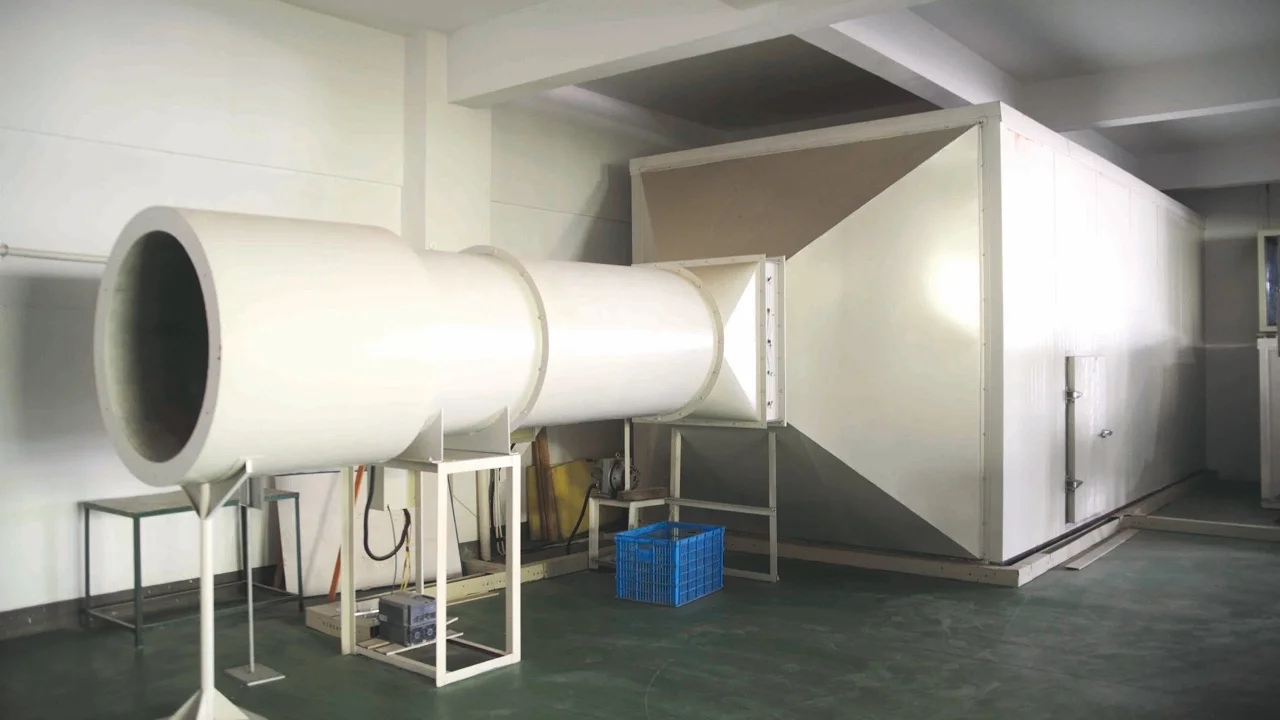
Do not copy the old curve onto the new suffix because the parts look similar. Define what changed, what might move as a result, how it will be measured and who accepts it. Laboratory fan data should also be separated from installed-equipment proof; nearby fittings and the equipment air path can change the result.
Send an RFQ That a Supplier Can Actually Review
A supplier cannot choose safely from “same size, lower noise.” Send whichever reliable evidence is easiest to obtain, then close the gaps:
- equipment description, installation photos and the problem being solved;
- required airflow and pressure at each operating condition;
- drawing, 3D envelope or reference sample, including service clearance;
- voltage, frequency, protection, connector and wiring requirements;
- control signal, feedback, alarm and communication behavior;
- temperature, moisture, contaminants, cleaning and other exposure;
- measurable acceptance tests, required documents and expected volume range.
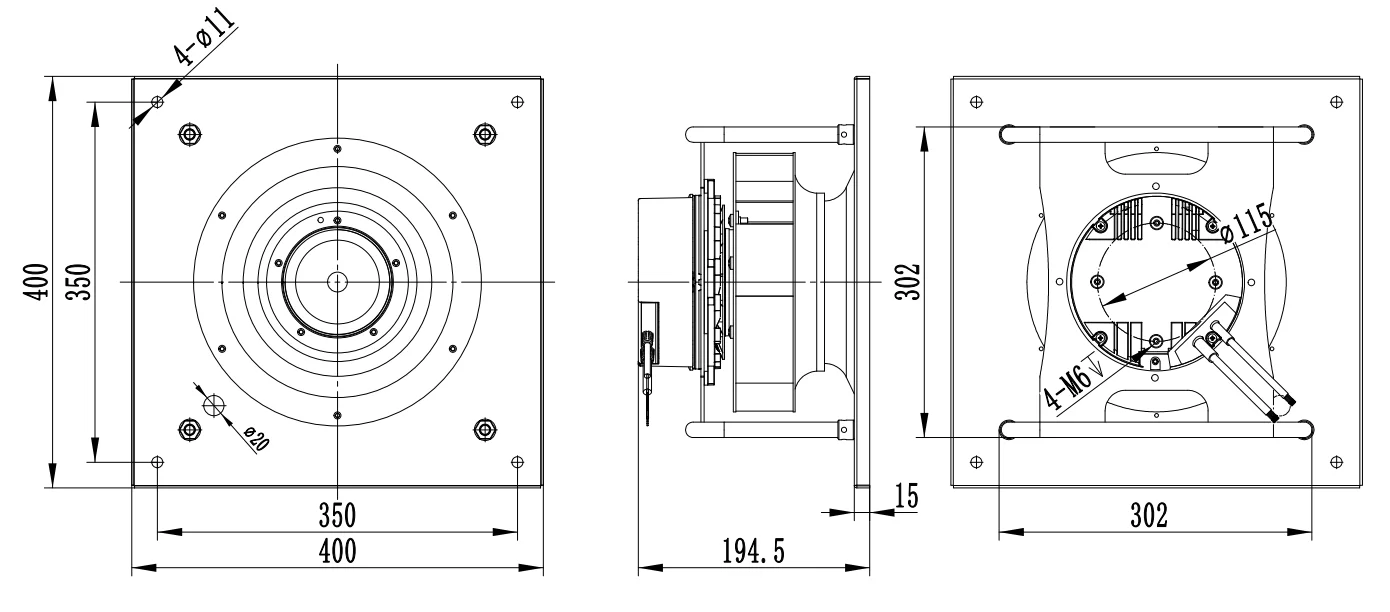
An exact-model drawing is an interface record, not a promise that every member of a series fits. Mark the dimensions that are genuinely fixed and identify which may be negotiated.
The OEM and partner overview is a useful route when the standard screen has exposed a real customization need. Keep the first discussion focused on the blocking interface rather than sending an unrestricted wish list.
Release the Production Definition, Not Just the Sample
A prototype that works once is not yet a production release. The approved result needs a full model and suffix, released drawing, electrical definition, test criteria, approved reference where applicable, inspection limits and change-notification rules. Record the configuration tested inside the equipment and the operating conditions used.
This is also where service planning belongs. Decide how replacements will be identified, which parts remain available, what happens after a revision and whether a standard fallback still exists. A bespoke component with an unclear identity can create more downtime than the original interface problem.
The Practical Decision Rule
Keep the standard fan when it passes the duty, fit, electrical, control, environment, sound and documentation checks. Configure an existing platform when the obstruction can be removed without changing its qualified core. Commission a true custom design only when a fixed, repeatable constraint creates enough lifecycle value to carry the added validation and control.
In short: customize the constraint, freeze the interfaces that already work, and prove the characteristics that changed.