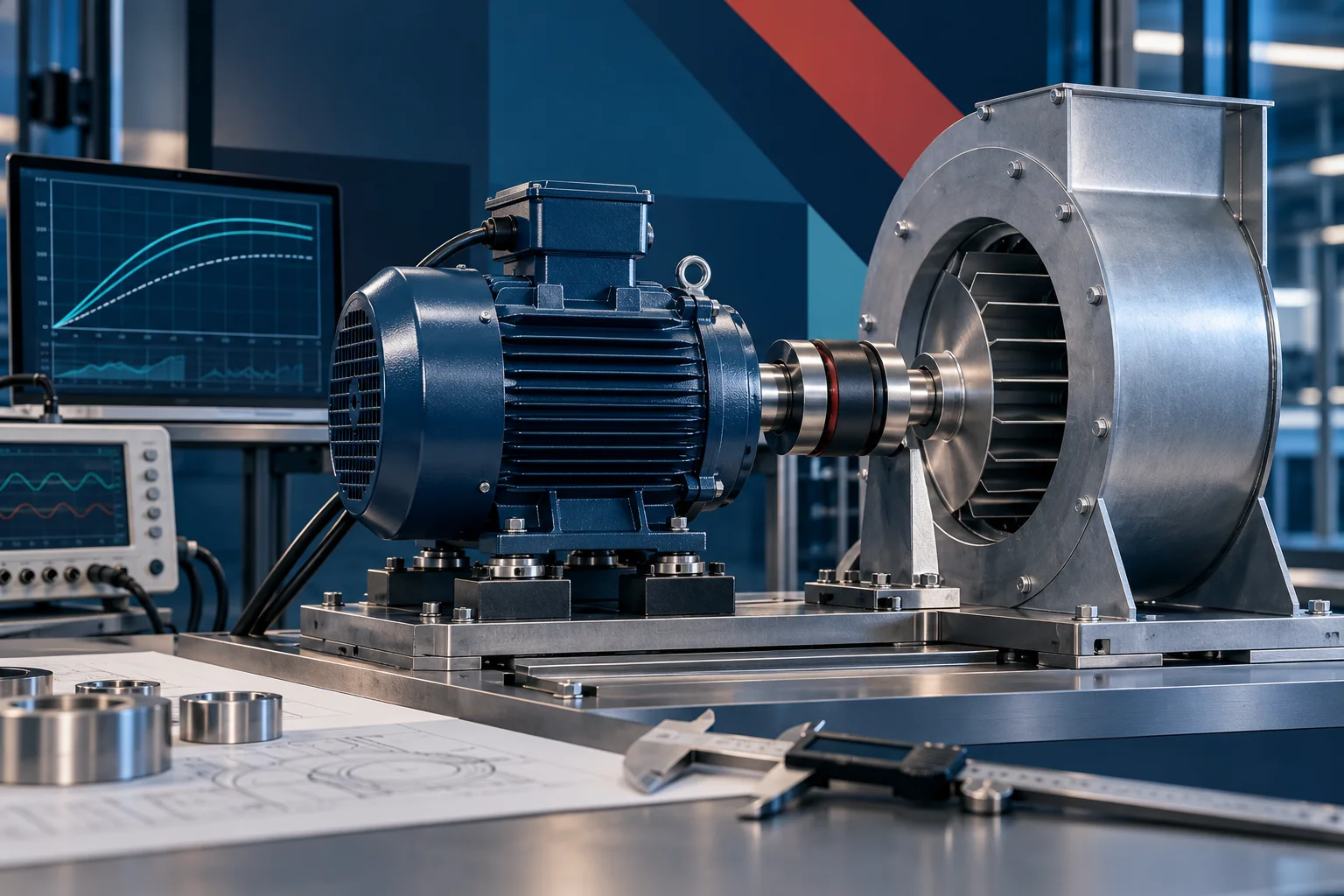
How is a backward-curved impeller made, and what should a buyer check before accepting one? The visible wheel is only the end of a route that links a released drawing, component geometry, joining, final dimensions and rotating assembly checks. The route changes with material, wheel construction and model. Ask for the exact drawing and revision before applying any generic process description to a particular fan.
The video below walks through an example manufacturing sequence. Use it to frame questions, then confirm the actual operations and acceptance records for the wheel you intend to buy. A filmed operation cannot establish the inspection result or every production lot.
Start with the released wheel definition
First identify the complete fan model, impeller or rotor identifier, drawing revision, material and intended operating speed. “Backward-curved” describes a blade orientation; it is not a manufacturing specification. A shrouded assembly, an open wheel, a metal fabrication and a moulded component can require different operations and checks. Even within one family, a suffix may identify a different motor, mounting or wheel configuration.
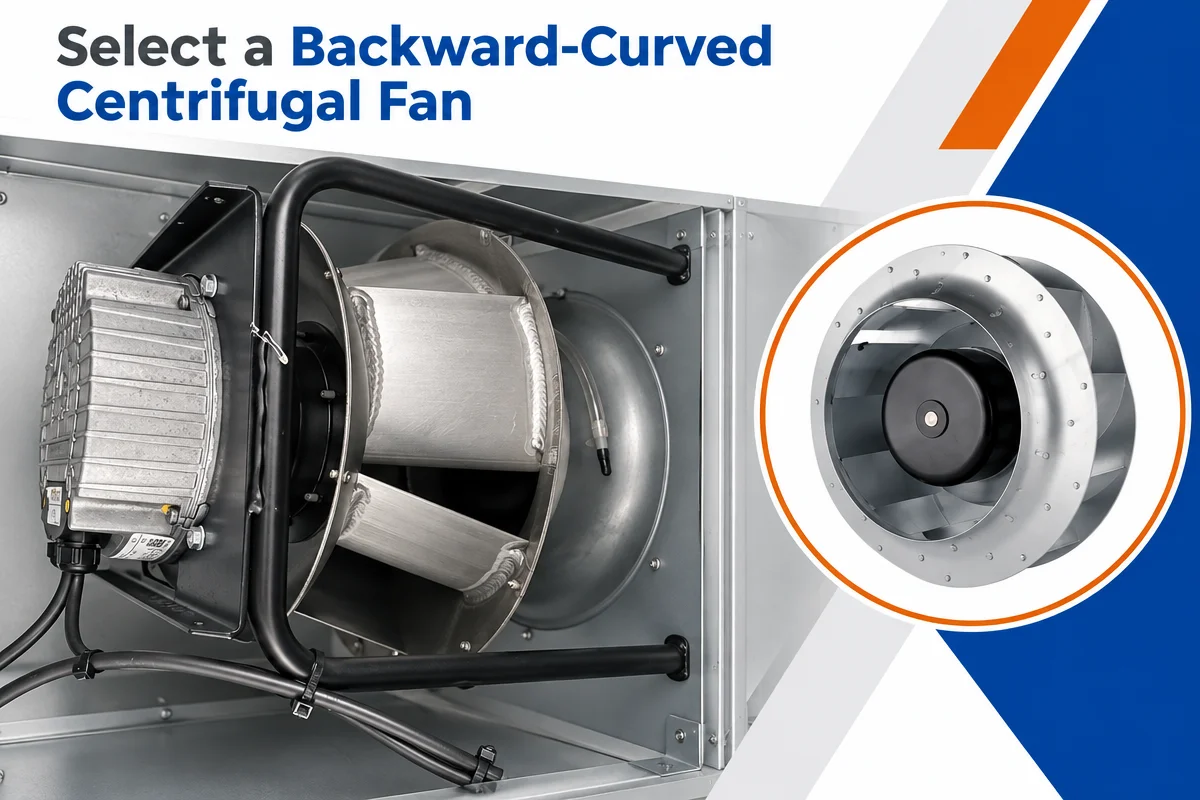
For an initial product-family shortlist, the LONGWELL backward-curved centrifugal fan family shows available routes to investigate. That family page establishes product identity and visible construction. It does not identify the manufacturing record or prove that a particular pictured fan meets your operating point. Request the current controlled drawing and performance information for the exact configuration.
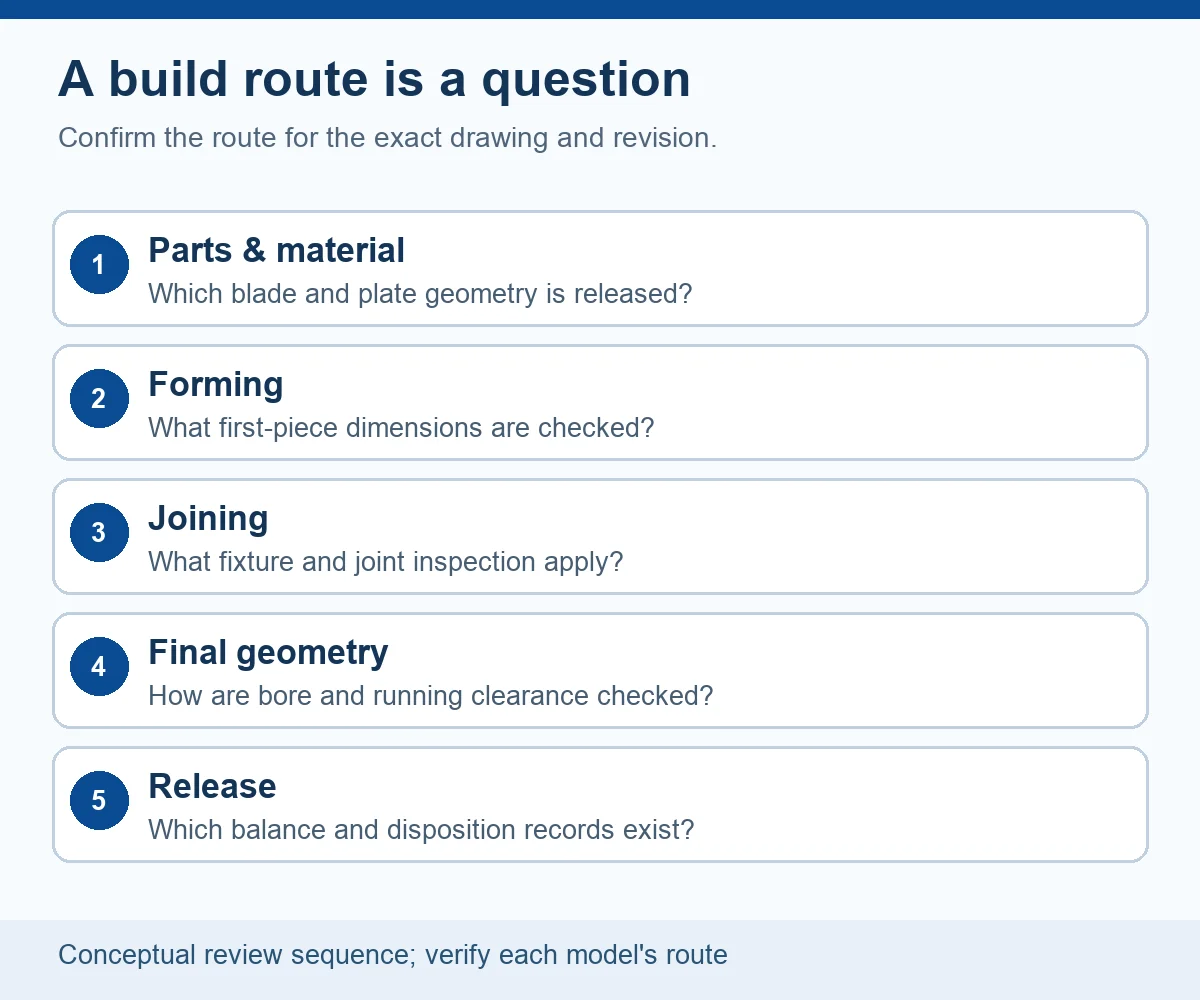
Trace parts, forming and joining as separate gates
A fabricated wheel may begin with cut plate or formed blade components. A different construction may use another route. For the proposed wheel, ask which dimensions are established at part level and which are checked after assembly. Blade shape, position and running clearance should be tied to drawing callouts rather than an attractive finished photo. The first-piece inspection record is often more useful than a generic description of the cutting machine.
If the wheel uses welded joints, review the applicable fixture, joining procedure and inspection criteria for that design. If it uses another joining method, ask for that method instead. Heat and fixturing can affect geometry, but the actual distortion allowance and any corrective step belong to the approved process for the specific part. Do not assume that all wheels receive stress relief, robotic welding or post-weld bore machining.
Check the final geometry before the rotating result
After assembly, the useful questions are concrete: what diameter and width were accepted, how was the hub interface located, and how were run-out and any critical clearances measured? The drawing should define the datum and tolerance for each value. A statement that a part “looks concentric” does not replace a measured record, and a sample result should not be presented as the result for every released wheel.
Order of operations matters only in relation to the controlled design. Machining can be done before or after joining depending on the part and datum strategy. Ask how the supplier protects the final rotational reference through the route; do not impose a universal sequence based on one video. If the wheel is coated, confirm whether dimensions and balance are checked in the as-released condition.
Separate balance, assembly vibration and fan duty
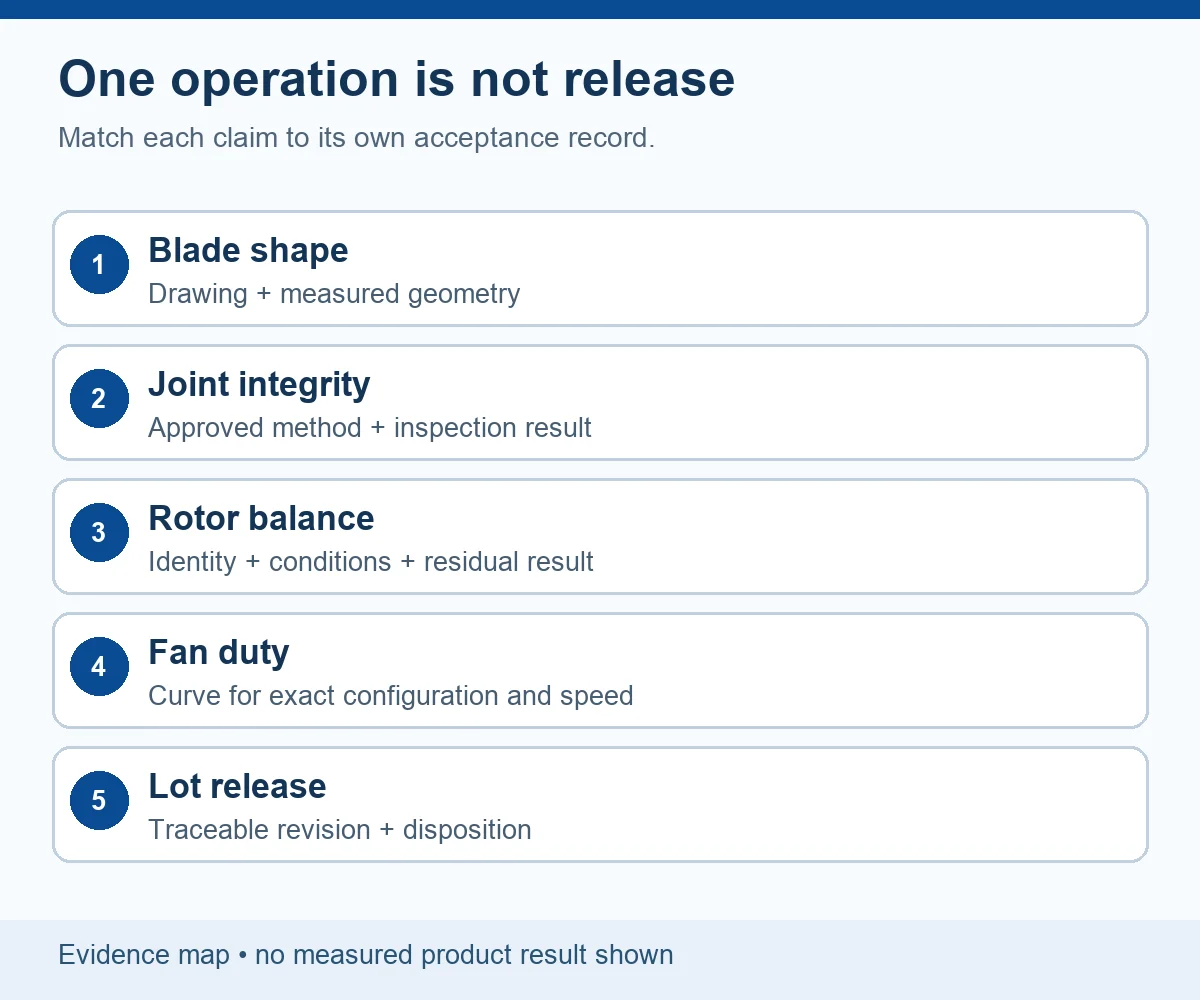
A rotor balance record should identify the exact rotor, its as-balanced configuration, test conditions, specified acceptance basis, measured residual result and disposition. A green screen or a correction weight alone cannot establish the acceptance grade. The impeller balancing and QC guide explains why fixture, repeatability and traceable release records are separate review points.
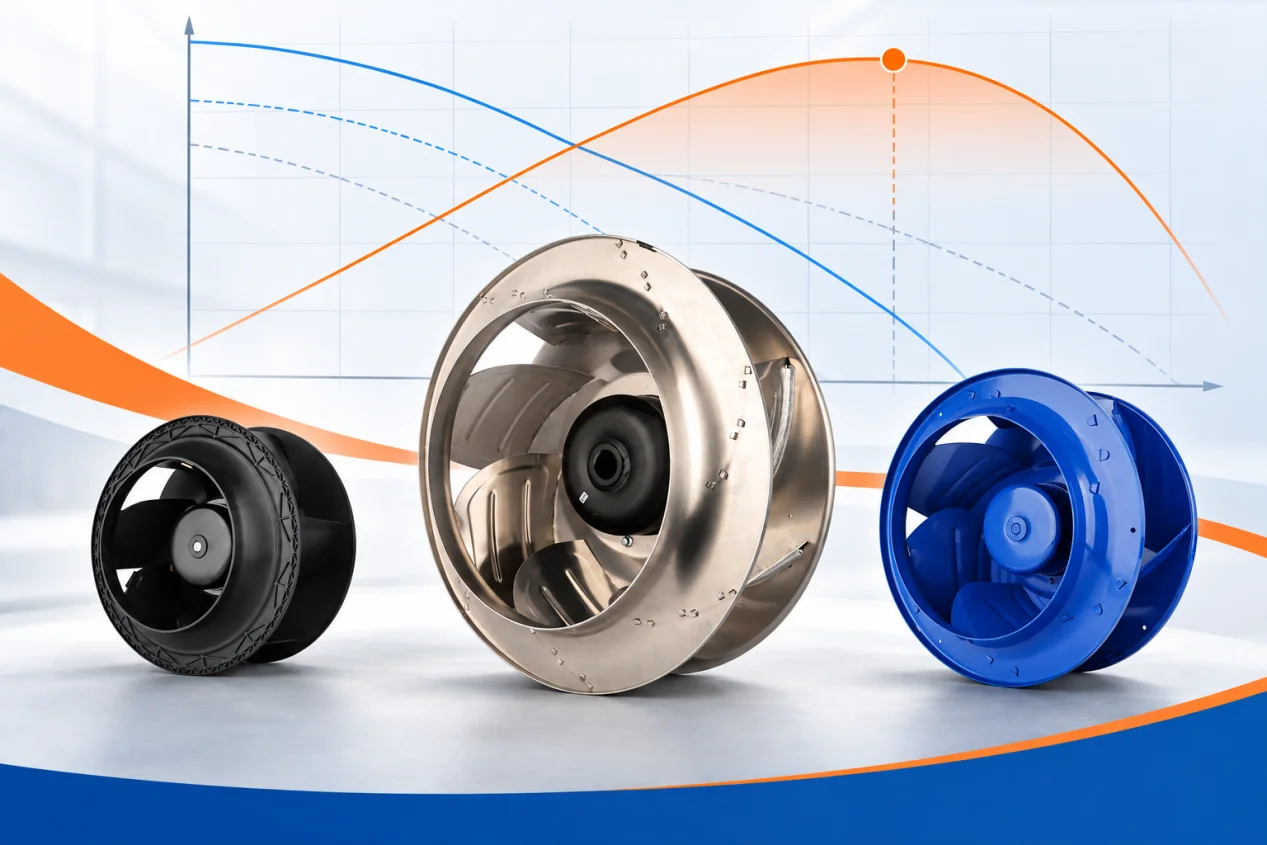
Balance is also distinct from vibration of the assembled fan. Motor, mounts, housing and installation can change an assembly measurement. Neither result proves the airflow and pressure curve. To evaluate duty, request the current curve for the exact fan configuration and speed, then compare it with the installed system requirement. Keep a drawing, balance record, assembly test and performance curve in their own evidence lanes.
What to request for a buyer review
A useful inquiry names the application and provides airflow, pressure, operating point, supply and control requirements, installation envelope and any environmental constraints. Ask which backward-curved fan family is being proposed, which exact model and revision apply, and which material and wheel construction are specified. This keeps a family image from being mistaken for a tested match to the application.
For the proposed part, request the drawing, relevant material and dimensional records, joining or moulding controls as applicable, balance acceptance basis and traceable release evidence. Ask separately for the exact-model fan curve and test conditions. The answer may be a controlled document set rather than one universal certificate. If a record is unavailable, keep that question open instead of filling the gap with a claim about a typical factory process.
The practical decision
A backward-curved impeller is ready for a technical review when its identity, manufacturing route, measured geometry and rotor release can be connected to the same configuration. It is ready for application selection only when the fan-level performance and installation boundary are also known. Those are two decisions, supported by different records. Use the video as a visual guide to the questions, then make the acceptance call from the current controlled information.
To review a specific fan, send the model or duty point and your installation requirements to sales@longwellfans.com.
Choose the right backward curved centrifugal fan
Longwell manufactures 587 backward curved centrifugal fans in-house. Send airflow, static pressure and voltage — an engineer replies with a matching model, performance curve and price within one working day.