An “alternative” EC fan is not approved by matching a diameter, a wattage line or a connector photo. The useful outcome is a signed evidence pack: the incumbent is identified, the duty and interfaces are frozen, the candidate is tested on comparable boundaries, and the installed equipment passes agreed checks.
That process protects both sides. The buyer avoids a late discovery in the cabinet or controller, while the supplier is not asked to promise equivalence from incomplete information. Treat “drop-in” as a release decision, never as a search keyword that settles the engineering.
Freeze the incumbent before requesting a match
Start with the complete manufacturer model, every suffix, the nameplate, current datasheet, dimensional drawing, wiring or communication document, and the equipment revision. Photograph the inlet, rear electronics, cable route, mounting, nearby panels and removal path. If the old fan is undocumented, say which facts are measured and which are assumptions.
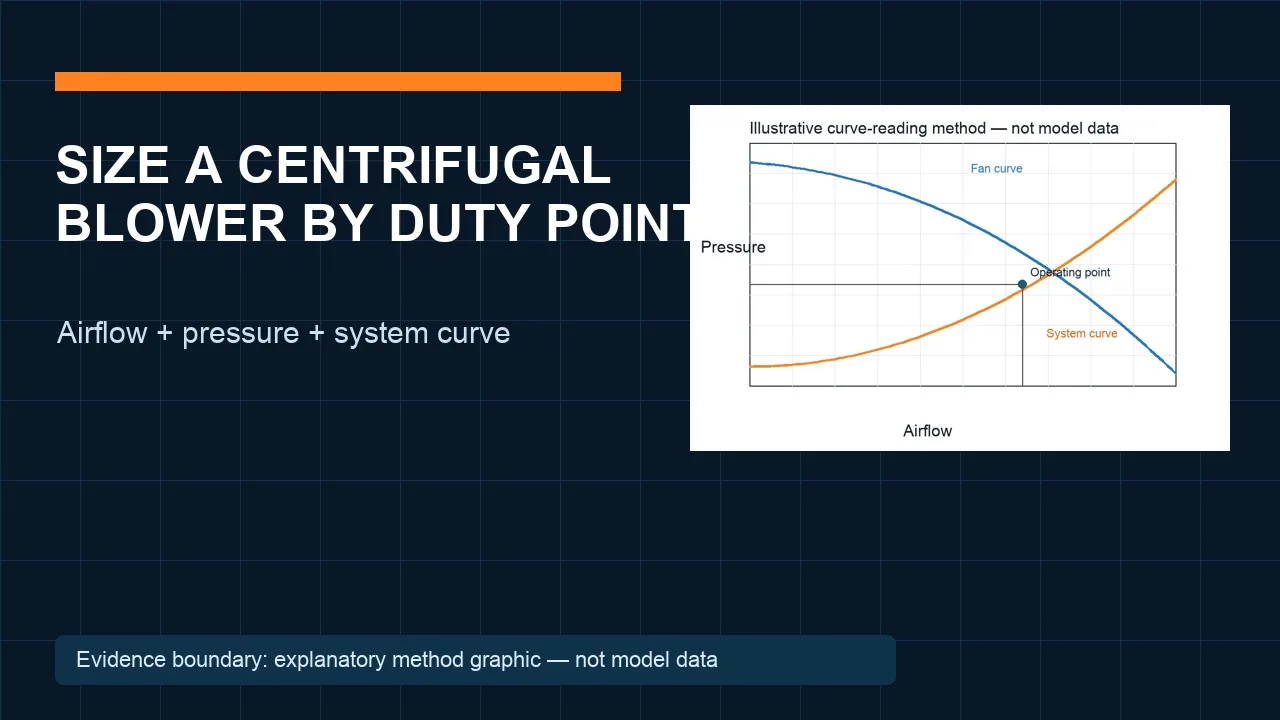
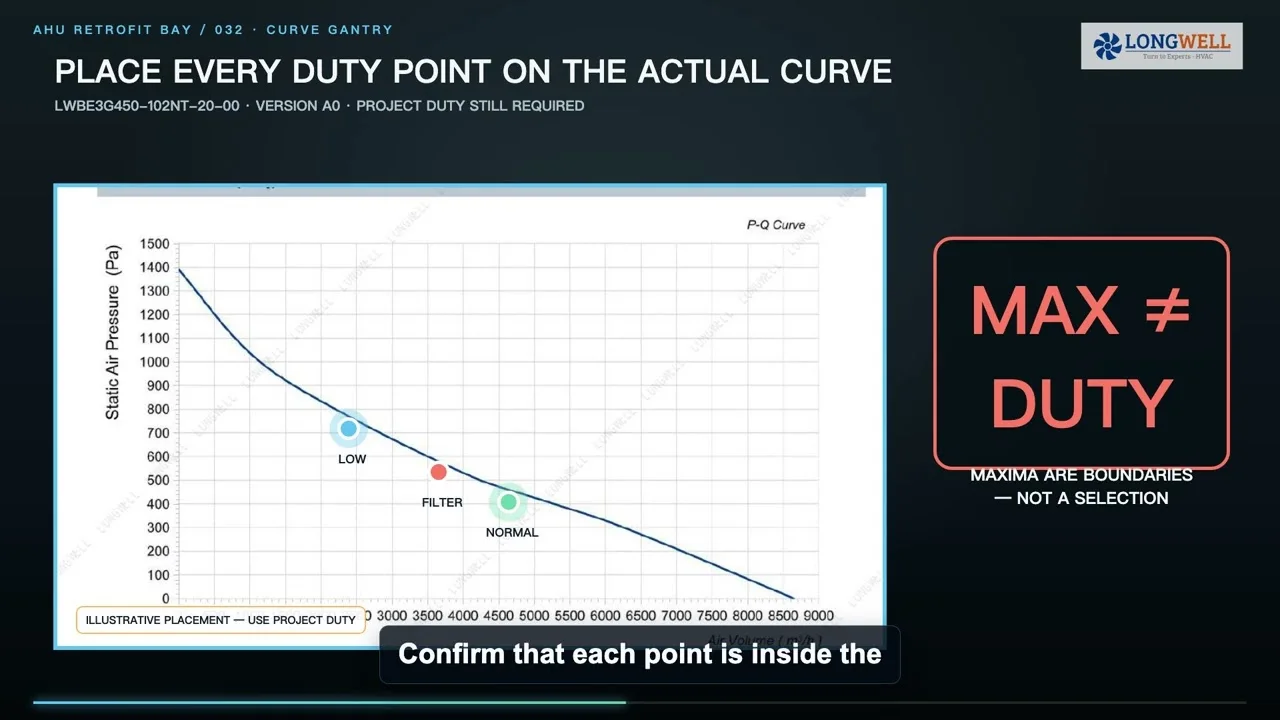
Then define the actual duty map. Record airflow and the correct static- or total-pressure basis at design, part-load and worst credible resistance. Add air density, speed range, supply, environment, sound objective and the host equipment’s operating states. Longwell’s EC fan selection guide is useful for organizing those inputs; it does not identify an equivalent by itself.
Require the same evidence pack from every candidate
A shortlist should be built from comparable documents, not polished summaries. Ask each supplier for the exact model and revision, a complete curve with test setup, dimensional and interface drawings, electrical limits, control behavior, sound boundary, environmental limits, applicable declarations or certificates, and a written change-notification rule.
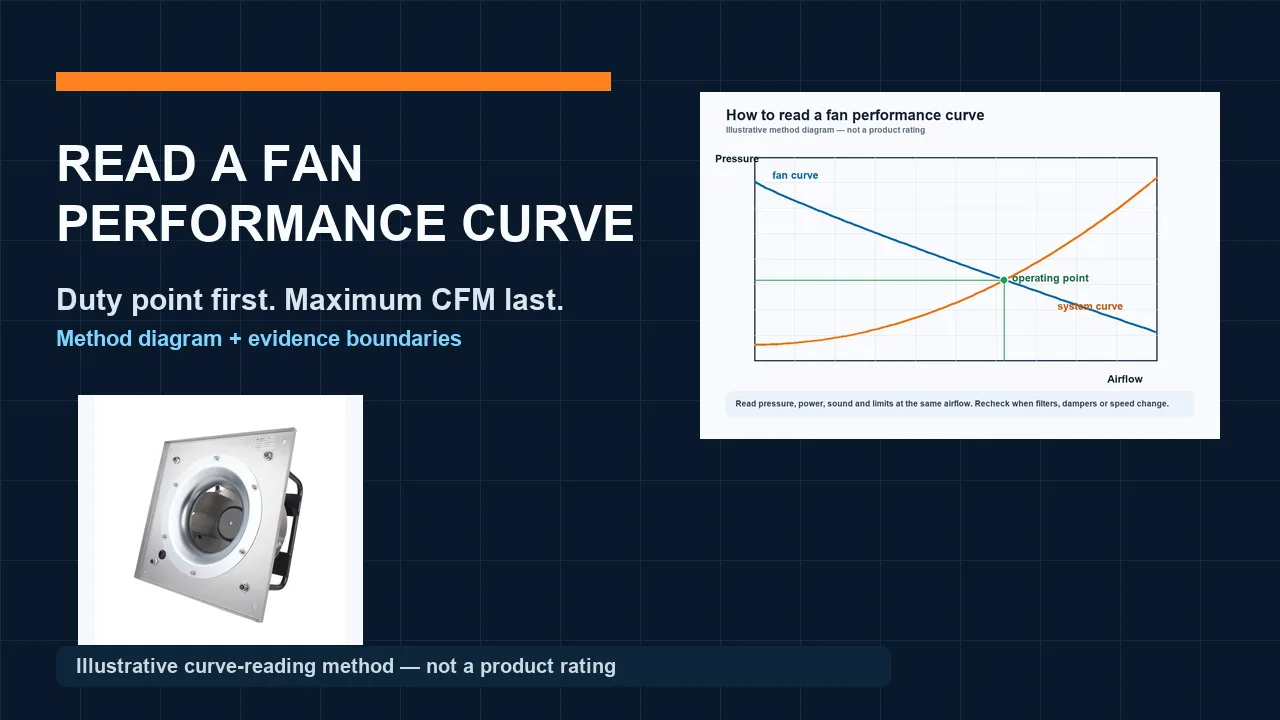
- Compare airflow, pressure and input power at the same operating points and air density.
- Record whether the curve is static or total pressure and what inlet or outlet accessories were fitted.
- Separate laboratory fan data from performance inside the real cabinet or air handler.
- Reject a certificate, curve or drawing that cannot be tied to the proposed suffix and revision.
ANSI/AMCA 210-25 defines uniform laboratory methods for airflow, pressure, power, air density, speed and efficiency. It is a test-method standard. “Tested to AMCA” is not the same claim as AMCA certification, and neither phrase replaces the exact report. The broader fan engineering buyers’ guides route is a safer place to collect comparison questions before turning them into an RFQ.
Use product media for identity, not equivalence
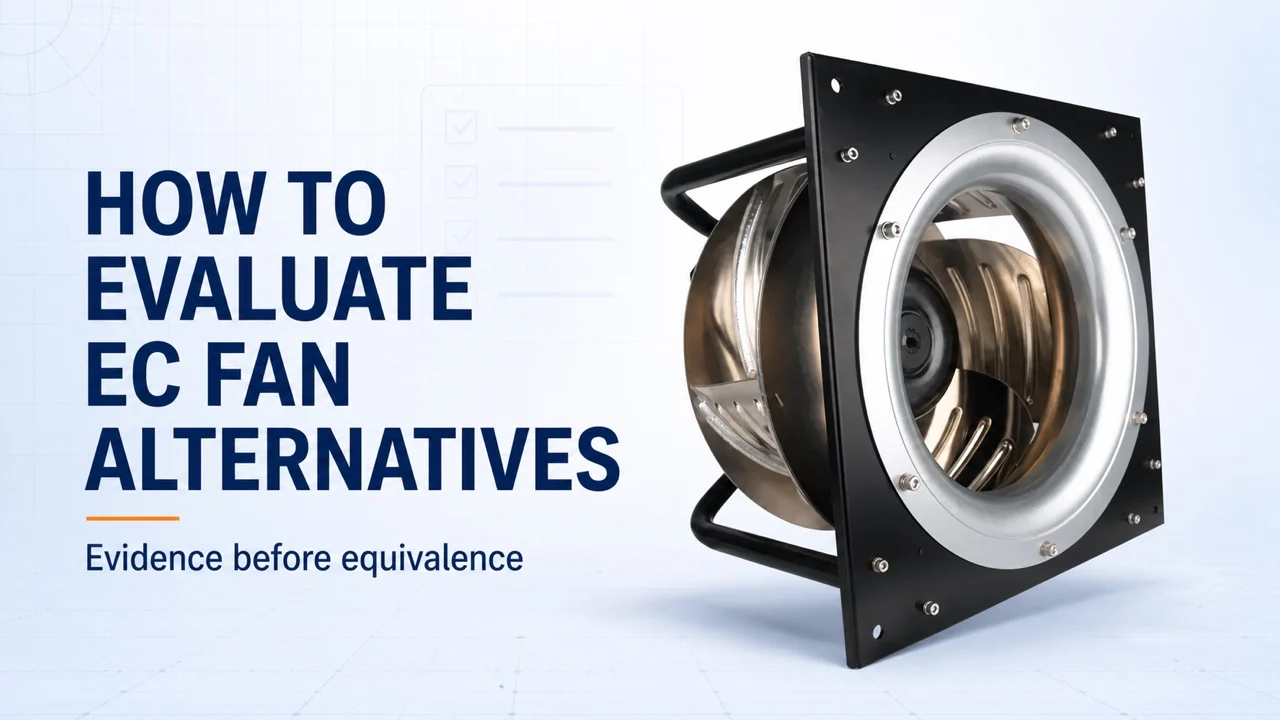
The photographs below show Longwell model LWBE3G355-138PT-05 as a concrete documentation example from the approved local material library. The images help a reviewer recognize the inlet, mounting plate, support frame and rear electronics. They do not map this product to any ebm-papst or Ziehl-Abegg model, and they do not replace a released drawing, report or certificate for a buyer’s exact project.
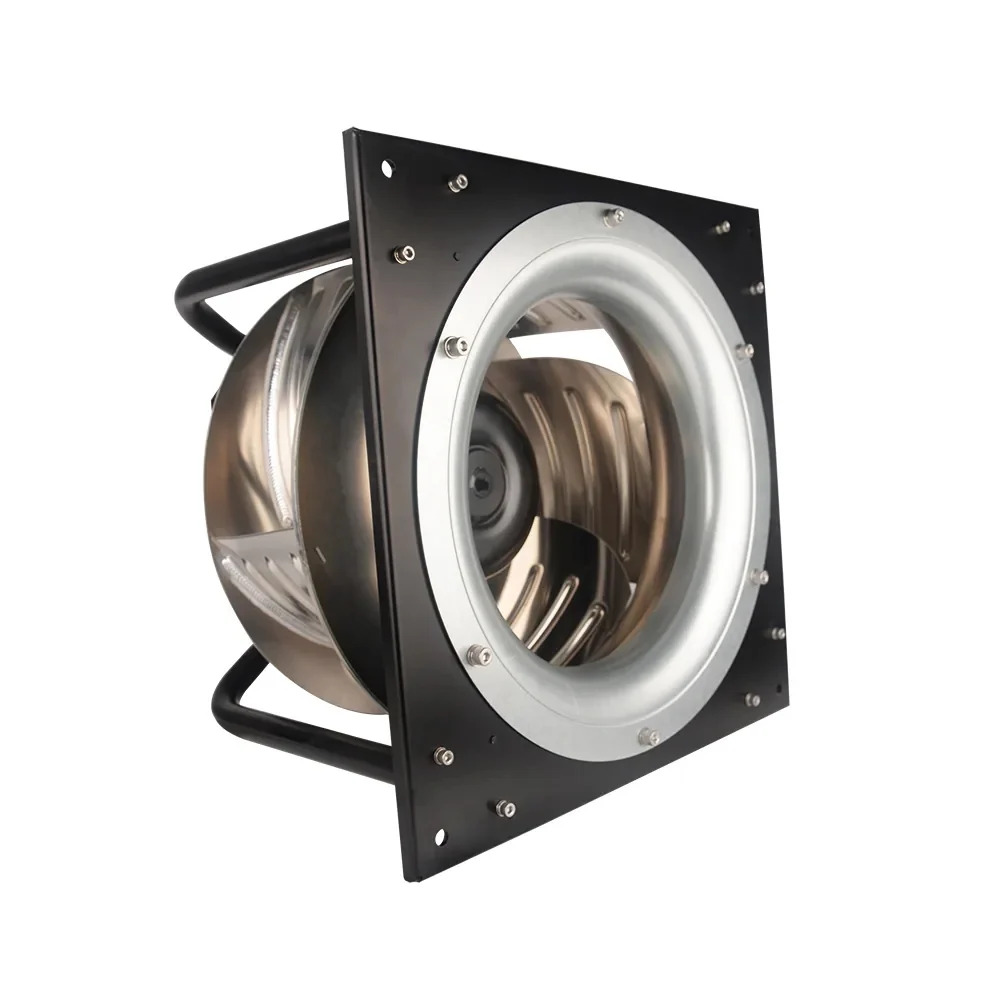
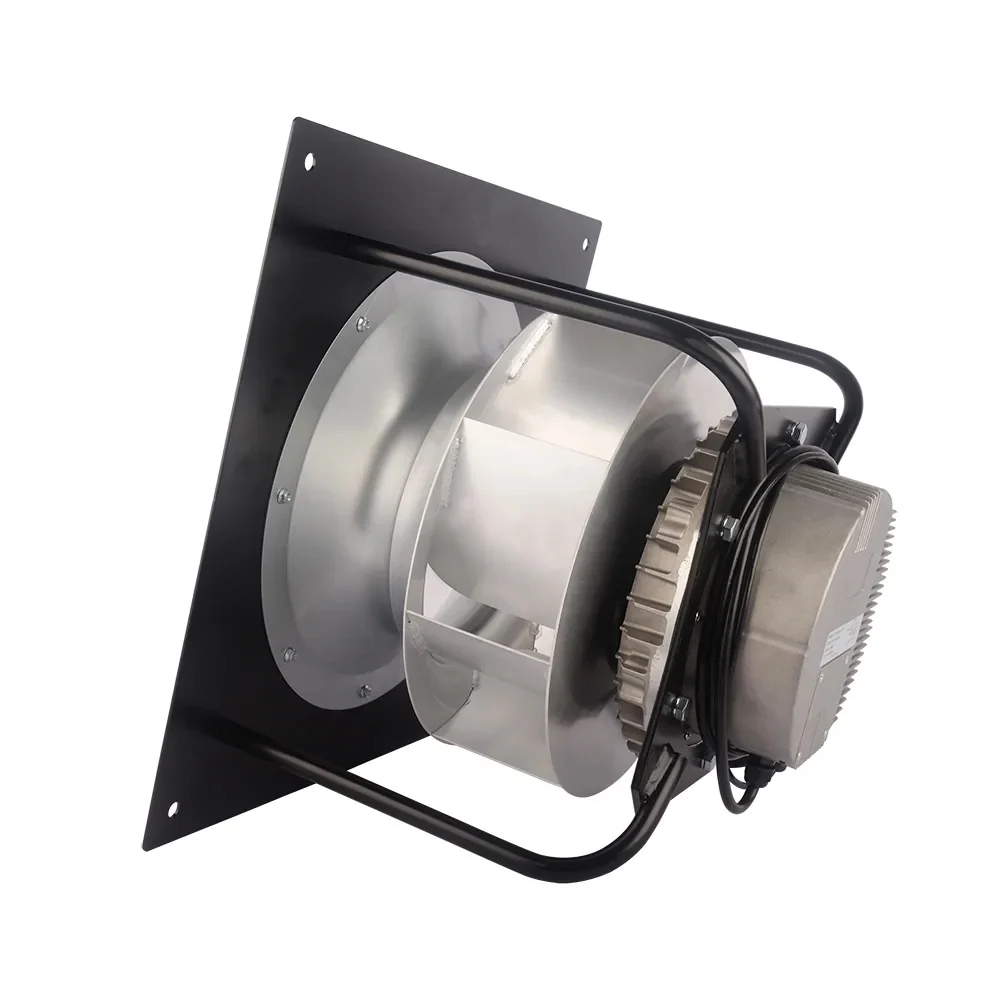
For family discovery, the Longwell EC plug fan category is a starting point. The candidate still has to be selected from the project duty, exact interfaces and controlled documents.
Pass mechanical, electrical and control gates separately
Overlay the released drawings. Check inlet geometry and running clearance, wheel and plate dimensions, bolt pattern, total depth, center of gravity, cable exits, airflow direction, rotation, guard, service access and the route used to remove the unit. A fan can fit the opening yet create recirculation or block a panel.
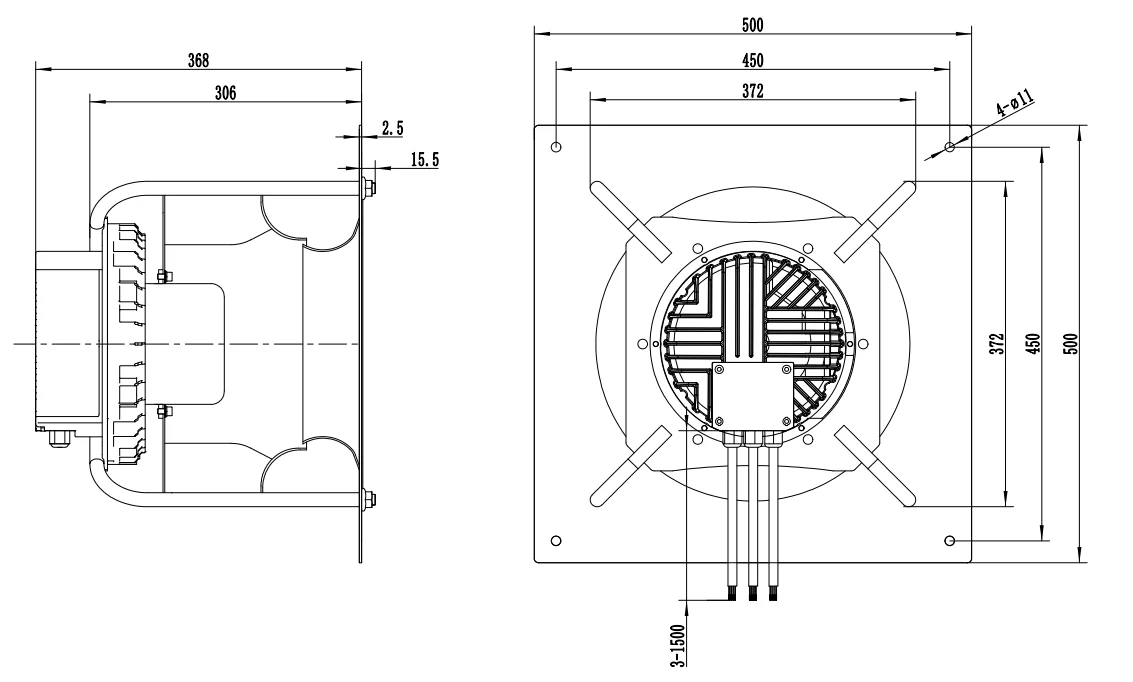
This drawing belongs only to the exact LWBE3G355-138PT-05 suffix shown in the file identity. Its dimensions must not be generalized to a series or competitor unit. If a marketing image, archived drawing and released sheet disagree, stop and obtain a revision-controlled answer before the sample is ordered.
Electrical and controls need their own matrix: voltage range, frequency, phase, protective earth, maximum current, branch protection, leakage or inrush requirements, derating and safe isolation. Shared labels such as 0-10 V or PWM do not prove the same pinout, scaling, feedback, alarm logic, ramp, minimum speed or loss-of-signal behavior. Record firmware and configuration where they affect the equipment.
Verify approval scope instead of copying a logo
Ask what the finished equipment must retain in each destination market, then trace every declaration or certificate to the exact product family, model pattern, factory and issue status. A company-level authorization, a similar fan family, or a logo in a brochure is not model-level proof. General explanations of marks can help with vocabulary, but the issuer’s current directory and the controlled document scope are the acceptance sources.
Keep performance testing and safety certification separate in the approval record. Also identify application-specific exclusions. A general HVAC candidate must not be promoted for smoke control, grease-laden air, explosive atmospheres or another safety function without explicit evidence for that duty.
Release through bench, equipment and pilot gates
Begin with document review against signed pass/fail criteria. Bench-test the sample for the required curve points, input, current, speed, controls, protections, sound, vibration and temperature behavior. Record the setup, instruments, units, model revision and configuration so another reviewer can reproduce the result.
Next install the candidate in the real equipment. Exercise normal load, part-load, worst resistance, startup, stop, alarm, signal loss and recovery states. Check clearances, airflow, input, sound, vibration, temperatures and controller behavior at the agreed boundaries. A bench pass is necessary evidence, not installed-system proof.
Use a pilot batch before converting a product line or maintenance stock. Freeze the approved suffix, drawing, firmware or settings, inspection points and change-notification process. Keep a retained reference and define how future revisions will be compared.
Make price the last comparison
Only after technical release should procurement compare landed cost, engineering work, adapters or wiring changes, validation, downtime exposure, spares, warranty response, lifecycle support and supply continuity. The lowest unit price can be the expensive option if the evidence pack is incomplete or the production revision moves without notice.
ebm-papst and Ziehl-Abegg are trademarks of their respective owners. Their names are used only to identify the evaluation context; no affiliation, endorsement or cross-model equivalence is implied.