A dryer vent booster is an installation decision only after the exhaust path, the exact dryer instructions and the proposed ventilator’s own approval have been checked. A longer run or slow drying does not, by itself, authorize adding a general-purpose inline fan. Lint, heat, moisture, controls and cleaning access change the equipment requirements. This guide shows what to verify before a contractor cuts the duct and what to record if a permitted dryer-exhaust duct power ventilator (DEDPV) is used.
Start with the exhaust problem, not a product
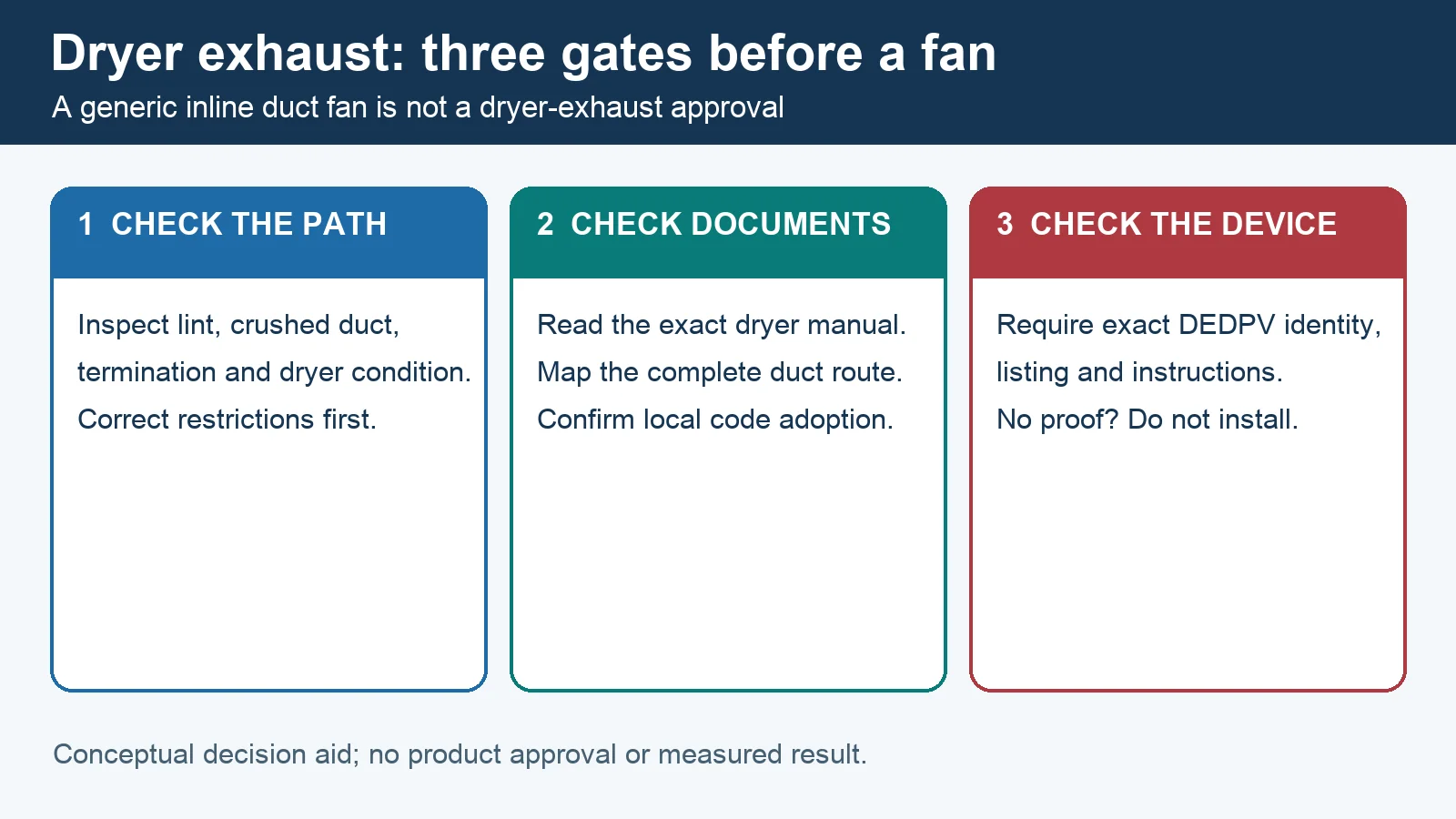
Slow drying can come from a loaded lint filter, crushed transition duct, accumulated lint, a damaged run, a termination that cannot open fully, or a dryer fault. Inspect the accessible path and have a qualified person investigate concealed sections or appliance symptoms. The U.S. Fire Administration’s dryer-fire guidance points to cleaning and restricted venting as material fire-safety concerns. A fan is not a repair for a blocked duct or defective dryer.
Make a simple route sketch from the dryer connection to the outside terminal. Note transitions, bends, concealed portions and service access. Preserve the exact dryer make and model so its installation instructions can be checked. A generic equivalent-length figure copied from another appliance is not a valid substitute. If the route or equipment identity cannot be established, stop the fan decision and investigate that gap first.
Distinguish a DEDPV from an ordinary duct fan
In U.S. jurisdictions applying the 2024 International Residential Code, Section M1502.4, the code distinguishes a dryer-exhaust duct power ventilator conforming to UL 705 for dryer exhaust use from a domestic booster fan, which that section prohibits in dryer exhaust systems. The code also directs installation of the DEDPV in accordance with its manufacturer’s instructions. Confirm the edition adopted locally and the authority’s interpretation for the actual project; codes and appliance requirements vary by location.
UL Solutions describes DEDPV as a distinct product category in its dryer-fire safety explanation. Ask for the current listing or certification record covering the exact model, its label and the full installation instructions. A metal housing, the word “booster” in a title, or a generic UL mark on some other product does not establish dryer-exhaust approval.
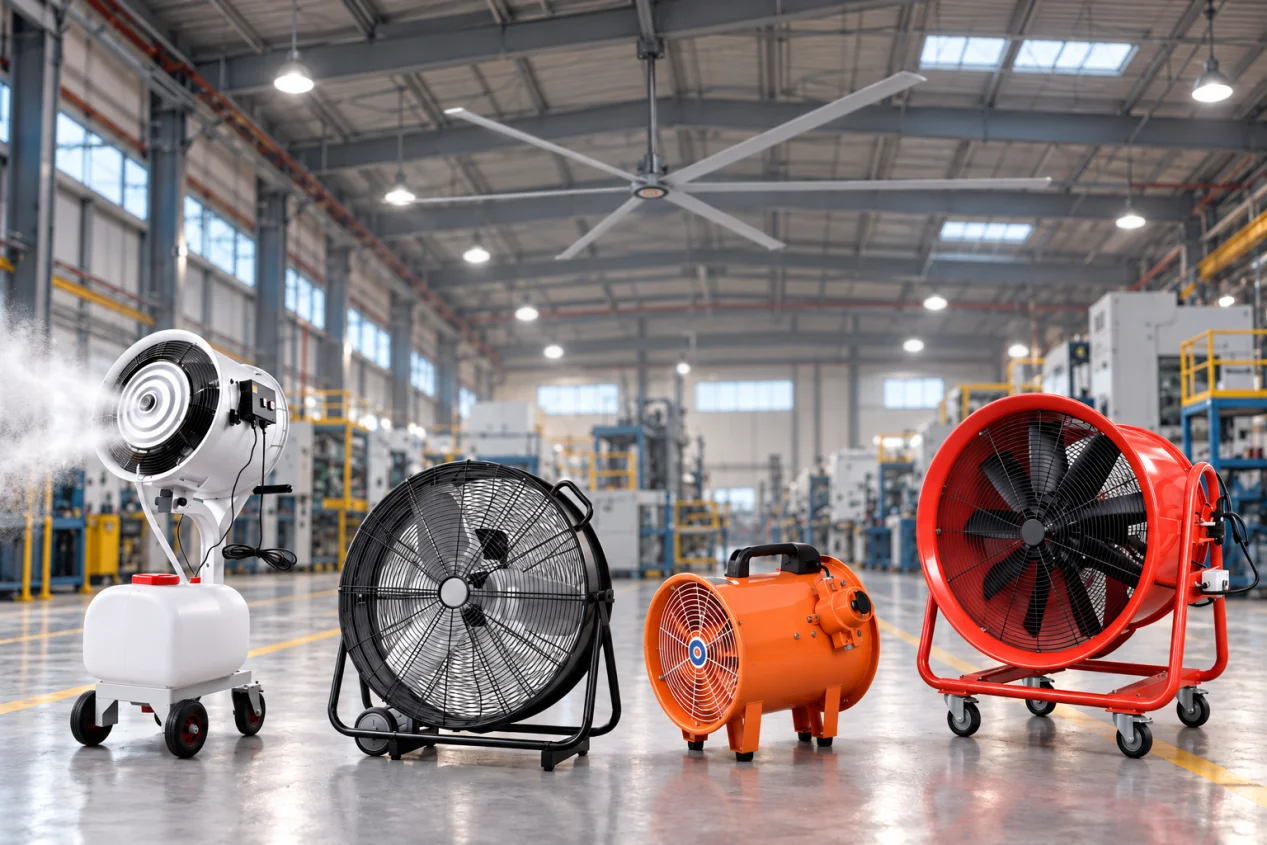
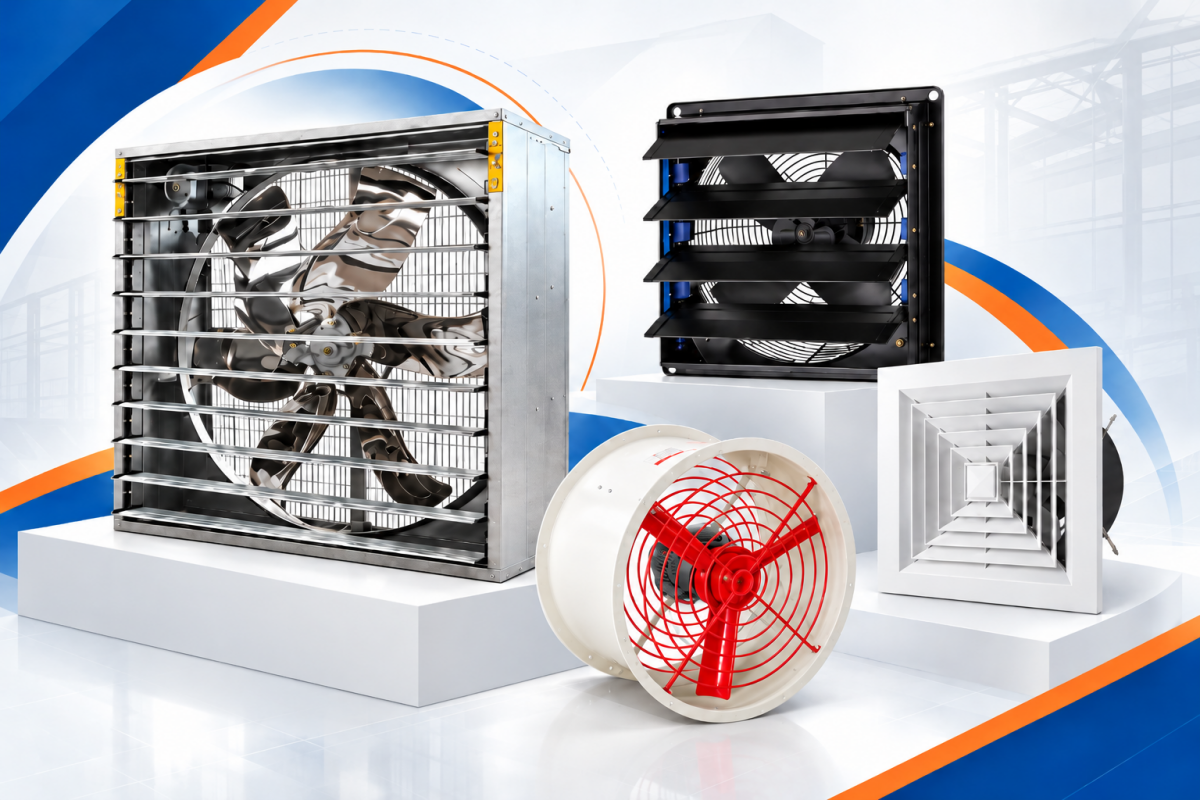
Longwell’s published metal duct fan family describes ordinary ventilation products. The materials reviewed for this article did not establish an exact Longwell model’s DEDPV listing or dryer-exhaust compatibility. That family link is product context only; it is not a recommendation to put a listed family member into a dryer exhaust duct. Request exact-model controlled evidence before making such a claim.
Use the exact manuals to design the route
Gather the dryer manual, the proposed DEDPV manual and the as-built route. Check whether the dryer instructions permit the proposed arrangement and how the exhaust length is to be evaluated. The 2024 IRC provides different routes for length determination, including manufacturer instructions and, where applicable, DEDPV instructions; that does not make one universal maximum suitable for every dryer. Record fittings, termination, transition duct and concealed sections. Review the actual duct material and joints against the applicable code and manuals rather than applying a one-line hardware rule copied from another installation.
The exact ventilator instructions must govern placement, orientation, clearance, support, electrical supply, sensing and service access. This article intentionally gives no fixed midpoint, straight-duct allowance, wiring schematic or control type. A pressure switch or current sensor may appear in a particular approved system, but neither can be specified from the video title alone. If the manuals conflict or a required document is missing, have the installer and local authority resolve the discrepancy before work begins.
Plan commissioning and cleaning before installation
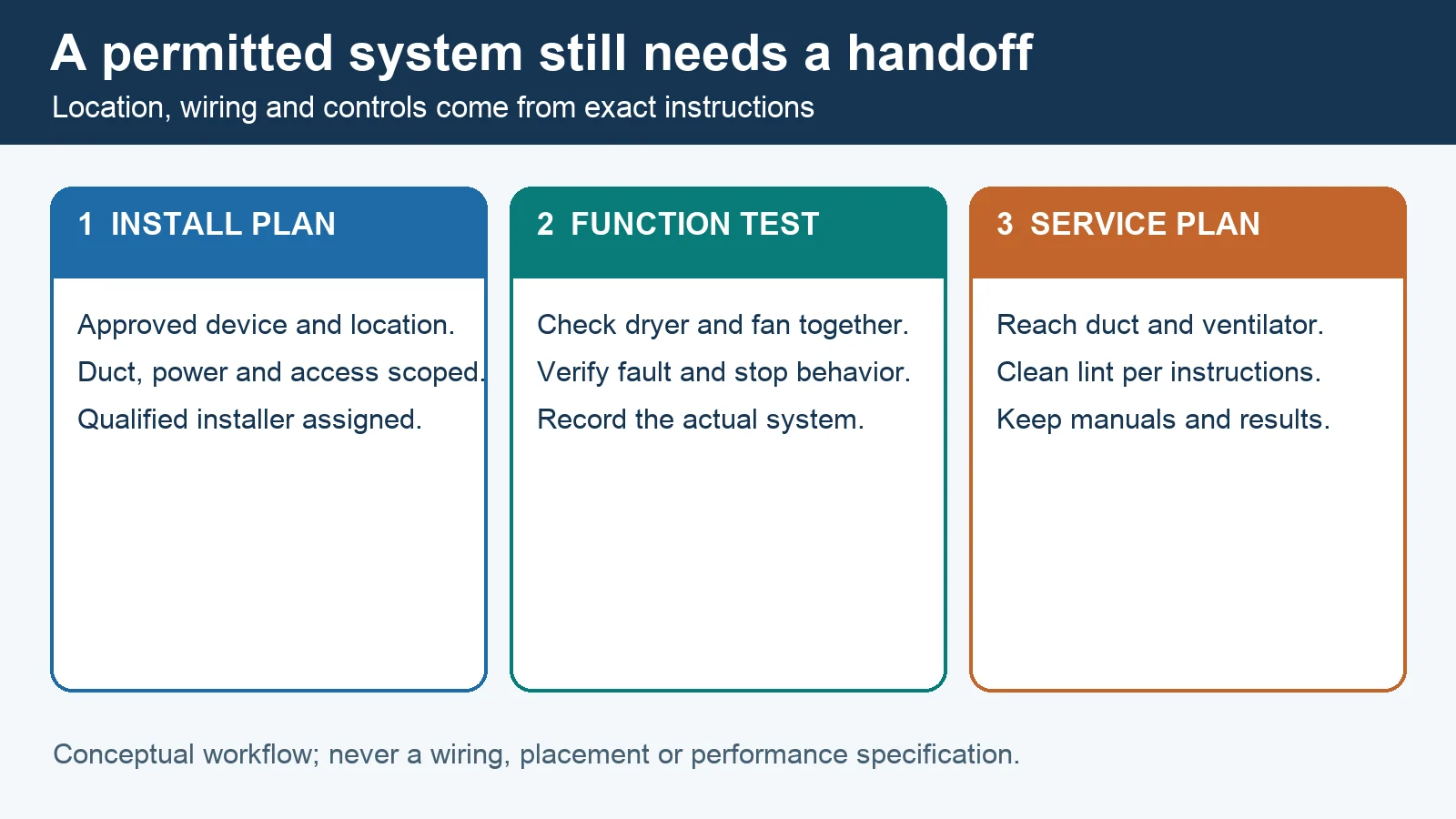
A permitted device adds another component to the lint path. Before installation, show how the full duct, the ventilator and the termination can be accessed and cleaned as the exact instructions require. Then define the handoff test: verify the dryer and ventilator operate together under their approved control arrangement, check normal stopping and the relevant fault response, inspect for leakage or obstruction, and document the observed results. A running motor is not proof that the complete exhaust system is safe or adequate.
The second diagram separates installation, function and service. It provides a workflow, not a wiring diagram, mounting location or performance specification. The qualified installer should record the exact model and revision, the approved instructions used, the route, inspection and test results, and the cleaning plan for the owner.
Know when to stop the project
Do not proceed on the basis of an old product photo, a family catalog or a salesperson’s general application statement when the exact product record is missing. Stop for an unidentified appliance, uncertain local rules, conflicting instructions, inaccessible lint path, damaged duct, heat or odor, electrical uncertainty, or an unresolved control fault. Combustion-appliance and pressure interactions also warrant qualified review where relevant. Correct a restriction or appliance fault before revisiting whether extra exhaust assistance is even needed.
The practical outcome is a documented yes-or-no decision: either the existing path is restored without a fan, or a specific DEDPV with the required evidence is selected and installed under its instructions. The installation location and maintenance interval then come from that system’s documents and observed conditions, not from a generic diagram.
For an exact-model evidence review, send the dryer model, route sketch, local requirements and proposed ventilator documents to sales@longwellfans.com.
Choose the right duct fan
Longwell manufactures 254 duct fans in-house. Send airflow, static pressure and voltage — an engineer replies with a matching model, performance curve and price within one working day.