A low HVAC fan quotation can hide an undefined operating point, an uncontrolled production revision, a certification scope gap, incomplete logistics costs, or an acceptance plan written after the shipment arrives. These are not country stereotypes; they are preventable procurement-control failures.
This guide explains five common mistakes and the evidence gates buyers can use before release. Destination rules and transaction details vary, so confirm current legal, customs, tax, sanctions, and product requirements with the relevant authority, importer of record, broker, and qualified advisers.
Mistake 1: buying a headline airflow value
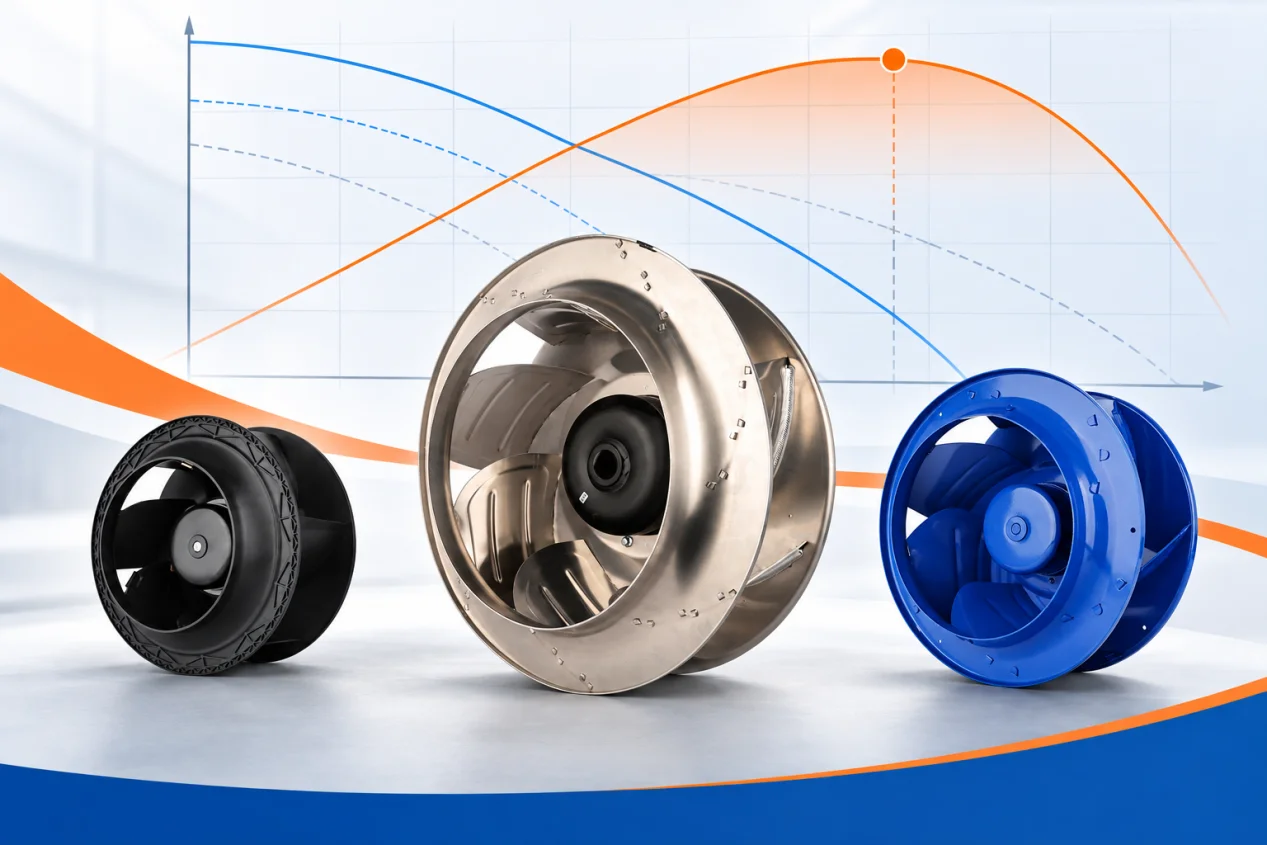
Maximum airflow is usually associated with very low pressure, while maximum pressure occurs near zero airflow. Neither establishes the installed duty point. Define required airflow with static or total pressure, air density and temperature, system resistance, speed or control state, installation geometry, acoustic limit, and acceptable operating range.
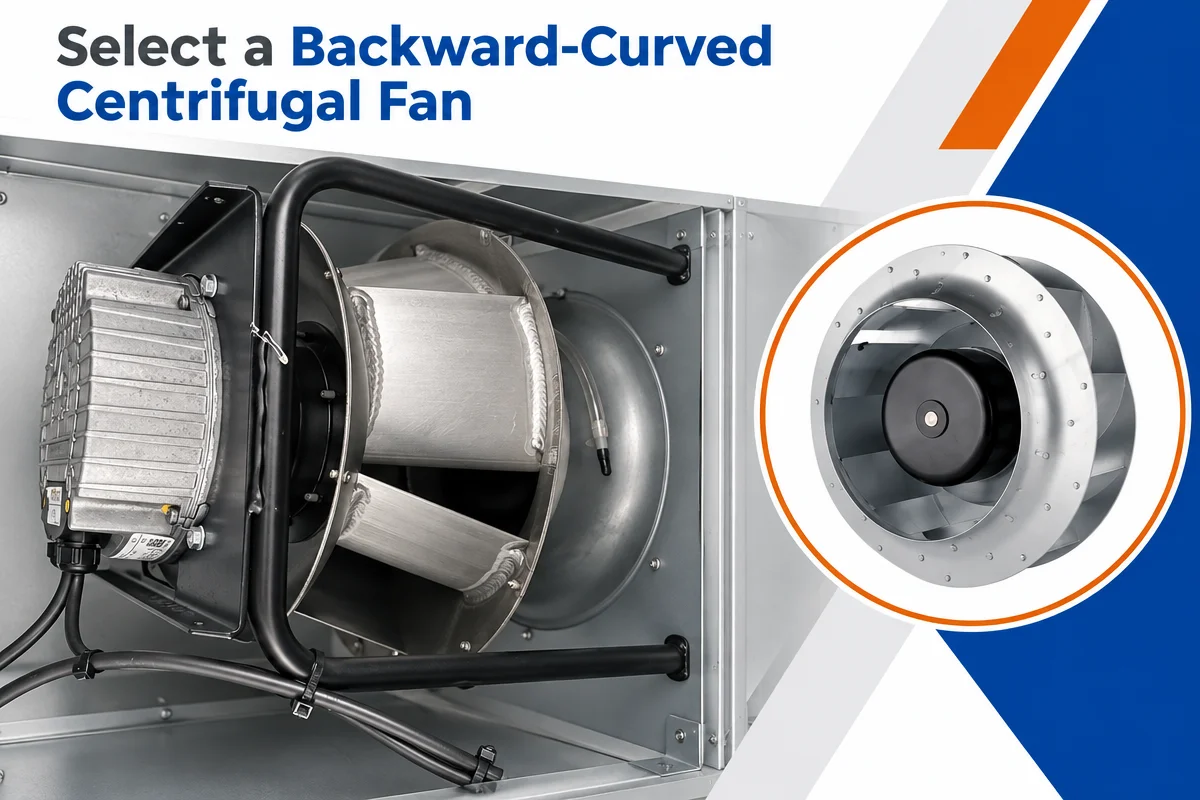
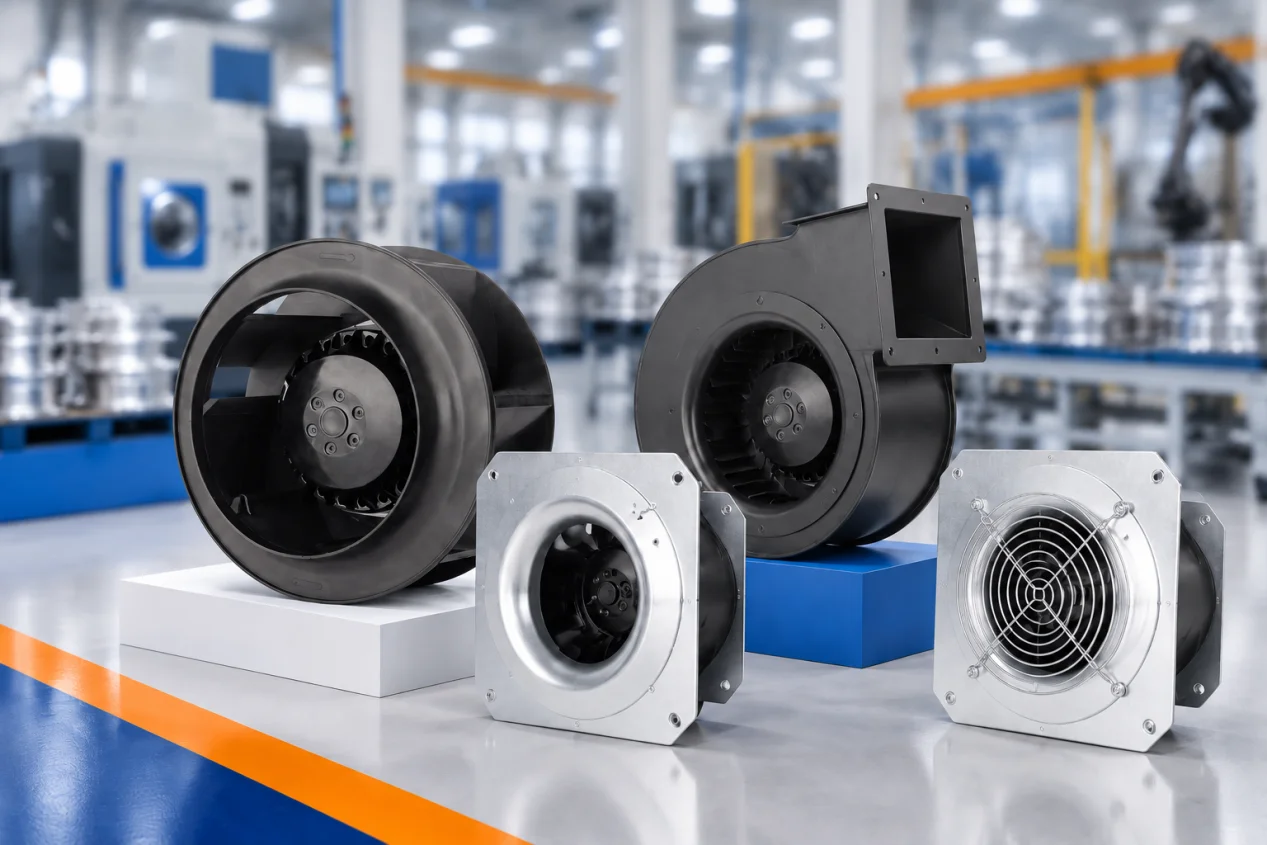
Request the fan curve at the relevant operating points and the model-specific power, current and sound records under declared test conditions. The LONGWELL duty-point guide explains how to read a candidate curve; it does not approve a model for this project. Record whether performance is for a bare fan, housing, guard, or assembled unit. An attractive free-air number can still miss the application once filters, coils, ducts, and system effects are included. LONGWELL centrifugal fan families provide candidate identities for this comparison, but the family page does not prove that any specific model fits the installation.
Mistake 2: assuming the approved sample locks production
A sample is useful only when it has a controlled identity. Preserve its full model, drawing revision, materials and critical components, motor and controls, firmware where relevant, labels, packaging, test conditions, approved deviations, photographs, serial or batch reference, and approval record. State which characteristics production must match.
Require written change control for substitutions, tooling repair, manufacturing-site changes, software revisions, packaging changes, and process transfers. The supplier should describe the reason, affected characteristics, validation, timing, and traceability before implementation. A good prototype does not automatically demonstrate every later production unit.
Mistake 3: trusting a mark without its scope
A certificate image or nameplate logo is not a complete market-access review. Match the responsible legal entity, manufacturing site where relevant, exact model or family, product role, destination, standard and edition, report or certificate number, issuing body, current status, authorized mark, and conditions or limitations.
Component evidence does not automatically approve the finished HVAC unit, control panel, machine, or installation. Private labeling and configuration changes can alter responsibilities and documentation. Keep management-system certificates separate from product certification, and confirm current applicability through official sources and qualified compliance professionals.
Mistake 4: comparing unit price instead of the delivered scope
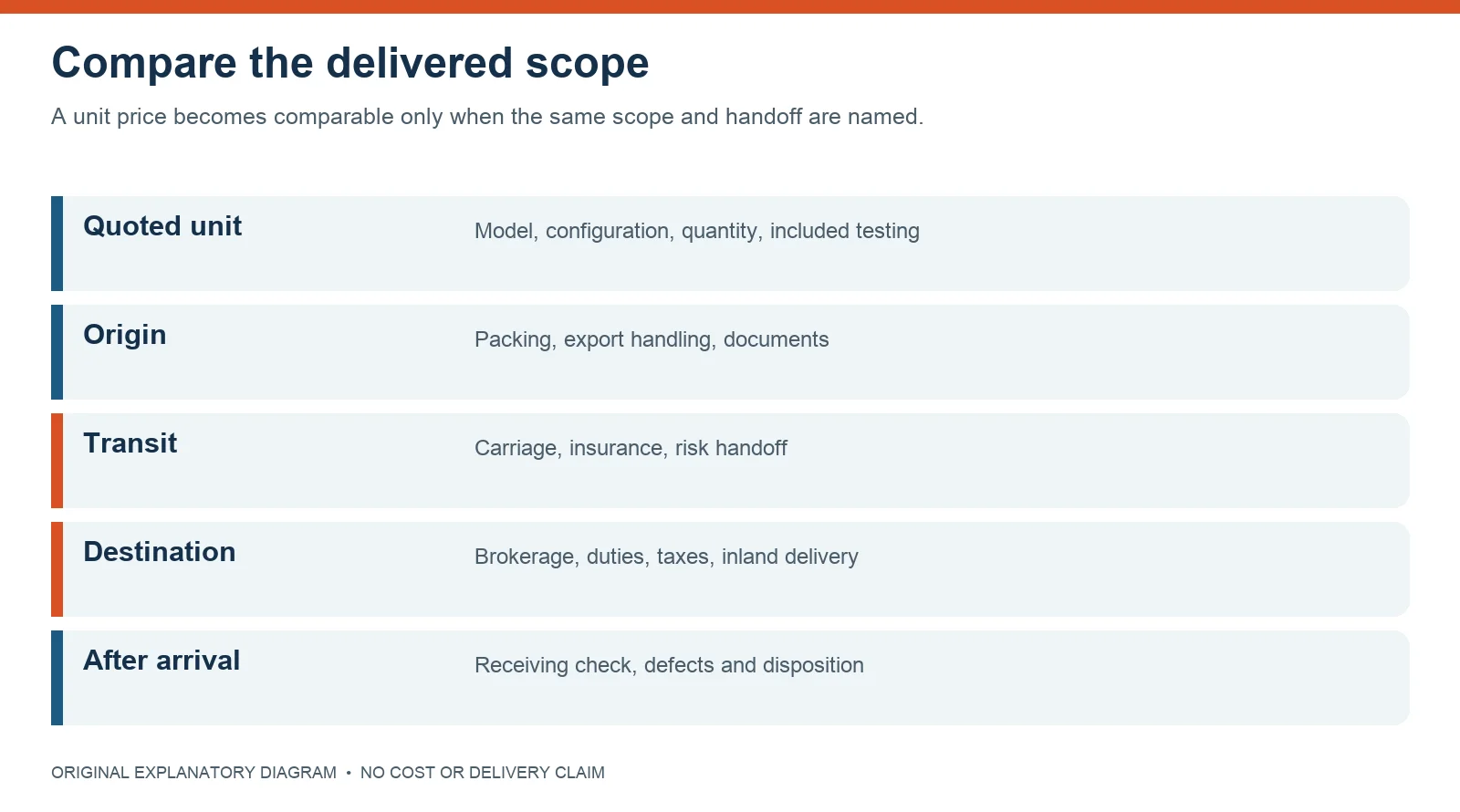
Normalize quotations to the same model revision, duty point, electrical configuration, quantity, accessories, testing, documentation, packaging, currency, validity, Incoterm, named point, and destination. Separate one-time engineering, samples, tooling, certification, and packaging development from recurring unit scope.
Build the logistics stack: origin handling, export clearance, carriage, insurance, destination terminal charges, customs brokerage, duties and taxes, storage, inland delivery, unloading, and exceptional fees. The ICC Incoterms rules allocate defined tasks, costs, and risk but do not replace the full contract. Current rates and import treatment must be verified for the actual shipment.
Mistake 5: defining acceptance after arrival
Write acceptance criteria before production. Depending on risk, the plan may cover identity, quantity, dimensions, workmanship, materials, rotation, electrical interface, current, controls, balancing, selected performance tests, traceability, labels, accessories, packing, and documents. Define method, sample size, limits, report format, and failed-result disposition.
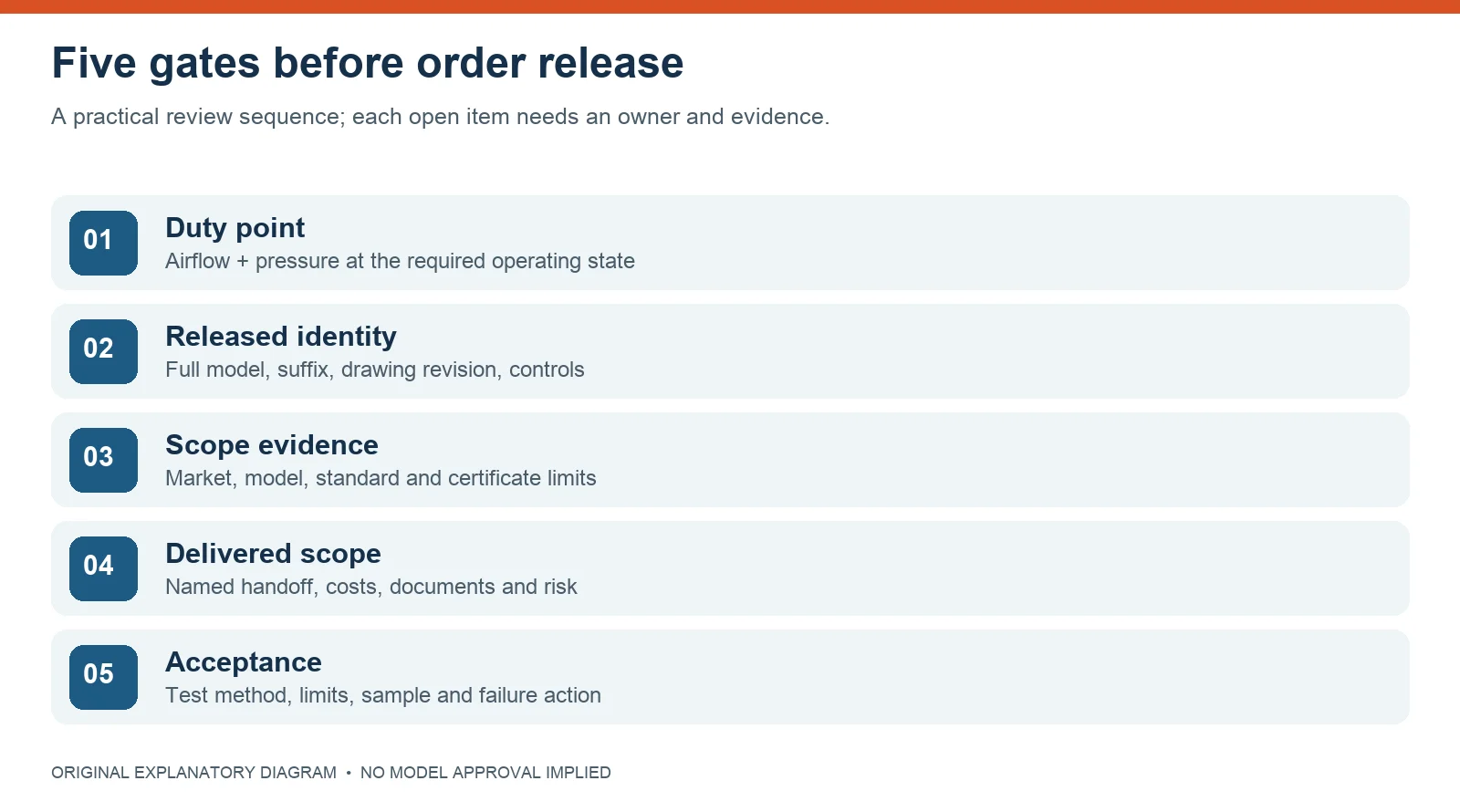
Use an order-specific release gate: is the duty point testable, is product identity frozen, is market-access evidence scoped, is logistics responsibility complete, and is acceptance agreed? Do not release solely because packaging photos, warehouse footage, or an inspection sheet look reassuring; sampled visuals do not prove capacity, conformity, performance, inventory, or delivery.
Close open items with named owners and evidence, then preserve the released specification, drawings, deviations, inspection results, and shipment reconciliation. These five controls turn HVAC fan importing from a trust exercise into a reviewable engineering and procurement process.
After the first delivery, review actual installation, commissioning, alarms, operating current, airflow evidence, damage, and document discrepancies against the release file. Feed verified lessons into the next revision instead of allowing informal fixes to become the new uncontrolled standard.