A blower wheel can shake for several reasons. Uneven mass is one possibility, but a loose hub, worn bearing, bent shaft, drive fault or flexible support can produce a similar complaint. The useful decision is whether the assembled wheel is intact and still has a repeatable running-speed vibration after cleaning and mechanical checks. Adding a weight before answering that question can conceal the actual fault.
This guide follows the inspection sequence shown in the video. It is an engineering diagnostic framework, not a balance result or maintenance instruction for every LONGWELL model. Record the exact fan and wheel identity, service conditions and manufacturer procedure before touching the assembly.
Use running-speed vibration as a clue, not a verdict
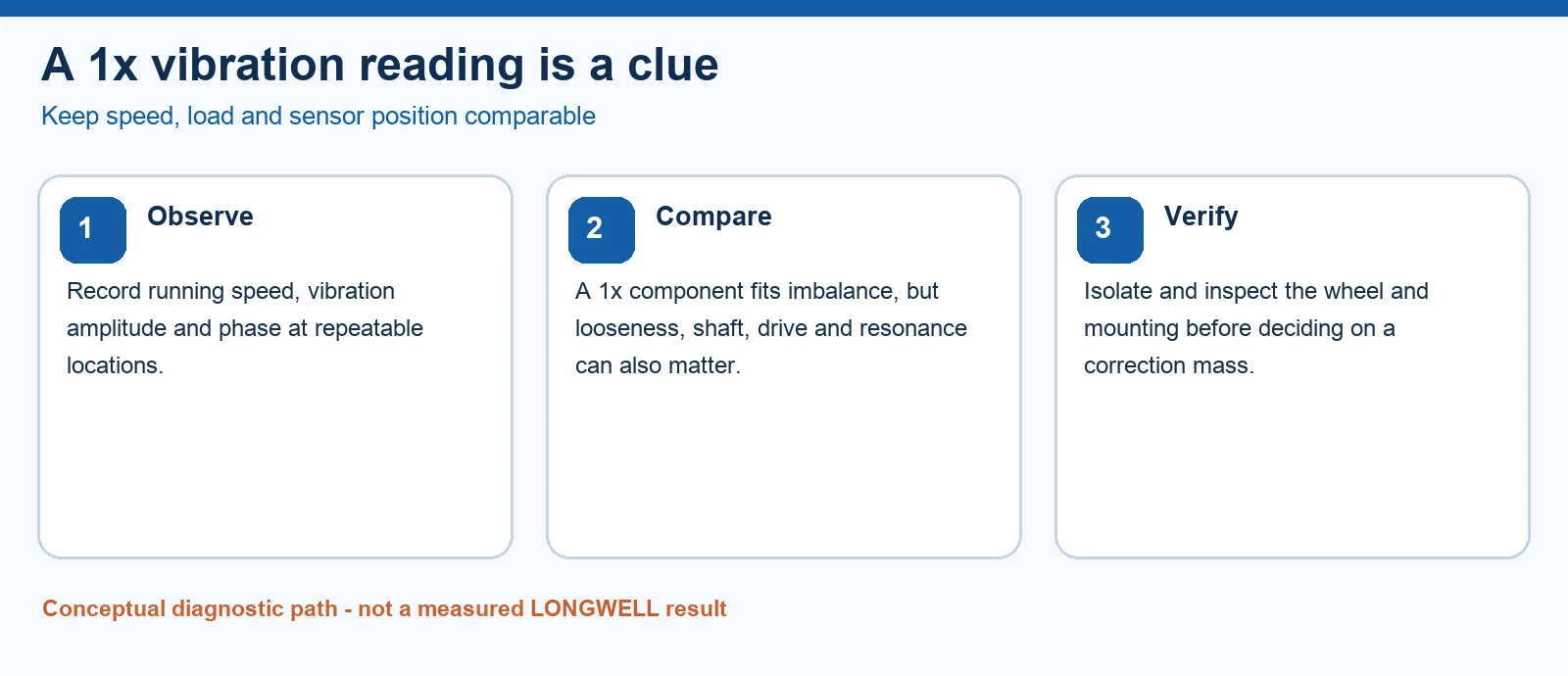
An unbalanced mass generates a rotating force that grows with the square of rotational speed when the mass and radius remain fixed. A strong component at one times running speed can therefore support an imbalance hypothesis. It cannot prove that hypothesis alone. Looseness, shaft runout, drive defects and a structural resonance may alter the observed amplitude and phase. The surrounding housing can also amplify a small excitation.
Record the running speed, vibration amplitude and phase where possible, sensor direction and location, fan operating point and whether the reading is repeatable. Compare measurements at the same locations and similar speed and load. A change in instrument position or system resistance makes a before-and-after comparison weaker. If vibration changes sharply over a narrow speed range, investigate the support and operating speed rather than assuming a new correction weight is the answer.
Isolate the fan before inspecting the wheel
Cleaning, opening a housing and touching a wheel are maintenance work. Qualified personnel should follow the equipment and site energy-control procedure, isolate every relevant energy source and verify the safe state before access. The OSHA hazardous-energy overview explains why unexpected startup and stored energy matter during service. The exact isolation steps depend on the machine, drive and local rules; a stopped control command is not a substitute for isolation.
Before moving or removing components, photograph the wheel, hub, mounting, clearances and any factory balance features. Check the full circumference and both sides where accessible. Look for uneven deposits, corrosion, erosion, cracked welds or blades, rubbed surfaces, loose fasteners and evidence that the wheel has moved on its shaft. A visual inspection can identify damage or contamination, but it cannot establish a balance grade or residual vibration value.
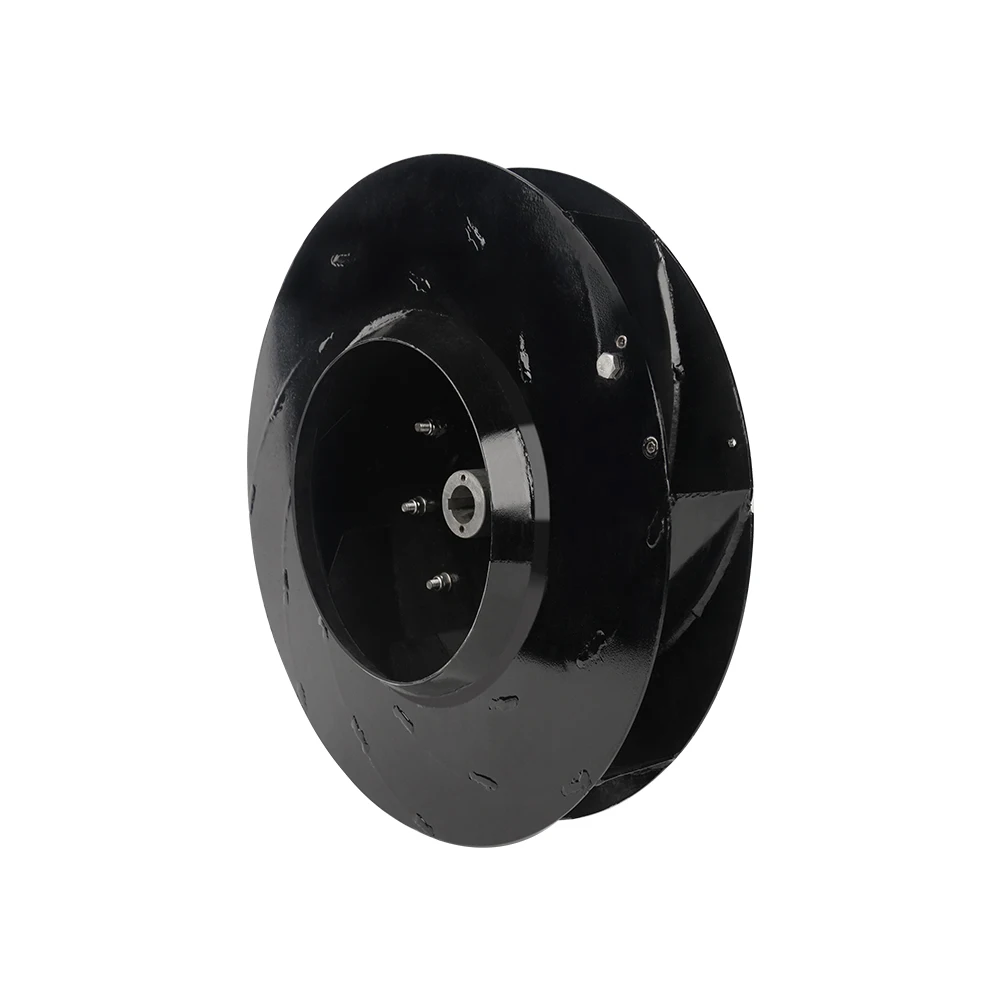
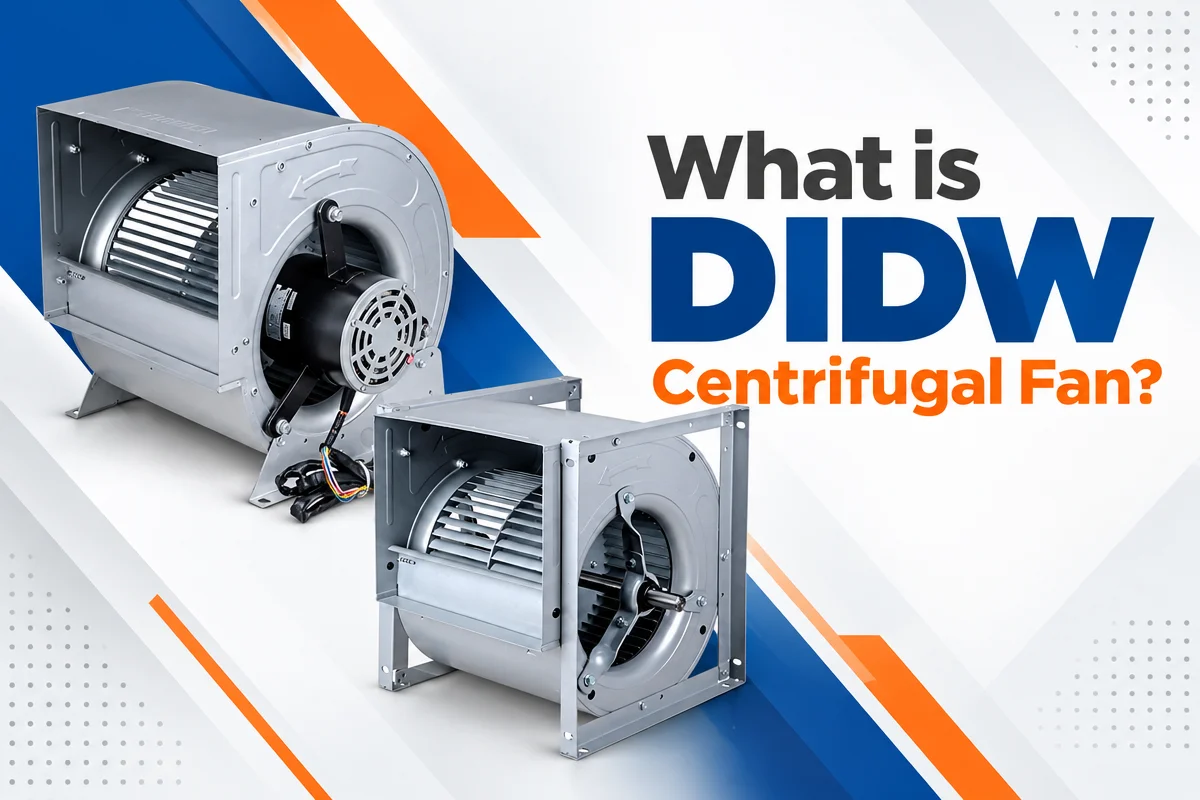
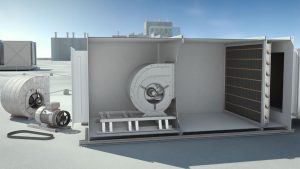
LONGWELL’s centrifugal impeller family shows candidate constructions, not an interchangeable replacement for an unidentified wheel. A forward-curved multi-vane blower and the backward-curved product pictured above can differ in blade geometry, hub and mounting. Confirm the exact model, suffix, rotation, dimensions and drawing revision before specifying a replacement.
Clean deposits without changing the balance features
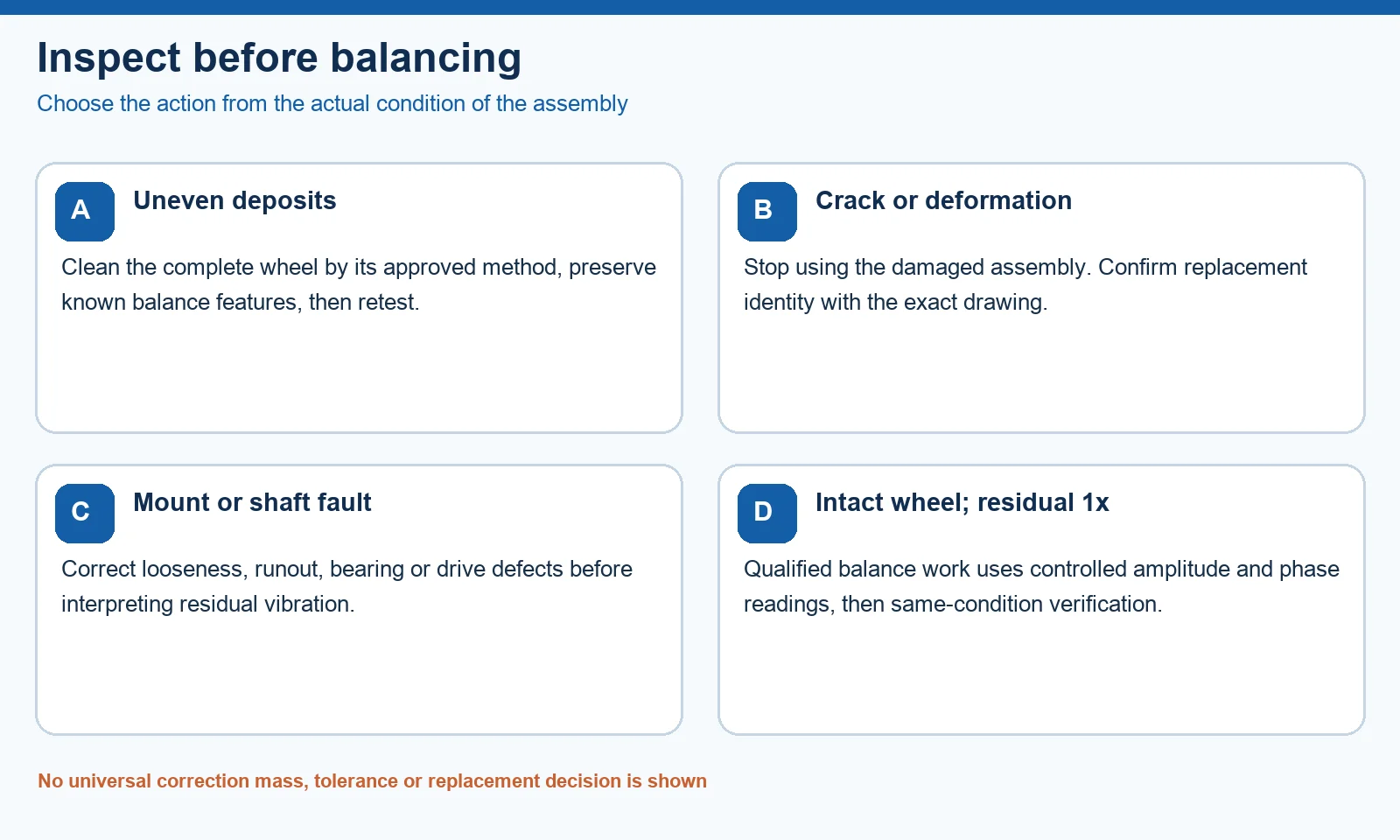
If deposits are present, clean the complete wheel using the approved method for its material and contamination. Cleaning only the visibly heavy side can move the mass distribution again. Preserve correction clips, welded weights and other known balance features; document any feature that is loose or missing rather than guessing its original position. Do not grind, drill or attach an improvised weight as a cleaning shortcut.
Once the wheel and housing are clean, reassemble to the documented position, restore guards and verify clearances according to the equipment procedure. Retest at a defined speed and load. If the reading improves, keep the before-and-after record and investigate why deposits built up. A loaded or bypassed filter, process carryover or access problem may be relevant depending on the system; the wheel alone cannot identify the upstream cause.
Separate damage and mounting faults from balance work
A crack, bent blade, failed weld, damaged hub or severe corrosion is a structural question. A correction mass does not restore lost strength or geometry. Stop operating the damaged assembly until it is assessed under the manufacturer’s procedure; replacement may be required. Likewise, a loose hub, shaft runout, bearing defect or drive problem needs its own repair before residual wheel balance is judged. Otherwise a trial weight can compensate for an unstable fault that will move again.
When measured balancing is justified
After cleaning and mechanical correction, an intact assembly may still show repeatable running-speed vibration. Qualified balance work then uses amplitude and phase measurements, a controlled trial or other approved method, and the actual assembly configuration. Correction mass, angular position, correction plane count and acceptable residual are specific to the wheel, speed, mounting and applicable manufacturer or project requirement. A guessed clip copied from another wheel does not meet that standard.
Measure again after correction under the same defined conditions, document the final vibration and inspect for interference, loose weights and guarding. A result on a balance stand is useful evidence for the assembly and test setup used there; it does not automatically predict the installed fan’s vibration when supports, duct forces or operating points change. The related impeller balancing guide explains the measurement loop in more detail.
What to send for a useful engineering review
Send the full fan and wheel model including suffix, nameplate and drawing revision; photos of both sides of the wheel, hub and any balance features; operating RPM and airflow or pressure condition; vibration amplitude, phase and measurement locations if available; and a timeline of cleaning, repairs and symptom changes. Include the mounting and drive arrangement. This lets an engineer distinguish a candidate product family from an exact replacement and decide which inspection or test is needed next.
Reviewing a blower wheel vibration issue? Send the exact assembly details and observations to sales@longwellfans.com.
Choose the right fan impeller
Longwell manufactures 10 fan impellers in-house. Send airflow, static pressure and voltage — an engineer replies with a matching model, performance curve and price within one working day.