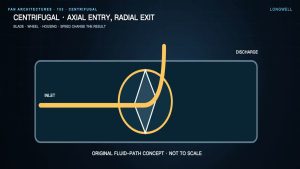
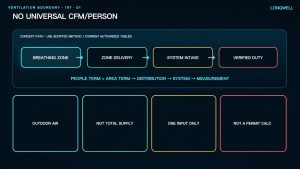
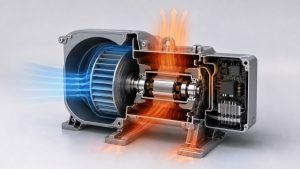
A food truck hood is a compact commercial cooking system, not a small household extractor. The useful starting question is which cooking plume must be captured and how replacement air can enter without pushing that plume out of the hood. The answer depends on the appliances, menu, fuel, adopted rules and authority having jurisdiction. Truck dimensions or an attractive fan catalogue page cannot establish an approved exhaust duty.
Trace the grease exhaust and clean replacement paths
Follow the cooking plume from appliance to hood, grease removal device, plenum, duct, exhaust fan and discharge. Every section affects capture, resistance, cleaning access or fire protection. A separate clean make-up-air path starts at a suitable intake and ends at an outlet that supports the hood without throwing a cross-draft across the cooking surface. The vehicle also has doors and a service window that can become unintended air inlets. A designer must consider those openings, wind and any combustion air requirement during operation.
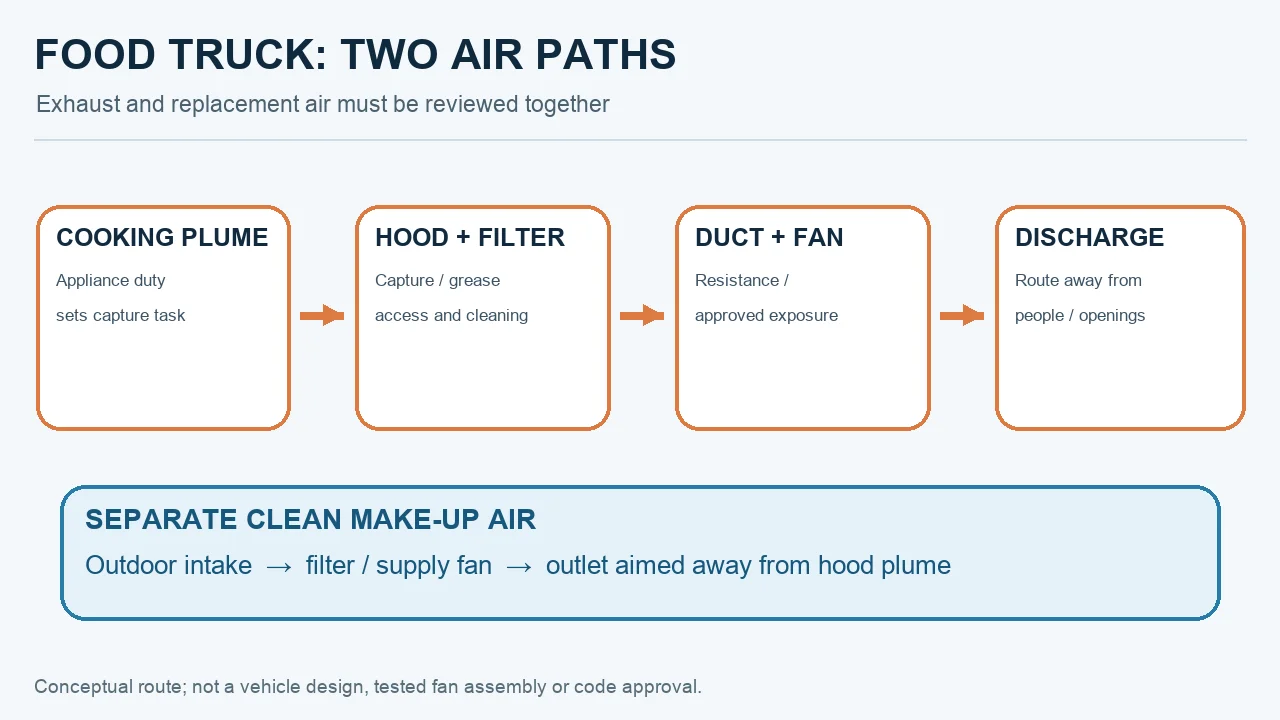
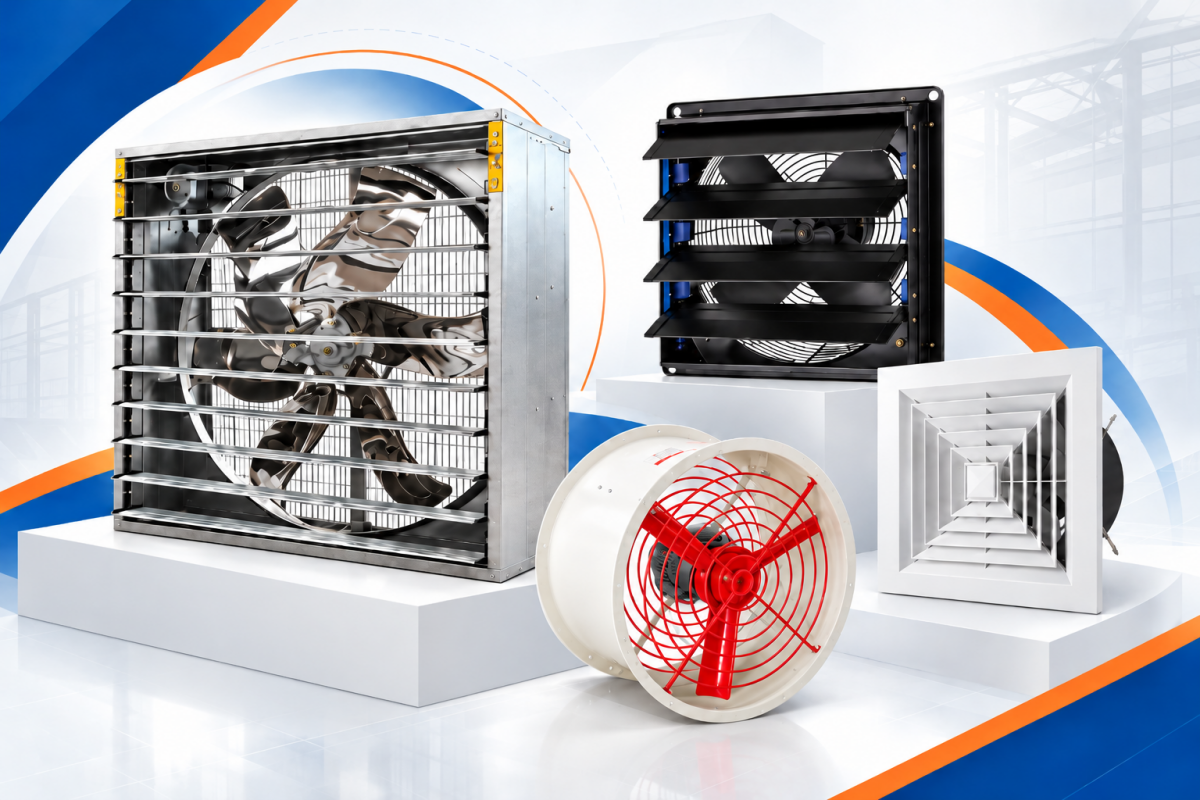
LONGWELL’s commercial-kitchen airflow guide explains the distinction between hood exhaust and clean make-up air. Its square-housing duct-fan family is a product route to evaluate only for a filtered, clean make-up-air branch when that branch’s airflow, resistance, temperature, power and controls are defined. The family page does not establish a grease-exhaust approval or fit for a particular truck.
Classify the cooking operation before sizing the hood
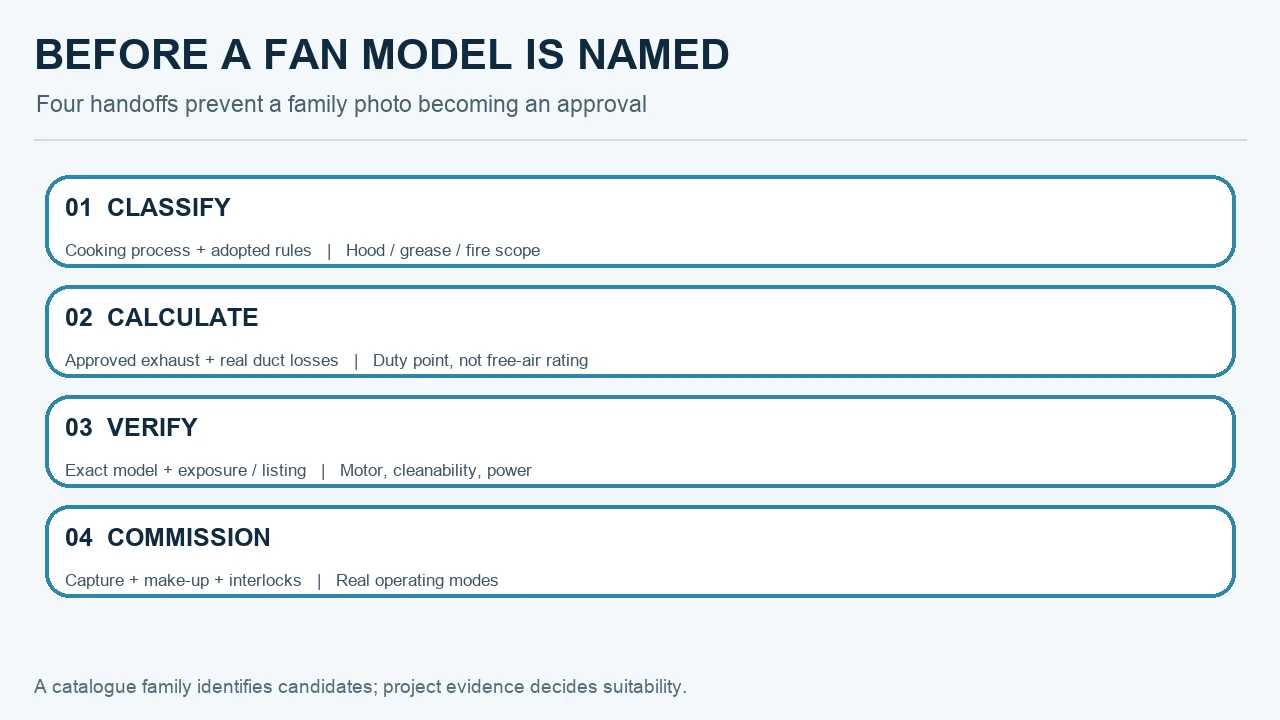
A fryer, griddle or other process that generates grease-laden vapour can bring different hood, duct and suppression obligations from equipment with another emissions profile. The actual appliance listing and local adopted requirements matter. NFPA’s NFPA 96 overview specifically covers commercial cooking ventilation and mobile operations, but the applicable edition and local adoption must be checked for the project. Do not select a generic “food truck CFM” or copy a fixed-building hood number into a vehicle plan.
Once the hood type and capture duty are established, document the exhaust airflow at the installed system resistance. Include filters, grease duct, fittings, termination and operating condition. A free-air fan rating says little about that duty point. The selected assembly must also be reviewed for temperature, grease exposure, motor location, access, materials and any required listing or approval. A series name alone proves none of those project conditions.
Keep the product evidence inside its scope
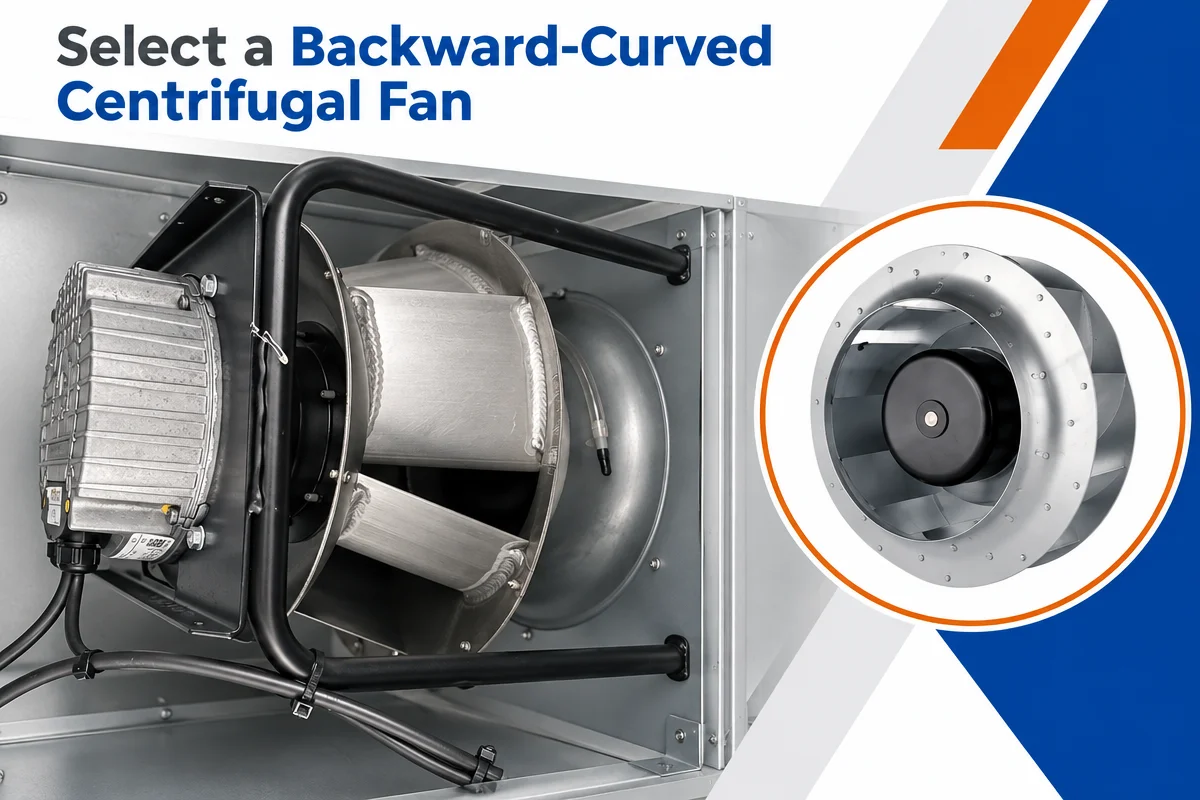
A LONGWELL catalogue identifies an LWKXF2B kitchen-exhaust centrifugal-fan series and shows nominal model data and dimensions. That is useful as a candidate identity and as a prompt for an exact-model technical request. It is not evidence that an LWKXF2B unit, or any ordinary roof or duct fan, is approved for grease-laden exhaust in a specific jurisdiction. Request the current model curve at the specified duty, exact motor and electrical configuration, exposure limits, cleaning arrangement and required certification or listing before placing any fan in the grease stream. The clean make-up-air branch can be reviewed separately against its own duty.
Make-up air, power and controls form one operating sequence
A food truck can pull replacement air through its service window or door if there is no deliberate path. Supplying more air is not automatically the fix: a high-velocity outlet aimed at the hood may disrupt capture. Show the intake, filters, any supply fan, outlet direction, doors, neighboring vehicles and combustion appliances on one plan. The U.S. Department of Energy’s commercial-kitchen ventilation guidance explains why adequate replacement air and low disturbance near the hood matter. It does not provide a universal food-truck airflow figure.
Identify whether the truck will operate from a generator, shore connection, batteries or another approved supply. Use the actual motor starting and running data, protections and control sequence to check that source. Do not assume that an EC motor, soft start or a nominal 12 V label resolves the electrical design. Document what exhaust, supply, cooking equipment and suppression controls do at start-up, normal operation, shutdown and a fire-system event. The responsible designer and authority must approve that sequence.
Design for road movement and service access
The vehicle adds roof penetrations, vibration, weather, overall height, transport restraints and post-trip inspection to an already demanding kitchen system. Position grease filters, drains, duct cleanouts, fan access and suppression components so they can be inspected and maintained without opening an unsafe route. Keep the discharge away from people, openings and combustible surfaces as required by the approved design. Food sanitation, fuel-gas arrangements, generator or engine exhaust and fire protection are separate checks; a running hood does not settle them.
Cleaning frequency should follow the applicable rules, cooking load and observed grease accumulation. A fixed “daily filters” or “monthly ducts” rule for every truck would hide those variables. Record who inspects the system, what triggers cleaning and which components are accessible. NFPA’s food-truck safety checklist is a useful starting map for the distinct cooking, fire and vehicle hazards; it does not replace the local approved plan.
Commission the installed system, not the catalogue rating
Before handover, measure exhaust and make-up airflow under the approved test method and observe capture with the actual appliances and surrounding air systems in intended operating modes. Confirm fan rotation, controls, interlocks, suppression interface, access and discharge location. Recheck after modifications that change the cooking line, filters, ducts or air supply. The final result belongs to the installed system and documented operating condition; it cannot be inferred from a family photo, a video demonstration or a nameplate alone.
For an exact-model engineering review, send the appliance list, jurisdiction, hood and duct drawings, approved exhaust and make-up-air duties, operating temperatures, power source, control sequence and any listing requirements. Email LONGWELL engineering with those project inputs.
Choose the right blower
Longwell manufactures 247 blowers in-house. Send airflow, static pressure and voltage — an engineer replies with a matching model, performance curve and price within one working day.