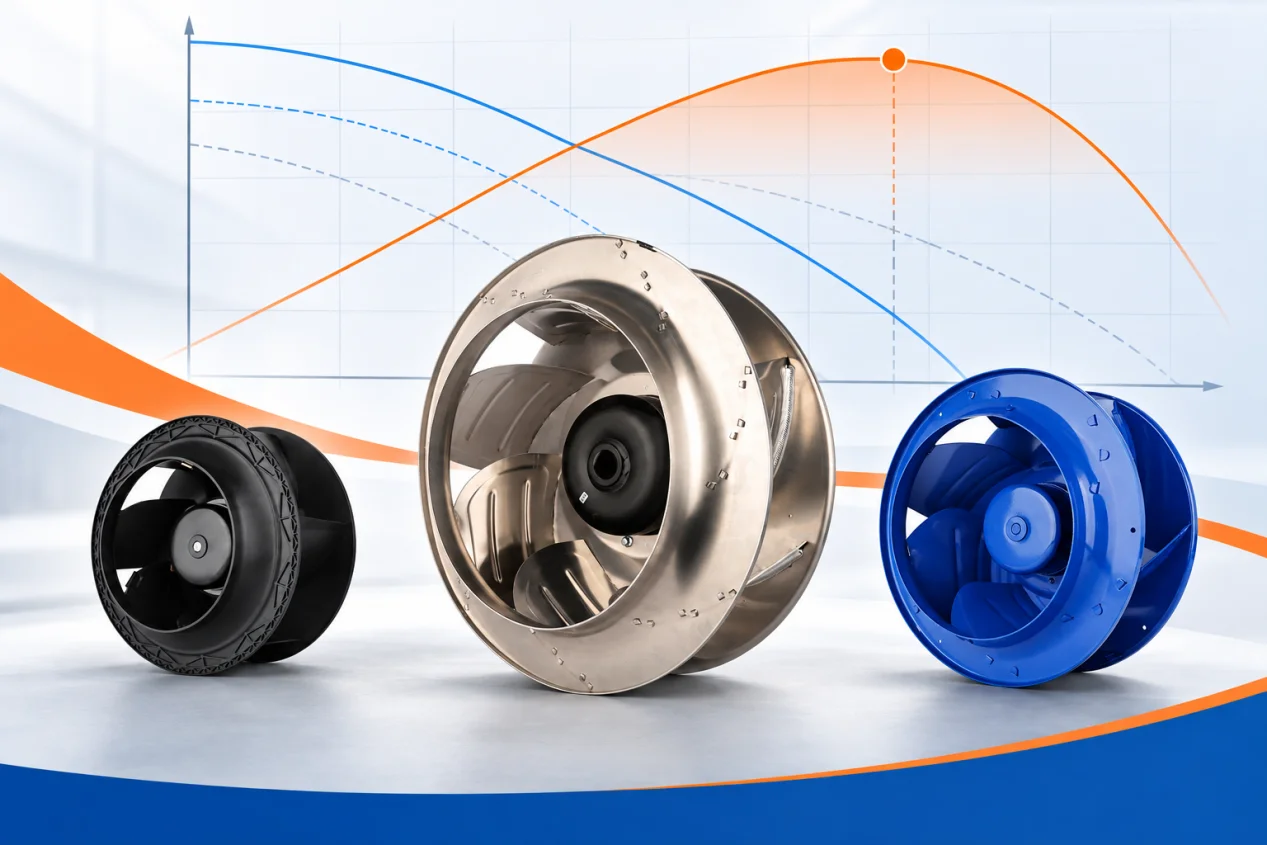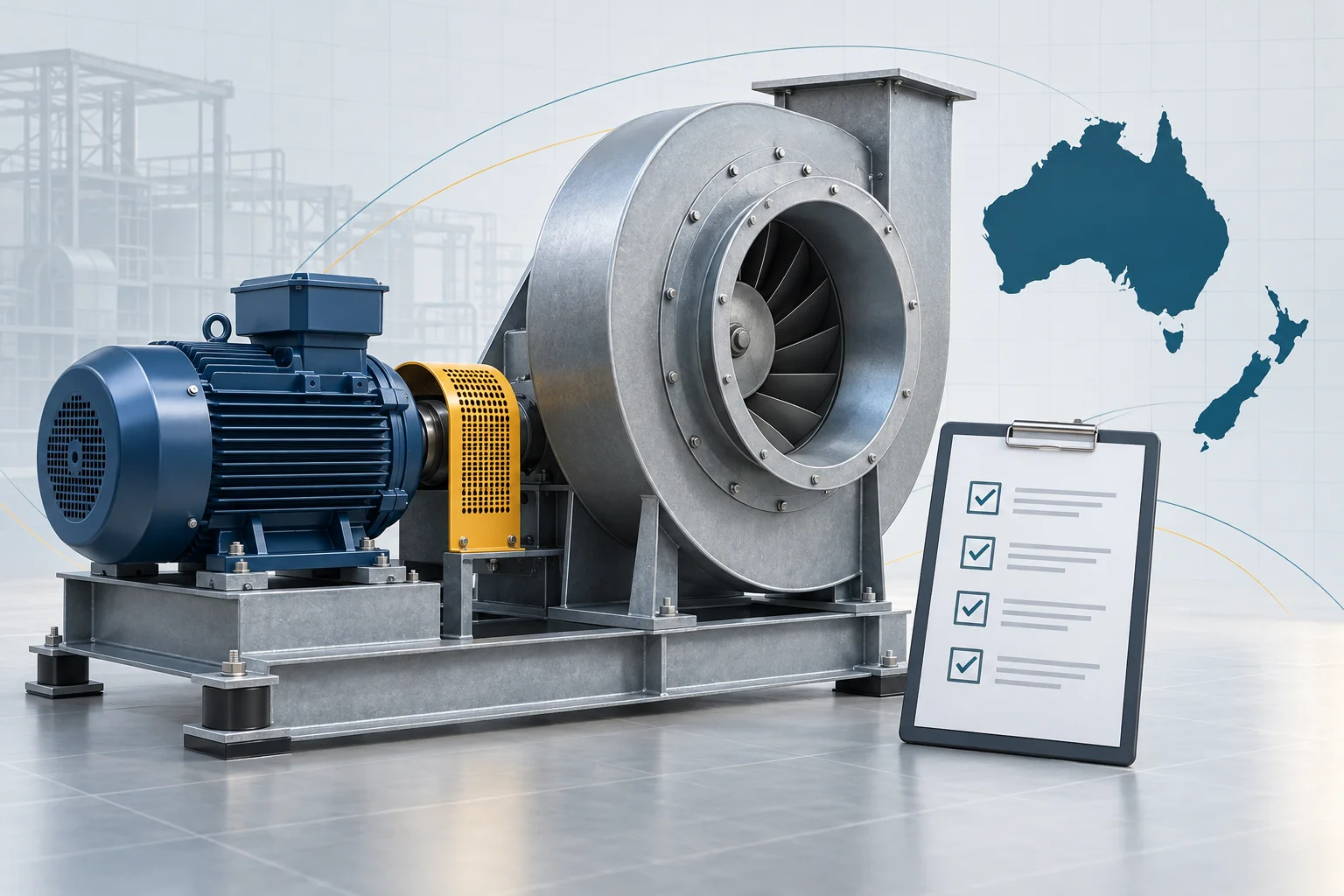
Axial, mixed-flow and centrifugal describe the path air takes through a fan. They do not assign a universal pressure band, efficiency or noise level. For an equipment engineer comparing candidates, the useful decision is whether each exact model can meet the same required airflow and pressure in the available space, with acceptable power, sound and installation conditions. Start with the duty point and system layout; use the family name to narrow the search.
First, distinguish the air paths
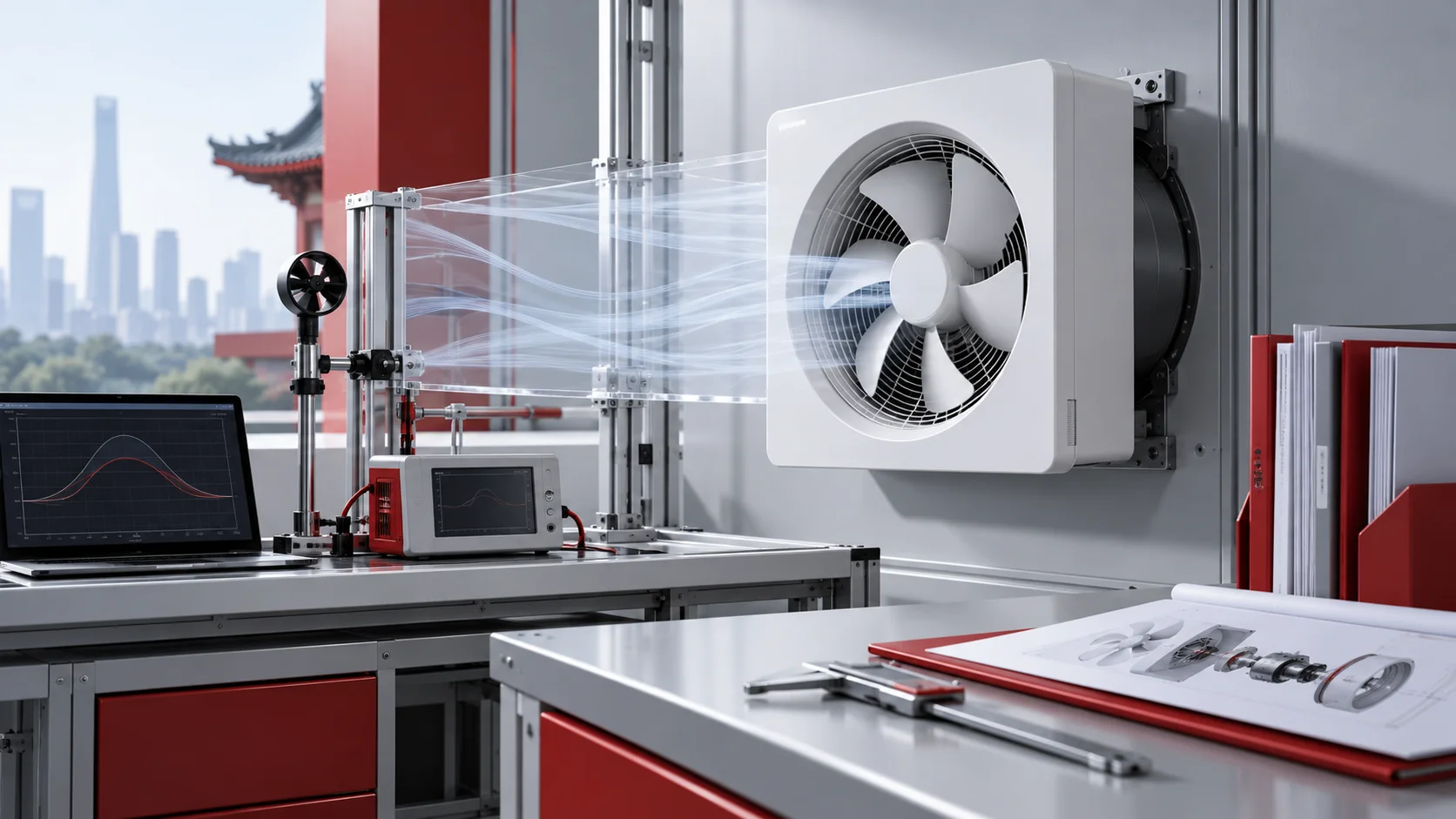
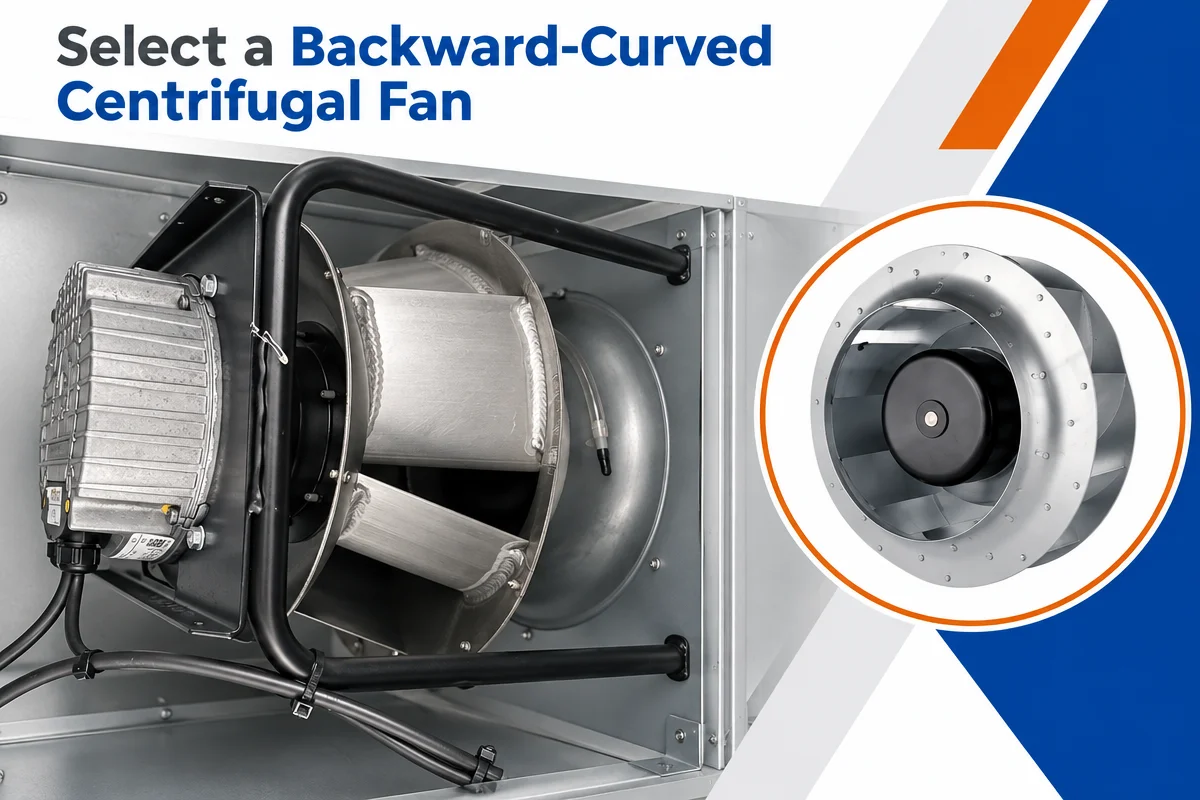
An axial impeller moves air mainly along its shaft. A mixed-flow, or diagonal-flow, impeller gives the stream axial and radial components before the casing guides it toward the outlet. A centrifugal wheel takes air in near its axis and turns it mainly outward. The drawing below explains direction only; it is not a cutaway of a LONGWELL model and does not predict performance.
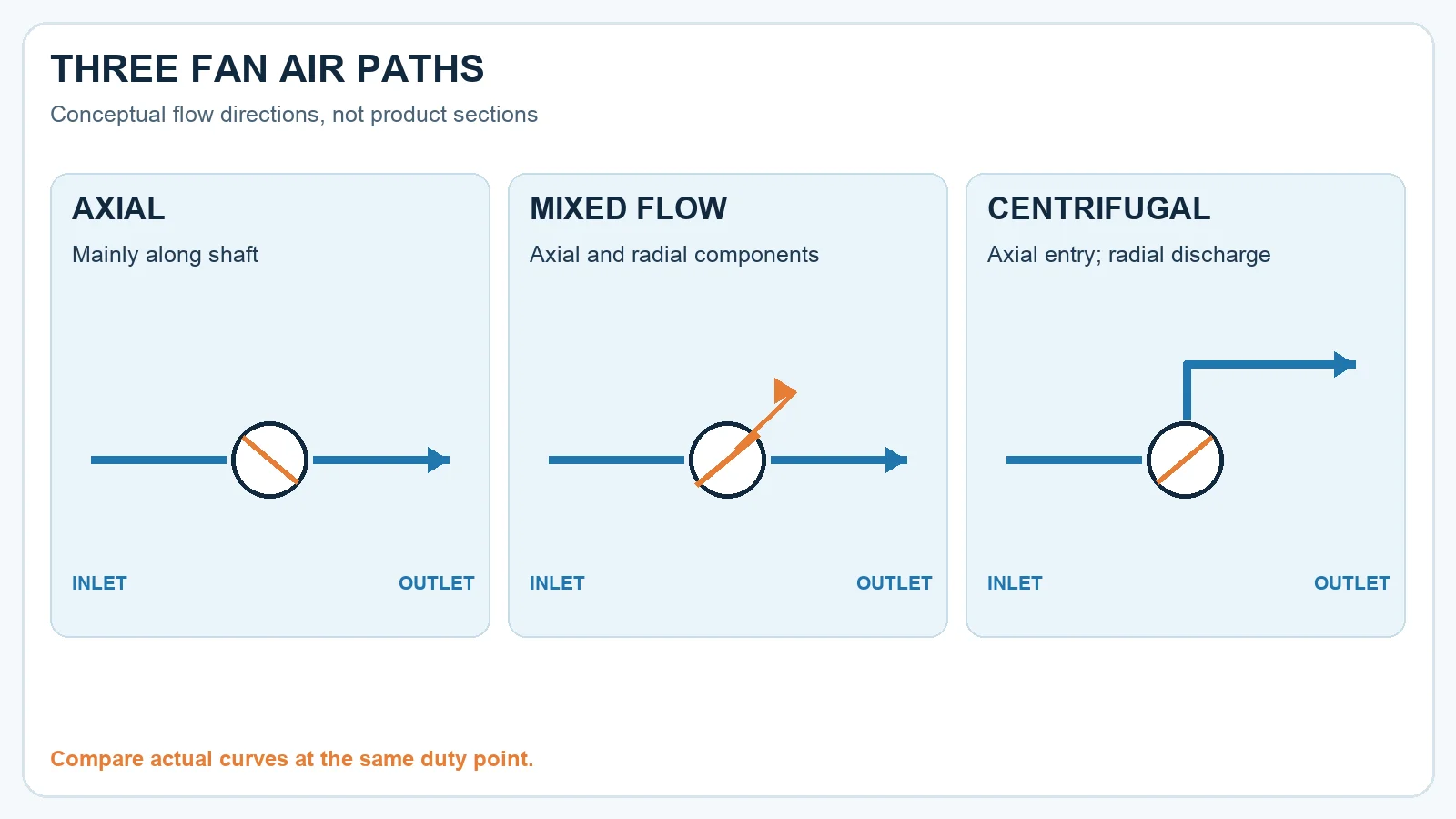
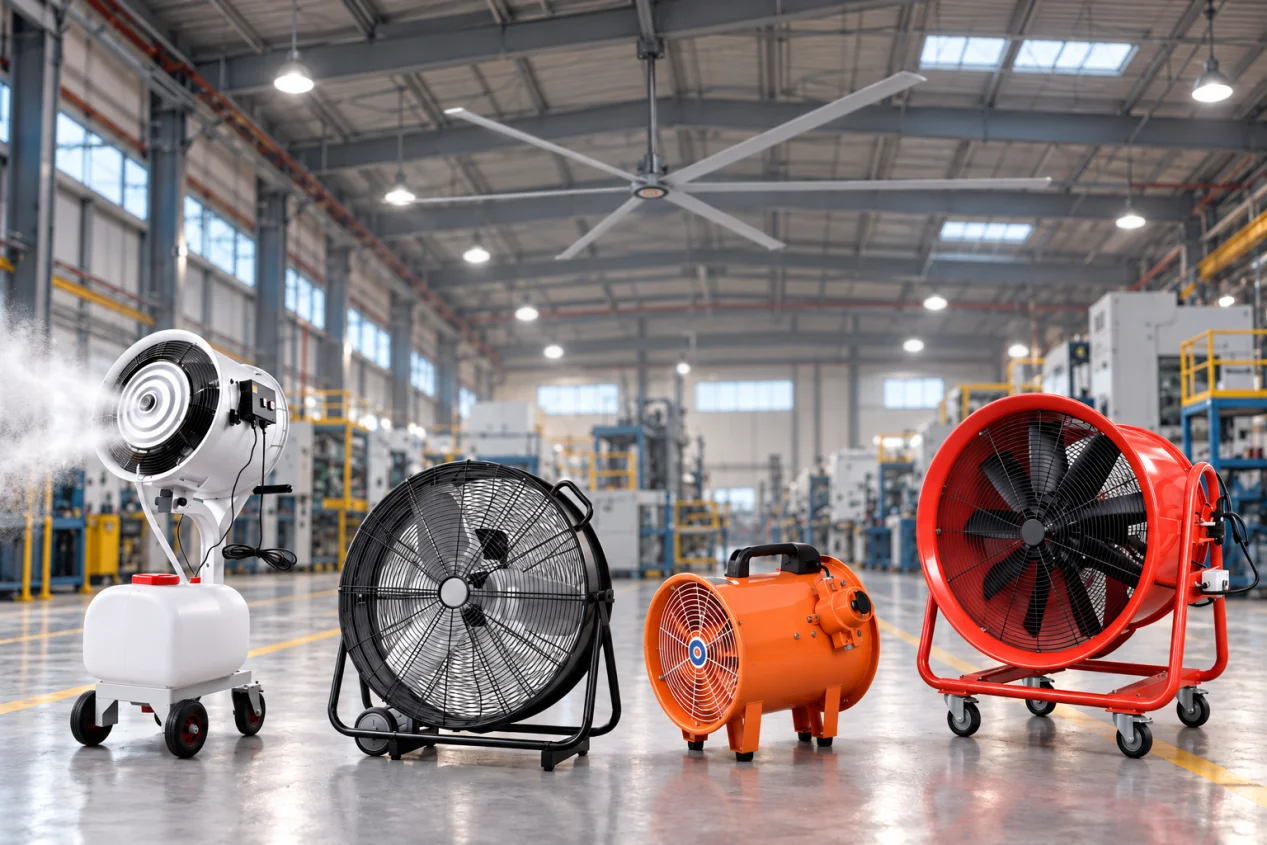
Geometry and casing make these families useful starting categories. An in-line route may favor an axial or mixed-flow construction when the project cannot accommodate a separate scroll or plenum. A centrifugal design can be considered when the system layout allows a radial outlet and its exact curve fits the duty. There are exceptions within every family. Compare the actual drawing, outlet arrangement and tested curve before excluding one.
Define one comparable duty point
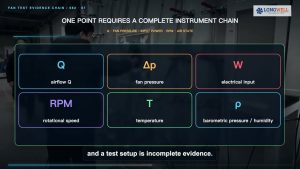
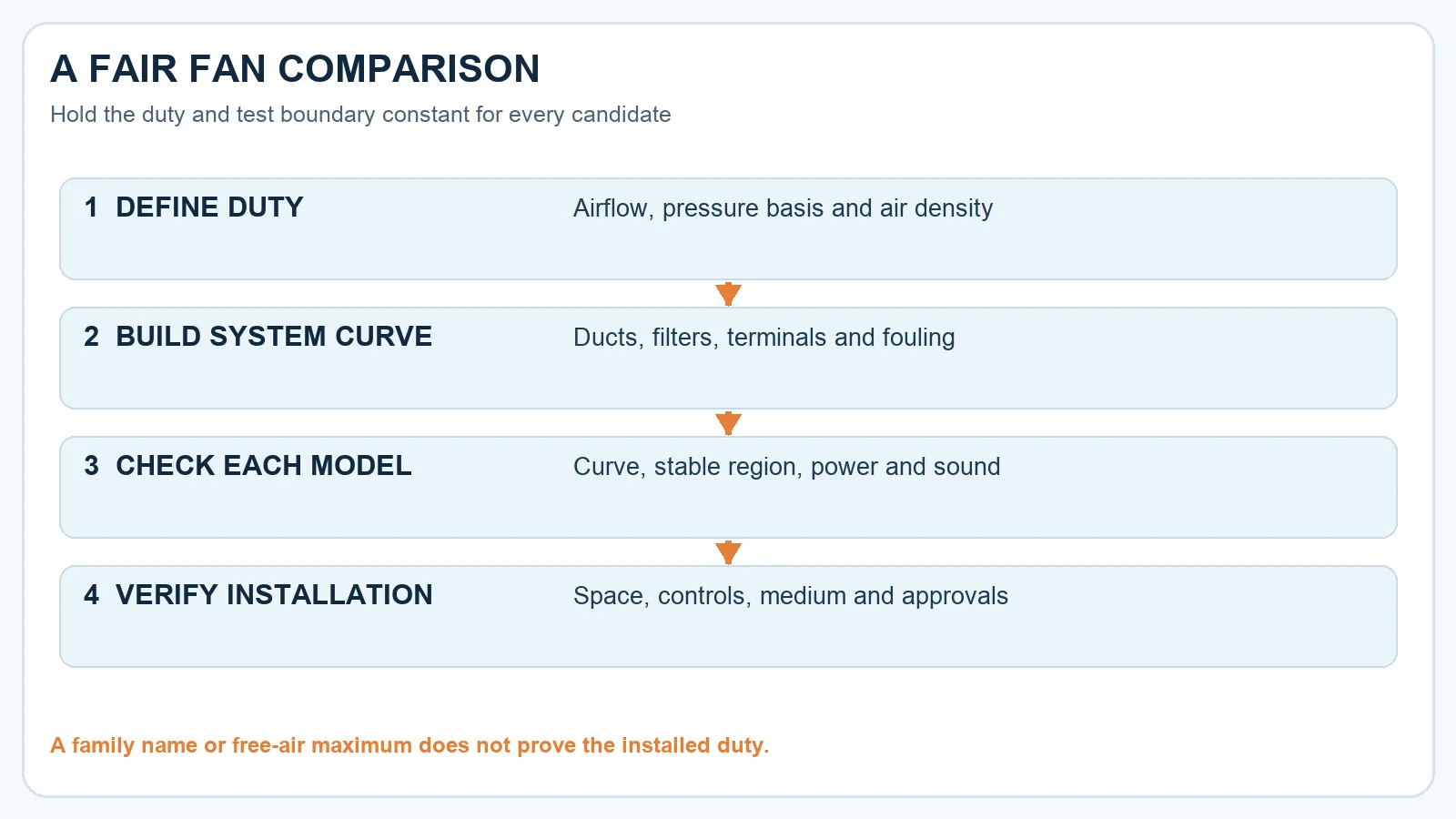
State the required volume flow, pressure type, air density and operating temperature. Then account for ducts, transitions, filters at both clean and expected loaded conditions, coils, dampers, terminals and any silencer. These components form the system resistance. Its intersection with a candidate fan curve is the operating point; a free-air airflow maximum and a shut-off pressure maximum are different ends of a curve, not a combined operating claim.
If one offer quotes static pressure and another quotes total pressure, the numbers are not directly comparable. Ask for the same pressure basis, test configuration, speed or control setting, and accessory boundary. AMCA’s system-effect explanation shows why nearby fittings can shift the installed result from a laboratory curve.
Use LONGWELL product families as routes to an exact model
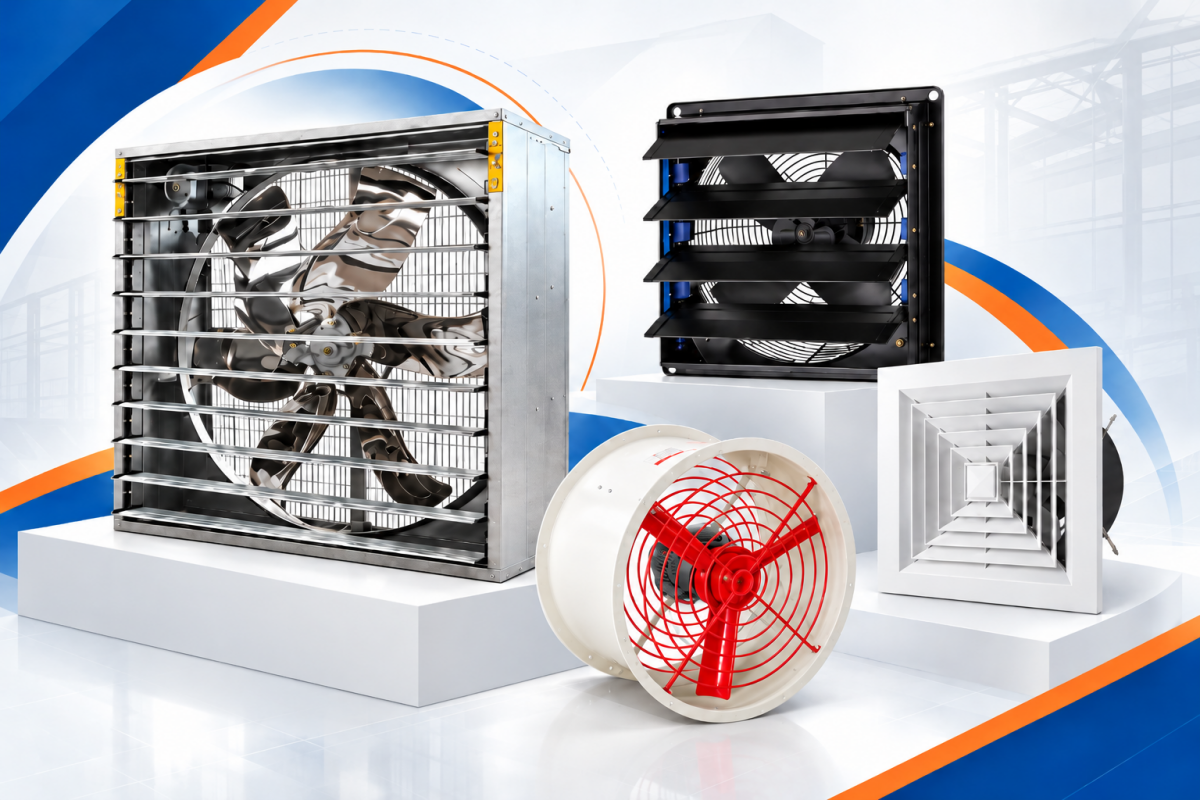
LONGWELL’s axial fan family, mixed-flow duct fan family and centrifugal fan family are three catalog starting points. They are family pages, not proof that a particular fan fits this project. The reviewed company diagonal-flow catalogue identifies an AC plastic-duct series with LWDA model codes and size variants. That establishes the existence and naming of a product route; it does not establish an installed curve, current revision, certificate scope or suitability for every duct system.
For a mixed-flow proposal, request the exact LWDA or other model suffix, voltage and control version, current dimensional drawing and the curve for that configuration. Apply the same discipline to an axial or centrifugal alternative. Catalog illustrations can confirm identity and geometry. They cannot replace a matched performance record or installation review. If the required duty falls outside an approved operating region for one model, ask for another model or architecture instead of assuming the family label guarantees a result.
Compare power and sound at the selected point
Power and acoustic figures depend on the operating point and test boundary. Do not compare a fan’s best efficiency with another fan’s value at the project duty. Ask for electrical input or shaft power as appropriate, motor loading, speed limits and the basis for any efficiency statement. For variable-speed operation, confirm the proposed control range and the resulting operating points. Fan-law estimates can help screen a speed change, but they do not remove system-effect or motor-limit checks.
Sound level needs the same care. A single dB(A) figure without distance, mounting arrangement, measurement method and frequency information cannot rank three candidates for a particular installation. Ask for relevant sound power or octave-band data when available, then consider ducts, silencers, structure-borne paths and the listener location. No fan family is inherently the quietest at every duty.
Check the installation and service boundary
Record the available length, diameter or envelope, inlet and outlet geometry, access for cleaning, support and vibration isolation. Confirm orientation, electrical supply, controls, guards and the medium moved. A clean-air ventilation candidate should not automatically be proposed for grease, smoke-control, corrosive, explosive or high-temperature duty. Those services need exact construction and current application-specific evidence, including any required approvals under the project jurisdiction.
Also check the installation drawing rather than assuming that an in-line casing is interchangeable with another. A transition, bend or filter immediately against an inlet may alter the delivered flow. If the original fan is underperforming, verify the installed resistance and controls before choosing a replacement. The cause may be outside the wheel.
Send a shortlist-ready request
A useful request contains the design and expected operating airflow, static or total pressure basis, air density or temperature, system sketch, space envelope, medium, voltage, control mode, sound target and required documents. Ask each supplier to return the exact model and suffix, curve with the duty marked, dimensional drawing, power and sound basis, and applicable certificates. Then compare like for like. An axial fan may be the straightforward option in one layout, mixed flow may solve another in-line packaging problem, and a centrifugal fan may better match a third duty. The validated point and installation decide.
Send the duty point and installation sketch to sales@longwellfans.com for an exact-model review.
Choose the right mixed flow fan
Longwell manufactures 33 mixed flow fans in-house. Send airflow, static pressure and voltage — an engineer replies with a matching model, performance curve and price within one working day.