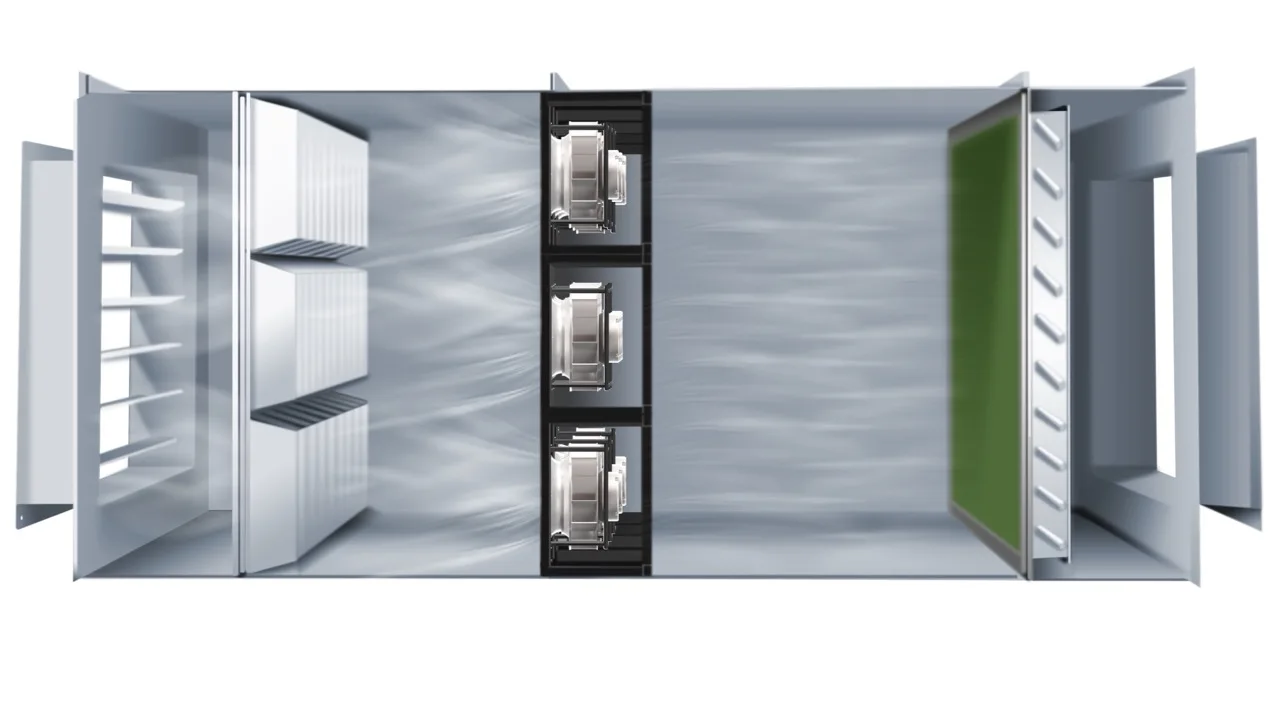
Axial versus centrifugal is not a contest between two catalog labels. It is a check against one operating point: the airflow your equipment needs and the pressure the fan must create to move that air through the real system. Axial fans often suit a comparatively open, straight-through path. Centrifugal fans often suit a path with more resistance or a required change in flow direction. Neither shortcut releases a model for purchase.
This guide explains the airflow and static-pressure basics behind that choice, then turns them into a usable selection checklist. The product photographs are real LONGWELL examples, but they are not a head-to-head performance test and are not offered as interchangeable candidates.
Start with the air path, not the fan diameter
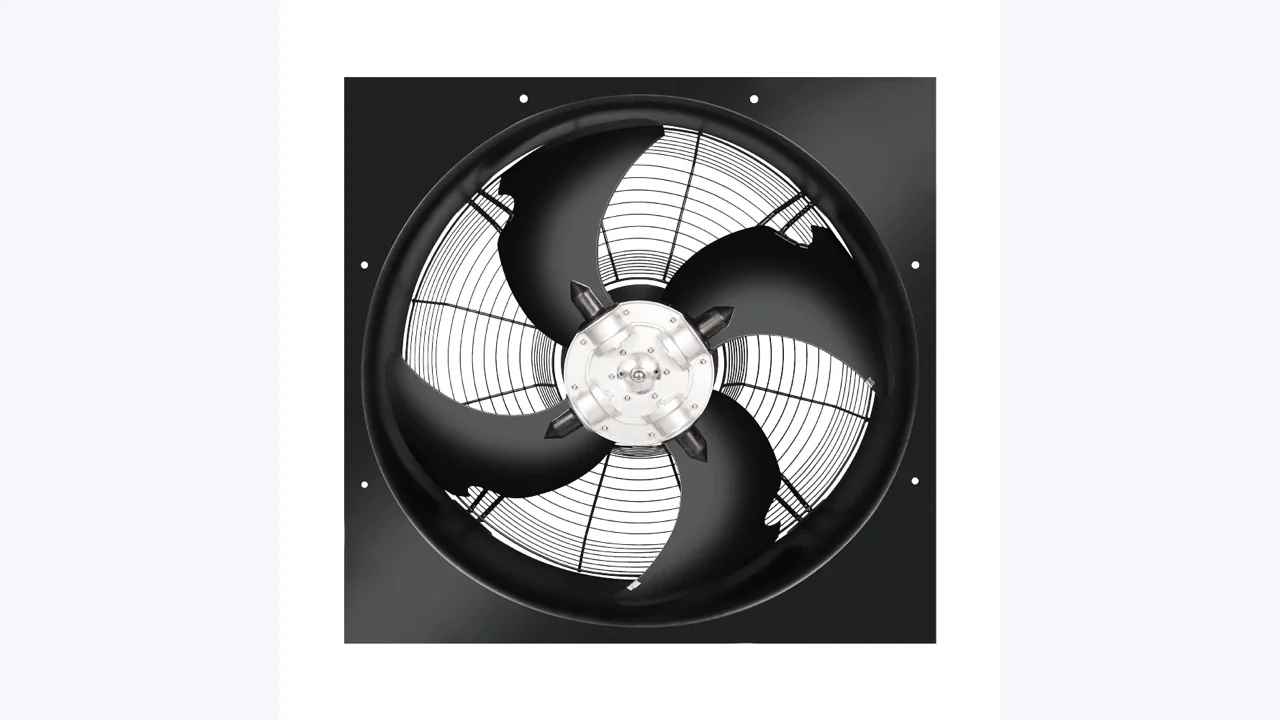
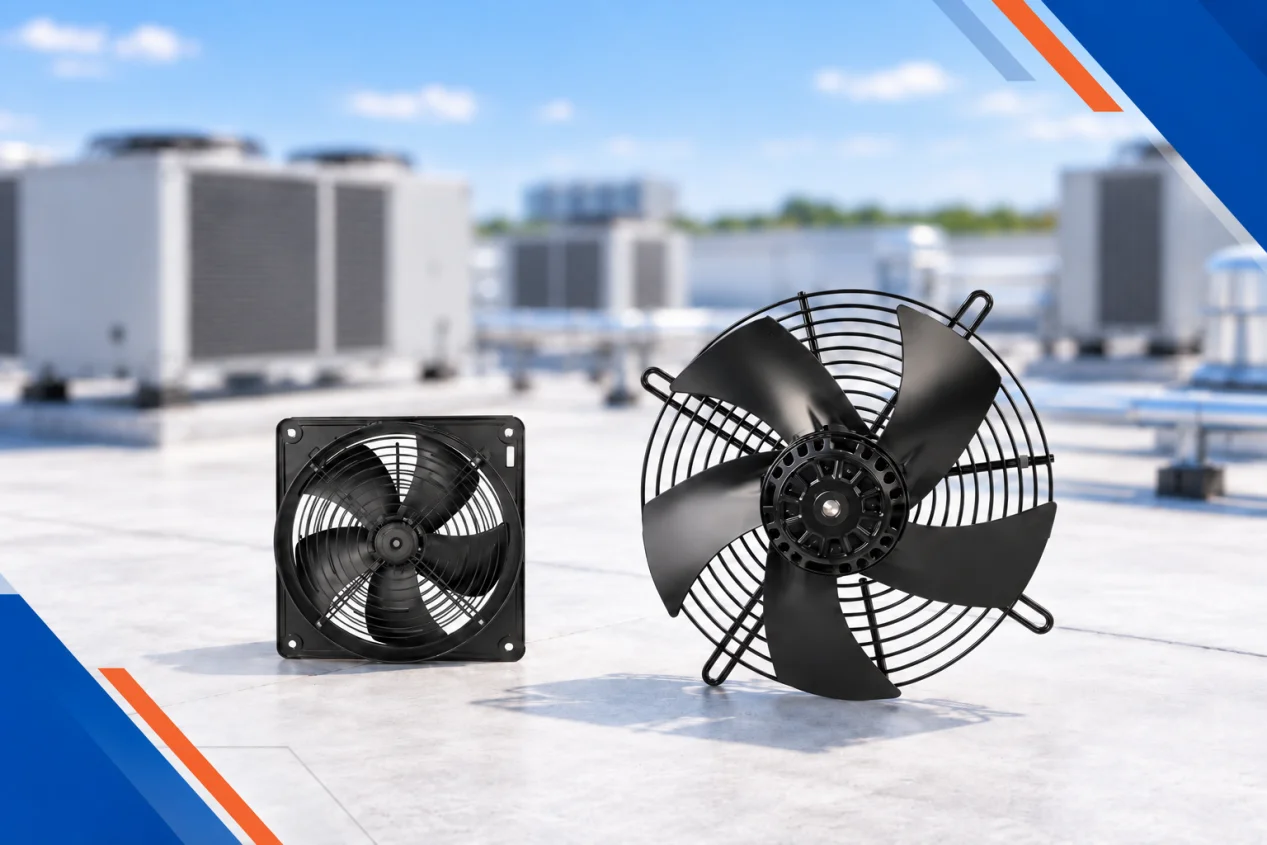
An axial fan moves air generally parallel to the shaft. That straight-through arrangement can fit a wall opening, heat exchanger, condenser, guard, short plenum, or other layout where inlet and discharge remain on the same axis. The visible blade and mounting panel tell you the aerodynamic family; they do not tell you the installed airflow.
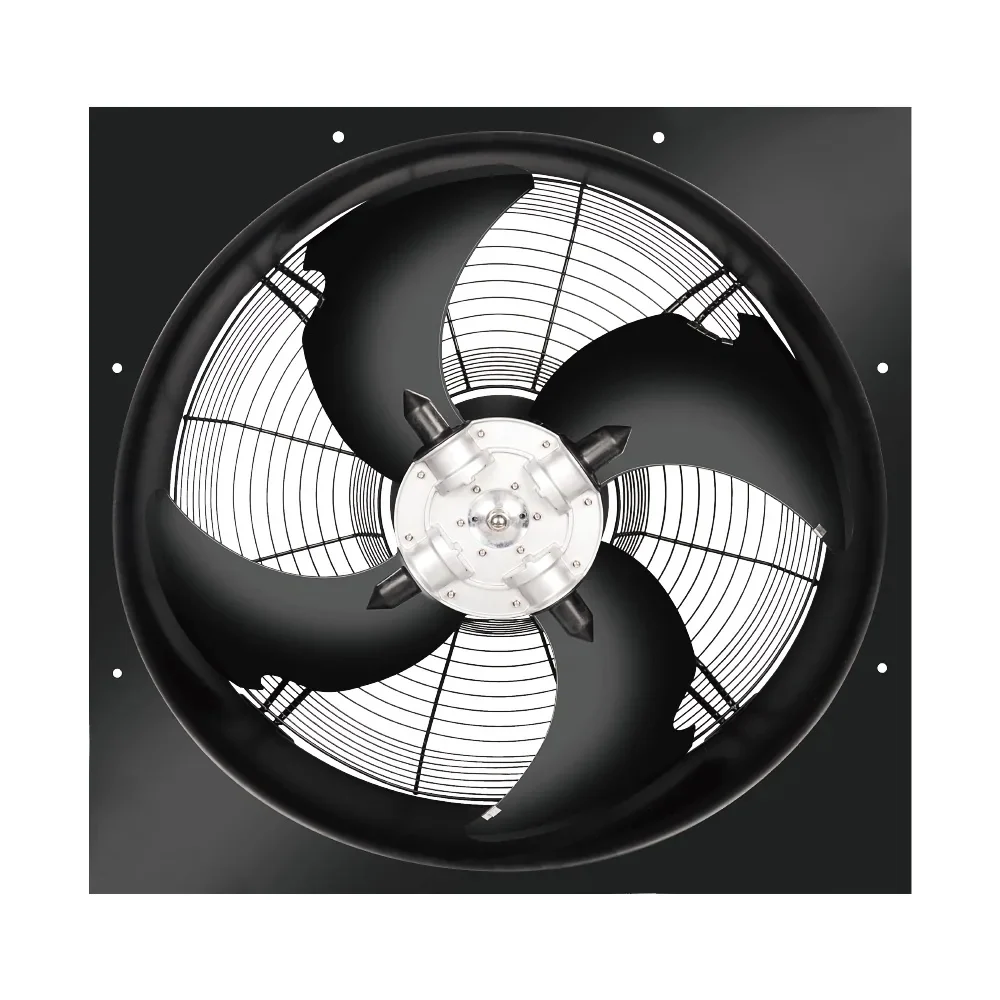
The pictured LWAE3G800TS-4PKW-04 is used only to make the axial form tangible. The blade, guard, motor hub, bellmouth and panel are visible. Its photograph does not establish a duty point, sound level, absorbed power, efficiency, approval, or fit for another machine. For family-level discovery, use LONGWELL’s industrial axial fan range, then request the current curve and drawing for the exact suffix being reviewed.
Static pressure is the price of resistance
Airflow is a volume per unit time, usually stated in CFM or m³/h. Static pressure is part of the pressure needed to overcome resistance in the air path. A free-air airflow figure describes a condition with little external restriction. Once the fan is installed, filters, coils, grilles, heat sinks, dampers, bends, silencers, ducts and discharge openings all consume pressure.
This is why “I need 10,000 m³/h” is not yet a fan specification. The same target could sit behind an open wall aperture or behind a loaded filter and long duct run. Those systems can require very different fan selections even when the airflow number is identical. State whether the pressure target is static or total pressure, and state where it applies.
A centrifugal wheel changes the flow direction
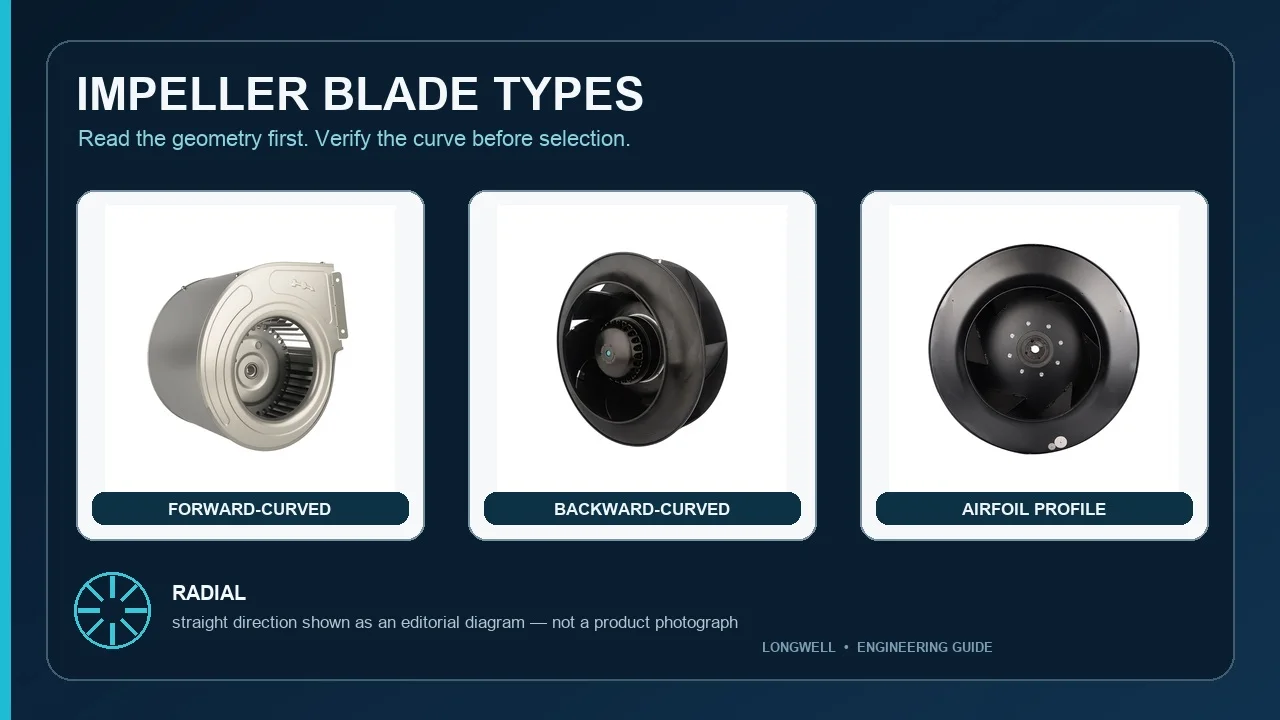
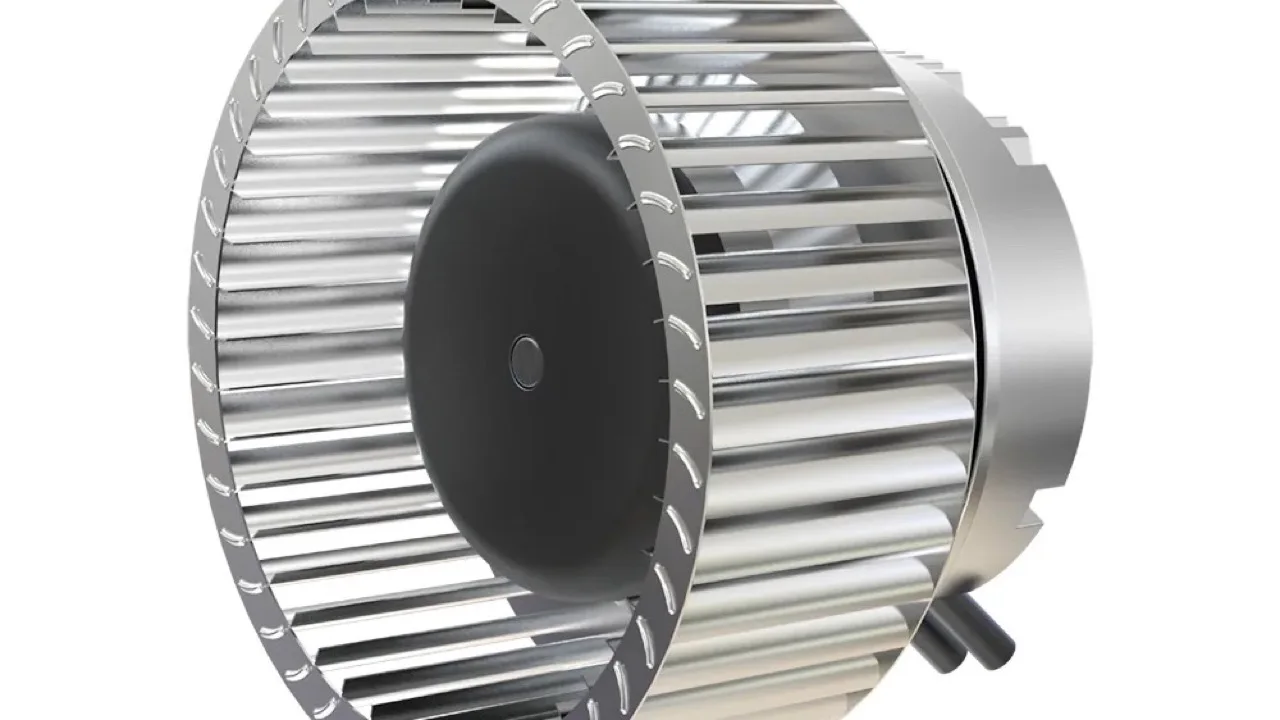
A centrifugal fan takes air in near the wheel axis and moves it outward through the impeller. The surrounding inlet ring, housing, plenum or cabinet determines how that radial discharge is collected. That geometry can be useful where the system has a restrictive path, but “centrifugal” still covers multiple wheel and housing arrangements with different curves.
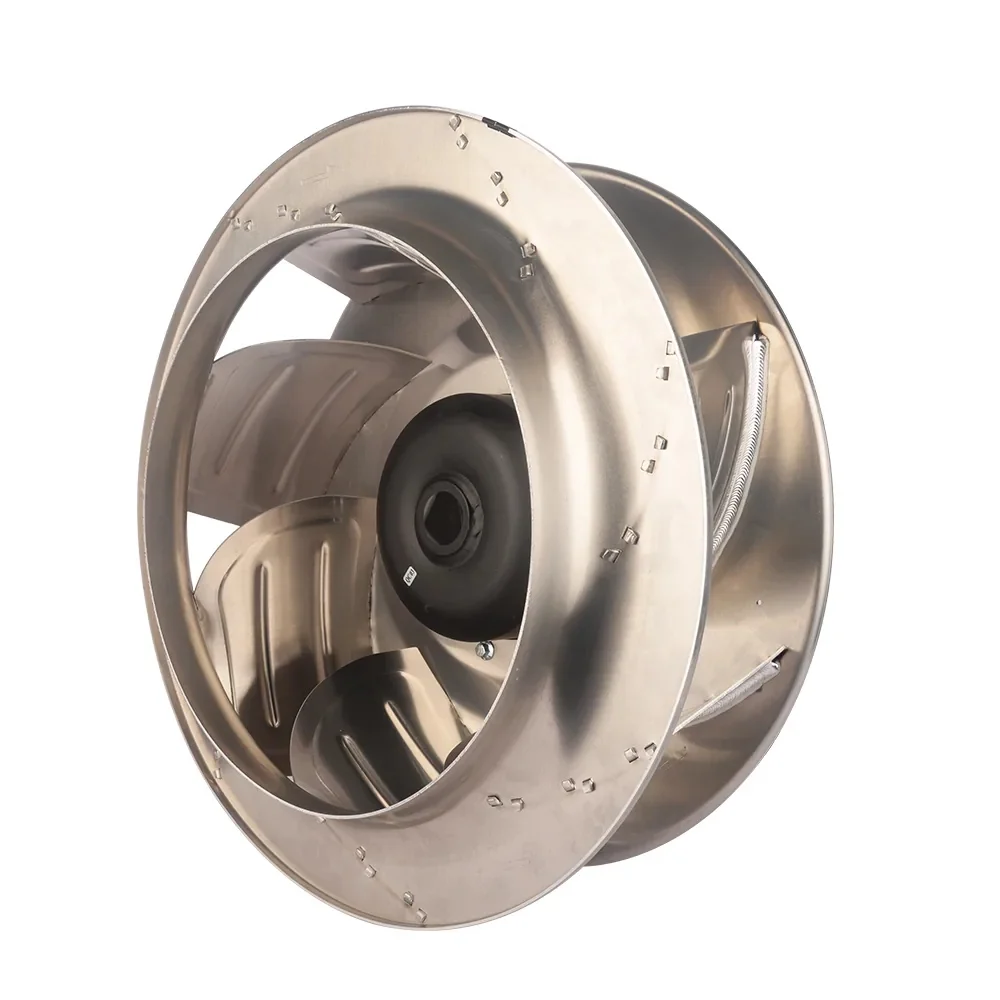
The pictured LWBE3G250-102NS-10 makes a backward-curved centrifugal form visible. It is not the centrifugal half of a controlled comparison with the axial photograph above: the products differ in size, motor platform and exact configuration. Use it to recognize the inlet ring, impeller and motor-side structure, then browse the centrifugal fan range without assuming that every centrifugal family shares the same pressure, efficiency or installation behavior.
The operating point is where fan and system curves meet
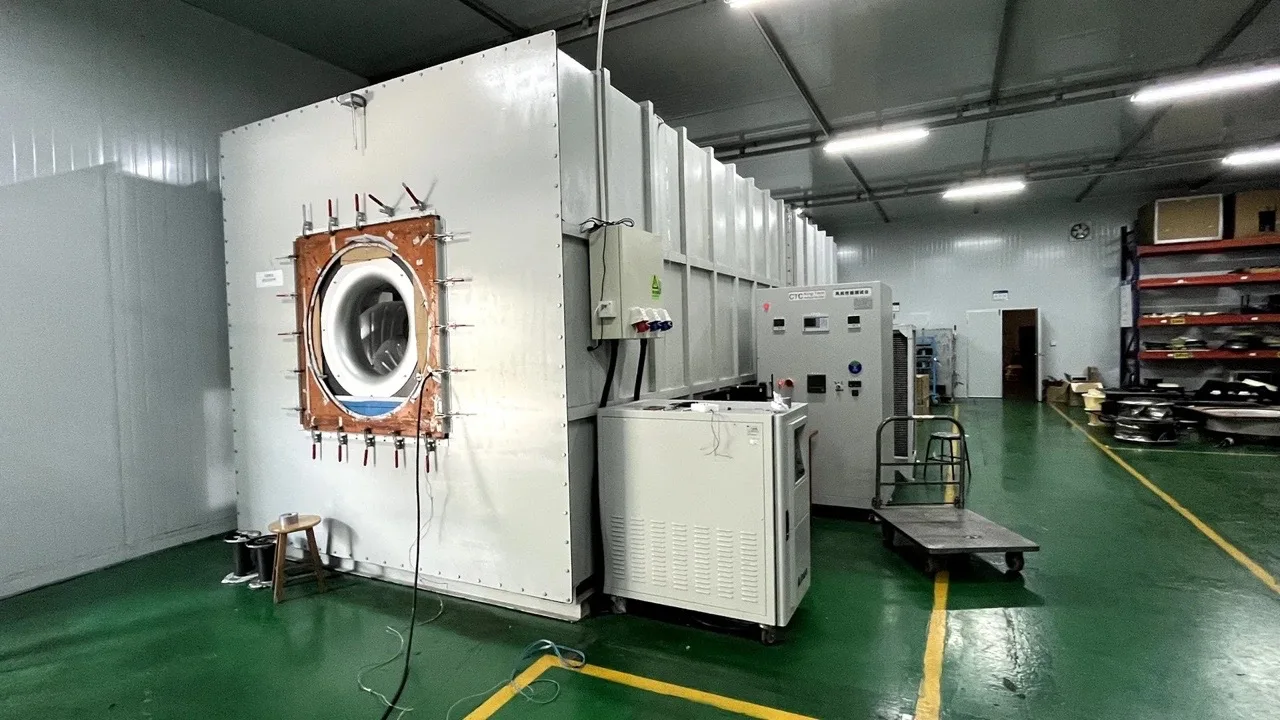
A fan curve relates airflow and pressure for a stated model, speed, air condition and test arrangement. A system curve represents the resistance of the connected equipment as airflow changes. Their intersection is the expected operating point. The fan cannot choose one point while the system chooses another.
The U.S. Department of Energy’s fan-system sourcebook illustrates this relationship and also explains system effect: poor inlet or outlet conditions can shift the system curve and the delivered flow. In practical terms, a catalogue curve is only useful when the proposed installation boundary is understood.
Plot more than the clean, nominal case. A dirty filter, a closing damper, a different coil, a blocked grille, or a revised duct can move the operating point. For variable-speed equipment, obtain the permitted speed range and the curves or data that apply to the relevant command points. Do not invent intermediate performance from a product photograph or a family name.
Where the usual axial-versus-centrifugal shortcut breaks
“Axial means high flow and low pressure; centrifugal means lower flow and high pressure” is a useful first orientation, but it is not a release rule. Diameter, blade profile, tip clearance, inlet quality, housing, rotational speed and motor capability can move the useful range. The two families can overlap.
Efficiency and sound also belong to the operating point and test condition. A fan that looks efficient at one point may be a poor match after the system resistance is revised. Compare exact candidates at the same airflow, the same pressure definition, the same air density and a declared installation condition. LONGWELL’s HVAC fan selection guide provides a broader duty-point framework; the current model documents remain the release authority.
Build a pressure budget before requesting a curve
- Inlet: grille, guard, louver, weather hood, bend, screen, plenum and the available straight approach.
- Equipment: clean and dirty filter losses, coils, heat exchangers, heat sinks, dampers, silencers and internal obstructions.
- Distribution: duct length and size, transitions, branches, tees, elbows, flexible connectors and terminal devices.
- Operating states: minimum and maximum flow, damper positions, filter loading, altitude, temperature and credible fouling.
- Boundary: where airflow and pressure are required and where each pressure loss was measured or calculated.
If a loss is unknown, label it as an assumption instead of hiding it inside a safety factor. A supplier can challenge an explicit assumption; nobody can review a pressure budget that was never written down. Excess margin is not automatically harmless because it can shift the fan away from the intended operating region.
Send an RFQ that can reach an engineering decision
- Duty point: required airflow plus static or total pressure, with units and air condition.
- System range: expected minimum and maximum resistance, including dirty-filter or part-load cases.
- Mechanical boundary: envelope, mounting points, orientation, inlet and discharge space, guards and service access.
- Electrical boundary: supply, phase, frequency, speed-control method, feedback, connector and external protection.
- Environment: airstream and ambient temperatures, humidity, altitude, contamination and corrosion exposure.
- Evidence required: exact model and suffix, current curve, dimensional drawing, wiring sheet, sound basis, approvals actually required, and revision date.
Finish the request by stating the decision: new design, replacement, prototype shortlist, or production release. Ask the supplier to mark the proposed operating point on the exact curve and to list every assumption. That is the shortest route from an “axial vs centrifugal fan” search to a selection that can be reviewed and purchased.
Choose the right centrifugal fan
Longwell manufactures 1,127 centrifugal fans in-house. Send airflow, static pressure and voltage — an engineer replies with a matching model, performance curve and price within one working day.