What the OEM actually asked for
An existing OEM partner sent an enquiry that was not an order. They were asking about buying injection mold tooling from us.
They did not want finished 406mm fan blades. What they wanted was the injection mold that makes them, so they could produce the blades in-house.
What buying injection mold tooling signals
Buying injection mold tooling is a vertical integration move. It points to a maker with enough volume on one line to own the process, rather than buy the output.
The gain is control of schedule and unit cost. Meanwhile the catch is everything else that comes with running a molding shop.
What made the request straightforward
They quoted our part number and worked from our drawing. So the blade design was already settled and agreed.
- First, a 406mm four-blade impeller, clockwise rotation.
- Next, glass-filled polypropylene as the standard material.
- Meanwhile dimensional tolerances to GB/T 1804-92.
- Finally, the mold itself plus a preliminary sample batch for fit and function validation.
So the hard part was never airflow. It was the tool itself: a mold that makes parts to that drawing, in their plant rather than ours.
Specifying tooling for someone else to run
Buying injection mold tooling puts the tool in someone else machine. So specifying it is different from specifying a tool you will run yourself, because you do not get to compensate later.
Steel grade sets the life
Here the mold steel had to match their volume. A pre-hardened grade suits mid-size runs. A hardened tool steel costs more and lasts much longer.
Getting this wrong costs money in a quiet way. A worn mold makes parts that drift out of tolerance slowly. You notice the drift after the parts are made, not before.
Why a single cavity
At 406mm diameter, one cavity per shot was the right choice.
More cavities raise output. But on a part this size, it is much harder to hold size across them. So a two-cavity mold can make two slightly different blades, and on a spinning part that turns into a balance problem.
Hot runner, and why
The specification includes a hot runner system. It cuts material waste and shortens cycle time, which is exactly what matters once you are running the tool yourself at volume.
On a mold you buy rather than rent, cycle time is your cost, not ours.
What it cost
Honestly, this transaction costs us the parts business on that line. That is what vertical integration means, and it is the customer right to pursue it.
What we can do is make sure the tooling they buy actually produces the blade the drawing describes, rather than sell a mold and let them discover its limits in production.
Technical Specifications
Meanwhile the blade specification below is what the tooling has to reproduce, batch after batch, in someone else machine.
| Parameter | Value |
|---|---|
| Model | LWA-φ406×96-4 |
| Impeller Type | Axial Fan Blade / Impeller |
| Diameter | 406 mm |
| Blade Count | 4 |
| Mounting / Bore Diameter | Φ12-10 mm (specification dependent) |
| Operating Direction | Clockwise (C.W.) |
| Standard Material | Glass-Fiber Reinforced Polypropylene (PP-GF30) |
| Dimensional Tolerance Standard | GB/T 1804-92 |
Technical Documentation
The following documents were central to defining the project scope and ensuring alignment between Longwell’s design and the customer’s manufacturing requirements.
Here the detailed 2D engineering drawing specifies all critical dimensions, blade profiles, tolerances, and surface finish requirements, essential for both mold manufacturing and final part quality control.

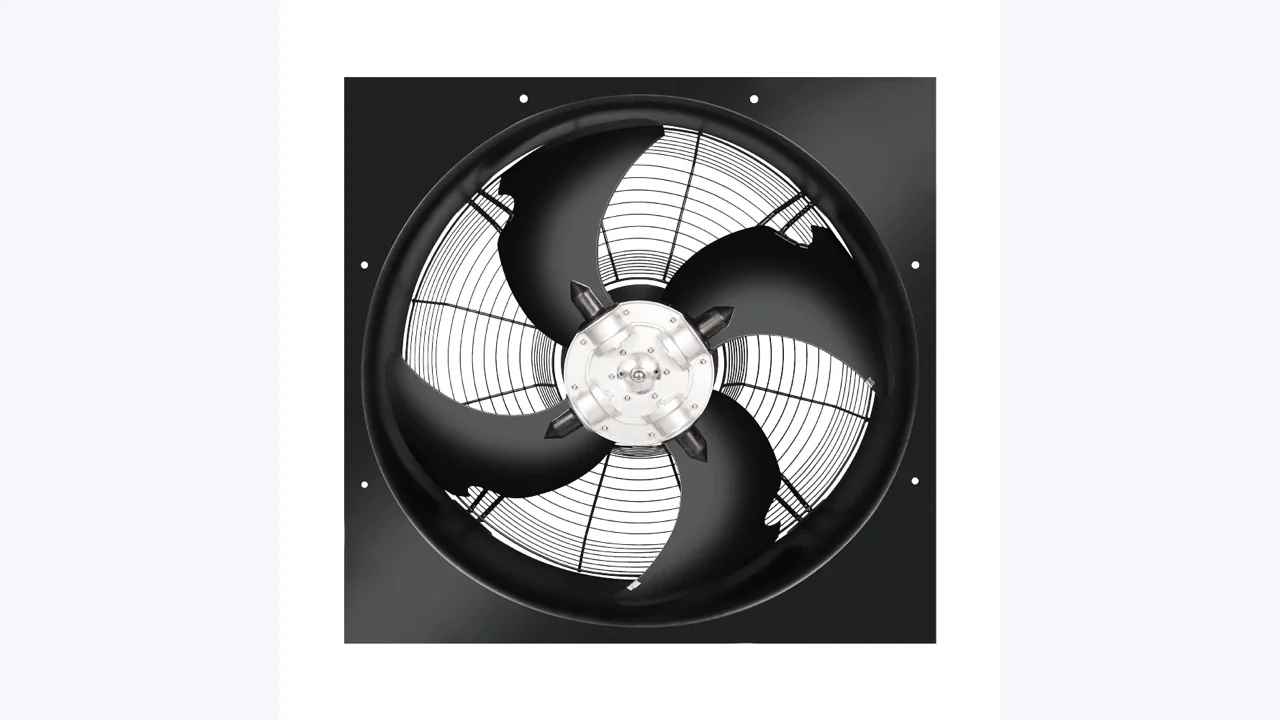
The product image provides a quick visual reference of the LWA-φ406×96-04 four-blade axial impeller design for identification and documentation purposes.
Before you buy a mold
Buying injection mold tooling is a bigger commitment than it looks on a quotation. These are the questions to settle first.
- Match the steel grade to your real annual volume. Buying injection mold tooling in a softer steel saves money now and produces out-of-tolerance parts sooner. Ask how many shots the specified grade is rated for, then compare that with your production plan.
- Ask why the cavity count was chosen. More cavities means more output and more variation between them. On a rotating part where balance matters, single cavity is often correct even though it looks slower.
- Confirm who owns the design, not just the tool. Buying a mold is not the same as buying the intellectual property in the part it produces. Establish in writing what you may make, where, and for whom.
- Budget for the sample validation, not just the mold. First articles need measuring against the drawing and balancing against your speed. That step is where a tooling purchase either succeeds or turns into a dispute.
See our fan impeller range, the fan blade section, or axial fans. Balance grades follow ISO 21940.
Questions about tooling purchase
Does buying the mold include the right to the design?
Not by default, and this is the first thing to settle in writing. A mold is a physical asset. The blade shape is design property, which is a separate thing. Agree what you may make, how much of it, and whether you may sell those parts on.
Why does cavity count affect balance?
Because each cavity makes a slightly different part, however well the tool is cut. On a fixed part that hardly matters. On a wheel spinning at speed, small weight shifts between cavities show up as balance scatter across your whole run.
What happens when the mold wears out?
Parts drift out of tolerance gradually rather than failing suddenly, which makes it hard to spot. Establish a re-qualification interval based on shot count, and measure sample parts against the drawing periodically rather than waiting for a complaint.
Is it cheaper to buy the tooling or the parts?
It depends on volume, and on what your own molding operation costs to run. Buying injection mold tooling shifts a variable cost into a fixed one, plus your own conversion cost. Below a certain annual quantity, buying finished parts remains cheaper, and that crossover is worth calculating before committing.
Technical Documentation & Resources
Working on something similar?
Send us the duty point, the envelope and the supply, and our engineers come back with a shortlist rather than a catalog. Meanwhile custom spec sheets and samples run to 90 days. Since 1990 we have built fans for HVAC, cold chain, data center and industrial OEMs.
Browse Related Products:
🏆 ISO 9001 / ISO 14001 / ISO 45001 | CE (TÜV) | UL/ETL | ATEX Zone 21/22 | AMCA 210/211 / ISO 5801 tested