What the OEM commissioned
An OEM selling into European light commercial and premium residential markets asked us for a wall-mounted bladeless fan.
They wanted a finished product rather than a component. Two reference images set the design direction. Meanwhile the opening order stood at 10,000 units.
What was specified, and what was not
The electrical parameters were fixed at 230V with a European plug. Beyond that, nothing else was pinned down. In short, they were asking us to develop the whole product.
- First, CE marking, meaning conformity with the Low Voltage and EMC Directives.
- Next, compliance with EN 60335 for household appliance safety.
- Low noise, since a premium air circulator lives in offices, hotel rooms and homes.
- Finally, an appearance matching the supplied reference images.
That last requirement is worth dwelling on. A quiet product is a selling point here, whereas in industrial ventilation it is often a nice-to-have.
Engineering the bladeless fan air engine
A consumer appliance sounds like unfamiliar territory for a fan factory. In fact it lands squarely on what we do, once you look inside the base.
How the air actually moves
A bladeless fan pushes air from a concealed high-pressure source through a narrow slot in an airfoil-shaped loop. The moving jet drags surrounding air along with it through the Coanda effect, which is where the amplified airflow comes from.
Consequently the loop is not the fan. The fan is hidden in the base, and it has to make real static pressure.
What we ruled out
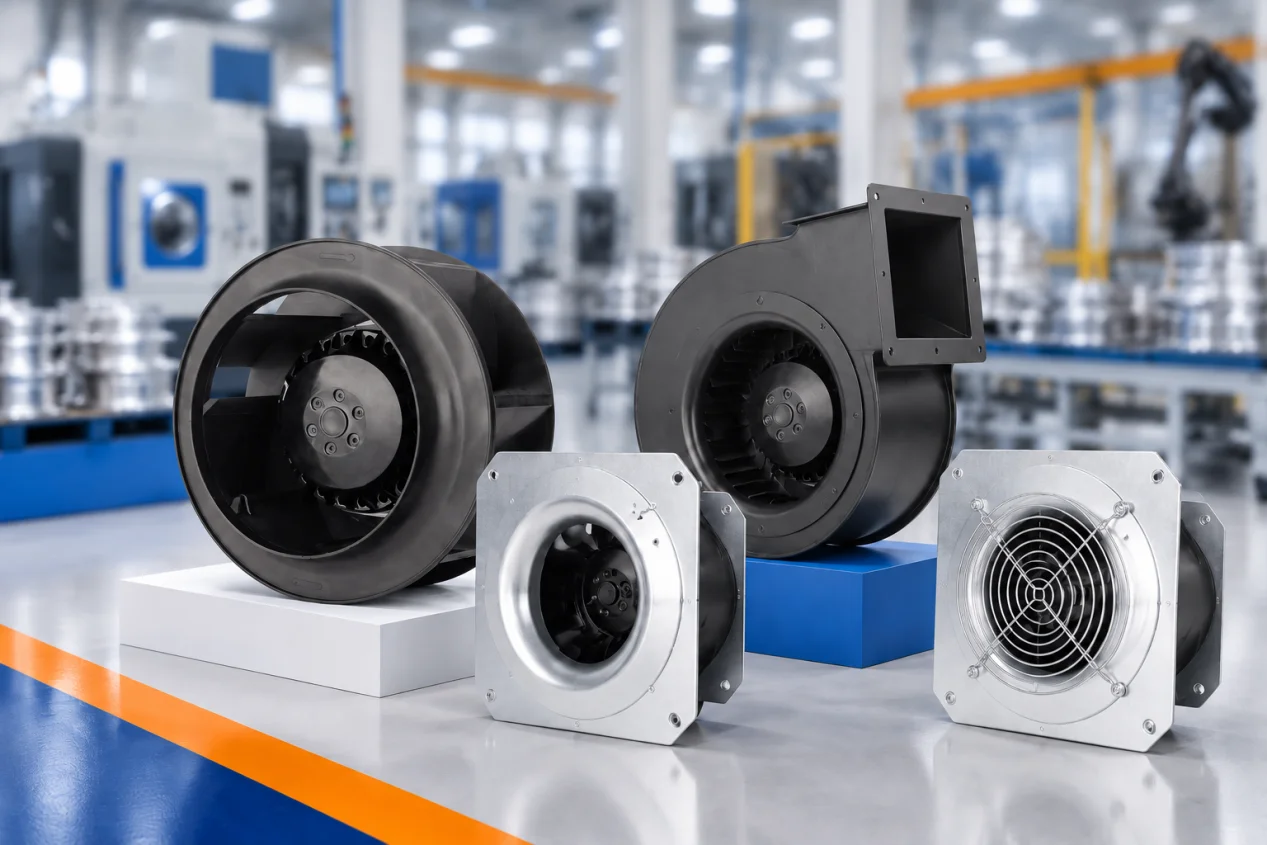
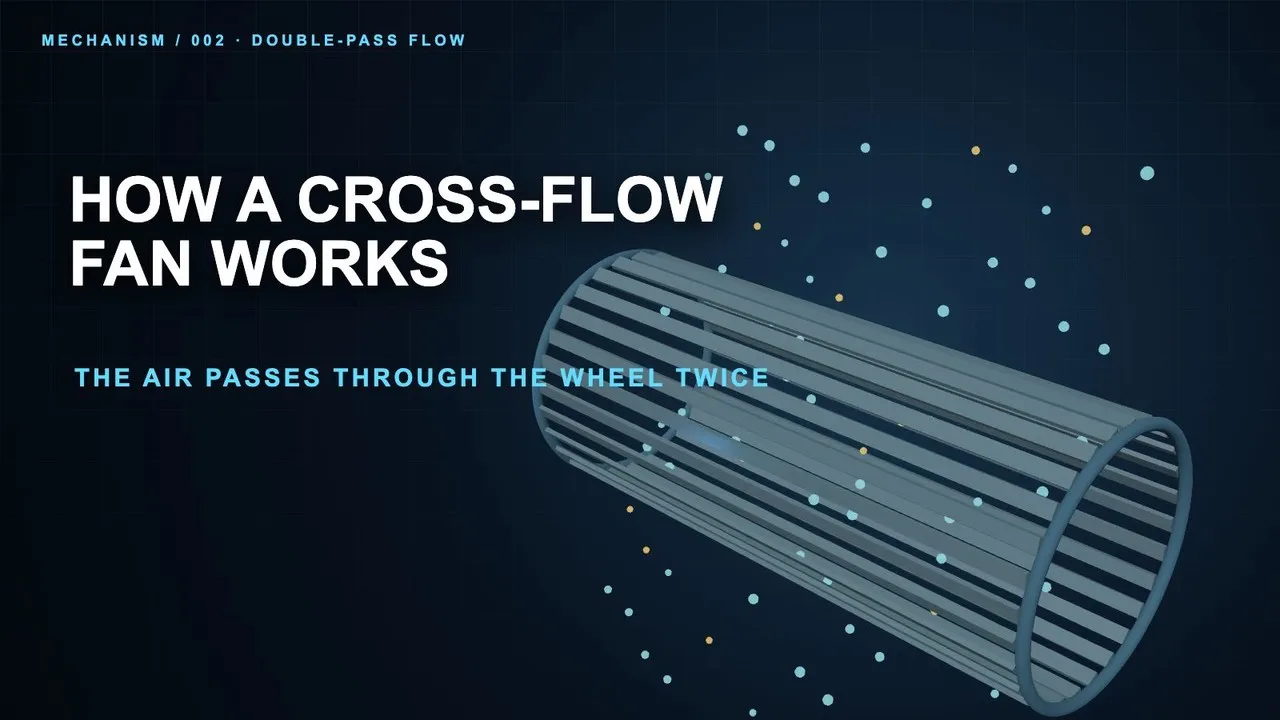
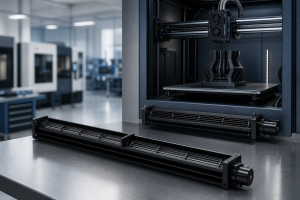
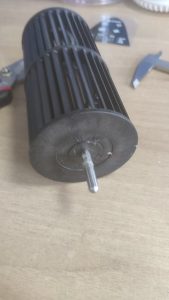
An axial fan was out immediately, since it cannot build the pressure this needs. We considered a cross-flow fan too, though it also fell away: it produces a wide, gentle sheet rather than the focused, high-pressure stream the slot demands.
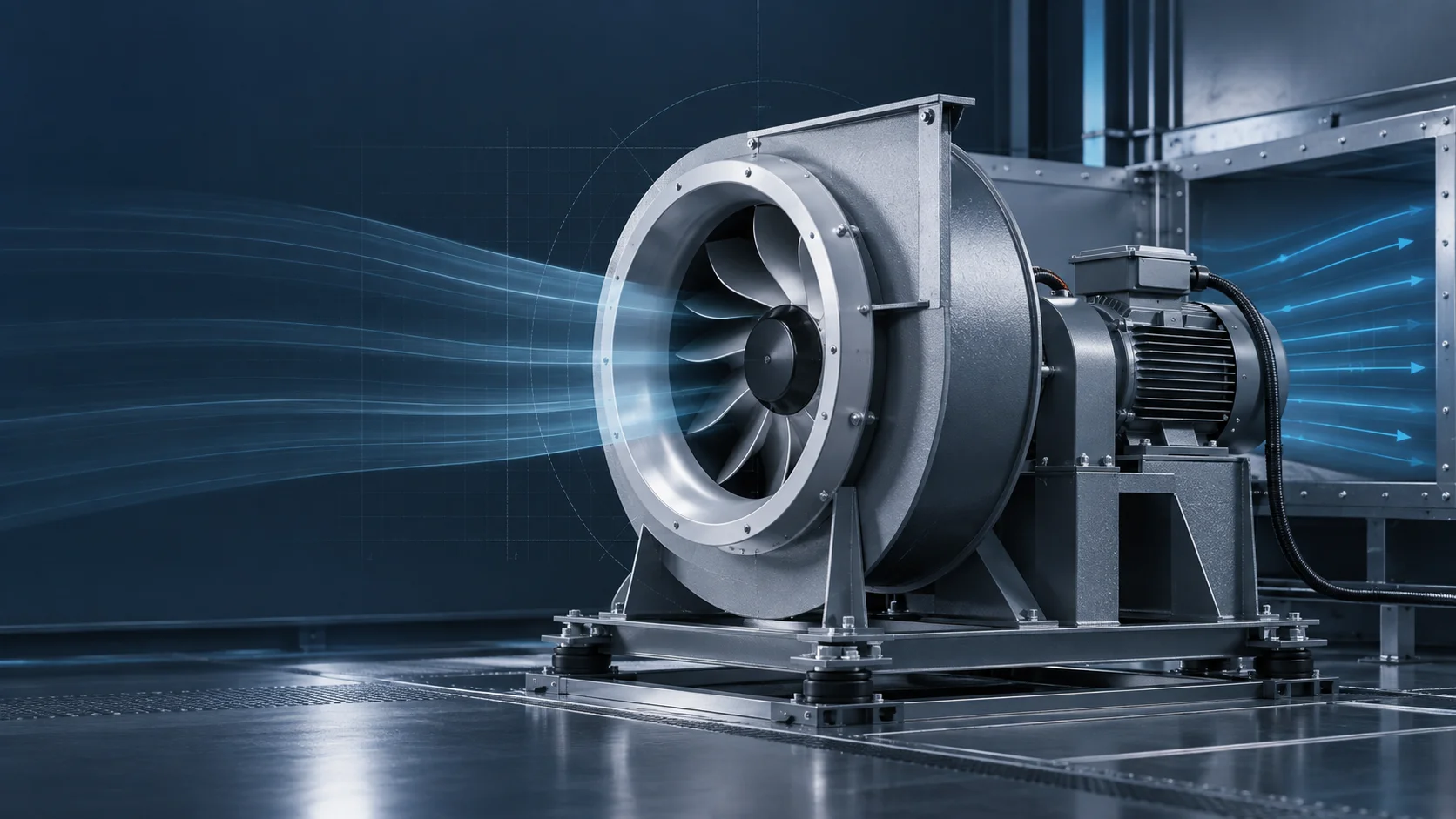
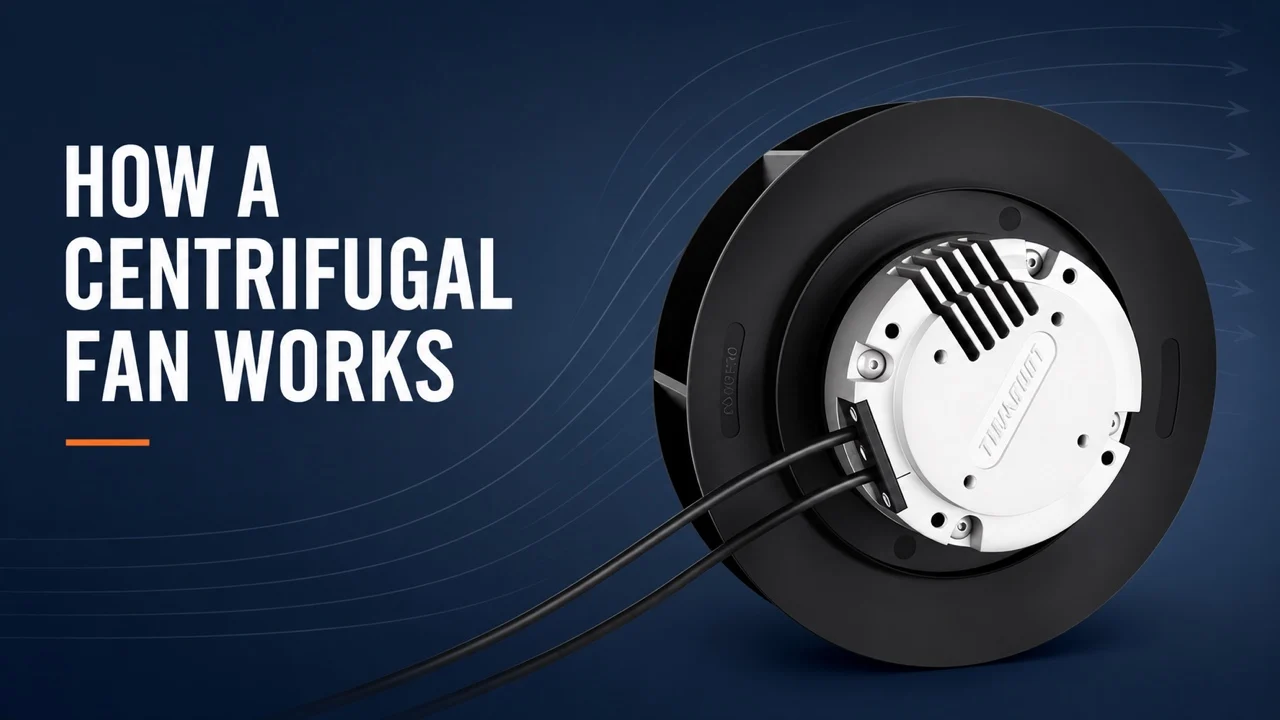
Consequently that left a centrifugal blower, which was the right answer.
Motor and acoustics
A plain AC motor would have worked mechanically. However, users expect variable speed from a product like this, and efficiency targets keep tightening. So we specified a compact centrifugal blower on a SmartEC motor. Its integrated controller turns a PWM signal into a genuine change in airflow.
Blade geometry came last and mattered most. The impeller follows our AcousticFlow rules. Blade curvature and spacing are tuned to cut turbulence and pure tones at the operating speed.
Here the finished air mover matches the internal volute of the plastic enclosure exactly. In our system it carries the part number NH-HA-BF-BG-EU-001.
Technical Specifications
The table below is short by design. At sales input stage this was still a product brief rather than a datasheet.
| Parameter | Specification |
|---|---|
| Longwell Model Number | NH-HA-BF-BG-EU-001 |
| Customer Code | LW26051435 |
| Input Voltage | 230V |
| Plug Configuration | European Standard |
| Initial Order Quantity | 10,000 units |
Technical Documentation
Meanwhile the following files represent the initial inputs and outputs from the sales and project quotation stage.
Longwell Quotation NH-HA-BF-BG-EU-001.pdf
The initial quotation document, prepared for the customer, outlines the commercial terms and preliminary project scope for the 10,000-unit production of the NH-HA-BF-BG-EU-001.
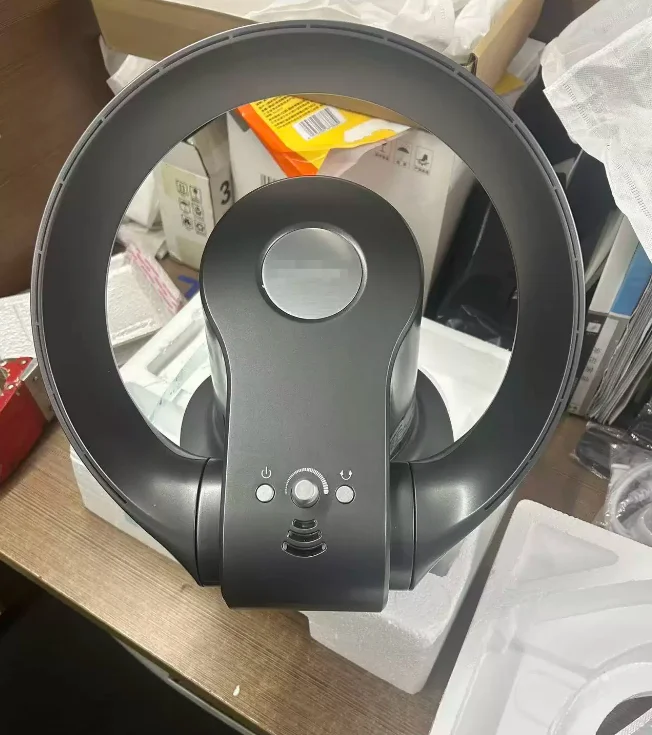
Here the product image provided by the customer established the industrial design and color-material-finish (CMF) target for the dark variant.
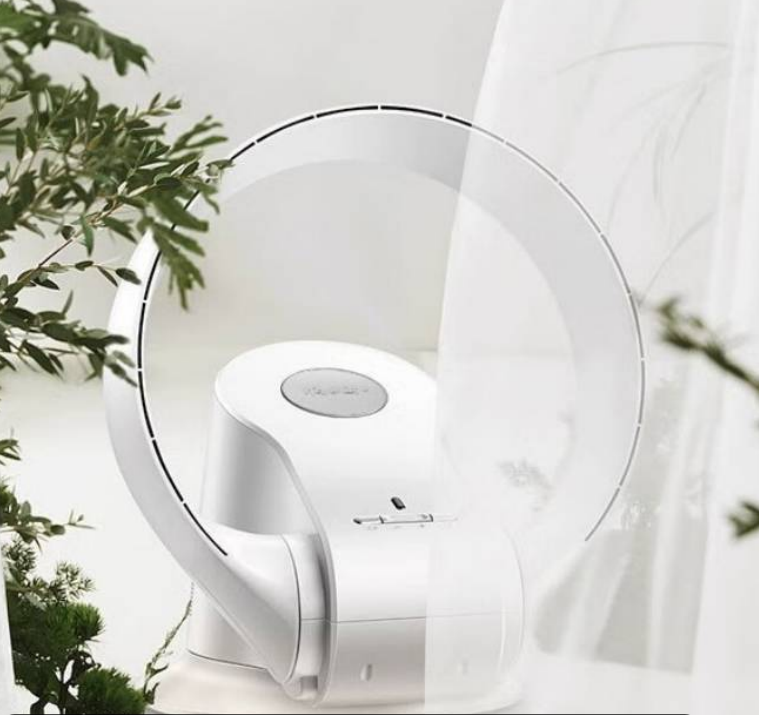
This reference image defined the aesthetic requirements for the white variant, influencing enclosure material selection and surface texture.
Why a fan maker, not an assembler
Plenty of factories will assemble a bladeless fan. However, far fewer can engineer the blower inside it.
- Full ODM in 90 days. The customer wanted a market-ready product, so the project ran through our structured NPI process from concept to production. European ODMs commonly quote 12 to 18 months for a new appliance.
- Unit economics at 10,000 pieces. Because we make the EC motor and the blower ourselves, and buy plastics and electronics through an established Ningbo supply chain, the finished product came in materially below a comparable European-sourced one.
- Certification off the critical path. CE marking was the schedule risk. Our long-standing China-local TUV NORD relationship shortens EN 60335 testing and approval, which protects the launch date.
- Where the expertise came from. The quality of a bladeless fan is decided by its air engine. Ours draws on engineering high-pressure centrifugal blowers for HVAC and industrial duty since 1990, which is not something a generalist assembler can borrow.
See our centrifugal fan range, or the blower section. Appliance safety follows IEC 60335-1.
Questions about this ODM project
What are the minimum order quantity and lead time for an ODM project like this?
Development and tooling run through our 90-day NPI process. First mass production typically needs 5,000 to 10,000 units, depending on complexity, since tooling has to be amortized. Afterwards repeat orders run 30 to 45 days.
What is inside the base, and what is certified?
A custom centrifugal blower on a SmartEC motor, with multi-speed control by PWM from the user interface board. The motor and drive are built to CE and UL component standards. Meanwhile the finished appliance goes for its own certification, EN 60335 in Europe.
Can the industrial design and branding be ours?
Yes, entirely. This project started from reference images, though we equally work from your own 3D design files. Custom colors to Pantone or RAL, your logo on the product and fully printed packaging are all normal parts of the NPI process.
Is a bladeless fan actually quieter than a conventional one?
Not automatically. It removes the blade-passing tone you hear from an exposed rotor, which sounds cleaner. However, the concealed blower still makes noise, and a badly matched one makes more of it. The acoustic result comes from the blower and volute design rather than from the bladeless format itself.
Have a fan requirement like this one?
Send the datasheet you are working against, or simply the duty point. Then our engineers tell you what fits and what does not. Meanwhile custom spec sheets and samples take up to 90 days. Since 1990 we have been building fans for OEMs worldwide.
Browse Related Products:
🏆 ISO 9001 / ISO 14001 / ISO 45001 | CE (TÜV) | UL/ETL | ATEX Zone 21/22 | AMCA 210/211 / ISO 5801 tested