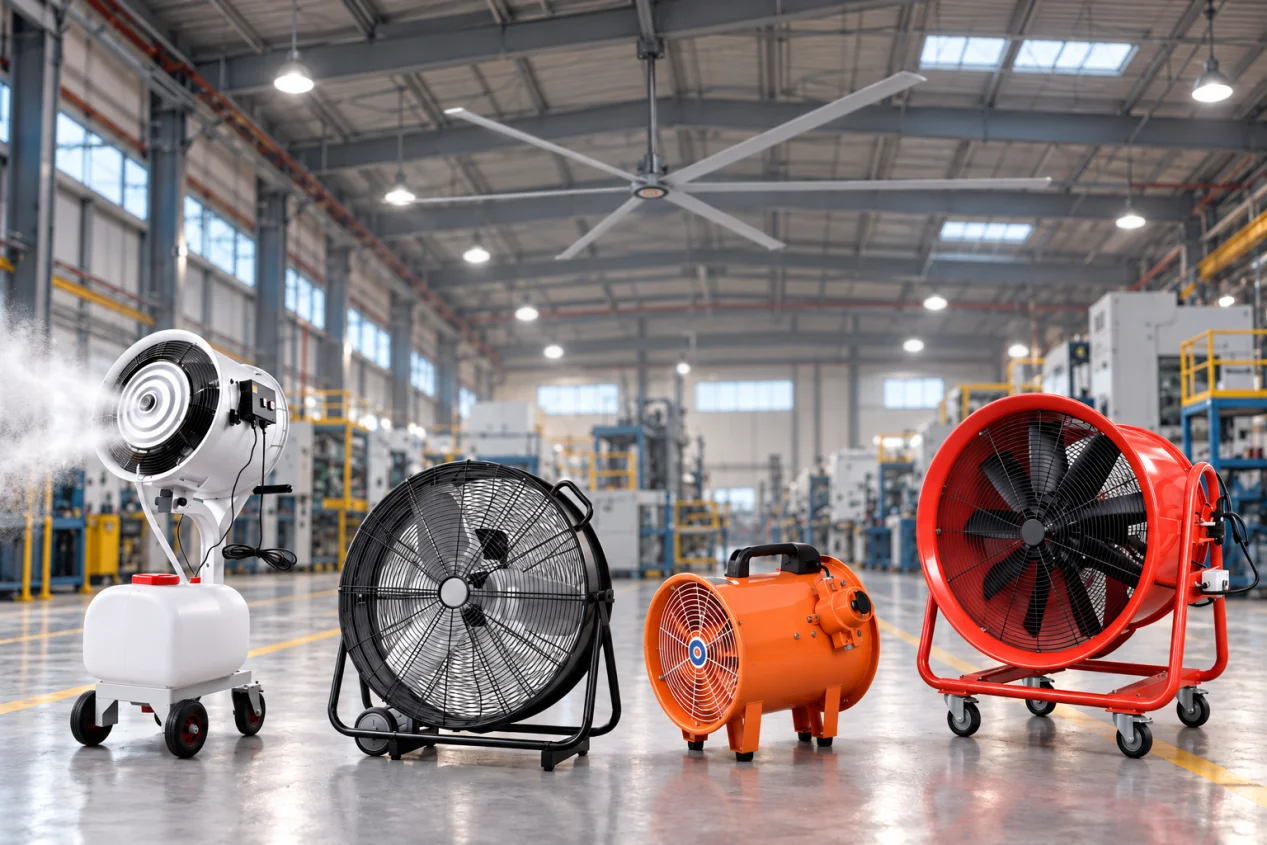
Why does a centrifugal fan need a scroll around its wheel? The wheel gives the air energy, but the housing still has to collect the discharge and guide it to an outlet. The cutoff, or tongue, is where those routes meet. Its shape and position can affect recirculation and the pressure pulses heard near blade-passing frequency. The useful design decision is to compare a complete wheel-and-housing assembly at the required duty, rather than select one clearance percentage from a generic chart.
Follow the air from wheel to outlet
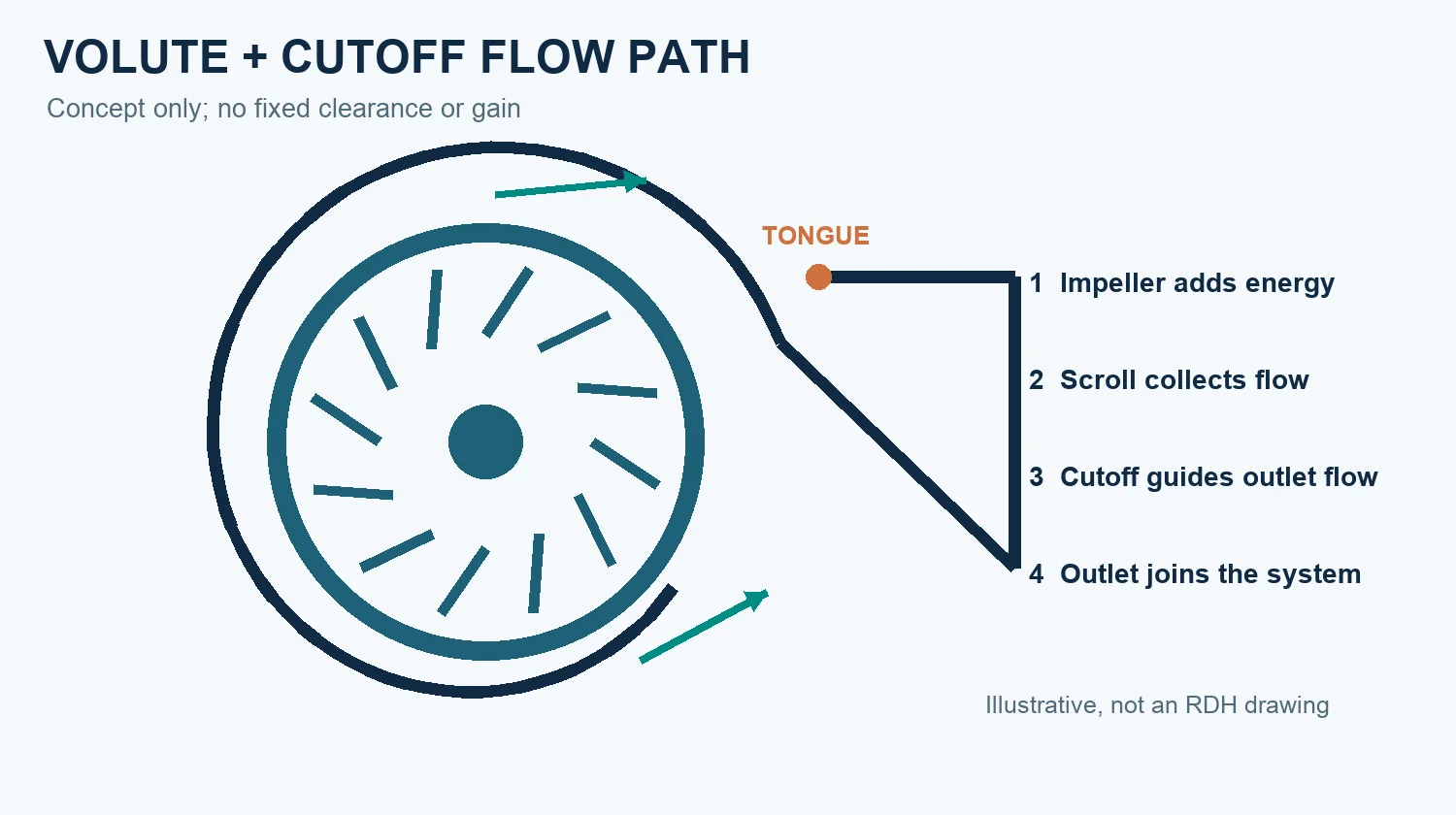
Air enters near the centre of a centrifugal wheel and leaves around its perimeter. A housed fan surrounds that perimeter with a collecting passage. The scroll commonly grows as it gathers more of the discharge on its way toward the outlet. In a suitable design, some velocity pressure can become useful static pressure; friction, mixing and poor transitions consume part of the available total pressure. The housing is therefore part of the fan’s rated aerodynamic assembly, not merely a guard.
The sketch below is deliberately qualitative. It shows the roles of the wheel, collecting scroll, cutoff and outlet; it is not a LONGWELL production drawing, flow simulation or measured pressure map. Its practical use is to locate the interfaces that must be specified together.
What changes at the cutoff
The tongue separates air proceeding to the outlet from air circulating near the wheel. Passing blades and their wakes interact with this fixed edge, so a blade-passing tone can become noticeable in some configurations. Blade count multiplied by rotational frequency identifies a frequency to inspect, but it does not predict the final sound level. Wheel geometry, tongue shape, clearance, speed, loading, casing and test setup all matter.
A smaller gap can change recirculation and local interaction; a larger one can change the outlet split. Neither direction guarantees a quieter or more efficient fan. Angled or rounded cutoff treatments are design options, not universal remedies with a fixed pressure penalty. Published clearance bands, velocity ranges and percentage penalties should not be transferred to an unmatched wheel and housing. If a supplier proposes a cutoff revision, request comparable pressure, power and sound evidence for the same complete fan at the intended operating points.
Use a real housed fan to identify the parts
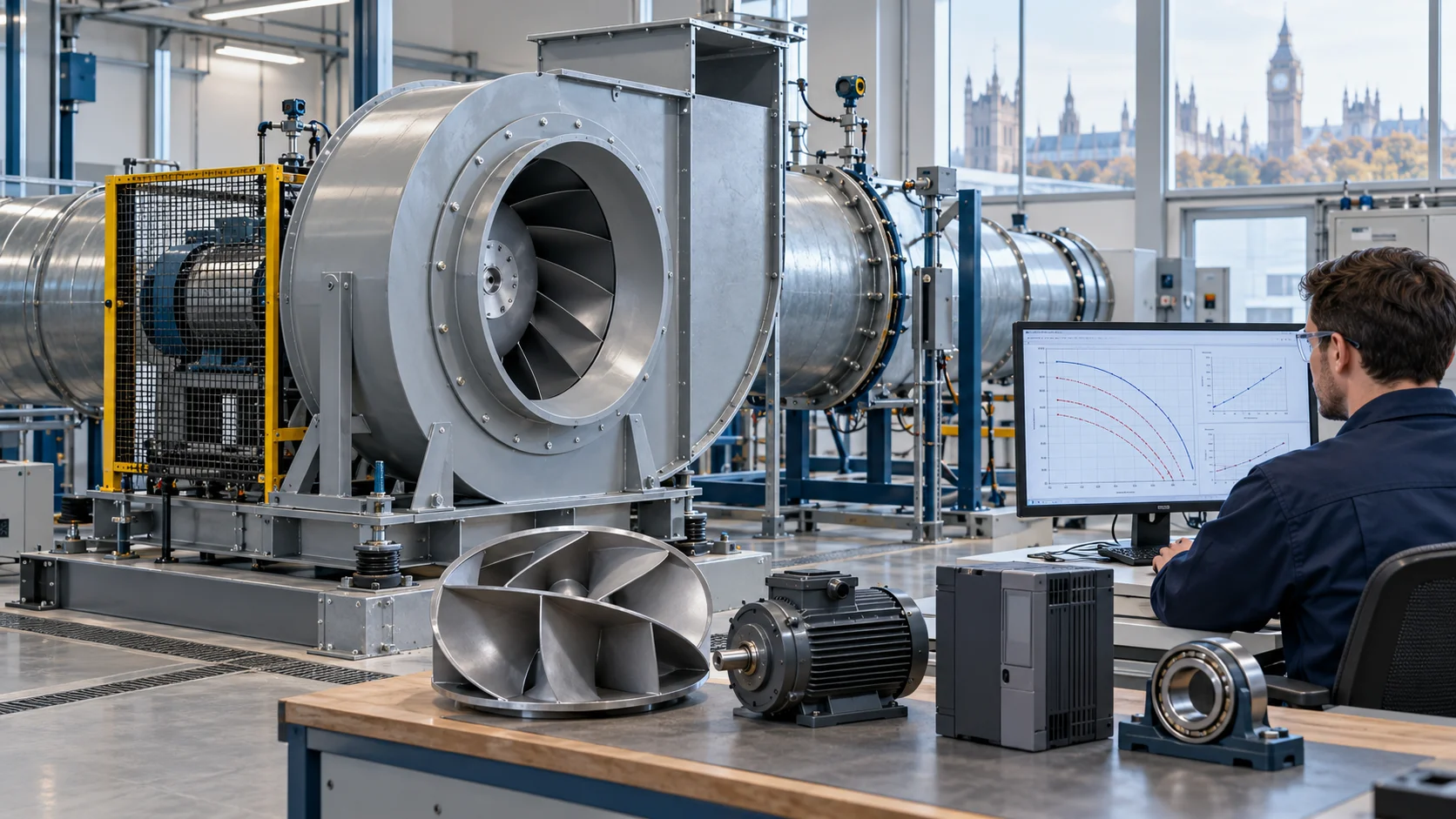
LONGWELL’s RDH backward centrifugal blower family provides a concrete housed-fan example. Its RDH catalog identifies the scroll, impeller, frame, bearings, shaft and outlet flange. The catalog image below makes the wheel, casing and structural frame visible together. It is a family illustration; the page does not identify a confirmed model suffix, drawing revision, tongue clearance or tested result for this article.
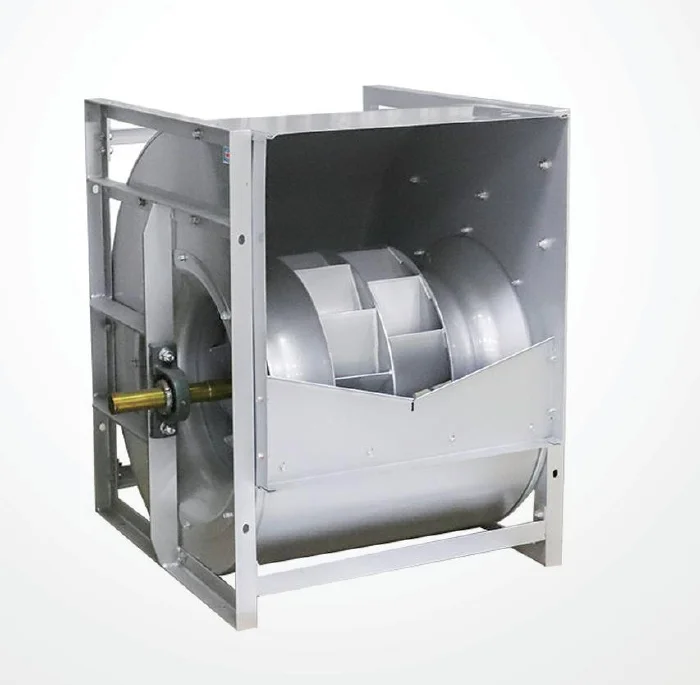
A family image cannot establish interchangeability. A replacement wheel of similar diameter may still differ in width, blade shape, hub, shaft connection, rotation or inlet arrangement. Changing the wheel can alter the flow presented to the scroll and cutoff. Confirm the exact assembly and mechanical fit first; then compare the complete fan rating. For the distinct plenum alternative, see the housed fan and plug fan comparison. The absence of a scroll changes the installation and rating boundary; a fixed pressure or energy difference cannot be inferred from the names alone.
Compare a housing change at the same duty
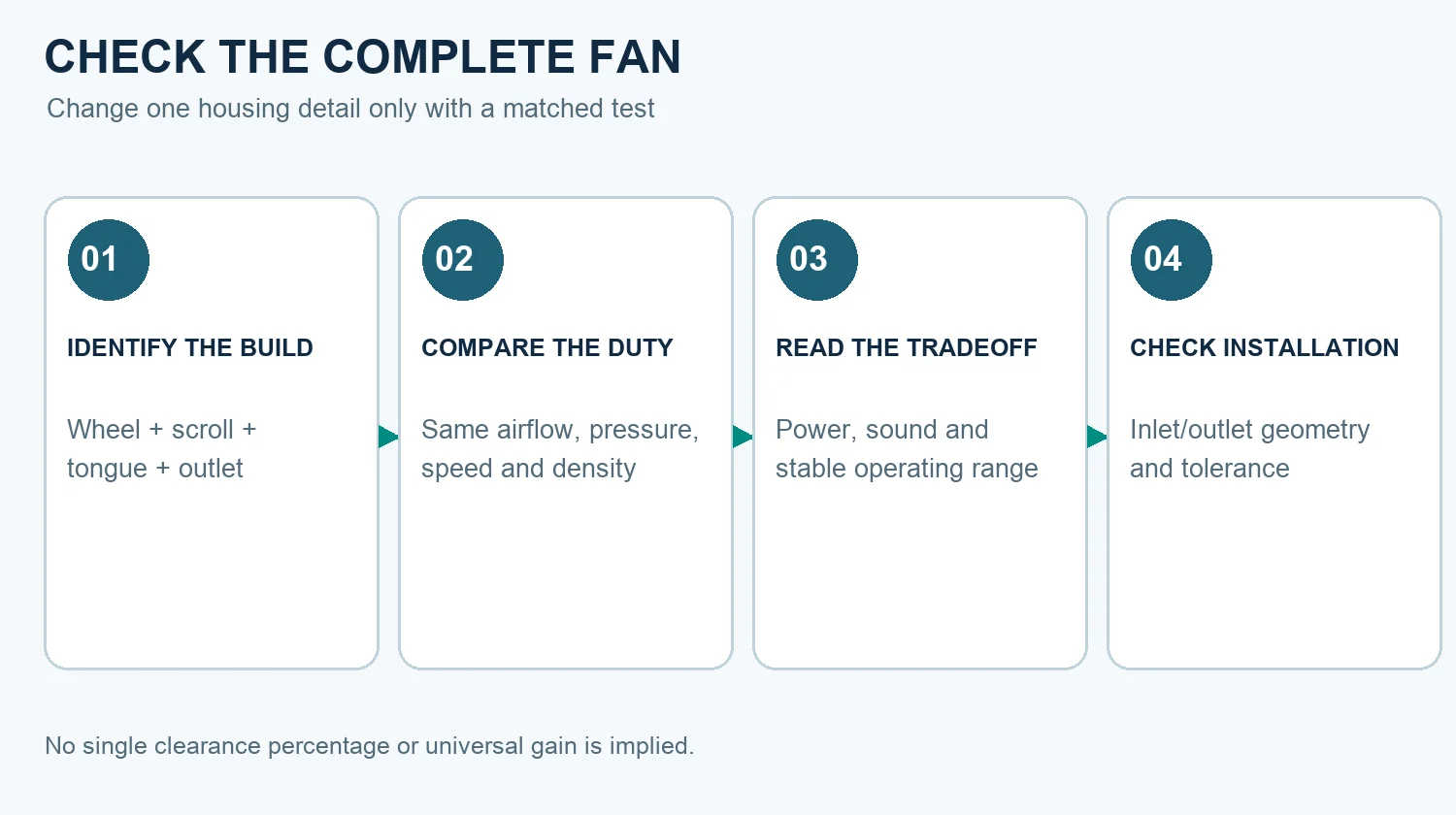
Start with one airflow, specified static or total pressure, air density, rotational speed and installation category. Hold those conditions and the wheel constant while comparing a proposed scroll or tongue variant. Read the entire performance curve rather than a single favorable point, especially when filters load or controls vary the speed. Record electrical or shaft input power with its definition, sound data with measurement conditions, and the range in which operation remains stable.
Then inspect manufacturing and service constraints: clearance tolerance, vibration, access to the casing, deposits on the wheel and any required cleaning method. A gap measured on a new sample may change with assembly tolerance, temperature or service condition. These are questions for the exact drawing and test record. The diagram is a request sequence, not a ranking of designs or an RDH test report.
The outlet and duct still affect the result
A rated fan is tested with a defined inlet and outlet arrangement. An elbow, damper or transition immediately at the discharge can change the velocity profile and create system effect. It is not enough to perfect the scroll while ignoring the first connected duct section. AMCA’s system-effect discussion explains why outlet arrangements can change installed performance and sound. Evaluate the proposed casing and its real connection as one system.
What to ask before specifying a cutoff
Request the exact fan model and suffix, current wheel-and-housing drawing, direction of rotation, nominal tongue geometry with tolerance, outlet dimensions, and the applicable curve and sound report. State the intended airflow and pressure, air density, speed range and installation arrangement. If the supplier offers a quieter cutoff variant, ask what changed and for a like-for-like test at the relevant points. A visual catalog or a generic tongue-gap rule is insufficient evidence for pressure recovery, noise or replacement suitability.
The decision is straightforward: keep the wheel, scroll, cutoff and outlet together in the selection record, then verify the complete fan under comparable conditions. The geometry can guide a test plan; only the matched results can settle the tradeoff for a project.
Need a model-specific review? Send the duty point, installation sketch and current assembly details to sales@longwellfans.com.
Choose the right centrifugal fan
Longwell manufactures 1,136 centrifugal fans in-house. Send airflow, static pressure and voltage — an engineer replies with a matching model, performance curve and price within one working day.