A power figure and a mockup
A European appliance OEM wanted a PTC heater blower for a compact personal space heater. What they sent was an 800 W total power figure, a European plug requirement, a note about branded packaging, and a visual mockup.
No airflow target, no static pressure figure, and nothing said about noise.
Why that is normal and not careless
The customer is an appliance designer, not a fan engineer. They know what the product must be, not what the air-mover inside it must do.
So the first engineering task was translation: turning a product concept into a specification something can be built against.
What the brief implied anyway
A personal heater sits on a desk or beside a chair. Consequently the acoustic requirement was real even though nobody wrote it down.
- First, CE marking, which pulls in the Low Voltage and EMC Directives.
- Next, a fan assembly consistent with EN 60335-1.
- Meanwhile a very small chassis, judging from the mockup.
- Finally, a bill of materials that works for a consumer product.
Sizing a PTC heater blower backwards
Here the useful question was not how much air the room needs. Rather, a PTC heater blower is sized by how hard the air has to be pushed to get through the appliance at all.
What a PTC element does to airflow
A PTC heating element is a dense stack of fins with narrow channels. Air does not drift through it, so the blower has to work for every cubic meter.
Add a fine-mesh safety grille at the outlet and an inlet guard, and the resistance adds up quickly inside a very small box. So this is a static pressure problem wearing an airflow label.
Why an axial fan was ruled out immediately
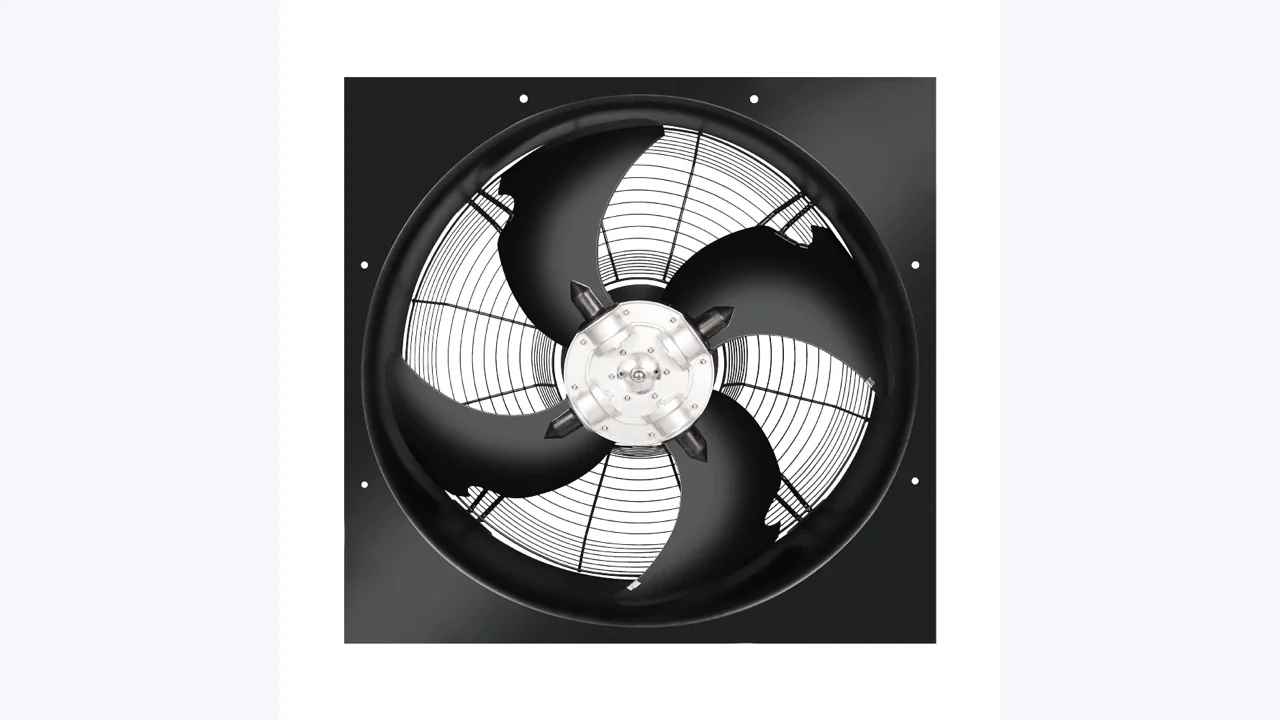
Axial fans move a lot of air against very little resistance. That is what they are good at, and it is the wrong skill here.
Put an axial fan where a PTC heater blower belongs and airflow collapses as the pressure rises. The fan spins, the element overheats, and the thermal cut-out becomes part of normal operation rather than a safety net.
Cross-flow considered and rejected
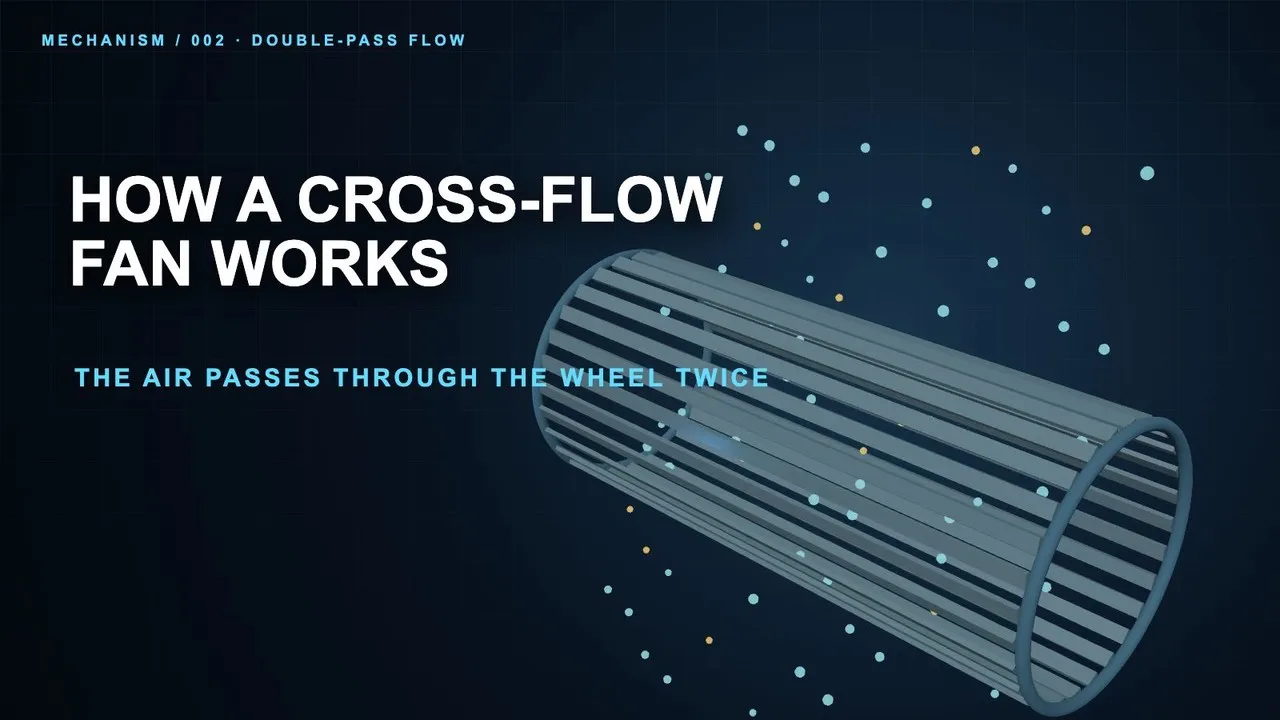
Meanwhile a tangential cross-flow fan produces a wide, even curtain of air, which suits a heater well in principle.
But its geometry is long and thin, and this product was closer to square. Fitting one would have meant designing the appliance around the fan, which is the wrong way round on a consumer product.
That decision would reverse on a taller, narrower heater, where a cross-flow fan is often the better answer.
What we chose, and the motor argument
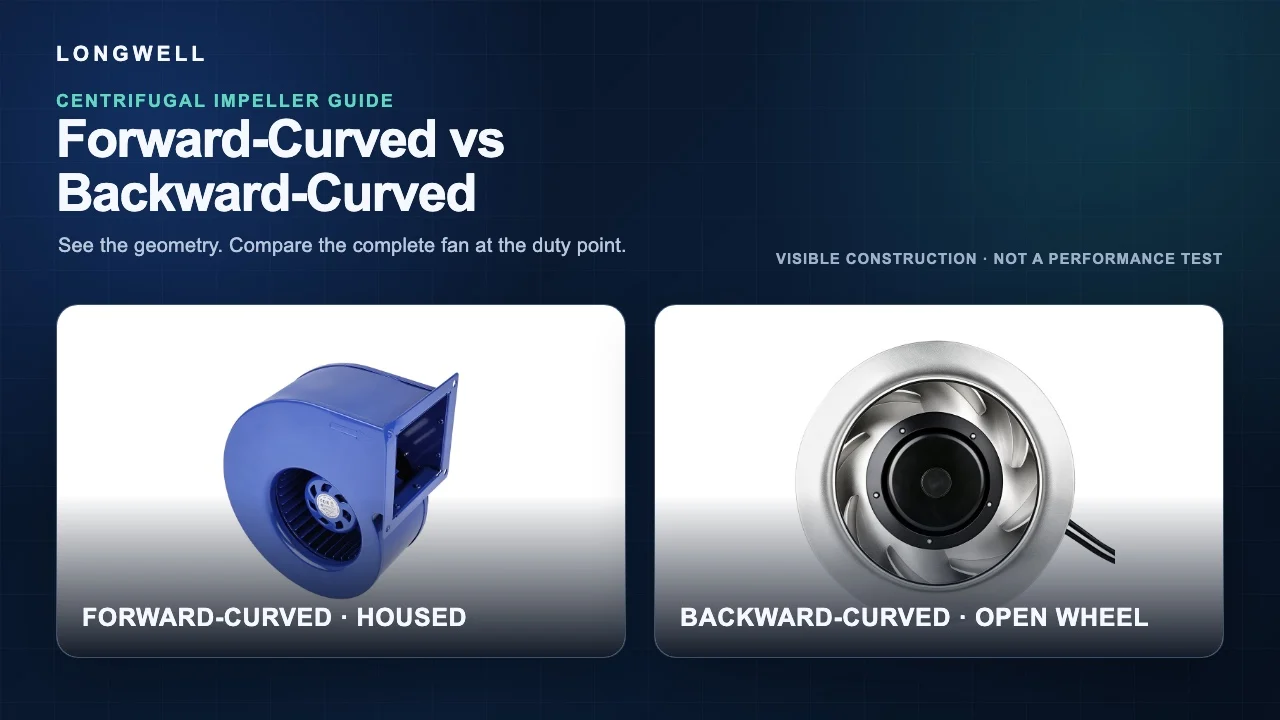
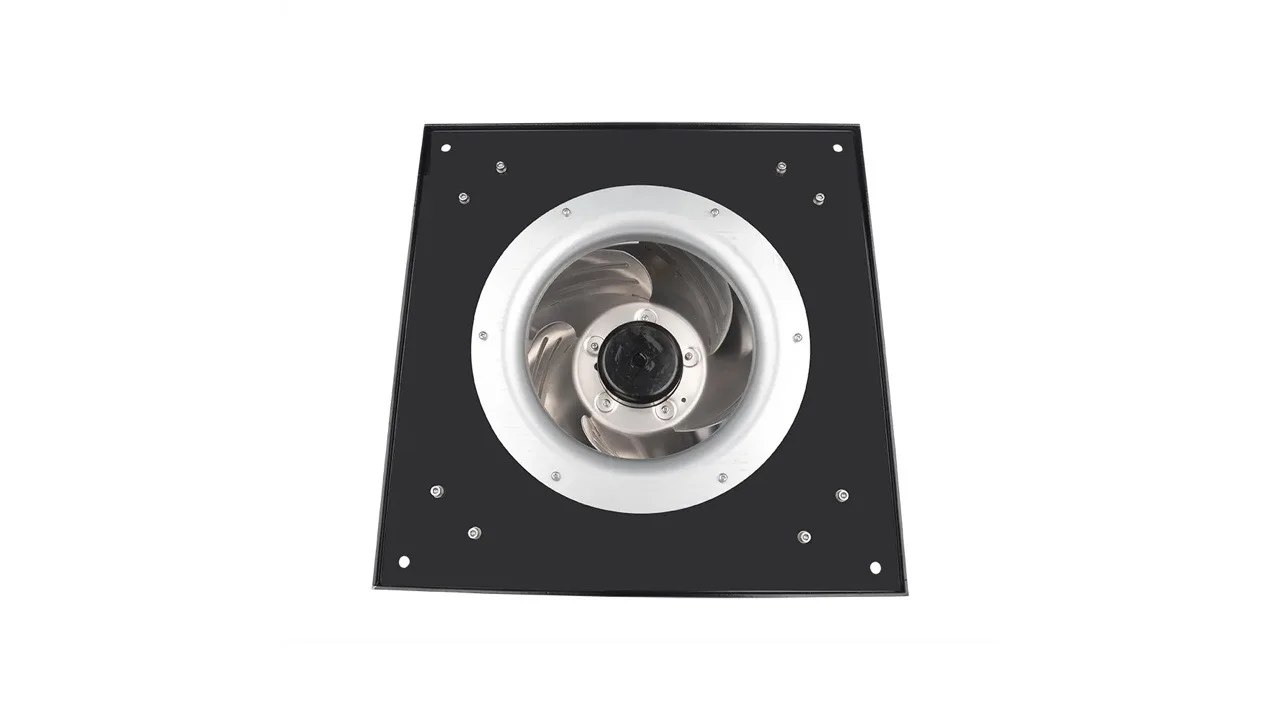
A compact forward-curved centrifugal blower generates the pressure needed and packs into a squarer footprint. That combination is why most of these products end up with the same architecture.
For the motor, a shaded-pole AC motor is the cheap baseline. We rejected it for three specific reasons: poor efficiency inside an 800 W budget where the heat should go to the element, an audible mains hum next to a seated user, and no speed control at all.
A brushless DC motor with PWM or variable-voltage control removes all three, and it makes multiple heat settings possible instead of one. Meanwhile it costs more per unit, which on a consumer product is a real argument that has to be won rather than waved away.
Safety requirements for this class are published by the IEC as IEC 60335-1.
Technical Specifications
None of these numbers came from the customer. They were derived from the element and the enclosure, then agreed.
| Parameter | Value |
|---|---|
| Appliance Target Power | 800W |
| Target Market / Supply | Europe (230V AC / 50Hz) |
| Longwell Project ID | NH-HA-HT-BL01-CM-001 |
Technical Documentation
The following image shows the OEM’s product concept that dictated the form factor for the internal blower assembly. Procurement managers and design engineers use such renderings to align on spatial constraints and final product aesthetics.

Internal project documents such as the commercial quotation (quotation heaterNH-HA-HT-BL01-CM-001 quotationxlsx.pdf), packaging specifications, and customs data were generated as per Longwell’s ISO 9001 certified workflow, progressing from Sales Input to Engineering Review.
Specifying a blower for a heater
If you are putting a PTC heater blower into your own product, these are the checks that decide whether it works.
- Get the pressure drop of your element first. A PTC heater blower must be selected against the resistance of the element, the grille and the inlet together. An airflow figure with no pressure attached to it cannot be used to select anything.
- Measure resistance with the grilles fitted. A fine safety mesh adds far more pressure drop than people expect, and it is often left out of the early prototype. Test the real stack, not the element alone.
- Watch what happens as airflow falls. Reduced airflow across a heating element raises its temperature. Check the behavior at your lowest fan setting and with a partially blocked inlet, because that is the condition your safety cut-out exists for.
- Decide the motor type against the user, not the datasheet. Efficiency and speed control matter, but on a device sitting a meter from someone, the noise character often decides the product. Listen to a running sample before committing.
See our blowers range, the forward-curved fans section, or cross-flow fans.
Questions about heater blowers
Why can an axial fan not be used behind a heating element?
Because an axial fan produces very little static pressure, which is exactly what a PTC heater blower needs most. As soon as the element and grille resist the flow, the airflow drops sharply rather than holding up. The fan appears to be running normally while delivering a fraction of the air the element needs.
How do I find the pressure drop of my PTC element?
Ask the element supplier for a pressure drop curve, or measure it: put the element in a duct, drive known airflows through it and record the pressure difference across it. Include the grilles, since they often contribute more than the element does.
Is a cross-flow fan ever the better choice for a heater?
Often, when the product is tall and narrow. A cross-flow fan gives a wide even airstream that suits a heater outlet well. It becomes the wrong choice when the enclosure is squarer, because its long thin geometry then dictates the whole product shape.
Does a quieter blower always mean less airflow?
Not always, but at a fixed size it usually means lower speed, and lower speed means less air. The way out is a larger blower running slower, or a lower-resistance element stack. Both cost something, which is why the trade-off belongs at concept stage.
Need the same thing for your own unit?
Give us the numbers and the envelope, and you get a shortlist rather than a catalog. Meanwhile custom spec sheets and samples run to 90 days. Since 1990 Longwell has supplied EC fans and blowers to OEMs in HVAC, cold chain, data center and industrial markets.
Browse Related Products:
🏆 ISO 9001 / ISO 14001 / ISO 45001 | CE (TÜV) | UL/ETL | ATEX Zone 21/22 | AMCA 210/211 / ISO 5801 tested