How much energy does an EC fan save? The defensible answer is the difference between two annual electrical-input totals while both options deliver the same required air service. A motor label cannot supply that difference. Airflow, pressure, filter condition, control sequence and hours at each load all affect it. Start with those inputs before quoting a percentage.
First match the air duty
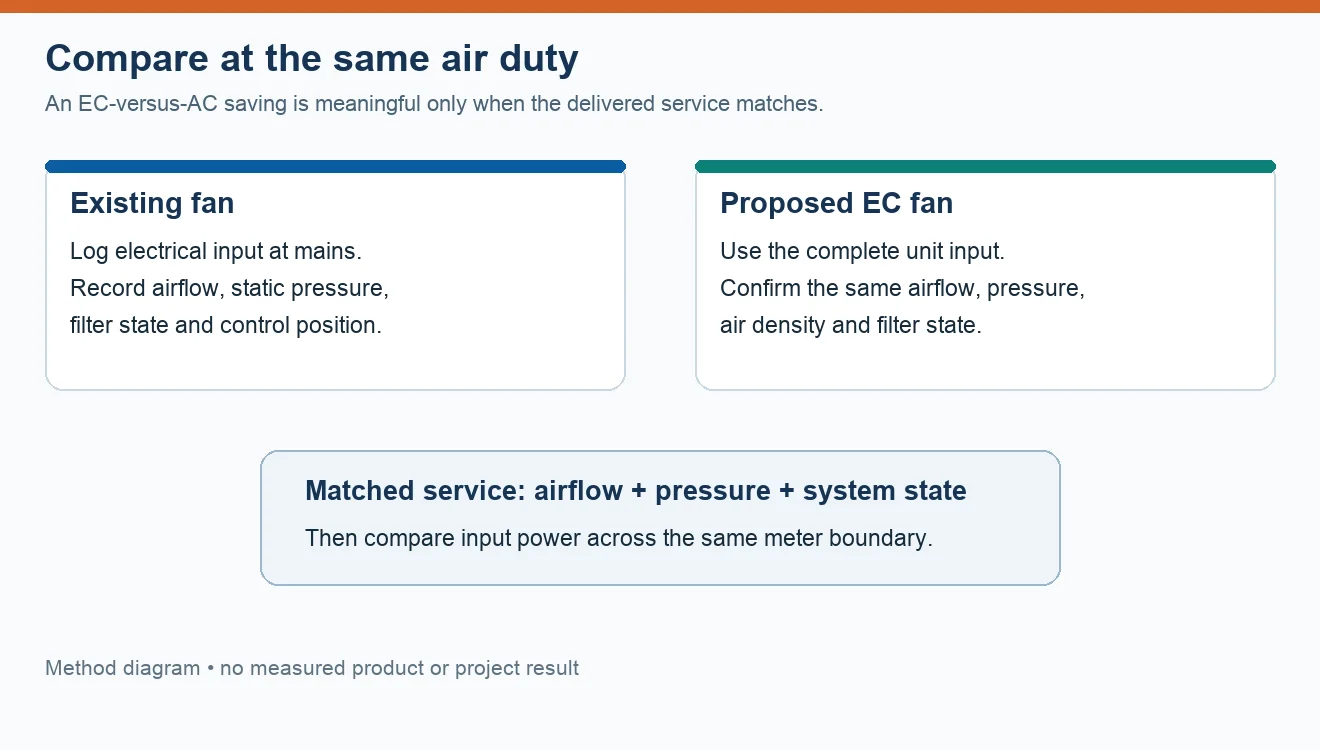
Measure the existing fan at the useful operating point, then specify the proposed fan at that same airflow and relevant static-pressure boundary. Record air density, filter state and the control setting. If one option delivers less air or works against a cleaner filter, its lower input power is not yet a like-for-like saving. The comparison also needs the same useful outcome: ventilation rate, process cooling or temperature control as appropriate to the equipment.
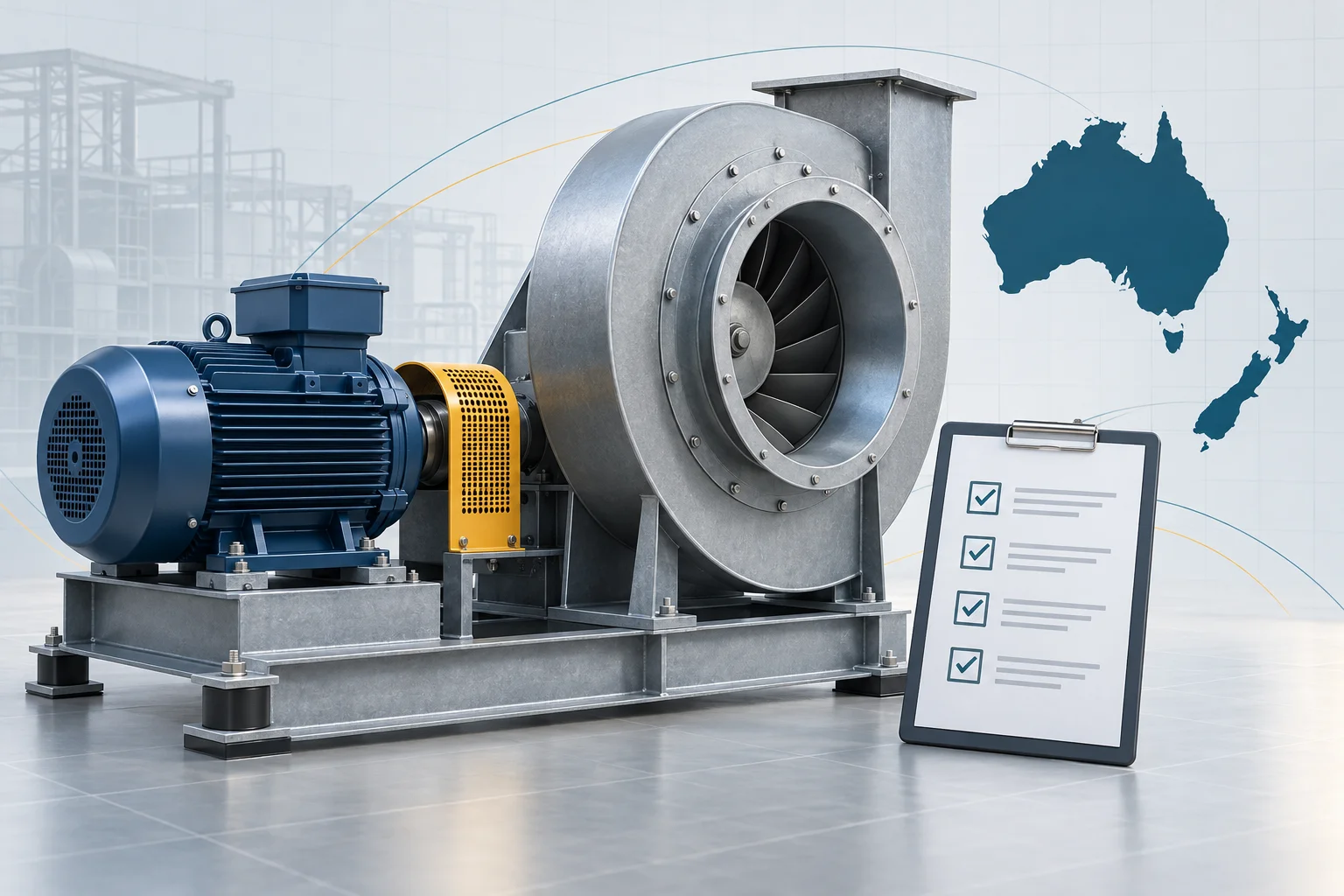
Define where the electrical meter starts and ends. Compare mains input for the existing installation with complete electrical input for the proposed assembly, including electronics and any auxiliaries that the selected boundary includes. A bare motor-efficiency figure and a whole installed-fan reading are different quantities. Figure 1 is the check to complete before subtracting two kW values.
What EC technology changes
An electronically commutated fan uses motor electronics to control the motor and can adjust speed to demand. That can make part-load operation easier to implement. It does not prove that every EC unit is more efficient at every duty point than every AC alternative. An AC fan with a correctly selected variable-speed drive can also capture much of the benefit of speed control. The fair comparison is between complete available options, their curves and their actual control strategies.
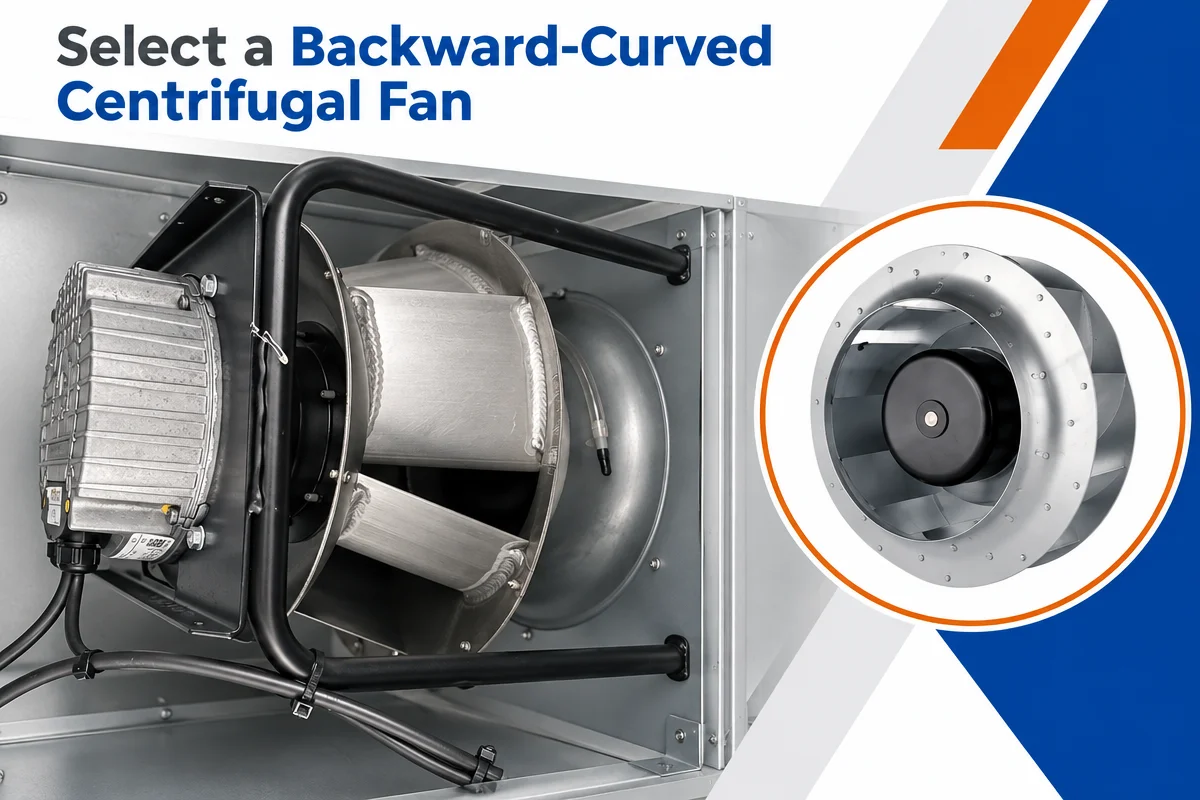
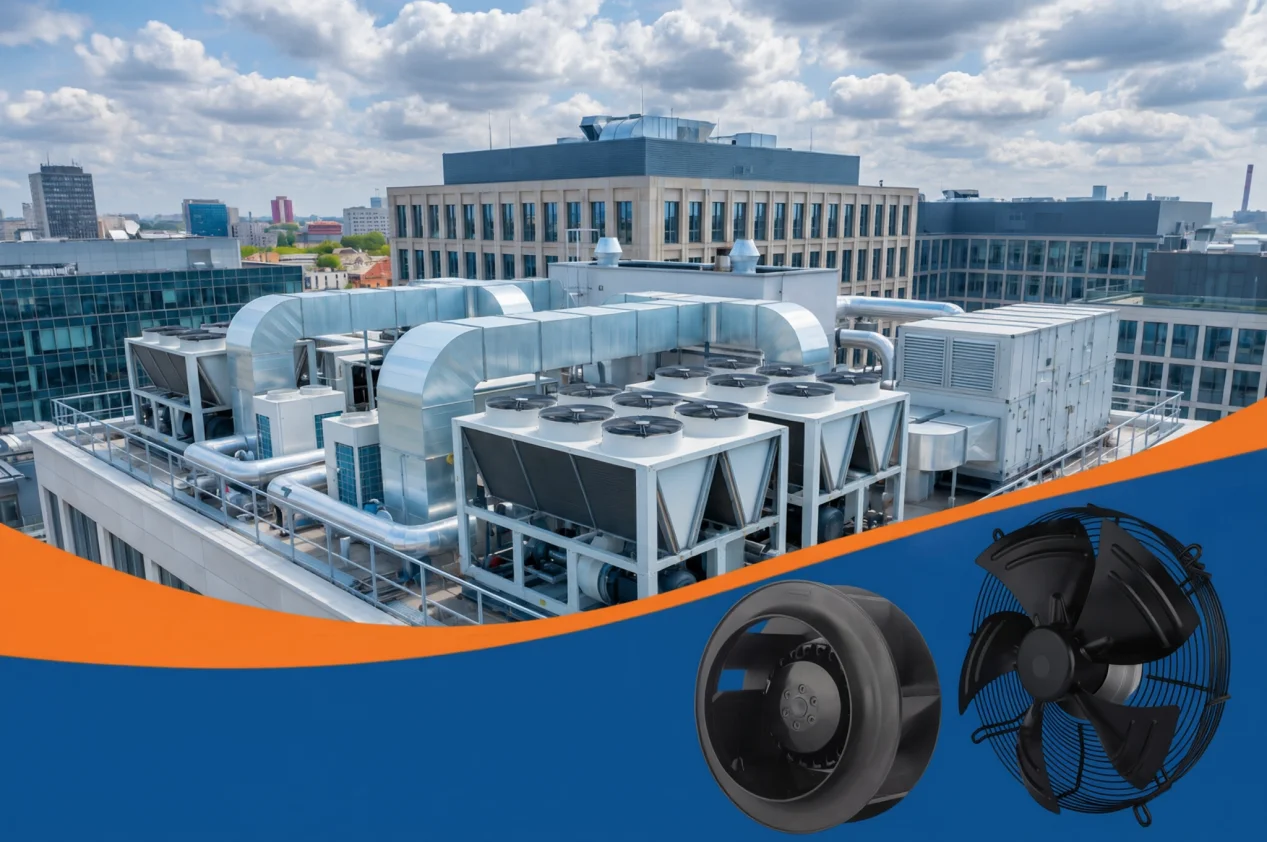
The LONGWELL EC backward-curved fan family illustrates the range of candidate designs. Its product catalogue contains multiple distinct suffixes. A photograph or family listing identifies a family, while selection requires the exact model suffix, current drawing and curve at the specified duty. The reviewed EC250 catalogue, for example, lists several LWBE3G250 variants; a curve or dimension from one suffix should not be transferred to another. None of those catalogue pages establishes a universal energy-saving percentage for an installed system.
Use the fan laws within their boundary
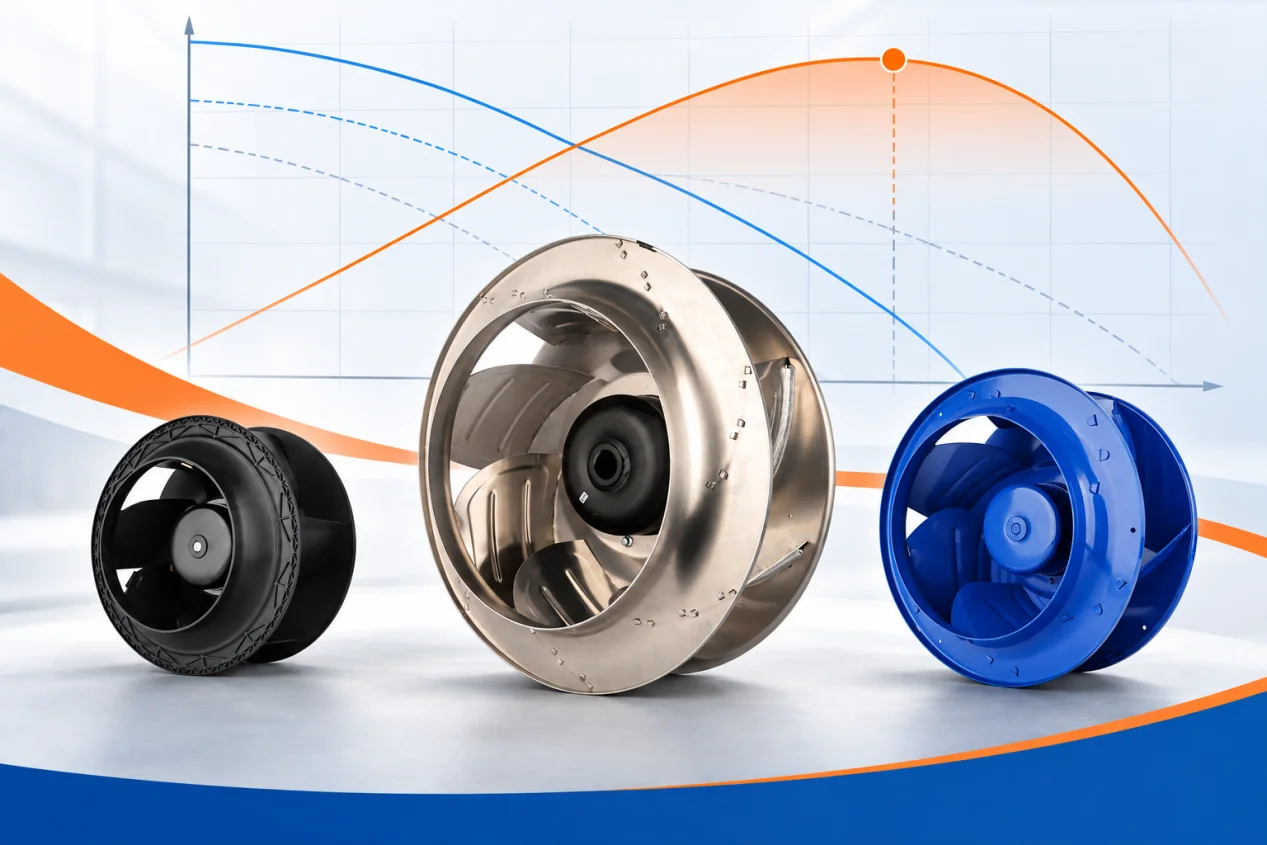
For the same fan geometry and comparable air conditions, fan laws relate a change in rotational speed to airflow, pressure and shaft power at corresponding points. A lower-speed calculation is a useful screening step, especially when the alternative to speed control is throttling. It is not, by itself, a prediction of meter input or the annual electricity bill. The system curve, motor and drive losses, minimum-speed limits, control setpoint and actual operating points still matter.
Use the fan-laws calculator to explore a speed change as a preliminary engineering scenario. Confirm each proposed point against the exact fan curve and electrical-input data. If the existing installation already uses speed control, do not compare the EC option against a hypothetical fixed-speed, heavily throttled baseline unless that is the real baseline.
Calculate annual kWh by operating bin
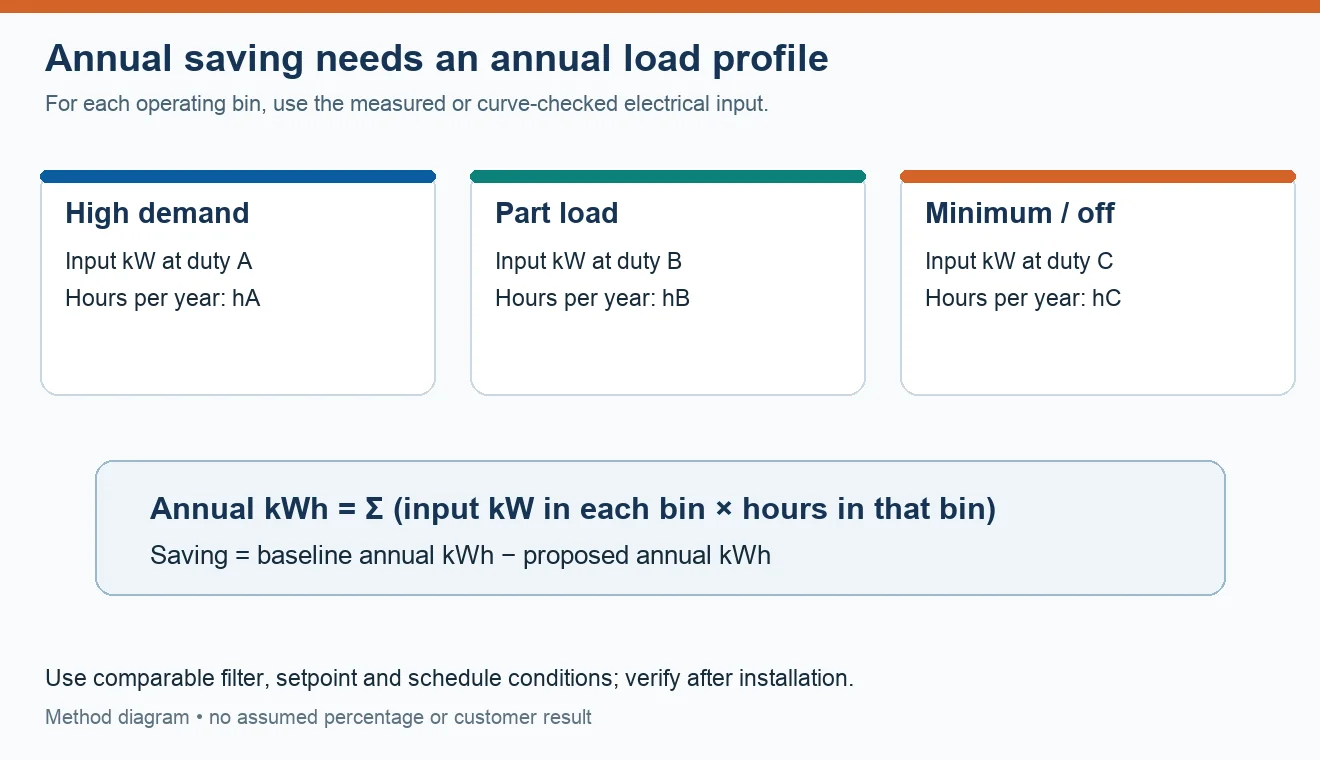
Log the current system over representative weekdays, weekends and process modes. Build a yearly schedule with separate high-demand, part-load, minimum and off periods. For each bin, use the measured existing input and a curve-checked or measured proposed input at the same duty. Multiply input kW by annual hours and sum the bins for each option. Annual kWh saved is the existing total minus the proposed total. The hours must cover the full year; one favourable low-load hour cannot stand for the operating profile.
If the operating schedule is seasonal, split it further. In an air-handling unit, filter loading and changing setpoints may move the duty point. In a process application, include production modes that change demand. Figure 2 makes the annual calculation visible and shows why a single percentage is an incomplete answer.
Verify the result after installation
Keep the baseline meter location, airflow and pressure definitions, schedule and filter condition in the project record. After installation, measure the same quantities again and document any change in weather, production load, occupancy or setpoint. Adjust the comparison for material differences rather than attributing every change to the fan. If the service or measurement boundary cannot be made comparable, report the observed input and operating conditions without claiming a validated saving.
A good acceptance package includes the exact existing and proposed fan identities, operating-point curves, electrical-input readings, control settings, load-bin hours and the calculation sheet. Price and payback can be calculated afterward from the buyer’s tariff and installed project cost. No fixed motor-efficiency table, “typical” saving percentage or brochure example can replace those records.
What to request before selecting a fan
Ask for required airflow and pressure at more than one operating mode, available supply voltage, installation space, ambient conditions, control interface and the current fan’s measured input. Request the exact candidate model curve and drawing, then check that the expected control range meets the duty across the year. Use the EC versus AC calculation worksheet for an exploratory estimate only after entering project-specific measurements. Validate the final selection and any savings claim against the actual equipment and agreed measurement plan.
Send the duty points, current meter readings, operating schedule and installation constraints to sales@longwellfans.com for a model-specific engineering review.