An inline grow-tent fan is one part of a controlled air path. Its job is to move air from a suitable intake, across the growing zone, through the selected filter if one is used, and to an allowed discharge point. The practical decision is to establish the required delivered airflow and then check whether the complete fan, filter, duct and control combination can provide it. A free-air number on a product page cannot answer that question by itself.
Set the ventilation objective before choosing a fan
Record the enclosure dimensions, lighting and other heat sources, surrounding-air conditions, crop and equipment requirements, target temperature and humidity range, and the permitted exhaust destination. A volume-based air-change estimate can be a starting check, but it does not include the actual heat and moisture load, filter resistance or source-air condition. Even a heat-balance calculation is only a planning estimate until the installed airflow and environmental response are measured.
Decide what the system must do during the warmest and most humid intended operating periods. When incoming air is already warm or humid, moving more of it may not achieve the intended condition. Check the overall environmental strategy and the equipment instructions before increasing fan speed. This is a ventilation planning guide for lawful indoor horticulture, not a crop-specific set point or an electrical installation instruction.
Trace intake, zone, filter, fan and discharge
Figure 1 separates the exhaust route from local circulation. The make-up-air opening needs a clear path and suitable source air. The exhaust route must pass through the intended plant zone and reach a discharge location that is allowed for the site. Filter placement, fan orientation, supporting hardware and duct connections follow the exact component instructions; the drawing does not certify one universal order or mounting arrangement.
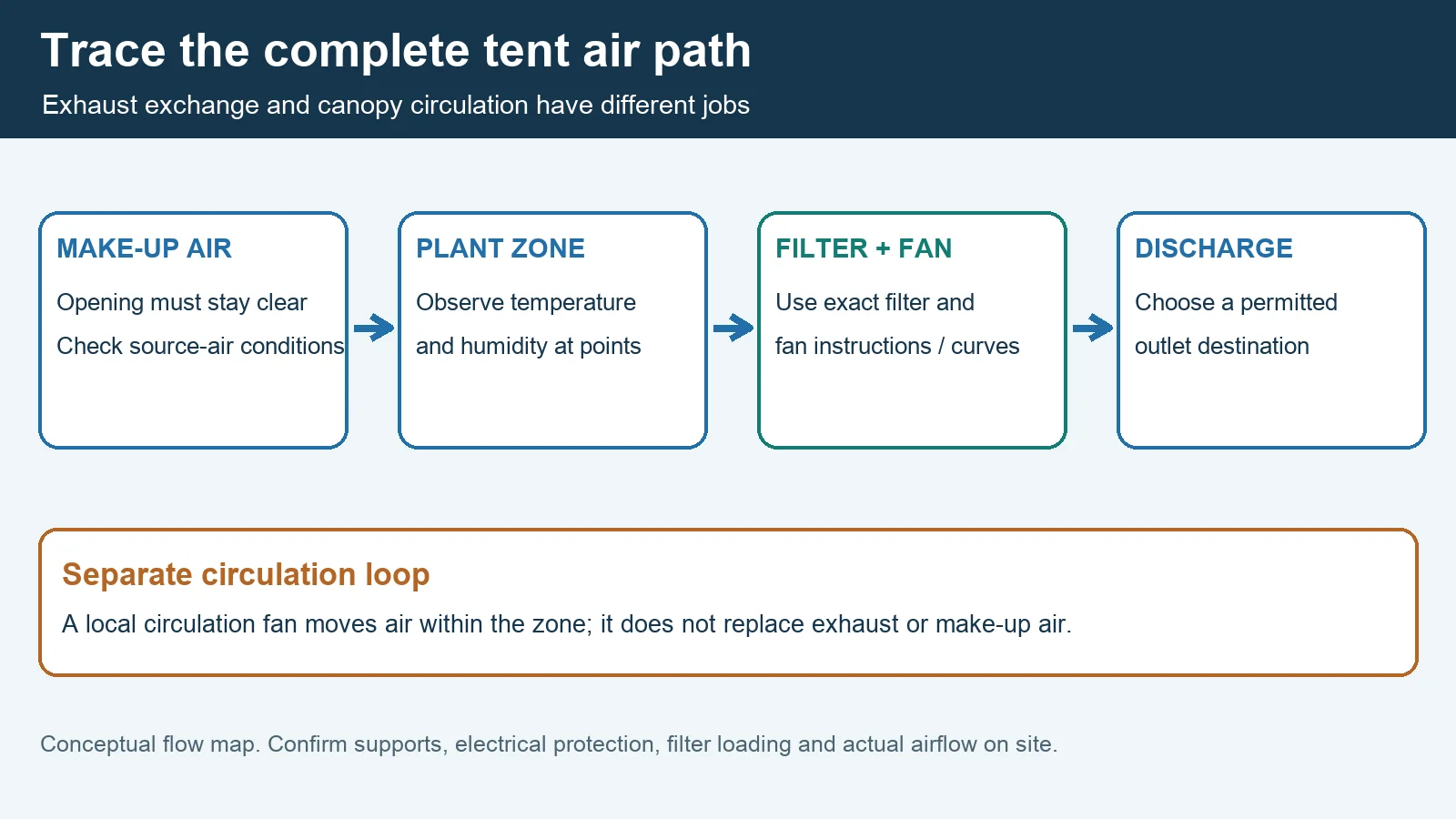
A circulation fan within the enclosure can help reduce stagnant pockets, but it does not supply fresh air or discharge moisture through the enclosure boundary. If the tent fabric pulls inward, treat that as a sign to check inlet restriction and installed airflow, not as a target pressure measurement. Support the filter and fan independently of fabric or flexible duct unless the selected equipment documentation expressly permits another arrangement. Keep water and condensation away from electrical components and use qualified installation where required.
Read a loaded system curve, not a free-air rating
The fan and the duct system determine one operating point together. Filters, bends, guards and the discharge each add resistance. As a filter loads, the system curve may shift and delivered flow can fall. Figure 2 shows the direction of that change without inventing a pressure loss, percentage or LONGWELL model curve. The U.S. Department of Energy fan-system sourcebook explains why filters and other components must be included in system resistance.
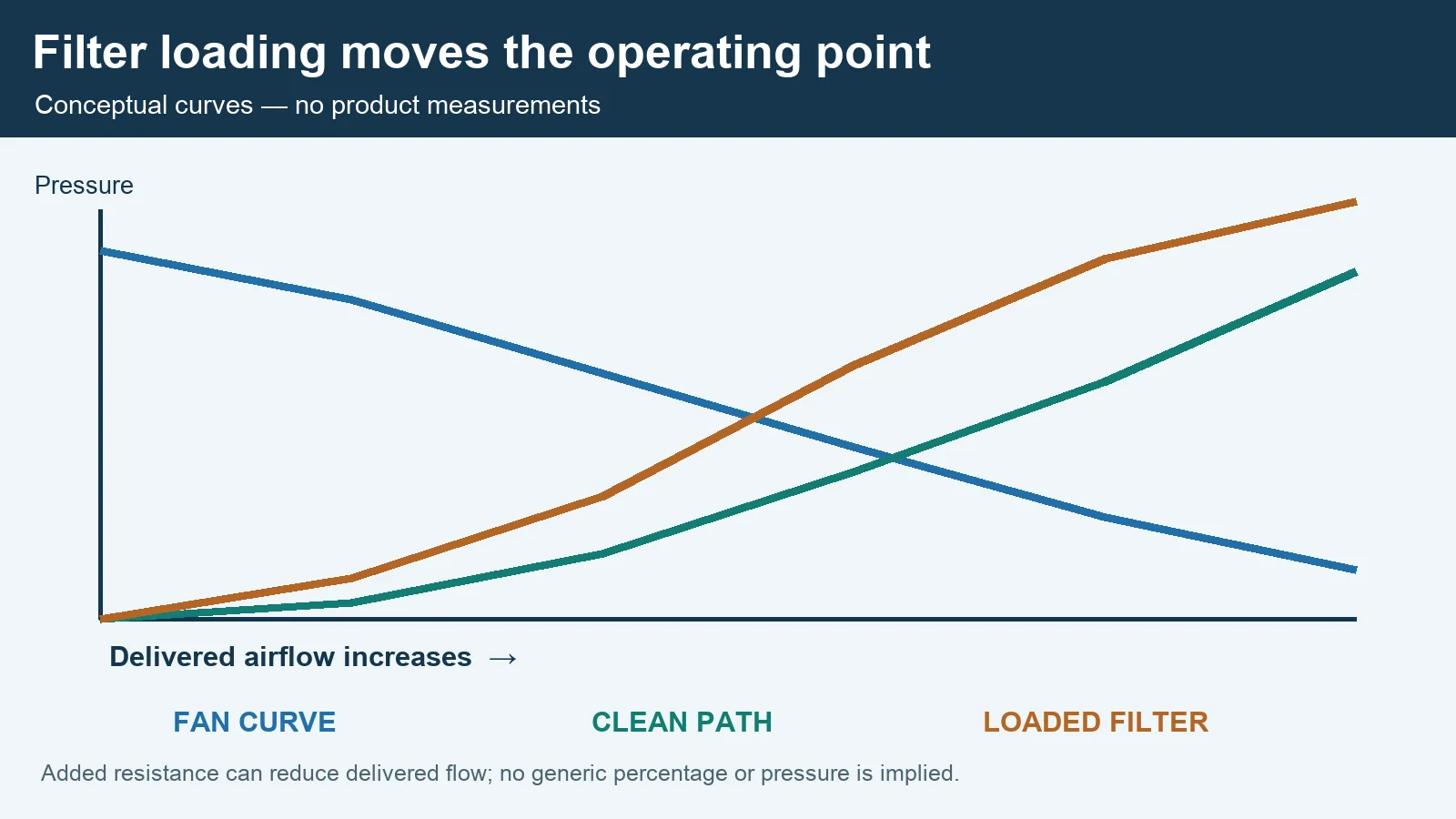
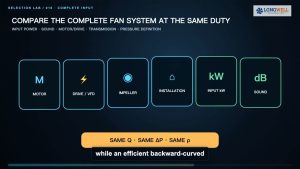
Obtain the actual fan performance curve at the intended voltage and speed and the filter maker’s clean and replacement-condition pressure information. Add the duct, inlet and outlet losses for the proposed layout. Compare the resulting system requirement with the fan curve at the intended duty point, including the control method and noise constraints. No generic statement such as “a filter halves airflow” can replace this check. A larger fan running slower is not automatically quieter or more suitable; compare the applicable sound data and installed arrangement.
Keep LONGWELL product identity at family scope
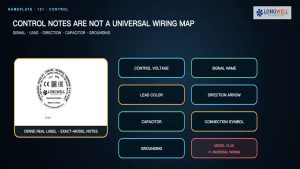
LONGWELL publishes an EC inline duct fan family as one route for a ducted project. That family listing identifies a type of product; it does not prove that a particular model fits this enclosure, filter, voltage, controller or regulatory setting. Ask for the exact model and suffix, current revision, dimensional drawing, performance curve, wiring and control instructions, and the environmental or mounting limits. A supplier image showing a fan in a growing space is application context, not a test of this proposed installation.
Match the fan’s connection size and mechanical envelope to the duct and supports without assuming that nominal diameter alone establishes fit. Confirm the controller type and supply voltage against the chosen motor, then check access for inspection and filter replacement. If the model-specific curve or installation instructions are unavailable, keep the product selection open rather than filling the gap with a family-level claim.
Commission the installed path and revisit it
After a safe installation, verify airflow direction, inlet and outlet clearance, secure supports, controller response, abnormal vibration, and dry, protected electrical connections. Observe temperature and humidity at representative locations while the intended equipment runs. If odor control is part of the design, follow the filter manufacturer’s instructions and check for bypass around seals; carbon media has finite capacity and cannot guarantee total odor removal. Record the initial filter condition, speed setting and measured operating conditions as a comparison baseline.
Recheck when the filter ages, the enclosure layout changes or the surrounding season changes. A difference between the baseline and current conditions is a reason to inspect the entire route before buying a larger fan. For a wider cultivation-space view, the LONGWELL grow-room ventilation guide discusses room-scale paths; its examples are not an exact tent specification.
Send a usable engineering brief
For a model review, provide the enclosure and duct layout, heat-producing equipment, intake and discharge conditions, filter model and its pressure data, desired delivered airflow, electrical supply, controller, mounting restrictions, and any measured operating point. Identify which values are measured, calculated or still unknown. That brief lets a supplier compare a specific model and revision against a defined duty instead of promising a result from a free-air rating or a photograph.
Choose the right duct fan
Longwell manufactures 254 duct fans in-house. Send airflow, static pressure and voltage — an engineer replies with a matching model, performance curve and price within one working day.