A network-wide energy program
A Philippine telecom firm operating 4,000 towers launched an energy program built on free cooling. They are retrofitting cell sites from air-conditioned indoor shelters to outdoor-style enclosures cooled by moved air alone.
Notably, the request began carefully, with a pilot batch of 20 units, which is the right way to bet a network.
The constraints
- First, direct operation from the site 48 VDC bus, across its real 36 to 57 V swing.
- Next, tropical ambient heat and humidity, continuously.
- Meanwhile a high IP rating, since the fans face wind-driven rain and dust in outdoor cabinets.
- Finally, 0-10V or PWM speed control from the shelter controller, and a high L10 life, because every failure is a site visit.
Why the program makes sense
An air conditioner spends compressor energy chilling a room below ambient. However, radio and battery gear mostly does not need that. It needs its heat removed fast enough to stay inside its rated window.
Where the gear tolerates ambient plus a margin, moving air does the job at a fraction of the energy. No refrigerant, no compressor, far less to fail. Multiplied by 4,000 sites running day and night, that difference is the program.
What free cooling demands from the fan
Free cooling shifts the burden from a refrigeration circuit onto the fan. Consequently, the fan carries requirements an indoor unit never sees.
Why the fan runs native 48 V
The site bus is 48 VDC, so the fan takes it directly. An AC fan here would need an inverter. That wastes 10 to 15% of the energy the program exists to save, and it adds a component whose failure silences the cooling.
Meanwhile the EC motor brings the control interface for nothing. The shelter controller trims speed against temperature over 0-10V or PWM, so the fan spends exactly the watts the moment requires.
The wide-bus detail
A telecom 48 V bus is a nominal fiction. It rides from 36 V on discharge to 57 V on equalize charge. So the fan must hold its duty across that whole window, because the hottest afternoon and the deepest battery discharge can arrive together.
What the enclosure change demands
Of course, opening a shelter to outdoor air puts the fan at the boundary: rain, dust and salt air on one side, electronics on the other.
That is why the ingress rating and the motor protection matter more here than in the sealed shelter being replaced. In short, the retrofit trades a chilled box for a ventilated one, and the fan is the part that makes the trade safe.
Reliability as arithmetic
Across 4,000 remote sites, fan life is not a datasheet virtue but an operating cost. Every early failure is a truck, a technician and hours of network risk.
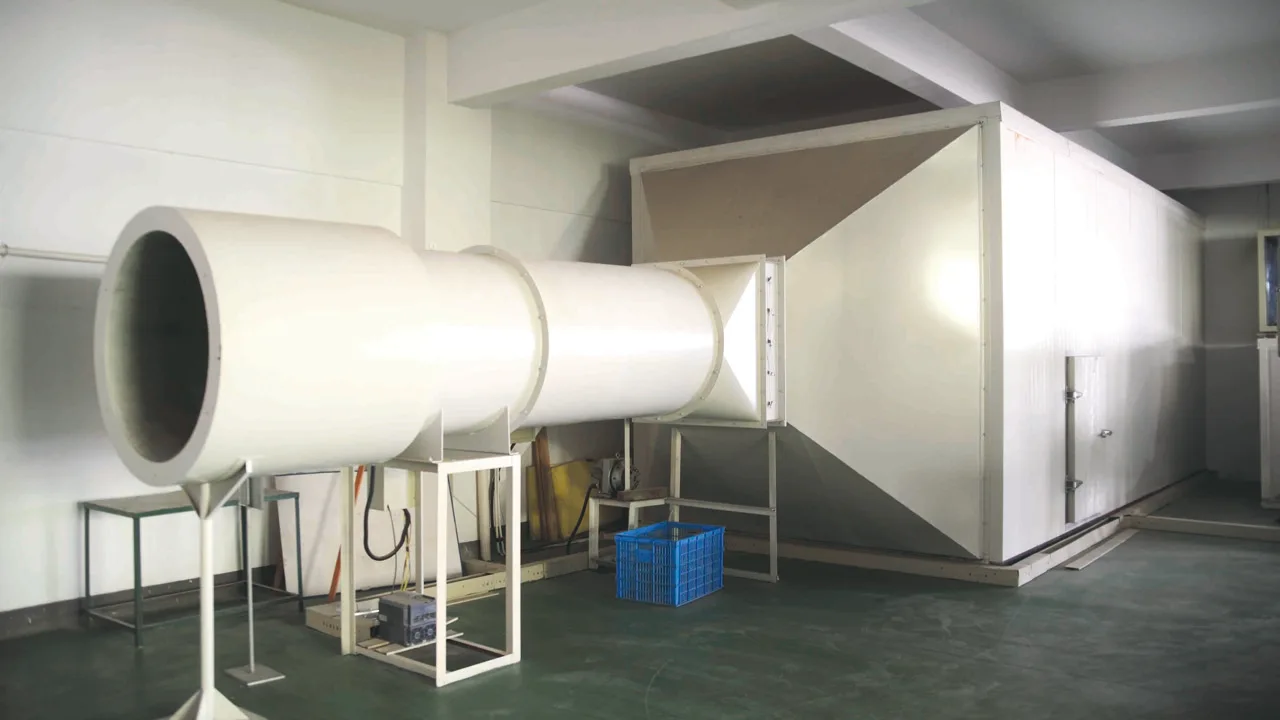
Therefore, a high L10 figure at realistic temperature, ball bearings and conservative electronics sizing are what keep the maintenance calendar the program promised. Airflow verification follows ISO 5801 methods.
Technical Specifications
These figures replace a refrigeration circuit. Read the power row with that in mind, because it is the whole argument.
| Model Number | LWAD3G250HS-7MKB-02-00 |
| Fan Type | DC Axial Flow Fan |
| Nominal Voltage | 48 VDC |
| Voltage Range | 36–57 VDC |
| Maximum Airflow | 1977 m³/h / 1163 CFM |
| Maximum Static Pressure | 232 Pa |
| Speed | 2780 RPM |
| Input Power | 105 W |
| Current | 2.2 A |
| Noise Level (LpA) | 69 dB(A) |
| Dimensions | Ø295 mm x 80 mm depth |
| Impeller Diameter | Ø250 mm |
| Weight | Approx. 2.5 kg |
| Protection Class | IP55 |
| Insulation Class | Class B |
| Operating Temperature | -25°C to +60°C |
| Bearing Type | Maintenance-free deep groove ball bearings |
| Life Expectancy (L10) | 50,000 Hours at 40°C |
| Control Input | 0-10VDC / PWM (1K-10KHz) |
| Housing Material | Die-aluminum |
| Impeller Material | Galvanized sheet steel |
| Certifications | CE, RoHS, Reach |
Technical Documentation
LWAD3G250HS-7MKB-02-00.pdf
The complete technical datasheet contains performance curves, wiring diagrams, and dimensional drawings required by design engineers for system integration.
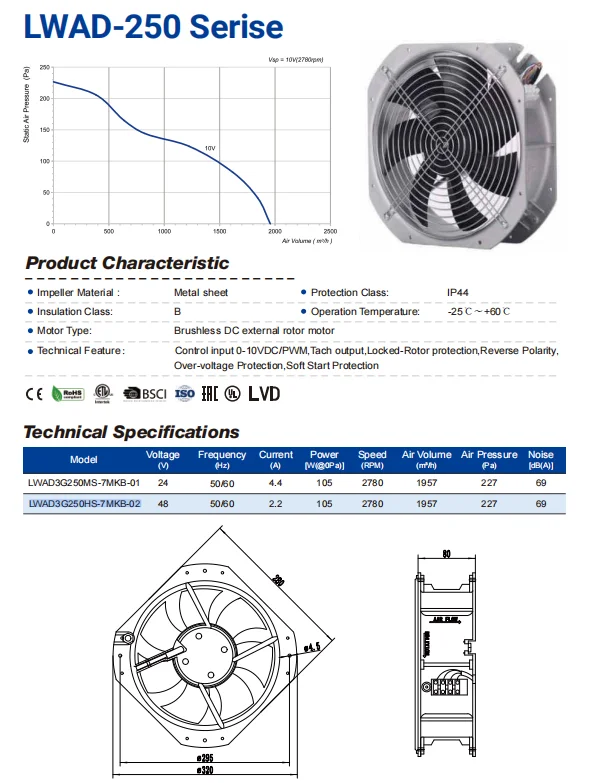
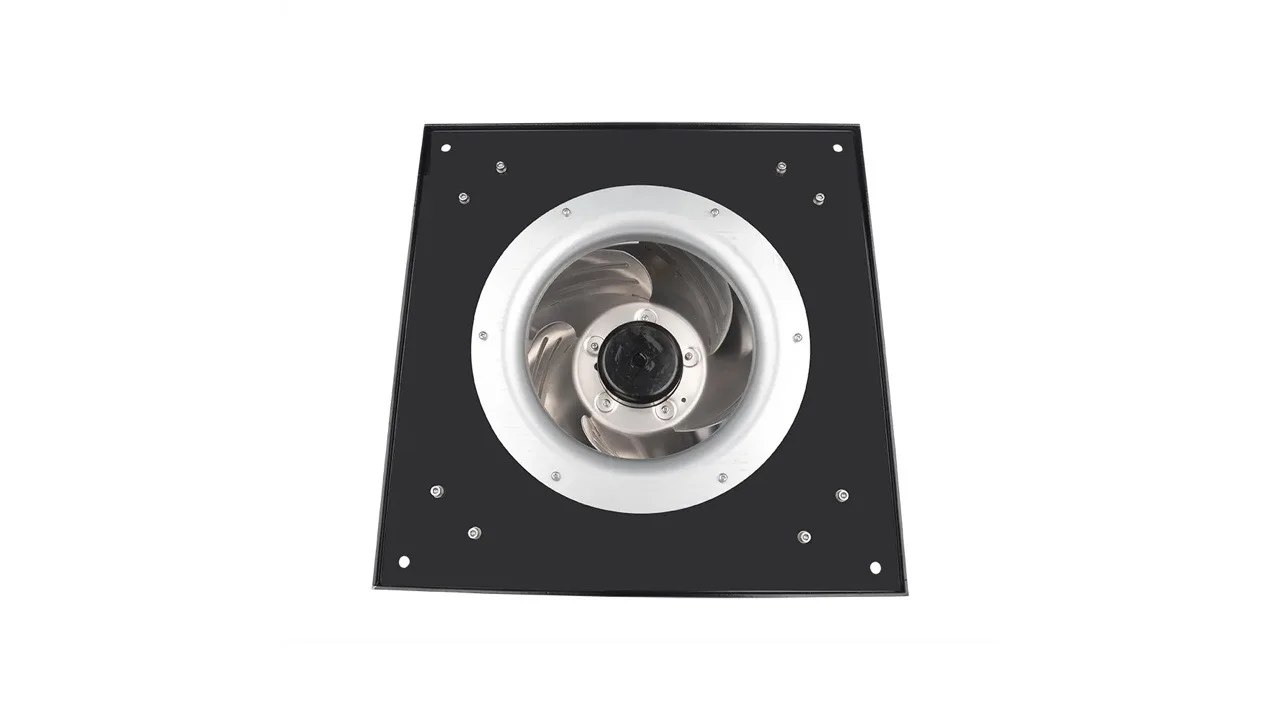
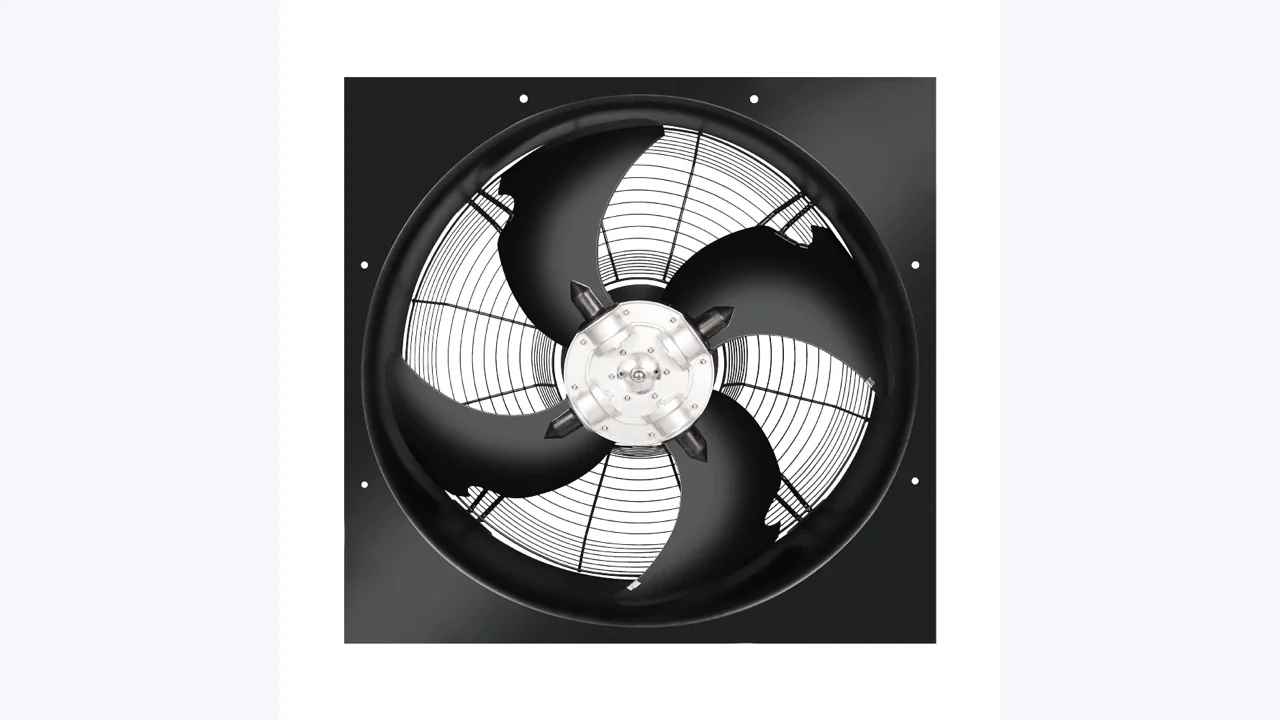
The product image shows the assembled fan with its die-cast aluminum housing and protective grille mounting points.
LWAD3G250HS-7MKB-02-00.docx
The original specification document provides a reference for the project’s technical parameters in an editable format for internal project management.
Evaluating your own retrofit
Free cooling repays careful qualification more than optimistic arithmetic. Four checks decide whether your sites are candidates.
- Confirm the equipment tolerates ambient-plus-margin. Free cooling holds the room near outdoor temperature plus the rise across the gear. So check every component rating against the hottest site day, not the average one, before removing any refrigeration.
- Size the fan for the worst hour, control it for the rest. The airflow requirement comes from peak heat load on the peak afternoon. Then speed control earns the savings the other 8,000 hours a year, which is why a controllable EC fan suits the duty.
- Respect what the opened enclosure lets in. Moving outdoor air means filtering dust, shedding rain and tolerating humidity. The IP rating, the filter plan and the rust resistance are the price of leaving refrigeration. Happily, they cost less than it did.
- Pilot in your worst climate, not your nearest. Twenty units prove the concept only if they face the conditions that will break it. So choose the pilot sites for heat, dust and salt, and let a season argue with the design before 4,000 sites depend on it.
See our axial fans range, the DC axial fans section, or DC cooling fans.
Questions about free cooling
When does free cooling not work?
When the gear needs temperatures below what outdoor air can provide, or when ambient peaks exceed the ratings minus the internal rise. Hot climates narrow the margin but rarely close it for telecom hardware, which tolerates far more heat than the humans who used to share its room.
How much energy does replacing an air conditioner save?
Here the compressor dominates the load in a small shelter, and a fan moving the same heat draws a small fraction of that power. The exact ratio depends on climate and load, which is precisely what a metered pilot batch establishes before the fleet commits.
What happens on the hottest day of the year?
The design must already answer that. The fan is sized for peak load at peak ambient, and the controller runs it flat out. Also, some deployments keep a small chilled stage for extreme events, a hybrid that still removes the compressor from all but a handful of hours.
Why is the voltage window so wide on a telecom bus?
Because the bus follows the batteries: float, equalize and discharge each sit at different voltages. Gear on that bus, fans included, must deliver rated performance across the whole range. After all, grid failures, and therefore low bus voltage, arrive in exactly the hours cooling matters.
Technical Documentation & Resources
Got a duty point you need matched?
Tell us the airflow, the pressure and the space you have. Then we mark your duty point on a tested curve and send the drawing back. Meanwhile samples and custom spec sheets take up to 90 days. Since 1990 we have supplied OEMs across HVAC, refrigeration and industry.
Browse Related Products:
🏆 ISO 9001 / ISO 14001 / ISO 45001 | CE (TÜV) | UL/ETL | ATEX Zone 21/22 | AMCA 210/211 / ISO 5801 tested
Choose the right axial fan
Longwell manufactures 1,086 axial fans in-house. Send airflow, static pressure and voltage — an engineer replies with a matching model, performance curve and price within one working day.