What the integrator was solving
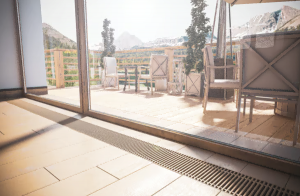
An HVAC system integrator needed a jet fan unit for a facility combining a swimming pool hall with an adjacent corridor.
The requirement that shaped everything was air throw: 22 to 25 meters. However, nothing in a catalog does that, so this jet fan unit had to be built.
Why throw matters here
A large pool hall stratifies. Warm humid air rises and sits, while cold air pools at floor level. Consequently condensation forms on any cold surface the moist layer reaches. Fixing that needs air delivered across the space fast enough to still be moving on arrival.
- A 380V three-phase supply at 50Hz.
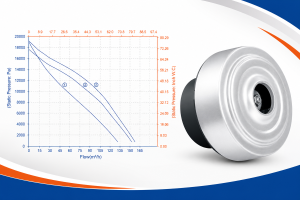
- Total airflow of 15,000 m3/h against 250 Pa external static pressure.
- Meanwhile the air is humid and carries airborne chlorine.
- Finally, performance verifiable against AMCA 210/211, since the integrator has to prove it on site.
Notably the 250 Pa figure is not arbitrary. It covers duct resistance while leaving the nozzles enough energy to produce the throw.
Building the jet fan unit
Two decisions mattered here. Notably, only one of them was aerodynamic.
Belt drive, considered and dropped
A belt-driven blower from our AT series reaches this duty easily. Even so, we rejected it.
A belt drive makes the unit larger. Furthermore it adds belts and pulleys someone must inspect and replace. On a jet fan unit destined for a humid, chlorinated ceiling void, every maintenance point is a place where maintenance will not happen.
Direct drive instead
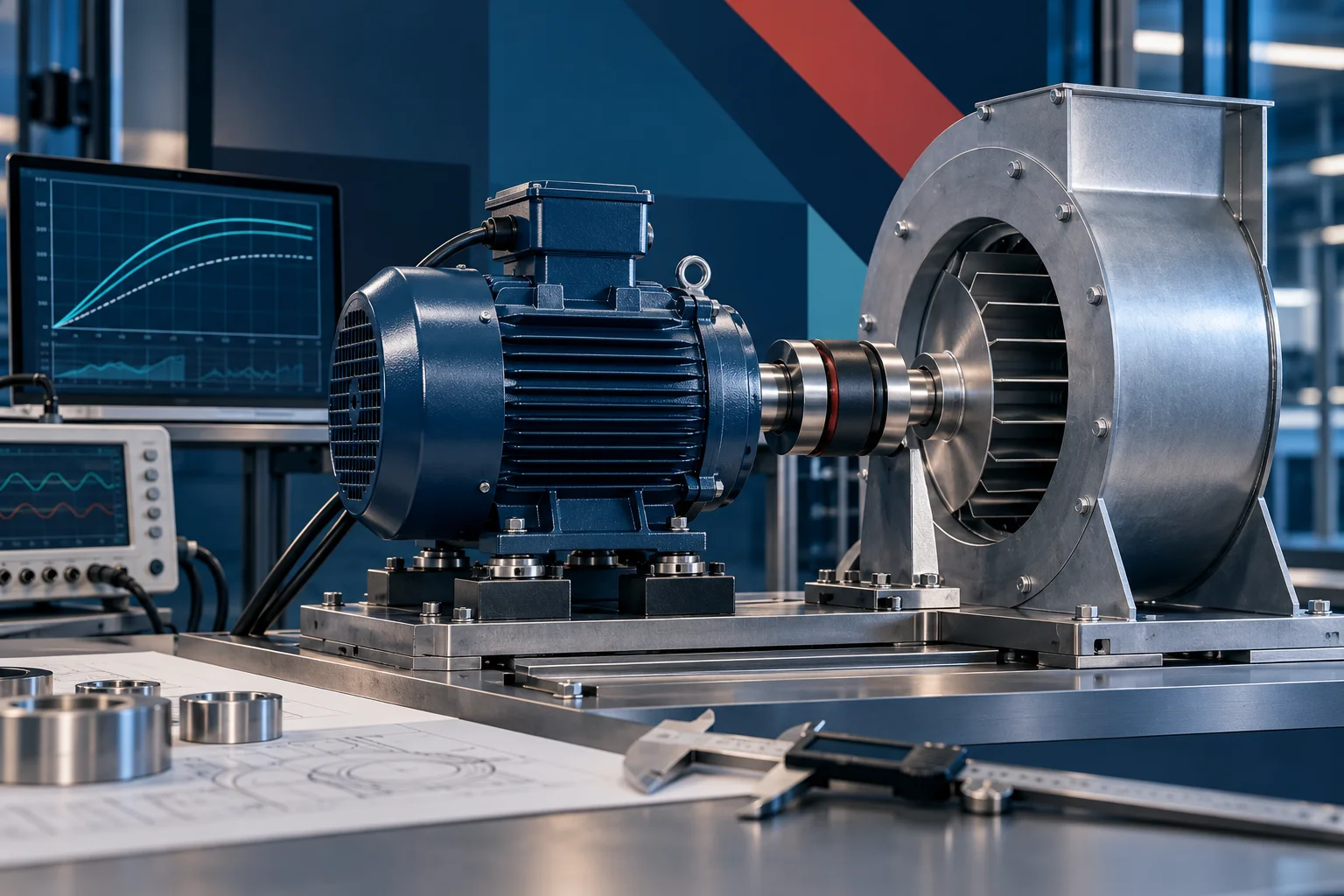
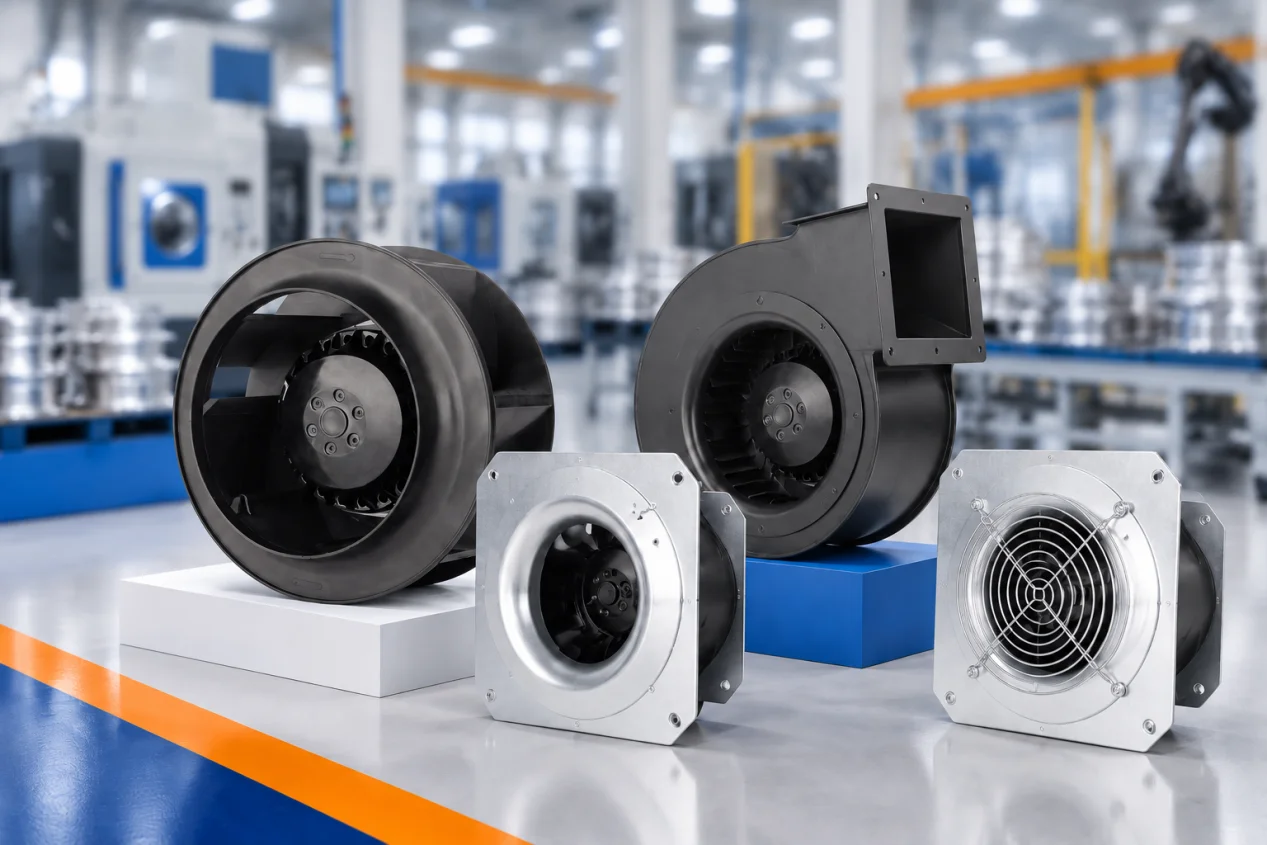
So we used our DDM series double-inlet double-width centrifugal blowers. The series envelope reaches 15,000 m3/h and 800 Pa, meaning the duty point sits well inside it rather than at the edge.
Here the double-inlet arrangement also suits the twin-nozzle layout naturally, which kept the unit compact.
EC over AC plus a drive
An EC motor was specified rather than an AC motor with a separate VFD.
Pool halls run continuously and rarely need full airflow. Consequently part-load efficiency is where the energy actually goes. Furthermore the SmartEC platform speaks 0-10V, PWM and Modbus RTU, so the building management system modulates the fan directly. That matters for ASHRAE 90.1.
The chlorine problem
This is the part that decides whether the unit lasts.
Airborne chlorine attacks galvanized steel steadily. Meanwhile an impeller is thin metal spinning in exactly that air. So the impeller and scroll housing carry an epoxy coating over the galvanizing.
The motor electronics carry IP54, which is adequate here because they sit outside the airstream and the threat is humidity rather than immersion.
What it cost
Weight and price. At 390 kg this is a substantial unit, and the epoxy coating adds cost over standard galvanizing.
Both are worth paying. An uncoated impeller in a pool hall corrodes, and replacing it means taking the whole jet fan unit out of a ceiling.
Technical Specifications
Read the throw figure alongside the airflow row. Neither means much without the other.
| Parameter | Value |
|---|---|
| Longwell Model Number | LWHFD-150S |
| Power Supply | 380V / 3N / 50Hz |
| Airflow | 15,000 m³/h |
| Air Throw (Crew Range) | 22–25 m |
| External Static Pressure (Design) | 250 Pa |
| Refrigeration Capacity (Return Air) | 89.3 kW |
| Refrigeration Capacity (Fresh Air) | 192 kW |
| Overall Dimensions (L x W x H) | 2630 x 1000 x 875 mm |
| Weight | 390 kg |
Technical Documentation

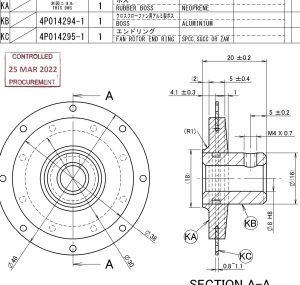
Meanwhile the final technical specification sheet for the LWHFD-150S unit is required by the system integrator for installation and by the facility manager for maintenance planning.

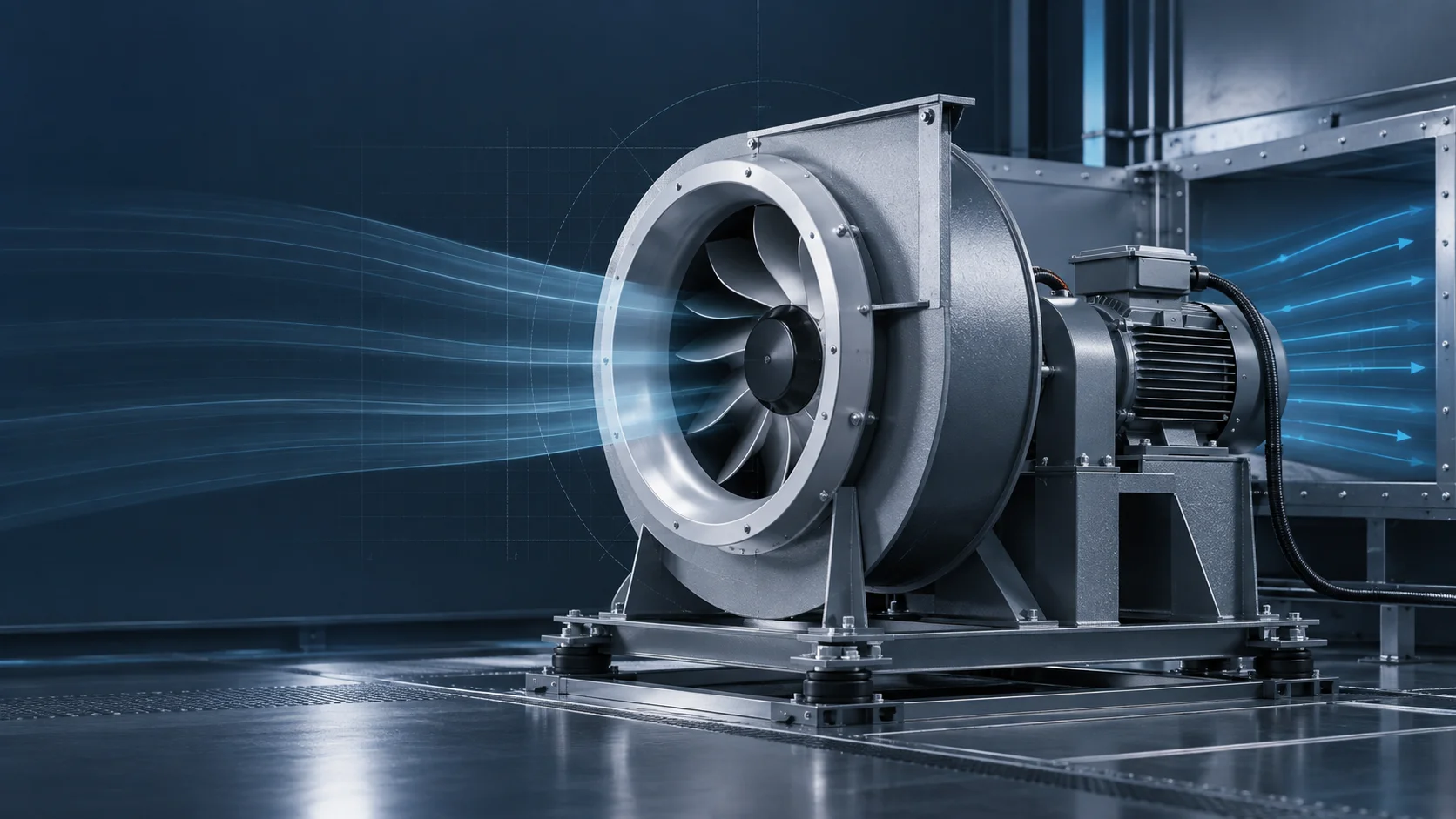
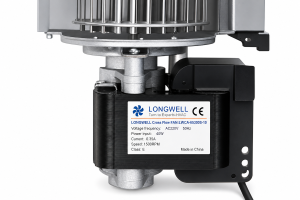
The complete LWHFD-150S custom jet fan unit is used by the OEM procurement manager to verify final form factor and build quality against the approved drawings.
If you are ventilating a pool hall
Pool hall ventilation punishes shortcuts. So if you are specifying a jet fan unit, these matter more than the airflow number.
- Specify the coating, not just the material. Galvanized steel is standard and is not enough near chlorine. Ask for an epoxy or equivalent coating on the impeller and scroll, and confirm it covers cut edges, which is where corrosion starts.
- Give throw distance as a requirement, not an outcome. Airflow alone does not tell a supplier how far the air travels. Nozzle design and discharge velocity decide that, and they need to be designed in rather than discovered on site.
- Design for the part-load condition. A pool hall runs all year and needs full airflow rarely. Efficiency at 50 to 70% speed is where the operating cost lives, which is the argument for EC over a fixed-speed fan.
- Count the maintenance points. Anything needing periodic access in a humid ceiling void will be neglected. Direct drive removes belts and pulleys from that list, which is often worth more than the small efficiency difference.
See our air handling unit range, the EC plug fan section, or industrial centrifugal fans. Efficiency rules come from ASHRAE 90.1.
Questions about this unit
What actually determines air throw?
Discharge velocity and nozzle geometry, not total airflow. A jet nozzle concentrates air into a fast-moving stream that entrains surrounding air as it travels, so it keeps moving far beyond where a diffuser outlet would have dissipated. Tell your supplier the distance and the room height, since both change the nozzle design.
Is IP54 enough in a pool environment?
For electronics sitting outside the airstream, yes. IP54 covers dust and splashing water, which matches a humid plant space. However, anything inside the airstream needs corrosion protection rather than ingress protection, and those are different problems with different answers.
Why not a belt drive, which is cheaper?
Purchase cost is lower, and the fan is easier to re-speed later. However, belts stretch and pulleys wear, and both need periodic access. In a humid ceiling void that access rarely happens. Consequently the failure arrives as an outage rather than a service item.
How does stratification cause condensation?
Warm, moist air rises and collects near the ceiling, where it meets the coldest surfaces in the building. When that surface is below the dew point of the trapped air, water forms on it. Moving air across the space breaks the layering, so the moist air never sits still long enough against a cold surface.
Technical Documentation & Resources
Need the same thing for your own unit?
Give us the numbers and the envelope, and you get a shortlist rather than a catalog. Meanwhile custom spec sheets and samples run to 90 days. Since 1990 Longwell has supplied EC fans and blowers to OEMs in HVAC, cold chain, data center and industrial markets.
Browse Related Products:
🏆 ISO 9001 / ISO 14001 / ISO 45001 | CE (TÜV) | UL/ETL | ATEX Zone 21/22 | AMCA 210/211 / ISO 5801 tested
Choose the right centrifugal fan
Longwell manufactures 1,130 centrifugal fans in-house. Send airflow, static pressure and voltage — an engineer replies with a matching model, performance curve and price within one working day.