Resolving Failures That a Nitrile Rubber Fan Support Fixes
First, a client asked us to revisit the shaft supports on an existing fan design. They had a major mechanical problem in the field. Eight of their older units showed heavily cracked rubber parts, which is what a nitrile rubber fan support was brought in to solve. So, they needed a fast material change for their next 150 units, and a nitrile rubber fan support was the candidate.
Next, we looked at their strict system rules. The equipment runs on a strict 24V power line. Furthermore, the motor must sit exactly on the left side of the metal frame. The system demands a precise air volume of 693 m³/h.
Therefore, the long aluminum blades must spin at exactly 1800 RPM. By contrast, a shorter fan creates much less physical stress. This unit uses a very long 870mm blade. Consequently, the long metal blade puts heavy mechanical loads on the end supports.
The generic rubber could not handle this constant rotational stress. Also, the client needed special electrical wiring. They asked for a custom 1.3-meter power cable. Furthermore, they required a 1.2-meter black woven sheath around this cable.
Finally, we had to add tough crimped terminals to the wire ends. The final build must pass the strict GB/T13933-2008 safety rules. In short, the project had three main goals. We had to stop the rubber from breaking under pressure.
We had to build custom wires for tight spaces. Finally, we had to keep the exact 693 m³/h air volume.
Choosing a Nitrile Rubber Fan Support
First, we checked the broken parts from the old units. The heavy stress completely ruined the generic rubber sleeve. It dried out and cracked under intense pressure. The fan uses a solid 3mm steel shaft.
Therefore, the fast steel shaft rubbed too hard against the basic rubber support. Next, we looked at new material options to fix this flaw. We quickly rejected cheap plastic and basic EPDM rubber. Instead, we picked a pure nitrile rubber bushing.
Nitrile rubber handles intense heat and heavy friction much better. Furthermore, it completely stops physical wear from the fast 3mm steel shaft. However, this choice has a clear financial cost. Nitrile rubber comes at a materially higher cost than standard generic blends.
Even so, we gladly accepted this higher price. An 870mm long blade needs perfect mechanical balance. If the support fails, the 60mm diameter blade will shake violently and hit the iron plates.
Custom Wiring and Motor Placement
Next, we solved the strict cable layout needs. The client required a strict left-side motor mount. So, we built a custom electrical harness for the 24V motor. First, we cut a tough 1.3-meter power cord.
Next, we covered it with a 1.2-meter black heat-shrinkable woven sheath. Finally, we added strong crimped terminals to the red and black wires. Consequently, this thick sheath stops wire cuts inside the tight cabinet. The wires will absolutely not rub against the sharp iron plates during system vibration.
In short, the new LWCD-60870MN-07-05 model hits all performance targets. It confidently moves 693 m³/h of air at 1800 RPM. Meanwhile, it draws only 1.25A of electrical current. The new nitrile rubber parts stop the dangerous cracking completely. Therefore, the client gets a highly stable and safe unit for their next 150 machines.
Technical Specifications
| Voltage | 24 VDC |
| Current | 1.25 A |
| Speed | 1800±10% r/min |
| Air Volume | 693 m³/h |
| Impeller Dimensions | Ø60mm x 870mm |
| Bearings | Ball bearing |
| Shaft Details | Ø3mm steel shaft, Ø1.5mm bushing |
| Safety Standard | GB/T13933-2008 |
First, the long 870mm blade limits how we build this unit. The strict 1800 RPM target sets the exact 693 m³/h air volume. Furthermore, it keeps the current down to 1.25A. Therefore, the pure nitrile rubber is the only way to support this fast speed.
Reference: ISO 21940 covers the test method behind these figures.
Technical Documentation
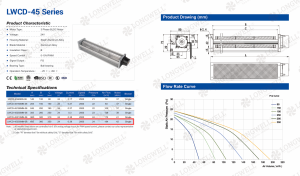
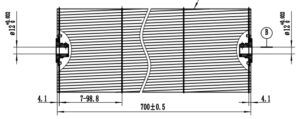
Current 24V DC Cross Flow Fan Drawing
This document shows the new nitrile rubber notes, the woven wire cover, and the left motor mount.
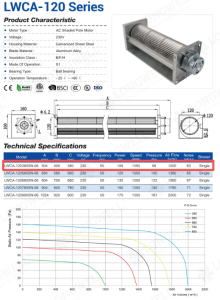
Previous Design Specification
This file shows the older version before we changed the rubber parts.
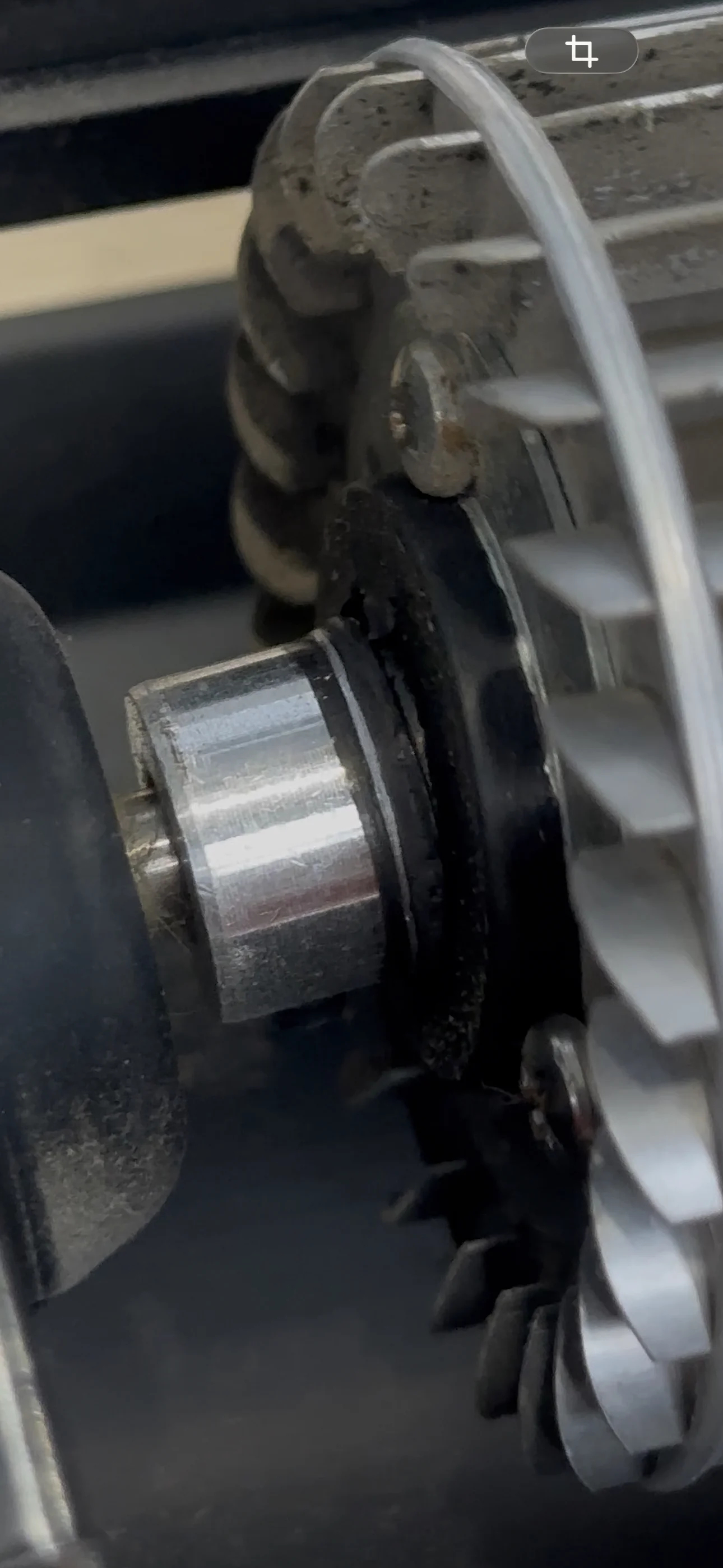
This photo shows the actual cracked rubber support from the field.
Fitting a Nitrile Rubber Fan Support in Long Builds
Engineers dealing with a broken nitrile rubber fan support must look closely at their mechanical loads. Long metal blades naturally shake much more than short ones. Consequently, the end supports take heavy physical damage over a long time.
- First, always check the exact wear spot. Send your factory clear photos of the broken parts so they can fix the actual root cause.
- Next, avoid standard EPDM rubber for high-stress zones. Instead, specify pure nitrile rubber when a solid 3mm steel shaft spins fast against a tight bushing.
- Furthermore, protect your long power wires. Ask for a thick woven sheath if your bare cables run near sharp iron chassis edges.
- Finally, check your exact motor placement early in the design phase. Make sure the left or right orientation clearly fits your metal frame before you send a final order.
In short, simply adding thicker metal plates will never stop the real wear. Instead, you must upgrade the actual physical contact point to a much better material.
Related: Cross Flow Fans.
Common Questions About Fan Shaft Wear
Technical Documentation & Resources
Browse our axial fans range, the AC axial fans section, or EC axial fans.
Have a Similar Fan Requirement?
Longwell’s engineering team delivers custom spec sheets and samples within 90 days. Since 1990, we have supplied EC fans and blowers to OEMs across HVAC, cold chain, data center, and industrial applications worldwide.
Browse Related Products:
🏆 ISO 9001 / ISO 14001 / ISO 45001 | CE (TÜV) | UL/ETL | ATEX Zone 21/22 | AMCA 210-16 / ISO 5801 tested
Choose the right cross flow fan
Longwell manufactures 495 cross flow fans in-house. Send airflow, static pressure and voltage — an engineer replies with a matching model, performance curve and price within one working day.