Replacing an Obsolete 160mm Blower Under Strict Power Limits
First, a customer required an EC centrifugal fan replacement. They buy thousands of units per year. The application is an outdoor equipment cooler. The original obsolete model drew 143 W of power. It delivered 666 m3/h of airflow. Also, the static pressure maxed out at 773 Pa. Next, the customer tested a standard 230 W substitute. However, they rejected this EC centrifugal fan replacement right away. The extra power would trip their electrical panel. Therefore, they set a firm upper limit of 150 W.
Also, the new blower needed to match the old 160mm physical envelope. The EC centrifugal fan replacement required strict safety compliance with EN 60335-1. Plus, the unit had to run reliably in harsh winter cold. The specification listed an operating range down to -30 C. This cold rating proves the fan lives outdoors in freezing weather. So, a basic off-the-shelf fan would not work. We needed a custom engineering path. Our team had to balance aerodynamic output with a hard electrical cap. Furthermore, we test all performance to ISO 5801 methods. This ensures our motors deliver real pressure without breaking power limits.
Balancing Airflow, Pressure, and the Power Cap
We looked at three ways to solve this problem. First, we tested an existing 160mm model. This unit was the LWFE3G160-072SS-07. It delivered a strong 670 m3/h of airflow. The static pressure reached a high 979 Pa. However, it required 170 W to spin at 3050 RPM. We rejected this option quickly. The 20 W overage would force the customer to upgrade their panel breakers. That change carried a materially higher cost.
Next, we thought about using software to limit the 170 W motor. We could restrict the speed using a 0-10V control input. By capping the PWM signal, the fan would draw less power. However, we rejected this idea too. Software limits are unsafe for hard electrical constraints. If the controller fails, it might default to full speed. Then, the fan would pull 170 W and trip the system.
Developing a custom EC centrifugal fan replacement
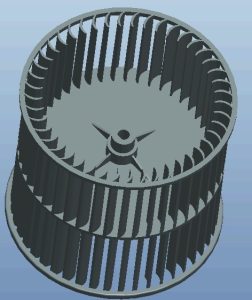
Instead, we started a custom R&D cycle. We took our standard 160mm galvanized steel impeller. Then, we paired it with a modified 72-frame EC motor. Our engineers optimized the stator winding. They also tightened the magnetic gap. As a result, the nominal current dropped from 1.2 A to 1.1 A. This change successfully lowered the maximum input power to 155 W.
Every design choice has a cost. First, the 155 W draw slightly missed the 150 W goal. The customer had to approve a tiny 5 W variance. Next, the peak airflow dropped to 649 m3/h. Finally, a custom NPI process requires a 90-day lead time. Even so, the new LWFE3G160-072SS-04 fan worked perfectly. It generated 989 Pa of static pressure at 3050 RPM. We also upgraded the protection class to IP55. This change keeps the fan safe from outdoor condensation between -30 C and +60 C.
Technical Specifications
| Parameter | Specification (LWFE3G160-072SS-04) |
|---|---|
| Airflow (Max) | 649 m3/h (382 CFM) |
| Static Pressure (Max) | 989 Pa |
| Input Power | 155 W |
| Speed | 3050 RPM |
| Nominal Voltage | 230 VAC (Range: 176-264 VAC) |
| Frequency | 50/60 Hz |
| Current | 1.1 A |
| Noise Level | 68 dB(A) |
| Ambient Temperature | -30 C to +60 C |
| IP Rating | IP55 |
| Insulation Class | Class B |
| Certifications | CE, ETL (UL 507, CSA C22.2#113), RoHS, REACH |
The critical rows in this table are the input power and the ambient temperature. The 155 W power draw keeps the fan within the customer’s strict electrical limits. Meanwhile, the -30 C minimum temperature rating ensures the bearings survive harsh outdoor winters.
Reference: AMCA 210 covers the test method behind these figures.
Technical Documentation
The following documents detail the original constraint and the final engineering output.

First, this requirement note outlines the strict 150 W power limitation.
Original Obsolete Specification (LWFE3G160-092SS-02)
Next, the baseline document shows the 143 W and 666 m3/h performance of the old unit.
Rejected 170 W Alternative (LWFE3G160-072SS-07)
Then, we see the datasheet for the existing model that failed the electrical constraint test.
Final Approved Specification (LWFE3G160-072SS-04)
Afterward, the approved specification details the custom 155 W motor and the IP55 protection class.

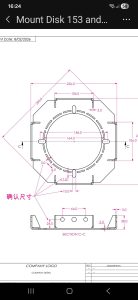
Finally, the mechanical drawing confirms the 160mm impeller fits the required physical space.
How to Approach Power-Constrained Upgrades
If you face a similar EC centrifugal fan replacement project, follow these steps:
- First, measure the true continuous power draw of your current system. Nameplate ratings often show the maximum possible draw. Your real application might allow more flexibility than you think.
- Next, decide which aerodynamic trait you can sacrifice. When you cap electrical power, you must give up either maximum airflow or static pressure. Specify exactly which one matters less.
- Also, send your supplier the full original specification sheet. Basic dimensions are not enough. Original fan curves help the engineering team match your critical operating point.
- Finally, plan your timeline carefully. If a supplier must modify a stator winding, the custom NPI process usually takes 90 days before mass production begins.
Related: Centrifugal Fans.
Technical Questions on Power-Limited EC Fans
Technical Documentation & Resources
Browse our centrifugal fans range, the backward-curved fans section, or forward-curved fans.
Have a Similar Fan Requirement?
Longwell’s engineering team delivers custom spec sheets and samples within 90 days. Since 1990, we have supplied EC fans and blowers to OEMs across HVAC, cold chain, data center, and industrial applications worldwide.
Browse Related Products:
🏆 ISO 9001 / ISO 14001 / ISO 45001 | CE (TÜV) | UL/ETL | ATEX Zone 21/22 | AMCA 210-16 / ISO 5801 tested
Choose the right centrifugal fan
Longwell manufactures 1,130 centrifugal fans in-house. Send airflow, static pressure and voltage — an engineer replies with a matching model, performance curve and price within one working day.