Application engineering note
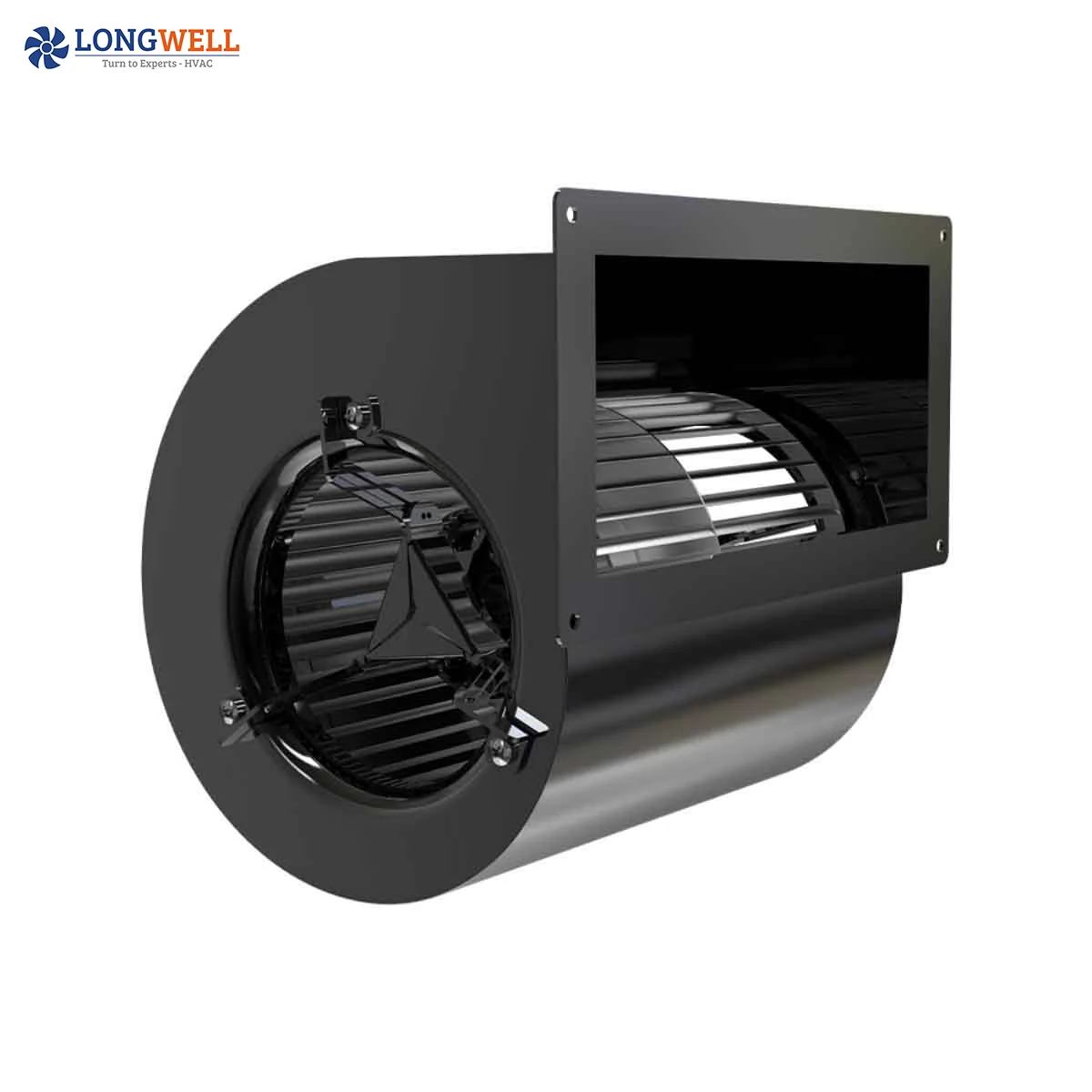
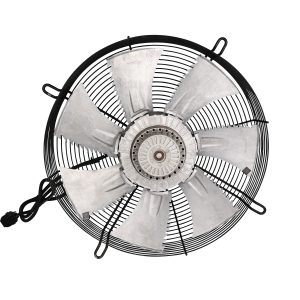
An industrial heater fan has to match the airflow path and the mechanical envelope around the heating section. A drawing package should describe both interfaces so that the equipment designer can assess fit and airflow before approving the assembly.
Start with the airflow path
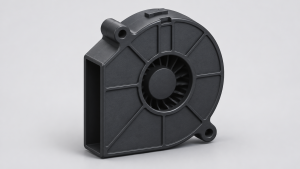
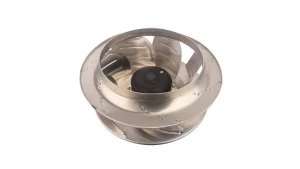
Provide the required airflow and static pressure through the heater, filters and discharge arrangement. State the air temperature at the fan location and the operating environment. These inputs help distinguish a compact forward-curved blower layout from a backward-curved centrifugal configuration.
LONGWELL’s DD and DDM commercial blower families use direct-driven forward-curved arrangements; the LWBE family uses backward-curved centrifugal impellers. The appropriate construction depends on the actual duty point, inlet arrangement and available space.
Make the drawing package specific
Dimension the mounting holes, inlet and outlet openings, overall depth and cable exit. Identify the motor supply and control interface separately from the heater’s electrical requirements. Include the intended installation orientation and any clearance needed for service or component replacement.
For a geometry-based replacement enquiry, send the existing fan drawing and photographs with a marked view of the required changes. Keep the model designation and revision consistent across the fan drawing, wiring diagram and equipment bill of materials. The completed equipment’s airflow and temperature checks should use the agreed operating conditions.
Discuss your fan requirement
Send LONGWELL your airflow and pressure duty point, power supply, available installation space, control requirements, operating environment and drawings. Contact our engineering team to discuss a suitable configuration.
Choose the right centrifugal fan
Longwell manufactures 1,146 centrifugal fans in-house. Send airflow, static pressure and voltage — an engineer replies with a matching model, performance curve and price within one working day.