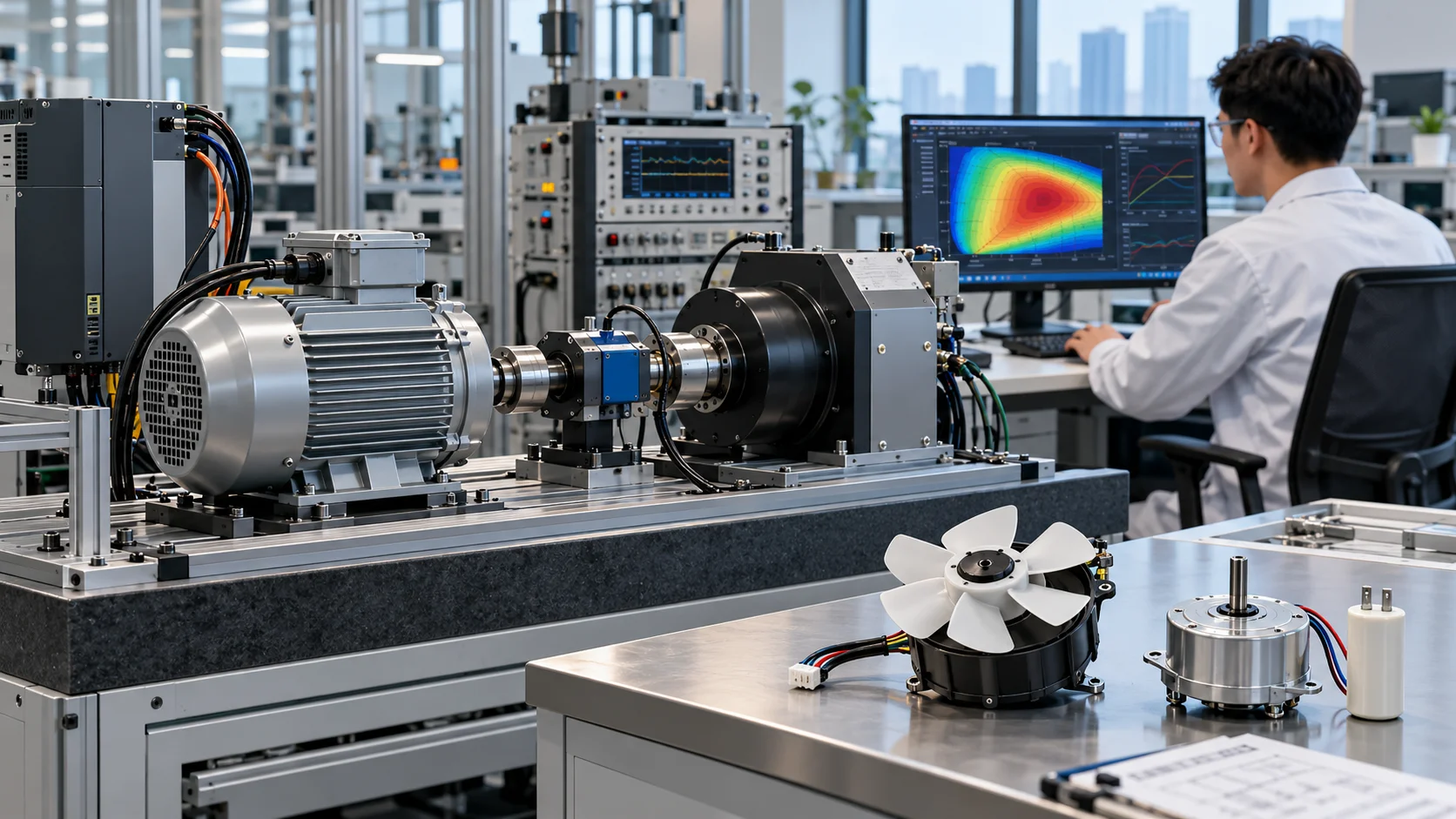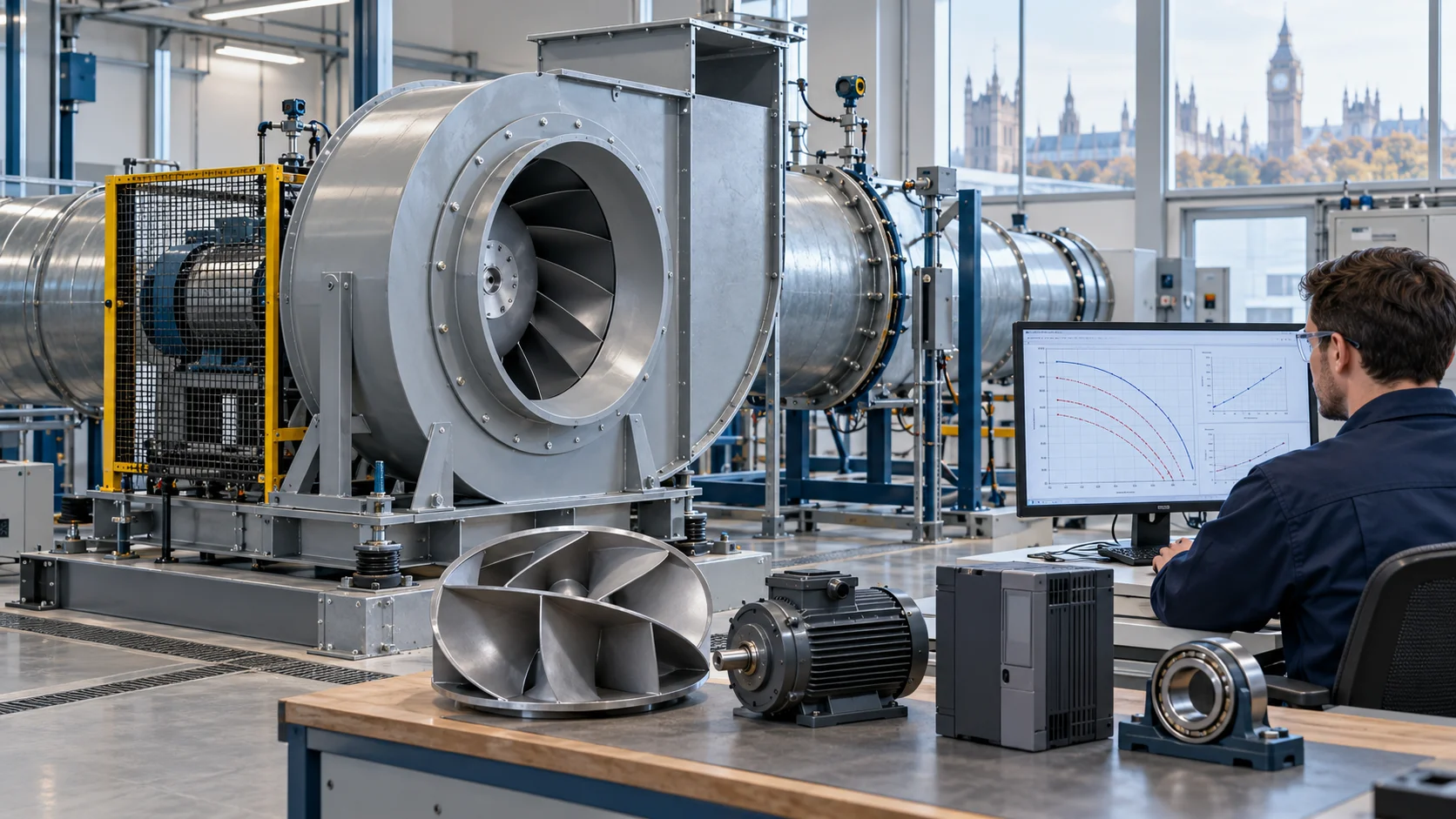
Can you put a variable-frequency drive (VFD) on any fan? Only after identifying the motor and checking the complete fan installation. A VFD is a common way to vary the speed of a suitable three-phase induction motor, but a three-phase nameplate alone does not approve the motor insulation, bearings, cooling, fan mechanics or process for every drive setting. The useful question is whether this exact motor, drive, cable and fan have a documented operating range.
Start with the motor and control architecture
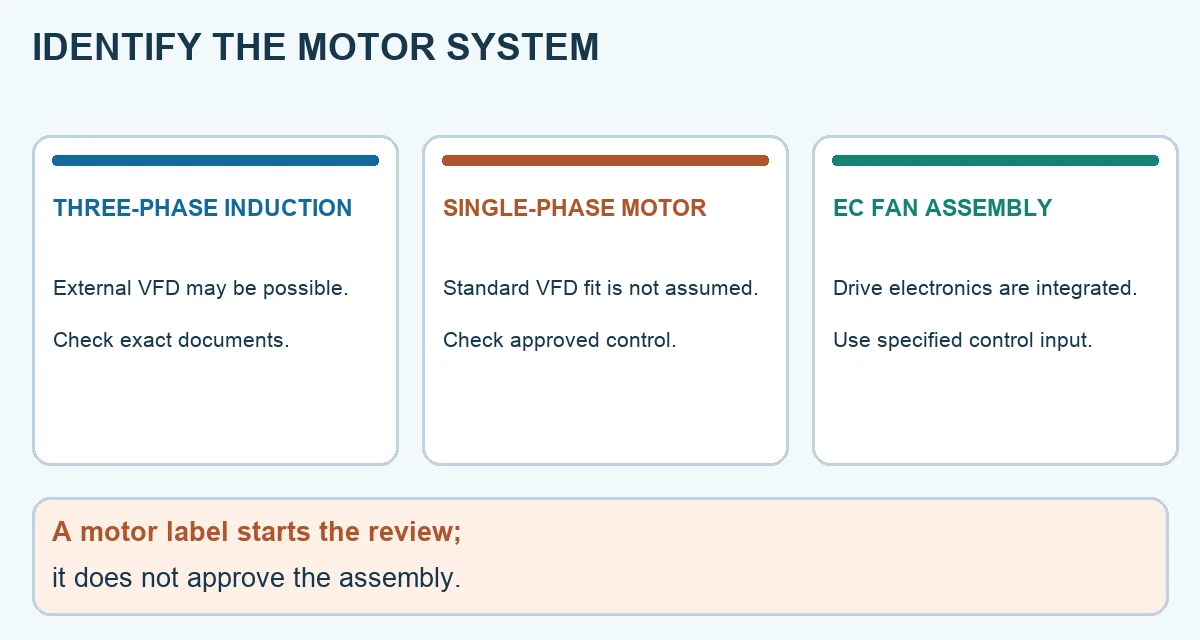
A conventional VFD changes the frequency and voltage delivered to a compatible AC motor. Three-phase induction motors are a common pairing, but their drive suitability and permitted speed range depend on the particular motor and drive. The motor label tells you its rated supply and output; it is only the first document in a compatibility review.
A single-phase capacitor or shaded-pole motor needs its own approved control arrangement; a standard three-phase drive should not be assumed to fit. An EC fan assembly already contains electronic commutation and normally expects the control interface specified for that assembly. Do not put an external VFD on its supply merely to obtain speed control. If the existing equipment is unidentified, obtain its wiring diagram and exact model before changing the controller.
Check insulation, cable and bearing-current paths
A drive’s switched output is different from a smooth utility-frequency sine wave. Voltage rise and reflected pulses can stress motor insulation; cable construction and length affect the result. Ask for the exact motor and drive manuals, the planned cable length and the required output filter or reactor. A generic cable-length number from another model is not a design limit for this installation.
Common-mode current can also find a path through bearings. Grounding, shield termination, insulated bearings and other mitigation measures must follow the actual system design. ABB’s bearing-current technical guide explains why the return path and cable geometry matter. It does not establish a universal motor-size threshold or prove that one accessory fixes every system.
Set low-speed limits from temperature and duty
When a motor uses a shaft-mounted cooling fan, slower shaft speed can mean less cooling air. The fan load may also fall as speed is reduced, so the thermal balance must be assessed for the real duty, ambient temperature and control profile. The US Department of Energy motor guide flags overheating as a concern for general-purpose motors at greatly reduced speed. It recommends considering inverter-duty motors and adequate cooling where appropriate.
No single percentage is a safe minimum for every motor. Use the motor maker’s allowed operating envelope and protection instructions, then check temperature during commissioning. The process may require a higher floor: a cooling coil, dust-extraction duct or safety-related ventilation path may need a minimum airflow even when the motor itself could run more slowly.
Review the fan, not only the motor
Changing speed changes the fan’s operating point. Check impeller and wheel speed limits, belt or coupling conditions, vibration and the installed system curve. A variable-speed fan may pass through a resonant range; any skip-frequency setting should be based on a measured installation response and the drive maker’s procedure. Our fan-vibration guide describes other causes to investigate before blaming a drive.
Fan affinity laws can help estimate a direction of change for a similar system, but they do not promise a fixed energy saving after a retrofit. Filters, dampers, process controls, required minimum flow and drive losses all influence the measured outcome. Compare input power and delivered airflow or pressure at the relevant duties if savings are part of the project case.
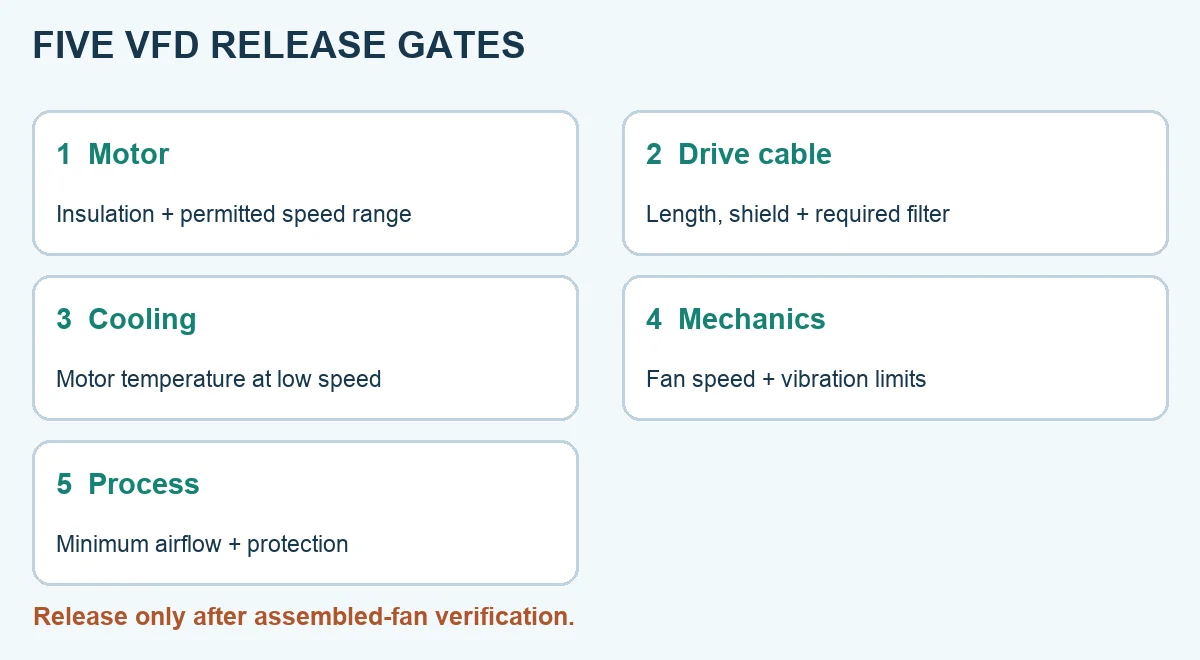
Use a five-gate release checklist
Before ordering, collect the motor model and revision, fan assembly and wheel identification, existing wiring, supply, required duty point and expected speed range. Pair those with the proposed drive manual, cable design, protection settings and the machine maker’s process limits. Record who has approved each combination. A qualified electrical professional should perform installation and commissioning under the applicable procedures.
For a new project, the LONGWELL AC motor range and EC axial fan range show different product-family routes. Their category pages establish available families, not VFD approval or replacement equivalence for an exact model. Ask for the current motor, fan and controller documents before treating a family choice as a system decision.