Application engineering note
A low-noise refrigeration fan enquiry should define the required cooling airflow and the acoustic target together. The fan has to provide that airflow through the heat exchanger, guards and enclosure while operating within the equipment’s noise requirement.
Make the acoustic target comparable
State whether the target is sound pressure or sound power, and include the measurement position, distance and operating condition. Identify the required fan speed or airflow during the acoustic check. A noise figure without those conditions is difficult to compare across designs.
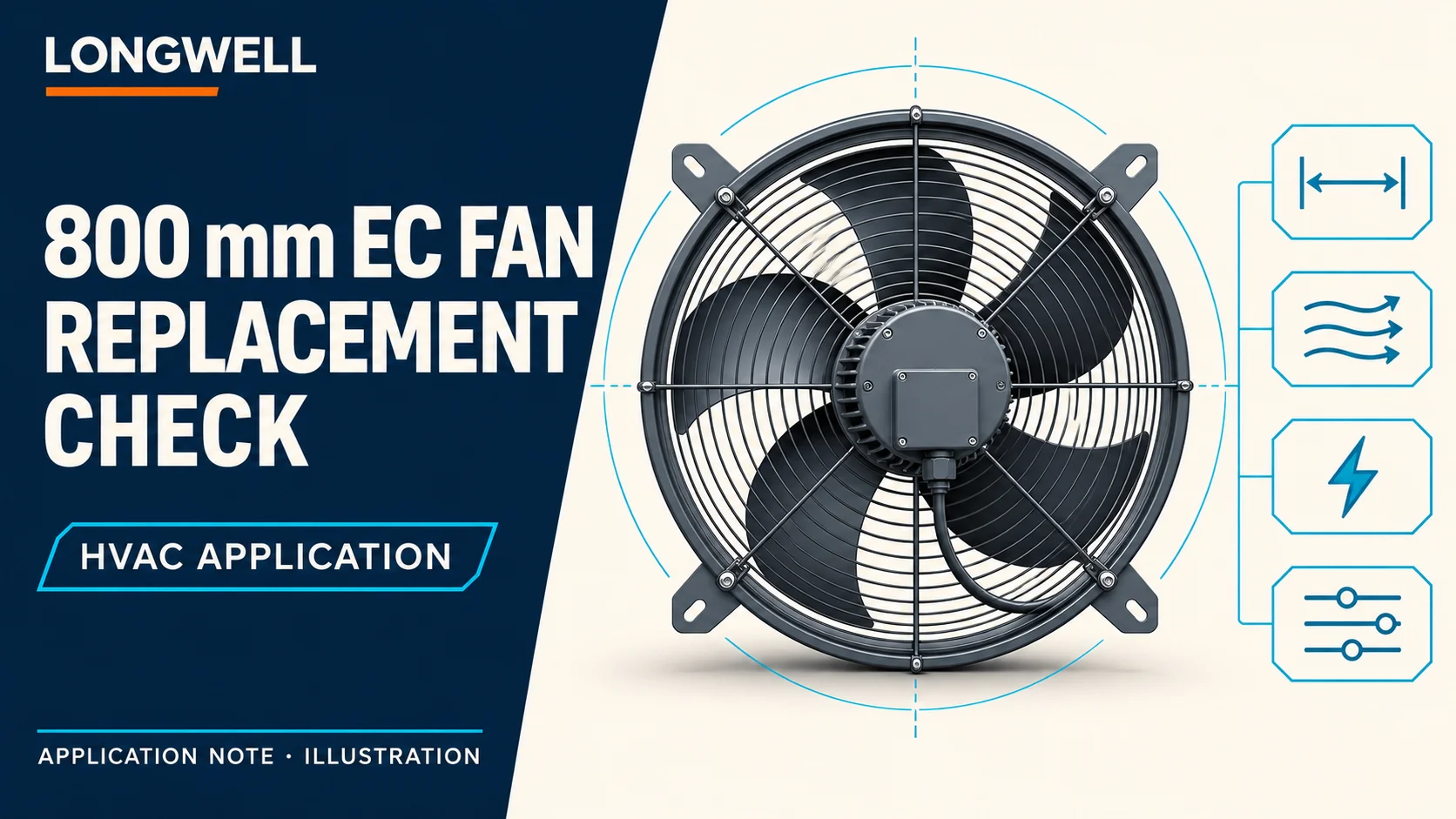
LONGWELL’s LWAE family uses an EC axial configuration for applications including refrigeration and heat exchange equipment. The exact motor supply, speed-control input and operating range should be confirmed on the selected model’s specification.
Review the installation as part of the fan selection
Provide the heat-exchanger arrangement, inlet and outlet clearances, guard details and mounting structure. Note any nearby panels or openings that may affect the airflow path. The equipment test should include the intended fan mounting and operating mode.
If the system uses several speeds, specify the cooling requirement and acoustic target for each relevant mode. This gives the engineering team a defined set of operating points to assess. Sample evaluation can then compare the proposed fan and installation against the agreed cooling and noise conditions.
Discuss your fan requirement
Send LONGWELL your airflow and pressure duty point, power supply, available installation space, control requirements, operating environment and drawings. Contact our engineering team to discuss a suitable configuration.