Defining the split ac indoor fan constraint
The customer requested a new split ac indoor fan. First, they needed fans for three wall-mounted units. These units cool 12,000 BTU, 18,000 BTU, and 24,000 BTU spaces. Next, the initial order asked for 850 total parts.
Extreme heat formed the main problem for this project. Furthermore, the technical documents demand cooling at 61°C. Also, the fan must heat the room at -10°C. Therefore, this wide temperature range causes major design issues.
A standard fan motor fails quickly in extreme heat. Next, the plastic chassis sets hard physical size limits. The 18,000 BTU unit offers a 910x295x205 mm space. Meanwhile, the 24,000 BTU model provides a 1075x330x240 mm envelope.
Consequently, the fan must fit within these tight bounds. Airflow targets made this engineering task quite difficult. The 18,000 BTU unit needs 850 m3/h of air. Furthermore, it must stay under 45 dB(A) of noise.
By contrast, the 24,000 BTU model needs 1050 m3/h. So, it must stay below 49 dB(A) at top speed. Finally, the 18,000 BTU unit limits power to 35W. The 24,000 BTU unit caps power at exactly 45W.
Both machines run on standard 220-240V 50Hz grid power. In short, hitting airflow without breaking limits is hard. These limits heavily restrict the available motor choices. Also, the fan must pass strict IEC 60335 tests. Thus, we balanced size, speed, and power very carefully.
Engineering the split ac indoor fan solution
We looked at several ways to solve this problem. First, we tested a fast motor design. This option saves space inside the narrow chassis. However, we rejected it due to high power draw. A fast motor pushes the 24,000 BTU unit past 45W. So, the internal control board would overheat.
Next, we tried a small diameter cross flow rotor. Small rotors spin much faster to move 1050 m3/h. Thus, they create too much wind noise. We rejected this small rotor idea immediately. The noise easily exceeded the strict 49 dB(A) limit. Furthermore, fast speeds ruin standard bearings at 61°C.
Evaluating motor and impeller options
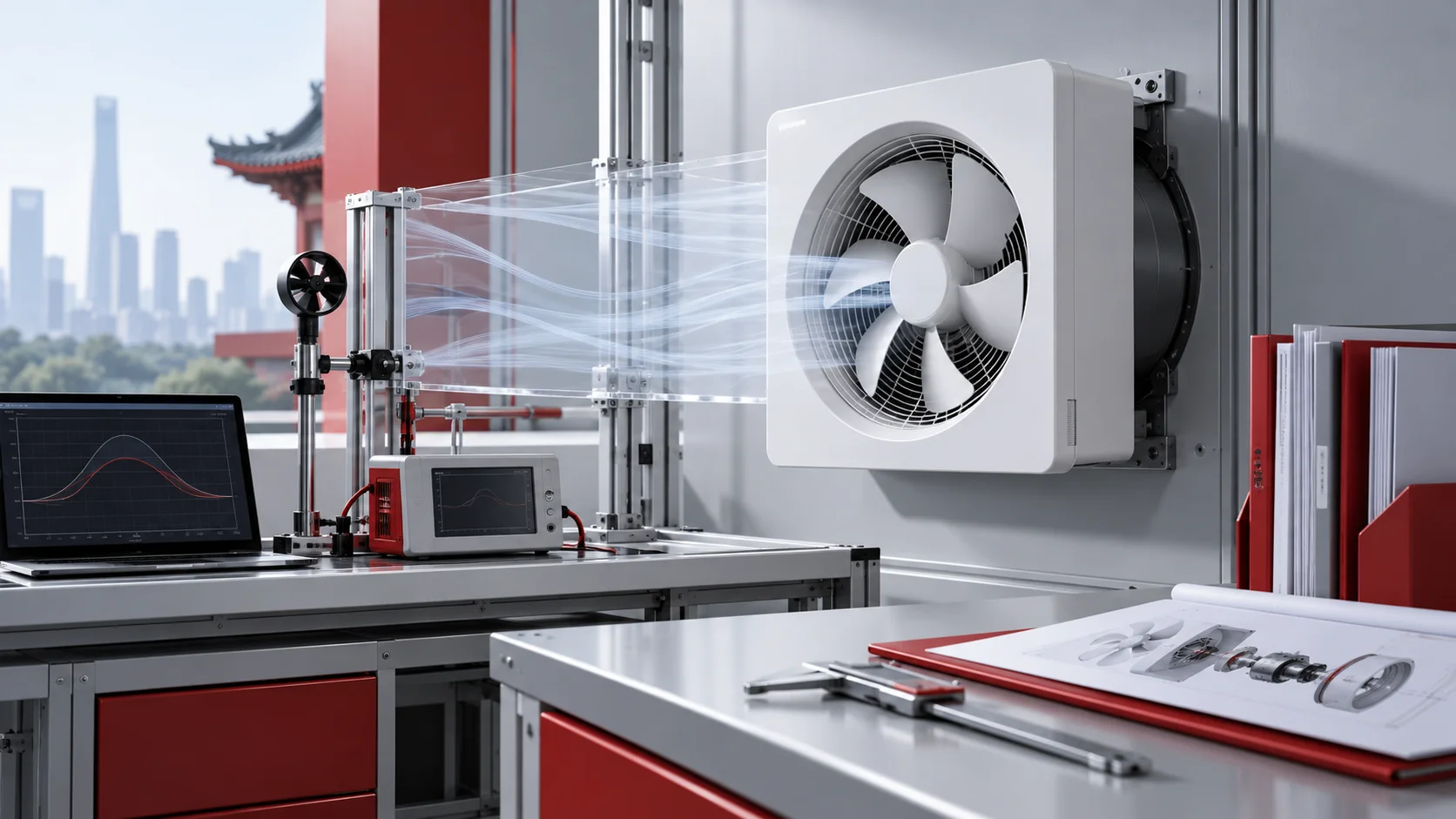
Instead, we chose a slow motor with a larger rotor. This choice balanced the airflow and the noise perfectly. Consequently, the larger rotor moves more air per turn. Even so, this decision had a clear physical cost. The larger fan blade adds mass to the rotor. Therefore, the motor needs a bigger capacitor for starting torque. Also, the new blade increased our tooling costs. Still, this trade-off met all customer targets. We matched the motor winding to the exact static pressure. Then, we tested the fan to AMCA 210-16 methods.
Finalizing the split ac indoor fan output
The final LWHA-CH51-01A model fits the 18,000 BTU unit. It delivers 850 m3/h at top speed. Also, it offers 750, 650, and 580 m3/h steps. It uses exactly 35W of electrical power. Most importantly, it limits noise to 45, 42, 39, and 37 dB(A).
By contrast, the LWHA-CH68-01A model powers the 24,000 BTU unit. First, it pushes 1050 m3/h of air. It scales down to 950, 800, and 680 m3/h. Next, it draws a maximum of 45W. It keeps noise at 49, 47, 45, and 42 dB(A). Finally, both units survive the extreme 61°C heat. Thus, we solved the thermal and acoustic puzzle.
Technical Specifications
| Parameter | LWHA-CH51-01A (18k BTU) | LWHA-CH68-01A (24k BTU) |
|---|---|---|
| Voltage | 220-240V | 220-240V |
| Frequency | 50 Hz | 50 Hz |
| Rated Input Power | 35 W | 45 W |
| Indoor Air Volume (m3/h) | 850 / 750 / 650 / 580 | 1050 / 950 / 800 / 680 |
| Noise (dB(A)) | 45 / 42 / 39 / 37 | 49 / 47 / 45 / 42 |
| AC Unit Body Size (W x H x D) | 910 x 295 x 205 mm | 1075 x 330 x 240 mm |
The power input row shows a strict limit for these units. Therefore, high motor efficiency is vital. Also, the multiple air volumes map to different relay speeds. Thus, the split ac indoor fan matches the cooling demand exactly. Finally, the strict sizes confirm the fan fits the plastic chassis.
Reference: AMCA 210 covers the test method behind these figures.
Technical Documentation
First, you can review the 18,000 BTU system details in
longwell-wi-6935162654-technical-doc-01.pdf. This sheet helps engineers check actual power limits.
Next, acoustic data for the 24,000 BTU unit exists in longwell-wi-6935162654-technical-doc-02.pdf. You can use it to verify noise levels.
Furthermore, we combined the output data into longwell-wi-6935162654-technical-doc-03.pdf. This file compares the whole wall-mounted series.
Finally, the physical space limit is visible in this drawing: 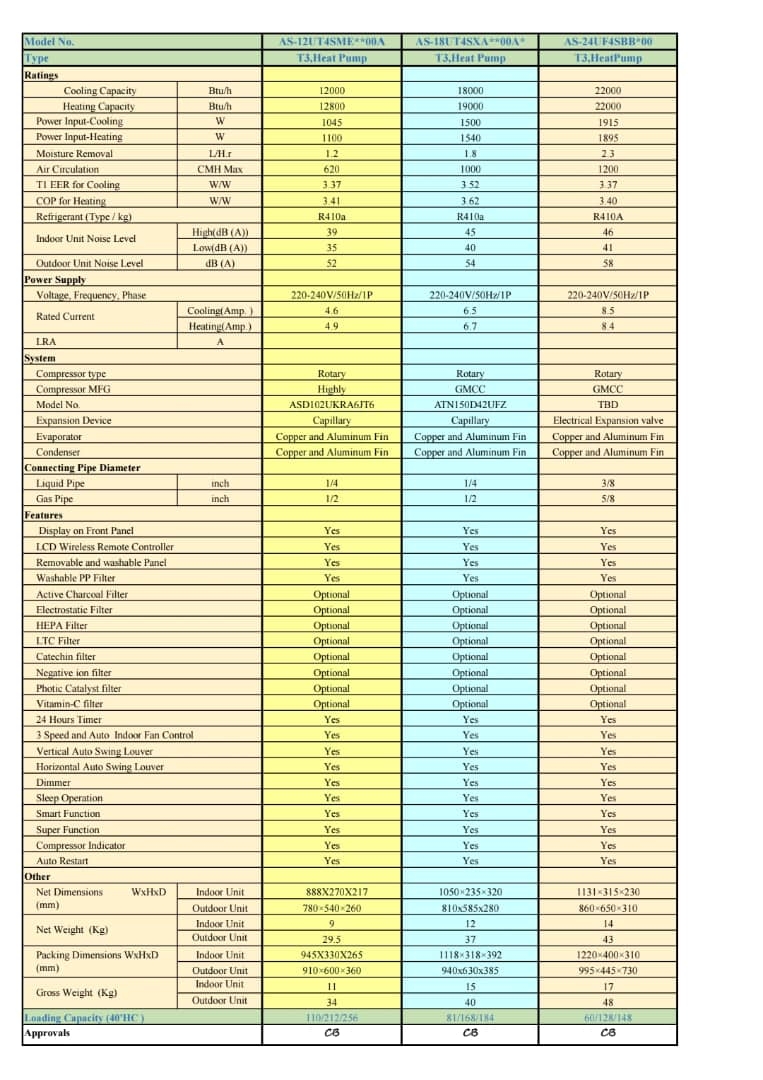 . It shows how the fan fits the chassis.
Specifying extreme ambient cooling modules
You might face a similar heat problem in your HVAC designs. So, secure these numbers before you contact a supplier. This step ensures the first quote actually works.
- First, measure the exact space inside your chassis. The physical room strictly sets your lowest possible noise level.
- Next, check the peak ambient heat. Systems rated for 61°C need special grease and insulation. Therefore, normal fans will fail fast.
- Furthermore, confirm the hard power limit of your control board. Breaking the wattage limit burns out normal relays.
Related: Cross Flow Fans.
Airflow and Acoustic FAQ
Technical Documentation & Resources
Browse our axial fans range, the AC axial fans section, or EC axial fans.
Have a Similar Fan Requirement?
Longwell’s engineering team delivers custom spec sheets and samples within 90 days. Since 1990, we have supplied EC fans and blowers to OEMs across HVAC, cold chain, data center, and industrial applications worldwide.
Browse Related Products:
🏆 ISO 9001 / ISO 14001 / ISO 45001 | CE (TÜV) | UL/ETL | ATEX Zone 21/22 | AMCA 210-16 / ISO 5801 tested