Plenty of equipment makers buy industrial fans from China every week. The gap between a good experience and a bad one is process rather than luck.
The steps below actually reduce risk when you buy industrial fans overseas, and they run in the order that matters.
Verify that the supplier is a manufacturer rather than a trader. Insist on performance data with a stated test method. Sample and test in your own equipment before committing. Inspect before shipment, use sensible payment terms, and put the specification in the purchase order rather than in an email.
Step 1: decide who you buy industrial fans from
Both can serve you well, although you need to know which one you have.
- Request the business licence, then check the registered scope.
- Ask which processes happen in house and which go outside.
- Ask to see the test chamber, since traders rarely have one.
- Pose a technical question that needs real design knowledge.
- Check whether the certificates carry the supplier own name.
- Finally, request a live video walk through the production line.
A trader with good factory links can be excellent. However, a trader pretending to be a maker cannot solve a technical problem when one turns up.
Step 2: demand real performance data
This is where most problems start, although it is easy to prevent.
Ask for the full curve rather than one rated point, and ask which test standard produced it. Then mark your own duty point on that curve, and see how close it sits to peak efficiency.
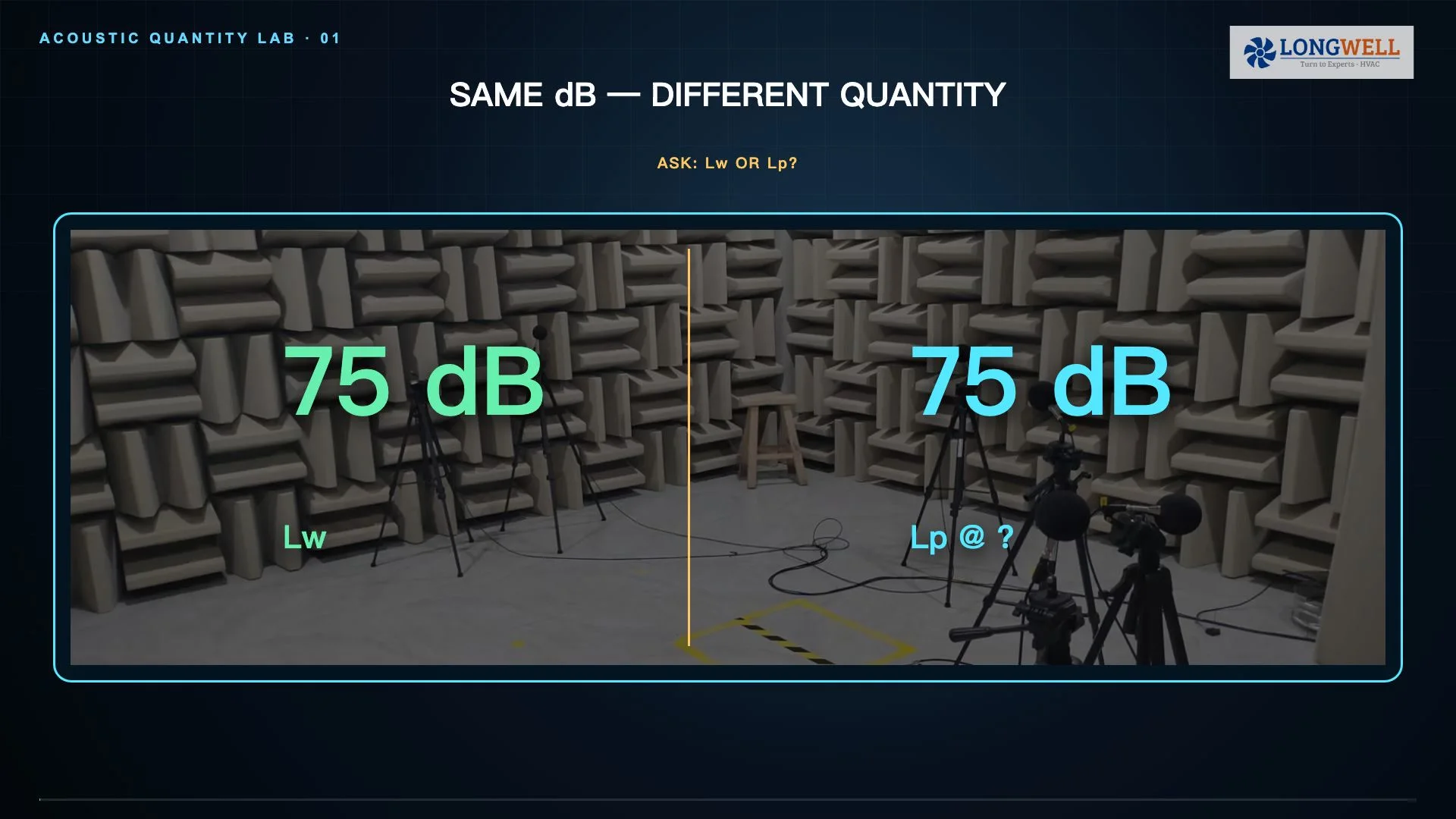
Ask for sound power in octave bands at your duty point. Suppliers with real test capability produce it quickly. Suppliers without it start explaining why it is unnecessary.
Step 3: sample and test properly
- Order samples against a written spec, never against a catalogue photo.
- Then test airflow and pressure yourself, or through an outside lab.
- Fit the sample into your real equipment rather than a bench rig.
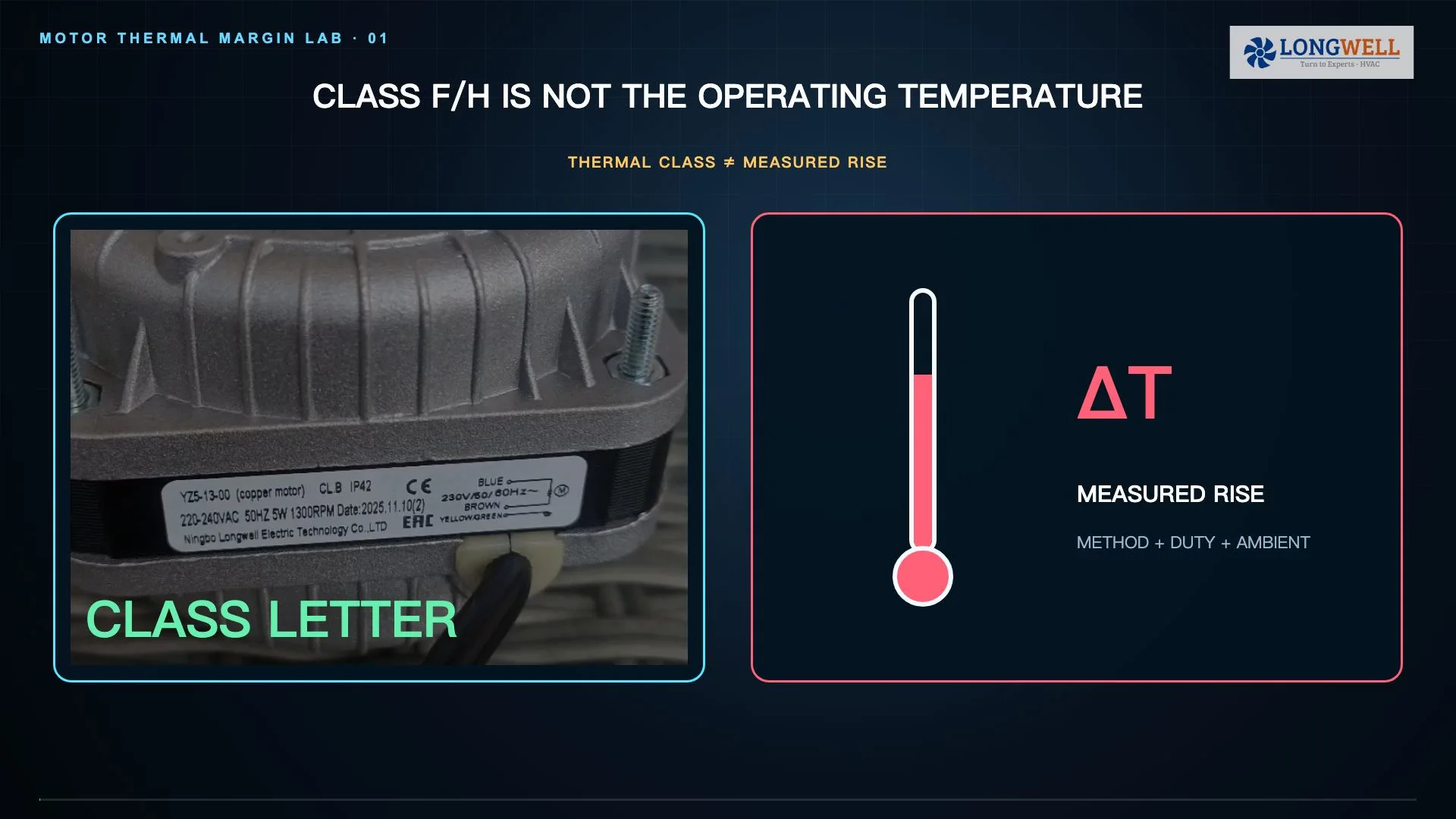
- Run a thermal test at the hottest ambient you expect on site.
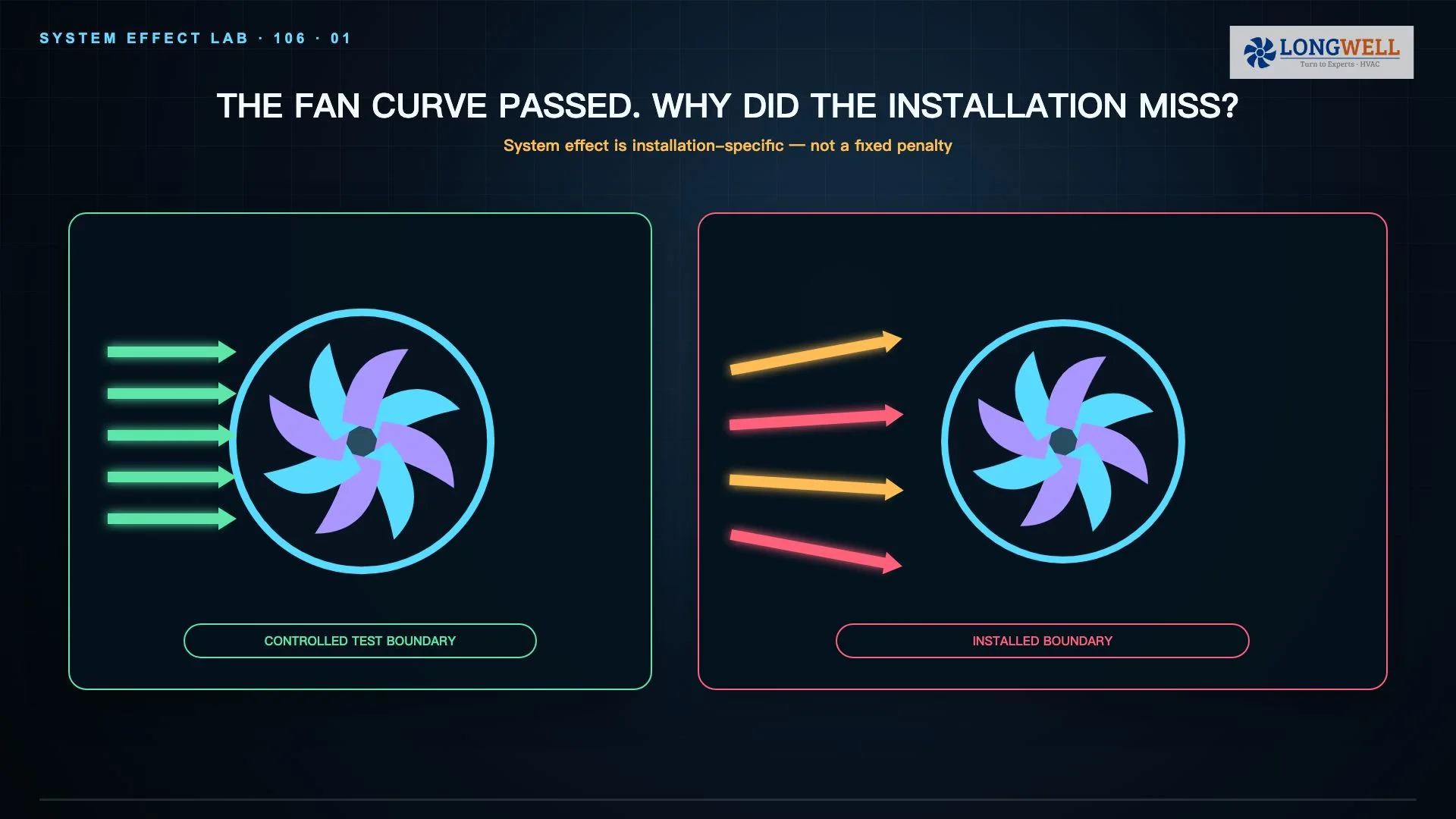
- Measure noise as installed, since free air tells you little.
- Finally, seal one sample as a reference for later deliveries.
Insist on that last step. A sealed reference sample settles quality arguments far faster than email ever will, and it costs nothing to keep.
Step 4: put everything in the purchase order
A spec agreed by email has a habit of never reaching the production line.
So the order should state duty point and tolerance, materials, coating, supply voltage, control interface, certification, packaging and inspection rights. Meanwhile the drawing revision number belongs on it too, since that is how you buy industrial fans that match the sample.
Our OEM against off-the-shelf guide covers what to specify when the fan is customised.
Step 5: inspect the industrial fans before shipment
Inspection before shipment costs little, and it prevents the expensive version of the problem.
| Check | Why it matters |
|---|---|
| Dimensional sampling | Confirms the right build was made |
| Electrical test records | Shows every unit was tested |
| Airflow spot check | Catches a wrong wheel or wrong speed |
| Balance records | Predicts vibration complaints |
| Packaging inspection | Prevents transit damage |
| Marking and labelling | Avoids customs delays |
Our factory audit guide covers the deeper version of this process.
Step 6: payment and documents
Payment terms should give both sides a reason to finish the job properly.
A deposit with the balance against inspection or shipping documents is normal and reasonable. Meanwhile the document set should include the packing list, invoice, bill of lading, certificate of origin and any certification paperwork your market requires.
Our Incoterms guide covers who carries risk at each stage, and the ICC publishes the definitions.
Fan sourcing FAQ
How do I know a factory is real?
Ask for the business licence, request a live video tour, and ask a technical question that needs design knowledge. Test capability is the clearest signal of all.
Should I use a third-party inspection company?
For a first order, almost always. The cost is small against a container of wrong or damaged product, and it changes the supplier behaviour immediately.
What payment terms are reasonable?
A deposit with the balance against shipping documents or inspection is standard. Full payment before production is a risk worth avoiding on a first order.
What if the delivered fans differ from the sample?
That is exactly why you keep a sealed reference sample and a written specification on the order. With both, the conversation is short. Without them, it is not.
Buy industrial fans the way you would buy any engineered part. Verify, specify, sample, inspect and document. Do that, and sourcing stops being a gamble.
Choose the right industrial fan
Longwell manufactures 37 industrial fans in-house. Send airflow, static pressure and voltage — an engineer replies with a matching model, performance curve and price within one working day.