Defining the Sizing Constraints for a Mobile 24V 300mm Axial Fan
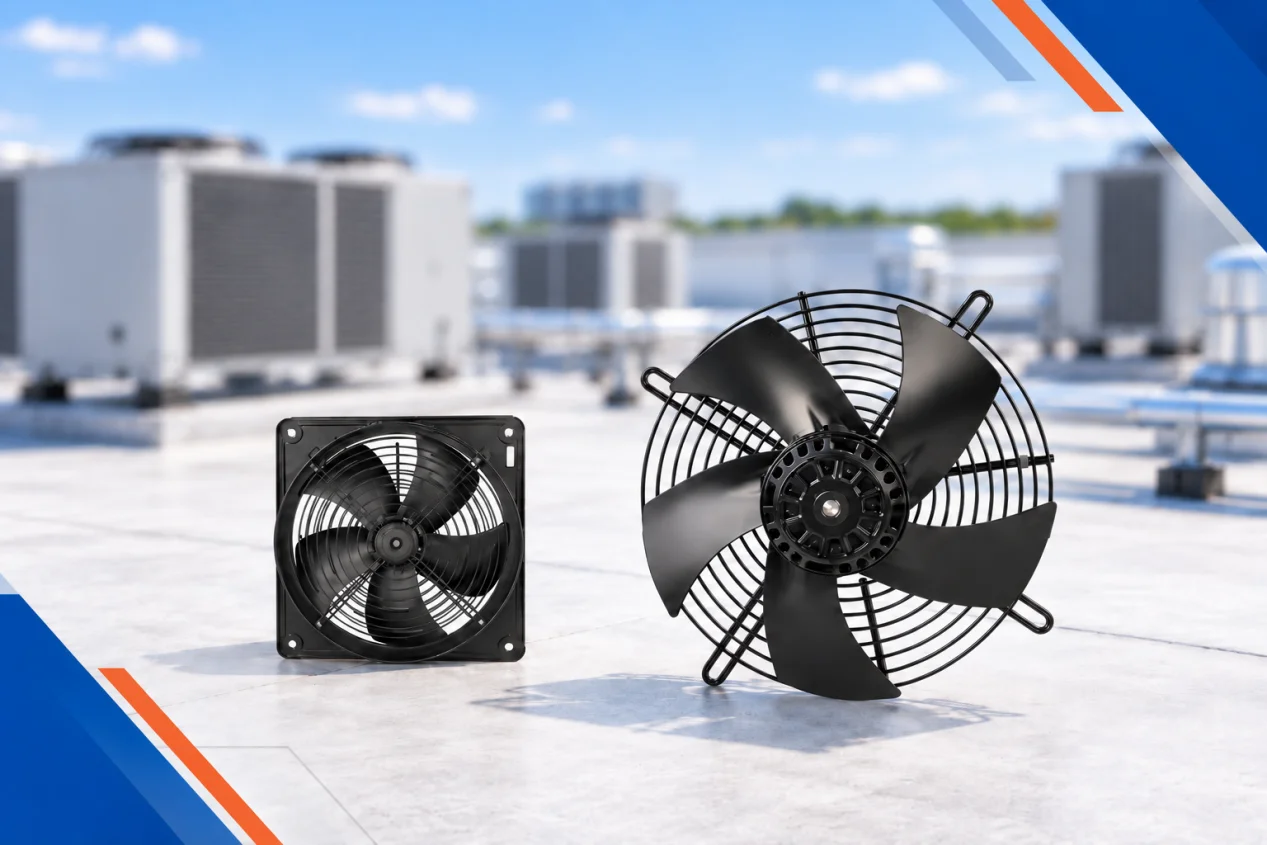
We received a request for an off-grid cooling project. First, the customer needed a new 24V 300mm axial fan with strict dimensional limits of 280 mm to 300 mm. Next, the system relies on a battery rail. Battery power often causes extremely large voltage swings during normal operation.
Therefore, the motor must handle these sudden drops and spikes safely without tripping the system faults. We needed a drive that works between 16V and 32V DC. Furthermore, the host machine requires flexible speed control, so the controller sends either a 0-10V analog signal or a PWM signal. So, the new fan had to accept both formats.
Even so, the equipment runs continuously outdoors in harsh conditions. The required temperature range spans from -25°C to 60°C. Consequently, this wide environmental range forces strict material choices to prevent failures. Meanwhile, the customer asked for a protective metal grille to shield the blades.
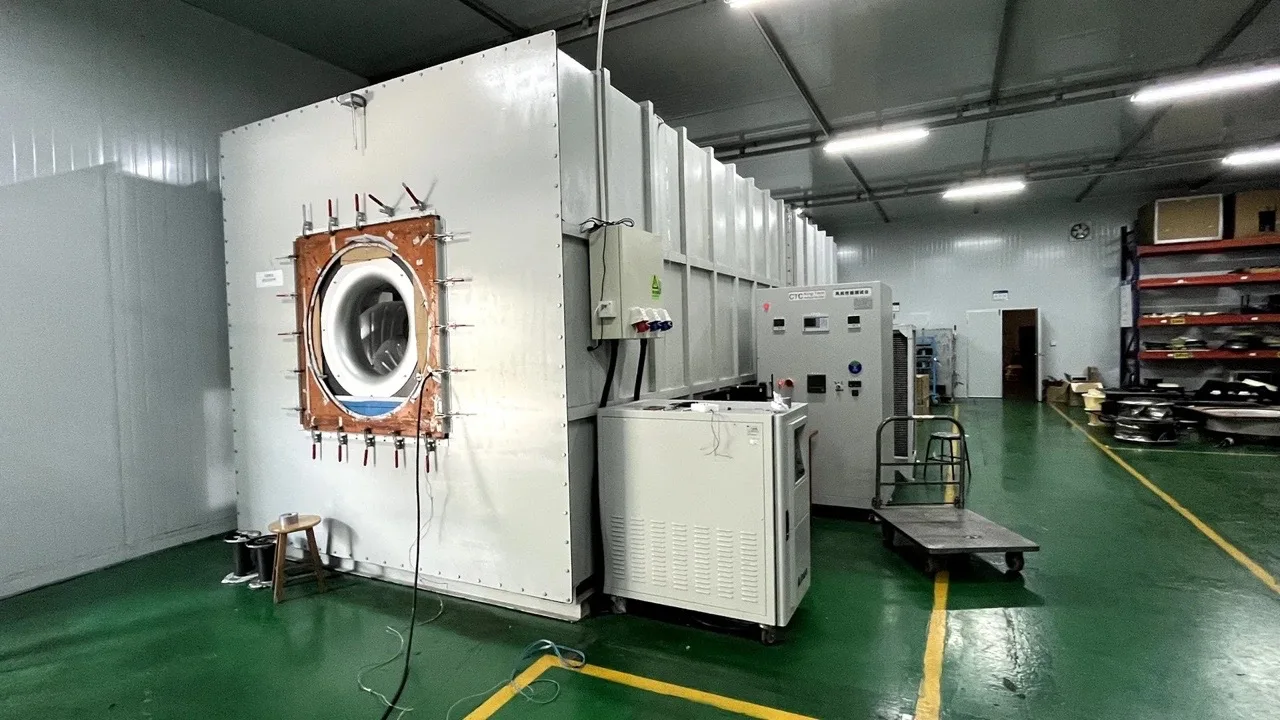
They requested a heavy metal blade design initially. However, the fan had to meet strict market rules, demanding CE certification, RoHS documentation, and REACH compliance. Finally, we had to test the airflow to ISO 5801 methods while safety checks fell under EN 60335-1.
Engineering the 24V 300mm Axial Fan System
Selecting the Impeller Material
The design process started with the core impeller material. First, the customer explicitly wanted a metal rotor for their 24V 300mm axial fan. However, metallic blades weigh a tremendous amount. This heavy mass makes the motor work significantly harder during the startup phase.
Consequently, heavy rotors draw huge peak currents from the battery, which can instantly trip the system breakers. Instead, we chose a durable plastic composite called PA6+GF. This specialized material mixes nylon with reinforcing glass fibers. We definitively rejected the metallic blade option because the specific application simply did not require it.
Next, the cooling system only needs 170 Pa of static pressure. Therefore, the PA6+GF plastic handles this mechanical force perfectly without bending or warping. Furthermore, the maximum operating air temperature is capped at exactly 60°C. Extreme heat can rapidly melt basic commercial plastics. Even so, the PA6+GF formulation stays totally rigid at 60°C.
Evaluating Trade-offs and Costs
Every engineering choice involves some type of performance cost. First, switching to plastic cost us some impact strength against large airborne debris. Even so, the final assembly includes a strong steel grille that stops large objects from hitting the internal blades. Therefore, the physical impact risk effectively drops to zero.
By contrast, the lighter plastic blades brought huge operational benefits to the system. The lower weight cuts the total input power requirement. So, the fan only pulls 80W at its top operational speed of 1800 RPM. This specific material substitution resulted in a materially lower manufacturing cost for the completely assembled unit.
Meanwhile, the lighter rotating blades passively protect the critical motor parts. The motor uses maintenance-free deep groove ball bearings. Because the blades weigh less, these bearings suffer significantly less wear and tear over time. Finally, the entire fan unit achieves a tested L10 operational lifespan of 40,000 hours inside a standard 25°C room.
Drive System and Smart Controls
The final 24V 300mm axial fan model is LWAD3G300MS-5PEW-07-00. We built this specific model using our proprietary SmartEC digital control logic system. First, this digital drive reads the 1K to 10KHz PWM signals perfectly. Next, it handles dangerous locked-rotor faults completely automatically.
If something physically jams the blades, the chip spots the mechanical block immediately. Instead, it cuts the power output after just one second. Consequently, the internal drive constantly tries to restart the fan mechanism every two to six seconds. This automated safety sequence prevents the internal copper coils from burning up completely.
Furthermore, the advanced drive includes built-in polarity protection. Sometimes installers accidentally cross the positive and negative supply wires. So, the circuit safely blocks the power for five seconds to prevent damage. In short, the motor survives basic human wiring mistakes. Finally, the entire unit moves 2369 m3/h of air while keeping noise at a quiet 66 dB(A).
Technical Specifications
| Parameter | Value |
|---|---|
| Airflow (Max) | 2369 m3/h / 1394 CFM |
| Static Pressure (Max) | 170 Pa |
| Input Power | 80 W |
| Speed | 1800 RPM |
| Nominal Voltage | 24 VDC |
| Voltage Range | 16 to 32 VDC |
| Current | 3.4 A |
| Impeller Diameter | 300 mm |
| Total Diameter | 380 mm |
| Depth | 85 mm |
| Noise Level (LpA) | 66 dB(A) |
| Operating Temperature | -25°C to 60°C |
| Protection Type | IP44 |
| Insulation Class | Class B |
| Certifications | CE, RoHS, REACH |
These electrical numbers define how the unit interacts with the whole machine. First, the 16 to 32 VDC range keeps the motor running safely when the battery charge drops. Next, the strict 3.4 A current limit helps engineers size fuses. Finally, the IP44 rating confirms the fan survives light water splashes during outdoor operation.
Reference: AMCA 210 covers the test method behind these figures.
Technical Documentation
Download the full dimensional drawing and performance curve. System integrators need this exact document to check the 365 mm mounting hole spacing and the PWM wiring layout.
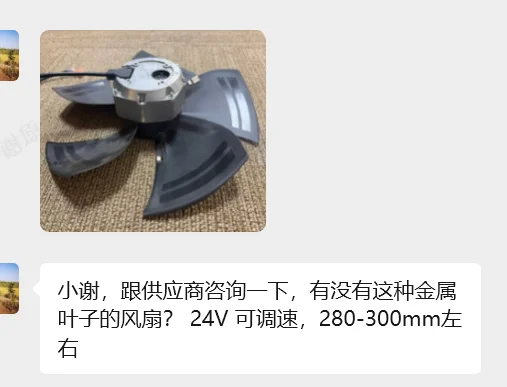
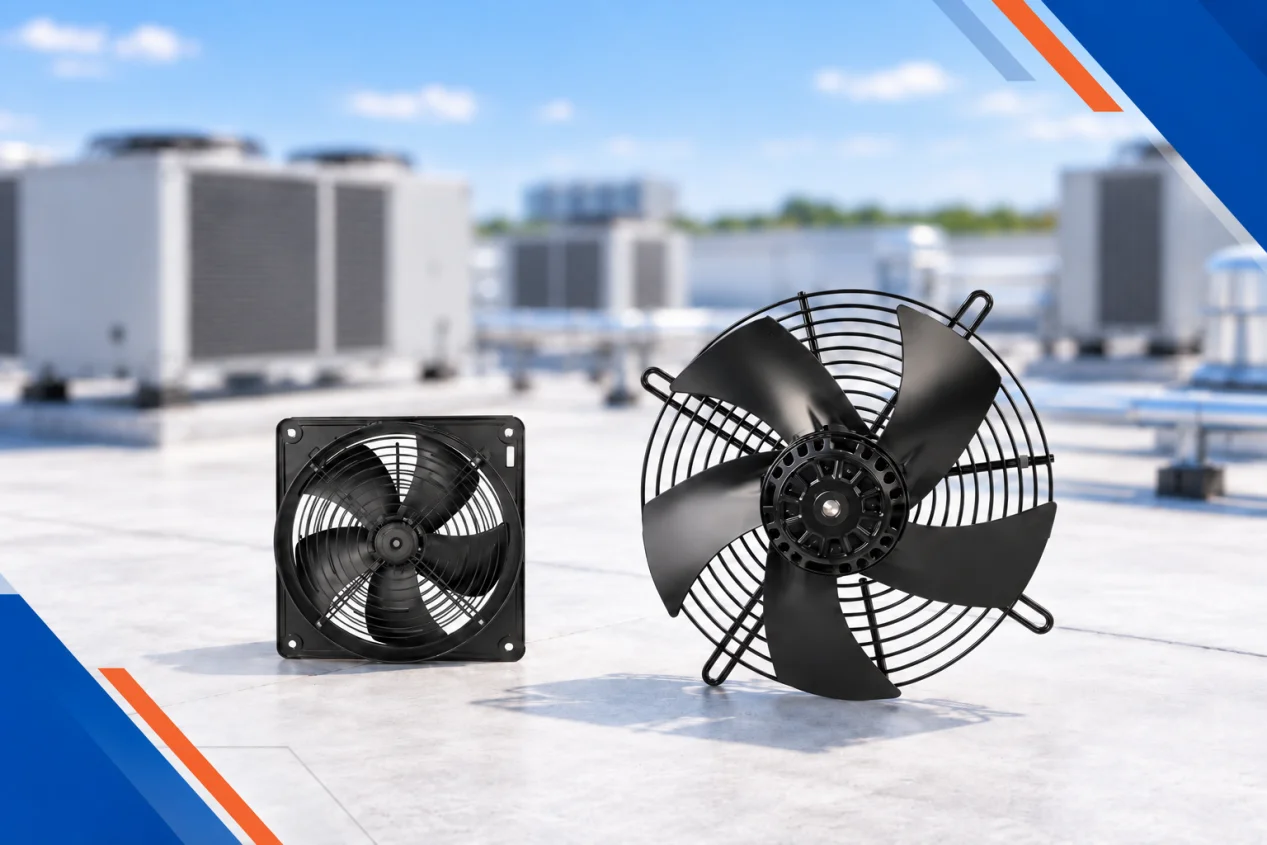
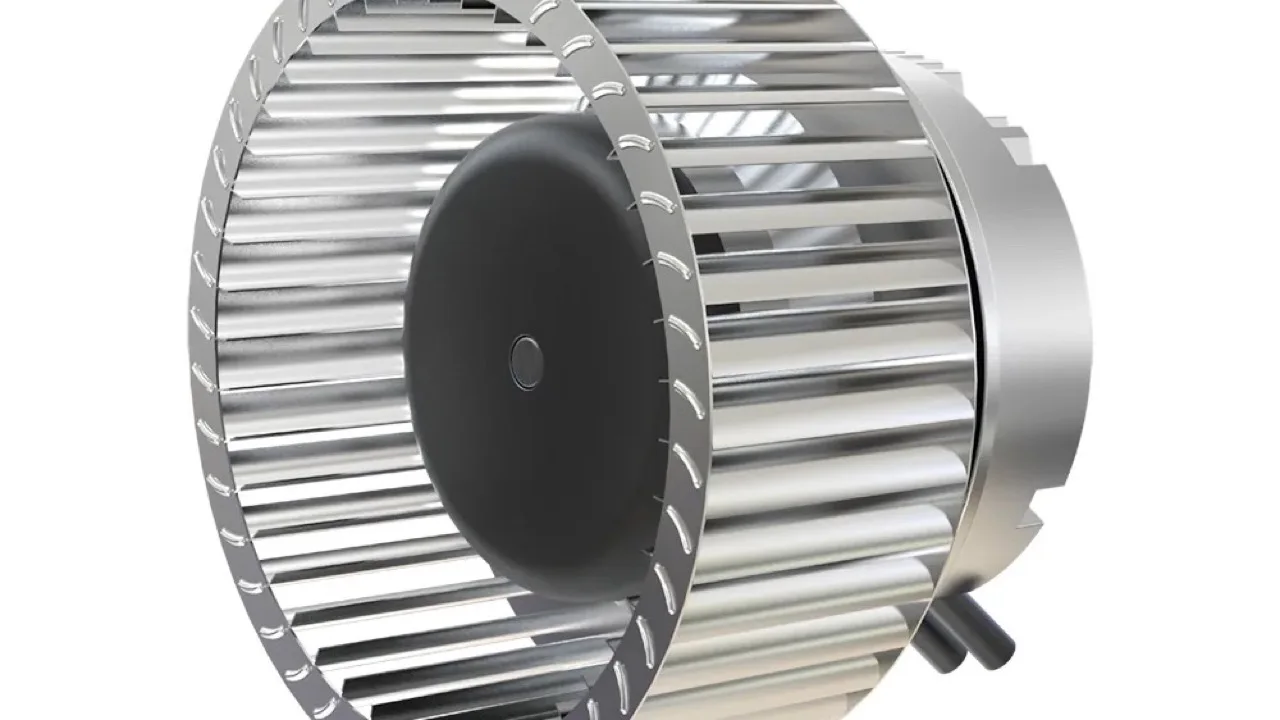
Meanwhile, this reference image shows the heavy metal blades the customer first asked us to build.
How to Specify Your Next 24V 300mm Axial Fan
If you need a new 24V 300mm axial fan for mobile gear, strictly follow these detailed tips. These specific diagnostic steps will completely guarantee you get an accurate price quote extremely quickly.
- First, measure your true battery voltage under a heavy mechanical load. Batteries rarely stay at a perfectly flat 24V. Instead, give the supplier your exact operational limits, like 16V to 32V.
- Next, check your control board peak amps. The hardest system limit is often the initial startup current. Therefore, you must explicitly know how much current trips your system fault.
- Furthermore, avoid asking for metallic blades by default. A glass-fiber plastic rotor reduces motor wear and saves valuable electrical power. You only ever need solid metal blades if the surrounding ambient air exceeds a blistering 80°C.
- Finally, send exact control signal details to your vendor. Tell the supplier if your board gives an open-collector output. We already hold CE marks for our DC range, which speeds up custom control tweaks immensely.
Related: Axial Fans.
Frequently Asked Questions
Technical Documentation & Resources
Browse our axial fans range, the AC axial fans section, or EC axial fans.
Have a Similar Fan Requirement?
Longwell’s engineering team delivers custom spec sheets and samples within 90 days. Since 1990, we have supplied EC fans and blowers to OEMs across HVAC, cold chain, data center, and industrial applications worldwide.
Browse Related Products:
🏆 ISO 9001 / ISO 14001 / ISO 45001 | CE (TÜV) | UL/ETL | ATEX Zone 21/22 | AMCA 210-16 / ISO 5801 tested
Choose the right axial fan
Longwell manufactures 1,086 axial fans in-house. Send airflow, static pressure and voltage — an engineer replies with a matching model, performance curve and price within one working day.