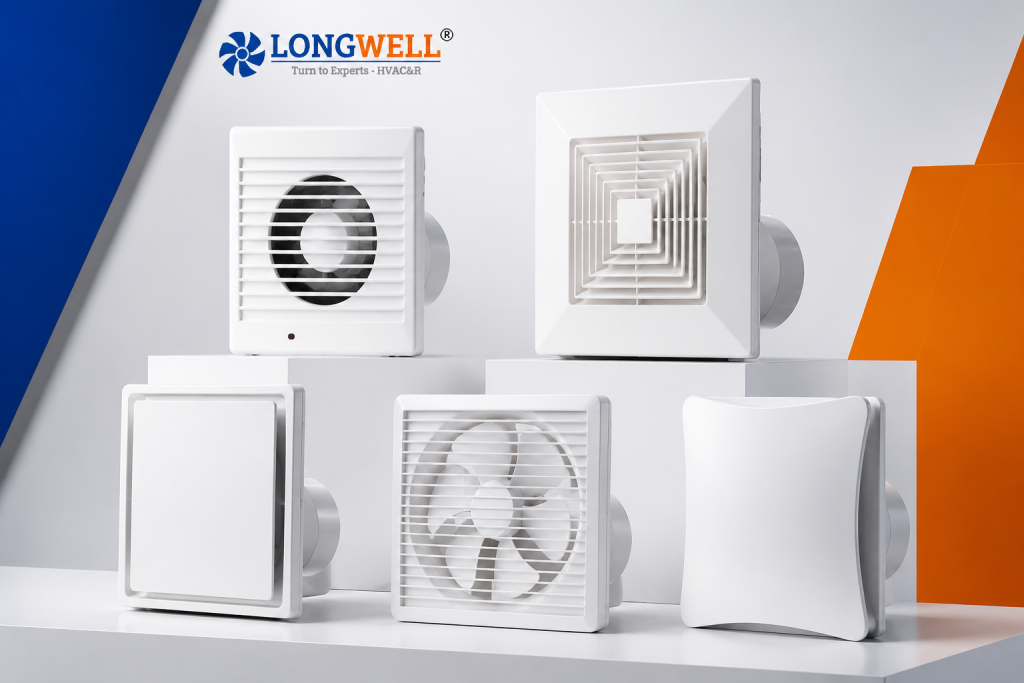
The bathroom is usually damp and hot, especially those without windows. Reliable mechanical ventilation is essential to remove steam, control moisture, clean odors, and reduce the risk of mold growth. This guide introduces the working principle of bathroom exhaust fans and evaluates the LONGWELL 2026 top 5 exhaust fan. The rating section will review available LONGWELL model sizes and performance options to help buyers match the fan to different bathroom ventilation requirements.
How Does a Bathroom Exhaust Fan Work?
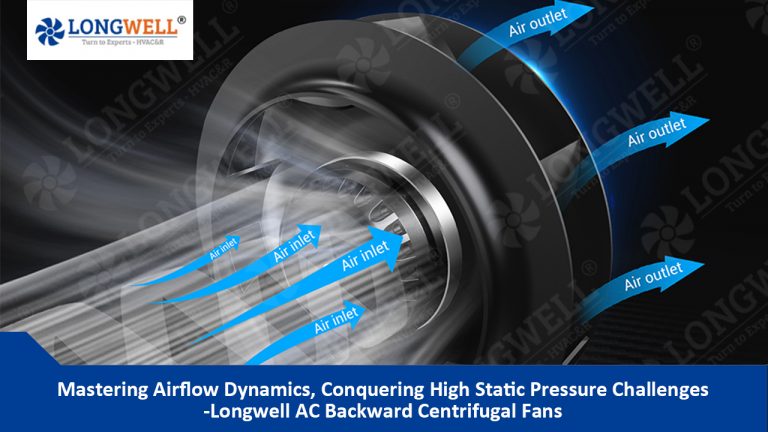
A bathroom exhaust fan uses an electric motor to rotate an impeller inside the housing. As the blades rotate, they create a low-pressure area near the fan inlet. Warm, humid air is drawn from the bathroom, passes through the fan, and is discharged outdoors. Fresh replacement air then enters through the door gap or another air inlet, refreshing the air.
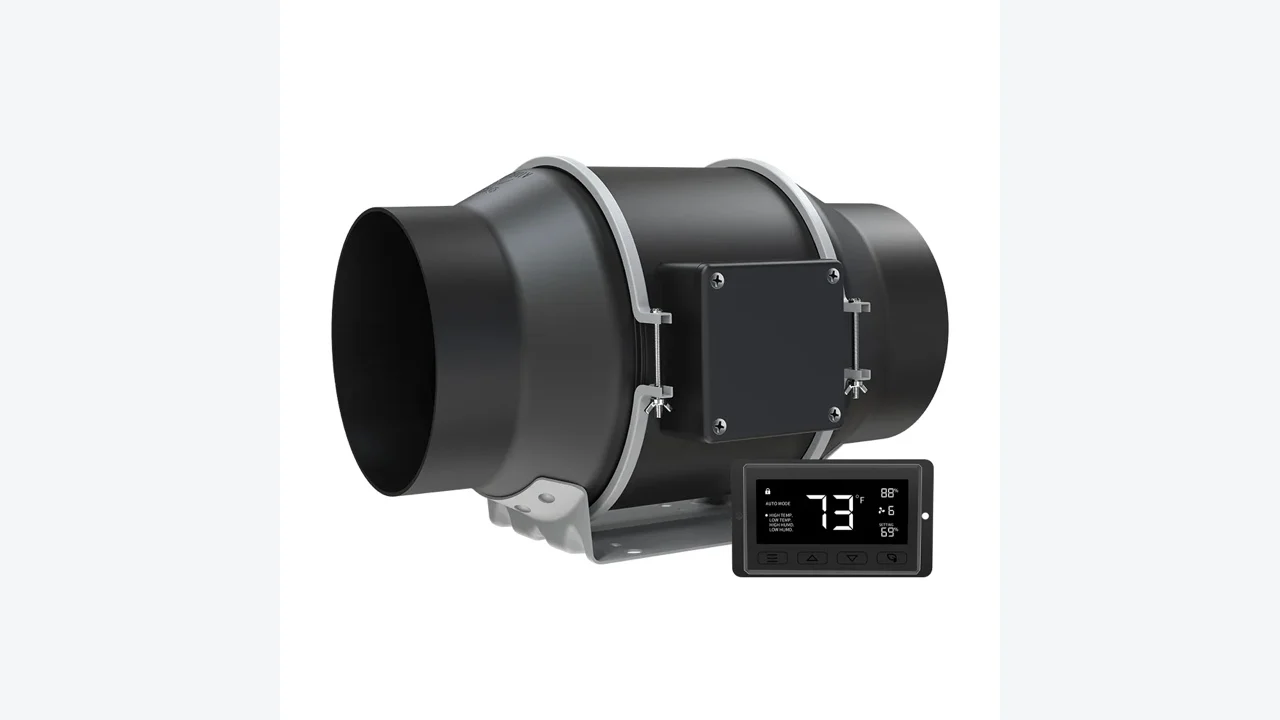
The way the fan starts depends on its control system. Basic models operate from a switch on the wall. Some intelligent designs use a timer, motion detector, or humidity sensor to control the exhaust fan.
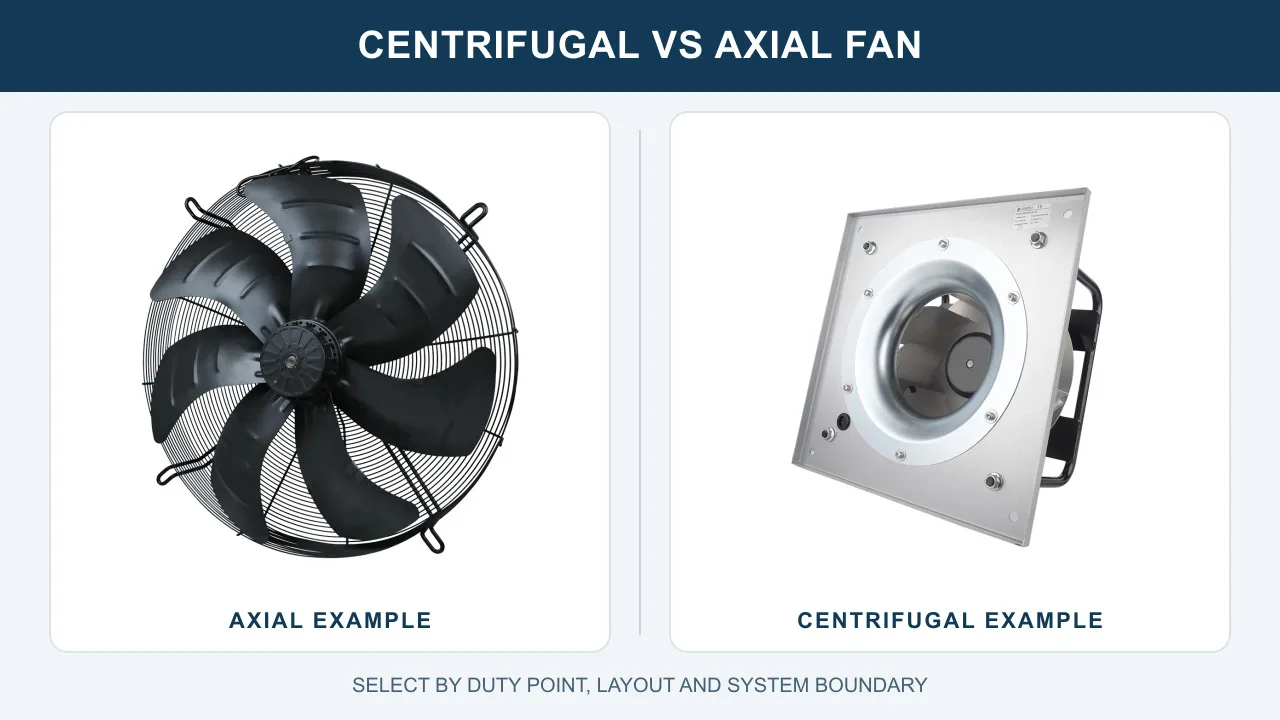
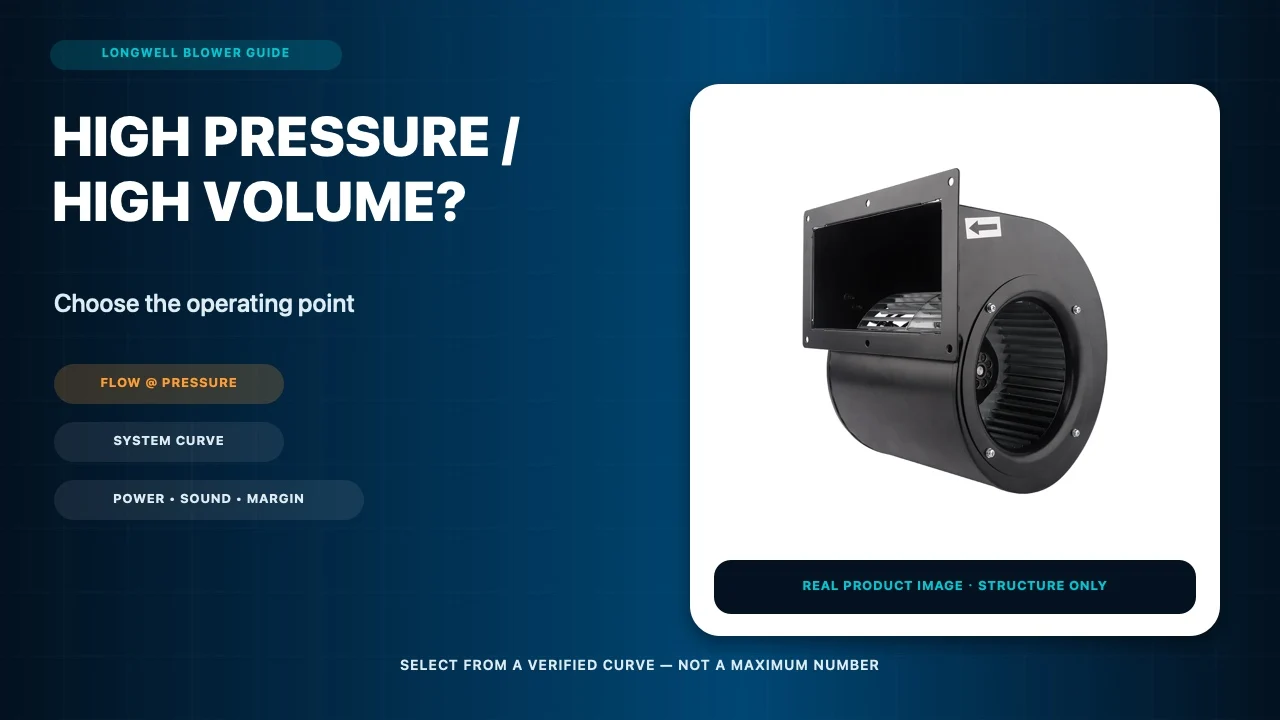
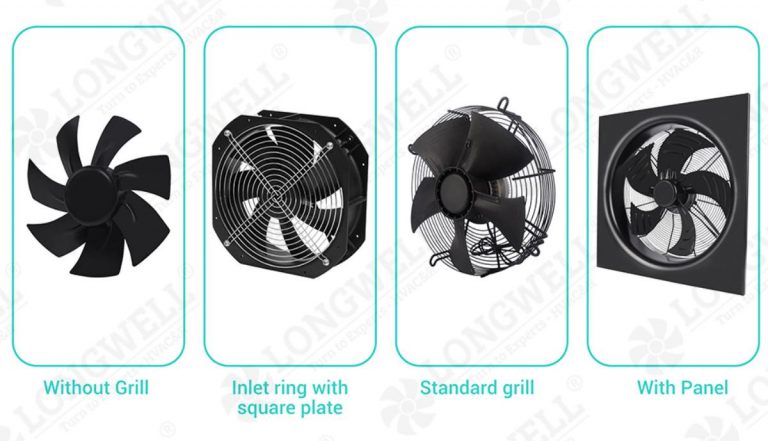
The internal fan design also affects its application. Axial fans are generally suited to direct discharge or short ducts. The centrifugal fans provide more pressure for longer or more resistant ductwork.
Why is Bathroom Ventilation Important?
When taking showers, bathrooms produce high levels of humidity. Without effective ventilation, moisture remains in the room and condenses on walls, ceilings, mirrors, and fixtures. Over time, a consistently humid environment will breed mold. This causes the wall paint or wallpaper to peel off, weakens the adhesives, causes the cabinet doors to warp, and leads to corrosion of the metal parts.
Mechanical ventilation removes humid air before it spreads into adjacent rooms or enters ceiling and wall cavities. It also helps clear odors, cleaning-product fumes, and stale air, improving comfort and indoor air quality. For this reason, the exhaust duct should discharge outdoors rather than into an attic, crawl space, or garage.
For residential applications, ASHRAE Standard 62.2 provides a useful minimum design reference. Bathroom local exhaust should deliver at least 50 CFM during intermittent operation or 20 CFM during continuous operation. These values refer to the airflow the ventilation system must provide, so buyers should consider performance losses caused by duct length, elbows, grilles, and backdraft shutters.
What Makes a Bathroom Exhaust Fan Quiet and Energy Efficient?
Noise Level
The noise level of a bathroom exhaust fan is one of the most important parameters. The bathroom exhaust fan noise may come from the motor, rotating impeller, turbulent airflow, and housing vibration. The noise level is commonly rated in sones and dB(A) in technical data sheets. The lower sone values generally indicate quieter operation. When low noise application is the priority, fans rated at around 1.0 sone or below are generally suitable.
Airflow Volume
Airflow volume indicates how quickly the fan can remove humid air and is usually expressed in CFM or m³/h. Insufficient airflow will cause moisture and unpleasant odors to accumulate indoors, while excessive airflow may increase noise and energy consumption. What’s worse is that it will create negative pressure, preventing an effective ventilation effect.
Measure the bathroom’s length, width, and height to calculate its size. Then multiply the bathroom size by 0.13 to get the minimum required airflow in CFM. When the bathroom size exceeds 100 sq. ft., add up the CFM requirements for each fixture instead of using the formula.
If having trouble calculating, you can submit the data and turn to LONGWELL for help. LONGWELL engineering team will reply within 1 business day.
Static Pressure
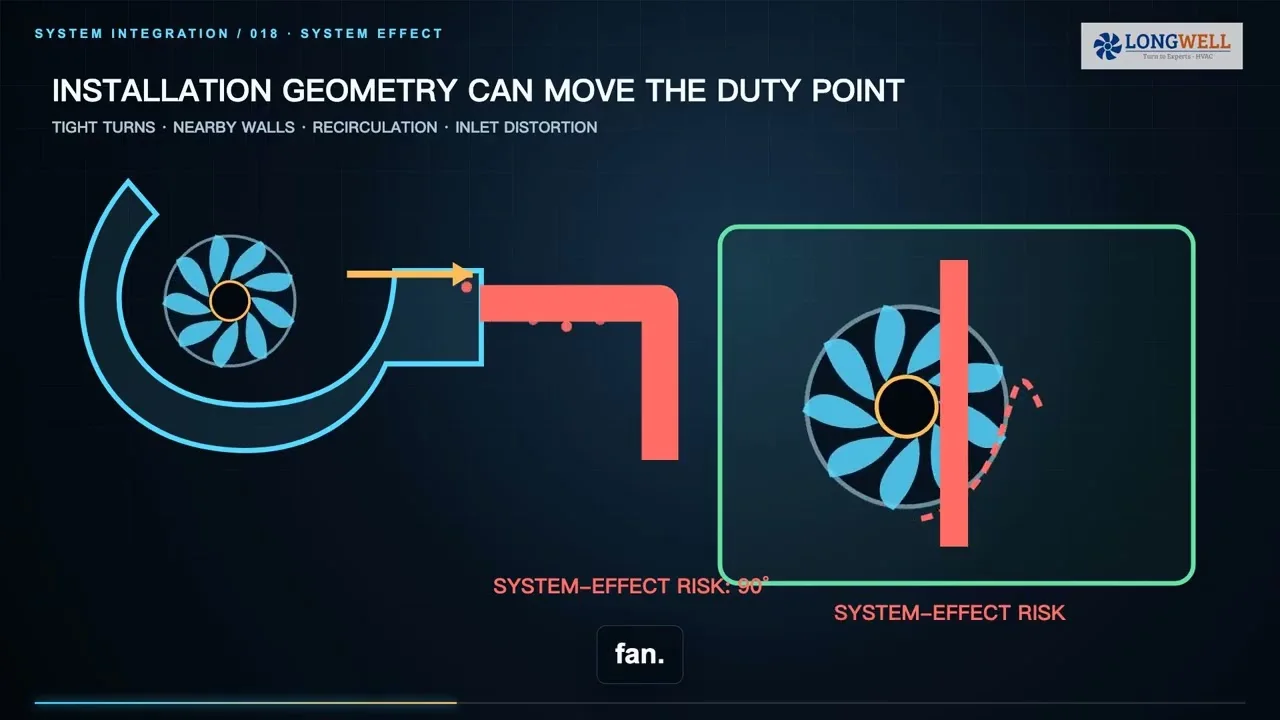
Static pressure represents the system resistance the exhaust fan must overcome. Components such as long ducts, grilles, exterior covers, and bends will all increase resistance. As resistance rises, the actual airflow delivered by the fan usually decreases.
Static pressure is especially important for ceiling-mounted and ducted exhaust fans. A high free-air volume does not guarantee adequate performance after installation. Buyers should review the fan’s performance curve or airflow data at the expected operating pressure and match the fan to the duct layout. Direct wall or window installations generally require less pressure than long or complex duct systems.
Power Consumption
The energy consumed by the exhaust fan during operation is usually measured in watts. When consuming lower wattage, it can reduce operating costs. However, not all low-power models are efficient in ventilation. If it cannot provide enough ventilation for the bathroom, the total power consumption will not be reduced.
Top 5 Bathroom Exhaust Fan Types in 2026
Wall/Window Mount Ducted Exhaust Fan
The wall/window mount ducted exhaust fan offers the best overall balance for typical bathroom projects. It can be installed on a wall, window, or ceiling. The fan can discharge air directly outdoors or connect to a short duct where the bathroom layout requires a separate outlet. This type works particularly well when the exhaust path is short.
The LWE100P-137, LWE125P-138, and LWE150P-139 series cover maximum airflow rates of 130, 240, and 320 m³/h. Their power inputs range from 12 to 18 W, while the listed sound pressure levels are between 34 and 35 dB at three metres. Static-pressure capacities range from 36 to 60 Pa, giving three performance levels for different room sizes and outlet arrangements.
Optional configurations include a pull-cord switch, an adjustable timer, and a microwave motion sensor. A shutter can be added to limit backflow when the fan is switched off, while a mounting ring is available for window installation. The supply voltage includes 12V, 110 V, 127 V, 220 V, and 220-240 V versions.
| Model | Maximum Airflow | Static Pressure | Power | Sound Pressure Level at 3m |
| LWE100(4″)P-137 | 130 m³/h | 36 Pa | 12 W | 34 dB |
| LWE125(5″)P-138 | 240 m³/h | 45 Pa | 16 W | 34 dB |
| LWE150(6″)P-139 | 320 m³/h | 60 Pa | 18 W | 35 dB |
Ceiling Pipeline Type Ventilating Fan
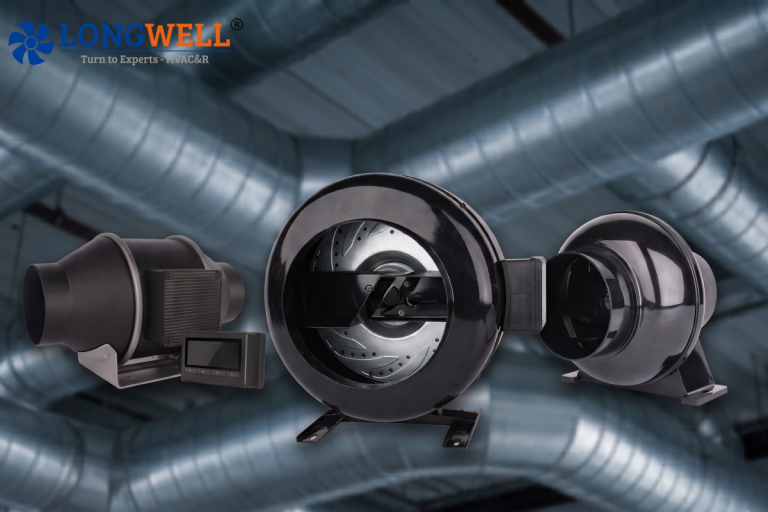
Ceiling pipeline-type ventilating fans are designed for bathrooms where humid air must travel through a duct before reaching the outdoor discharge point. It has a more complex system and a higher installation cost. This fan can be concealed above the ceiling and connected to ductwork, leaving only the grille visible inside the bathroom.
This structure provides a cleaner appearance and works well with suspended ceilings. This design is suitable for apartments, hotels, residential developments, and windowless bathrooms. It is also more suitable for bathrooms that do not have an accessible exterior wall. However, before choosing the model, it is necessary to measure the available ceiling depth, pipe diameter, pipe length, and the number of bends.
This bathroom exhaust fan includes four impeller sizes from 8-inch to 14-inch. Airflow increases from 150 to 350 m³/h, while power input ranges from 25 to 40 W. Equivalent models are available in both 110V and 220V versions.
| 220 V Model | Airflow | Speed | Power |
| LWEA200(8″)SP-031 | 150 m³/h | 1,300 rpm | 25 W |
| LWEA250(10″)SP-032 | 200 m³/h | 1,300 rpm | 30 W |
| LWEA300(12″)SP-033 | 250 m³/h | 1,200 rpm | 35 W |
| LWEA350(14″)SP-034 | 350 m³/h | 1,100 rpm | 40 W |
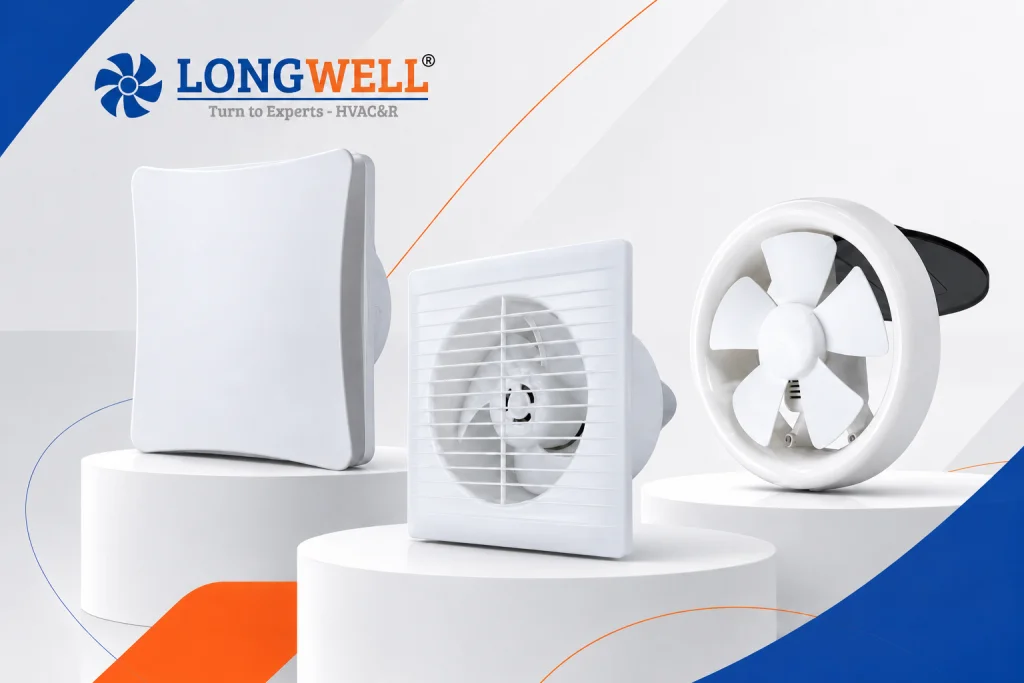
Window Bathroom Ventilator
A window bathroom ventilator is suitable when humid air can be discharged directly through a glass window, exterior wall, or prepared panel opening. It provides one of the shortest and most direct exhaust paths. It avoids the need for long ceiling ducts and is often used in renovations, older buildings, compact apartments, and bathrooms with limited ceiling space.
LONGWELL offers square and circular window ventilators. The square models include 100, 150, and 200 mm versions with airflow capacities of 150, 200, and 300 m³/h. Their power inputs range from 23 to 30 W. Both 220 V/50 Hz and 110 V/60 Hz configurations are listed. There are two circle model, 150mm and 200mm, with 150 and 200 m³/h airflow capacity, respectively.
Integrated Ceiling Ventilation Fan
Integrated ceiling ventilation fans are designed to align with modular or suspended ceiling systems. These applications consider the visible appearance as an important factor. Their larger decorative panels allow the fan to blend into the ceiling while the fan body and electrical connections remain concealed above it.
This type is well suited to apartments and hotels where appearance is an important purchasing consideration. It can also simplify installation when the ceiling uses standard panel dimensions.
| Model | Panel Size | Airflow | Power |
| LWEA300×300SP-055 | 300 × 300 mm | 300 m³/h | 35 W |
| LWEA300×300SP-056 | 300 × 300 mm | 180 m³/h | 30 W |
| LWEA300×300SP-059 | 300 × 300 mm | 180 m³/h | 30 W |
| LWEA300×450SP-060 | 300 × 450 mm | 200 m³/h | 30 W |
| LWEA450×450SP-061 | 450 × 450 mm | 200 m³/h | 30 W |
Louver Ventilator
The louver ventilator has a higher airflow capacity than most standard residential bathrooms require. The louver structure also helps protect the opening and limit reverse airflow when the fan is not operating.
The series covers airflow for 280–1,100 m³/h, making it more suitable for large washrooms and public sanitary spaces, utility rooms. Larger models require bigger wall openings and may introduce more operating noise when used in a small room.
| 220 V Model | Size | Airflow | Power |
| LWEA150(6″)SP-009 | 6 inches | 280 m³/h | 25 W |
| LWEA200(8″)SP-010 | 8 inches | 480 m³/h | 28 W |
| LWEA250(10″)SP-011 | 10 inches | 750 m³/h | 30 W |
| LWEA300(12″)SP-012 | 12 inches | 1,100 m³/h | 40 W |
LONGWELL – Engineered for the Critical
LONGWELL’s product range also covers whole-house HRV/ERV, apartment ventilation, smart home ventilation, kitchen and bathroom exhaust, and air purifier integration. Available platforms include centrifugal fans, cross-flow fans, cooling fans, and axial fans. This allows residential ventilation OEMs to source different fan technologies from one engineering partner.
Alongside standard product portfolios, LONGWELL provides customized solutions for application-specific projects. Fan dimensions, airflow and pressure targets, motor configuration, speed control, protection requirements, acoustic performance, housing design, and smart-control interfaces can be adapted to the customer’s product platform. LONGWELL also supports OEM development with CFD optimization, 3D CAD files, acoustic engineering, control integration, and structured product-development service.
FAQs
Do bathroom exhaust fans need cleaning?
Yes. The accumulated dust and moisture will increase the operating noise. The bathroom exhaust fan should generally be cleaned at least once a year. For frequently used ones, they may need more frequent maintenance.
What is the quietest sone for a bathroom fan?
The lower the sone rating, the quieter the bathroom fan. The lowest currently certifiable rating for residential ventilation products is below 0.3 sone, while a fan rated at 0.5 sone or less is generally considered very quiet. For most residential bathrooms, a rating of 1.0 sone or below provides comfortable operation.
What is the average lifespan of bathroom exhaust fan?
For LONGWELL products, service life varies by model and operating conditions. For instance, L10 bearing at 40℃ room and 15%~65%RH humidity can reach up to 40,000h lifespan.
Is it worth installing a humidity-sensing bathroom fan in the bathroom?
Yes. A humidity-sensing fan can start automatically when it detects an increase in moisture and continues ventilating until humidity falls to an acceptable level. This avoids relying on users to operate the fan manually.
Choose the right exhaust fan
Longwell manufactures 241 exhaust fans in-house. Send airflow, static pressure and voltage — an engineer replies with a matching model, performance curve and price within one working day.