What the OEM specified
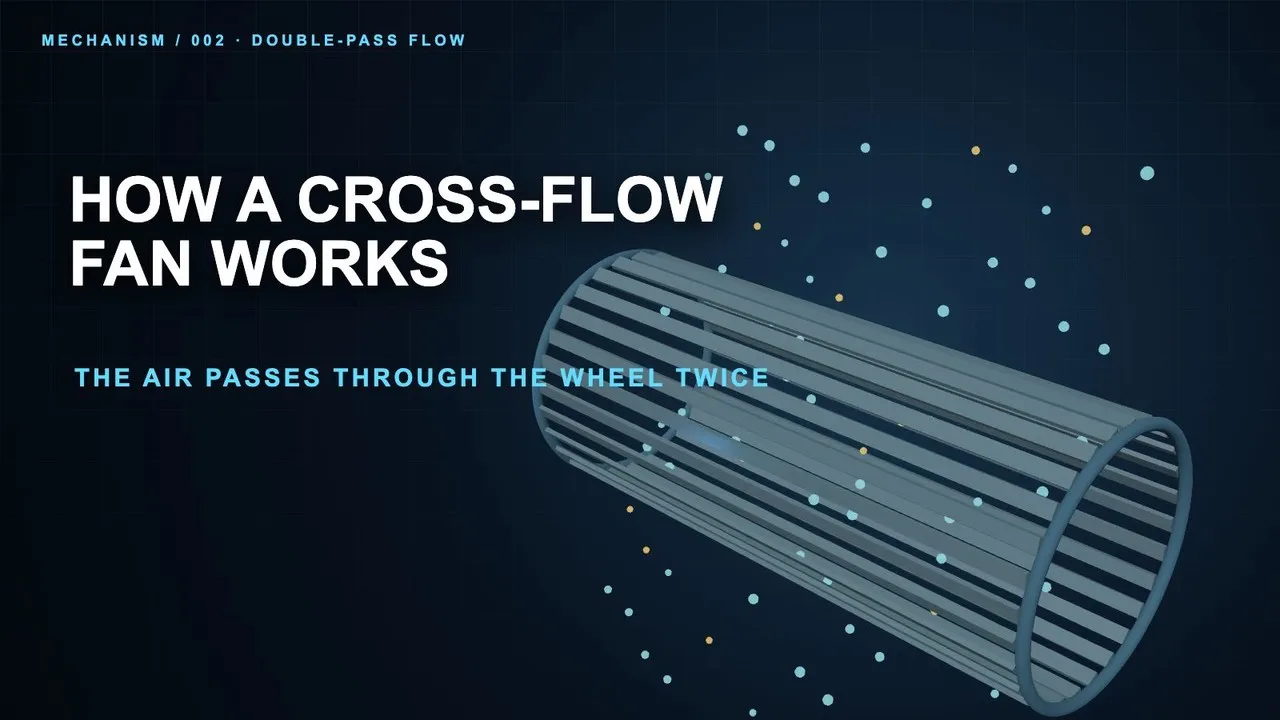
A European HVAC OEM needed a replacement cross-flow fan assembly for a commercial air curtain. A plastic impeller, a three-speed AC motor, and a three-speed fan power figure at every tap.
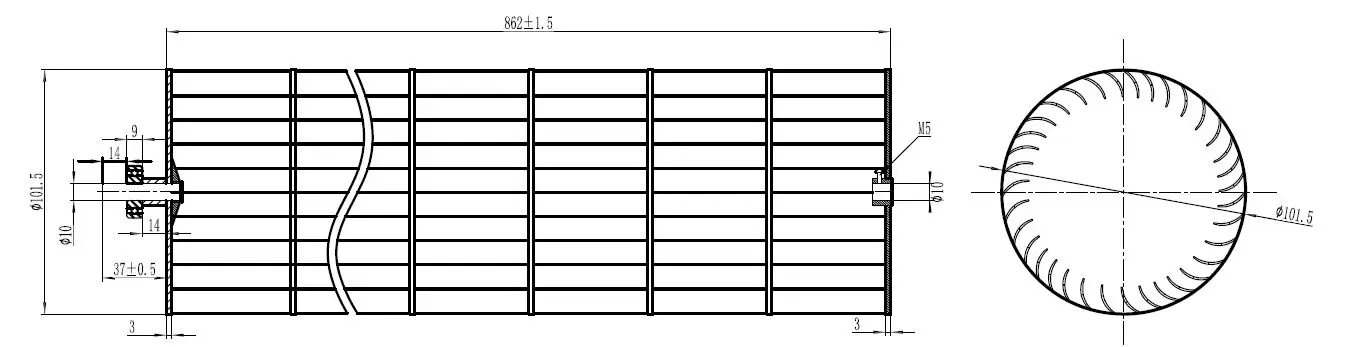
The impeller had to be 862mm long at 101.5mm diameter, since an air curtain needs a long, even sheet of air across a doorway.
The motor requirements
- First, 100W single-phase on a 230V, 50Hz supply.
- Next, a primary speed near 1350 RPM with two lower settings for user control.
- Meanwhile incoming current capped at 0.70A.
- A three-leg mounting on a 98mm bolt circle.
- Finally, integrated thermal protection and CE compliance.
They supplied reference drawings and part numbers, so the dimensional baseline was fixed before we started.
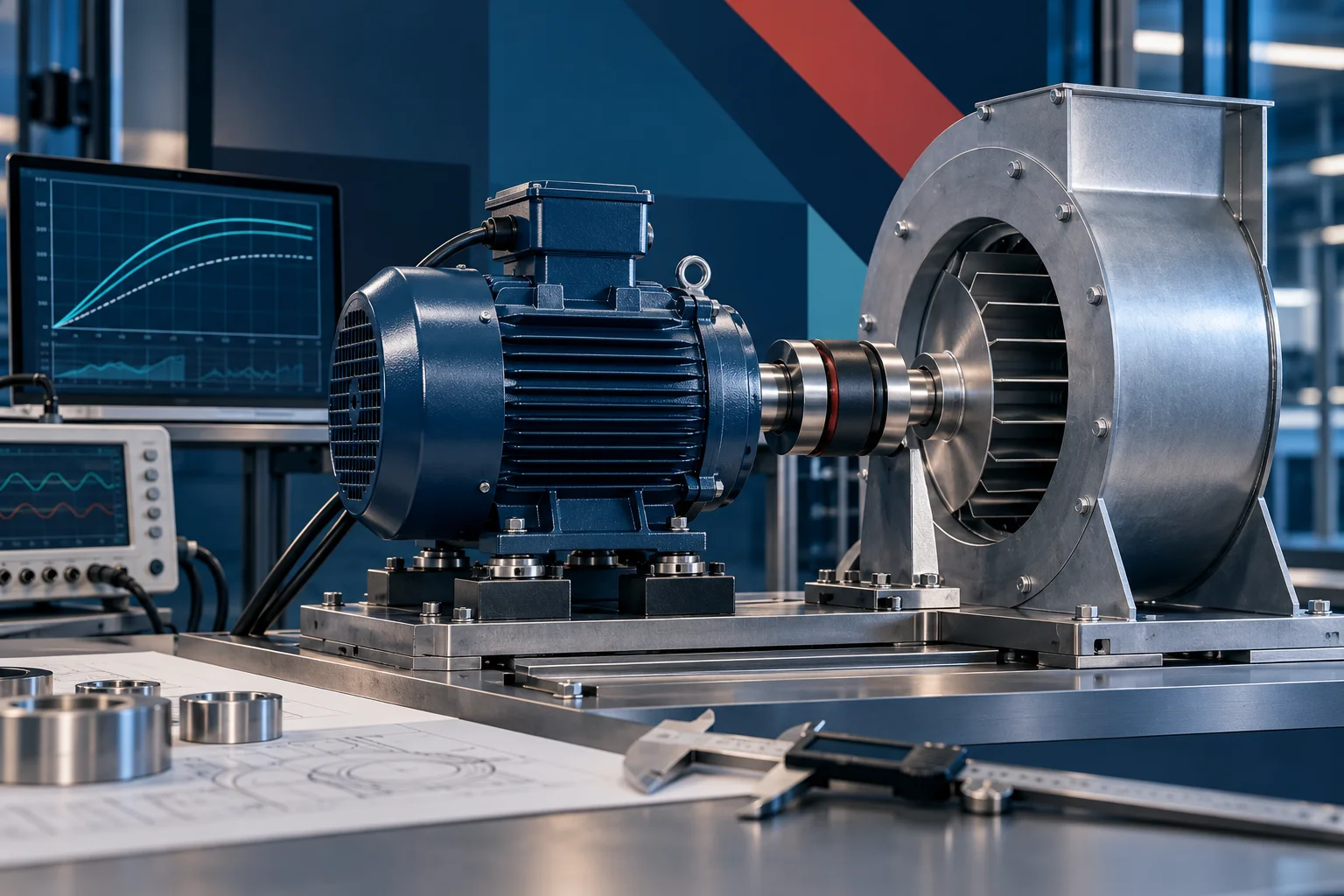
Measuring three-speed fan power
Both the motor and the impeller were already existing designs, so this was validation rather than development. The interesting part was what the measurements showed.
Why not EC
An EC motor with our SmartEC controller would give stepless speed over 0-10V and better efficiency.
However, their product uses a simple three-position switch, and the goal was matching an existing line on cost. An EC motor would need a more expensive controller for capability the switch cannot use. So the three-speed AC motor stayed.
What the three taps actually deliver
Tested speeds came out at 1250, 1150 and 1000 RPM. Notably that is below the 1350 RPM they nominated, which we reported rather than rounded up.
Here the three-speed fan power figures are where it gets interesting: 82W, 28W and 13W across the settings.
Why the low tap saves so much
Speed drops 20% from high to low. Power drops by roughly six sevenths.
Most of that comes from the fan law relationship: shaft power rises with the cube of speed, so a modest speed reduction cuts power disproportionately. A tapped AC motor at its lower windings adds to the effect, since the fan unloads as it slows.
Consequently the low setting is not a slightly quieter version of high. It is a fundamentally cheaper way to run the product, and worth designing the user interface around.
The impeller and its material
Glass-filled AS holds its shape across 862mm at these speeds while weighing far less than metal. Over that span, stiffness is what keeps runout in tolerance and the assembly quiet.
What it cost
Airflow at the low setting, obviously. Thirteen watts does not move much air, and the trade is real rather than free.
The honest framing is that three-speed AC gives you three fixed points, not a range. If the application would benefit from holding a set airflow as a door opens and closes, that argues for EC after all, and the customer should know it.
Technical Specifications
Meanwhile the three-speed fan power row below carries one figure per tap. Read them against the speed row.
| Parameter | Value |
|---|---|
| Product | Cross-Flow Fan Assembly |
| Motor Model | LWYDK-100-4P-001 |
| Impeller Model | LWPI-φ101.5*862-01 |
| Voltage | 230V |
| Frequency | 50Hz |
| Speeds (RPM) | 1250 / 1150 / 1000 (Tested) |
| Input Power (W) | 82 / 28 / 13 (per speed) |
| Current (A) | 0.61 / 0.52 / 0.44 (per speed) |
| Impeller Diameter | 101.5 mm |
| Impeller Length | 862 mm |
| Impeller Material | AS+GF30% (Acrylonitrile Styrene + 30% Glass Fiber) |
| Insulation Class | Class B |
| Protection | Thermal Overload Protection |
| Certification | CE Compliant |
Technical Documentation
The following documents were generated and approved as the final deliverables for this project.
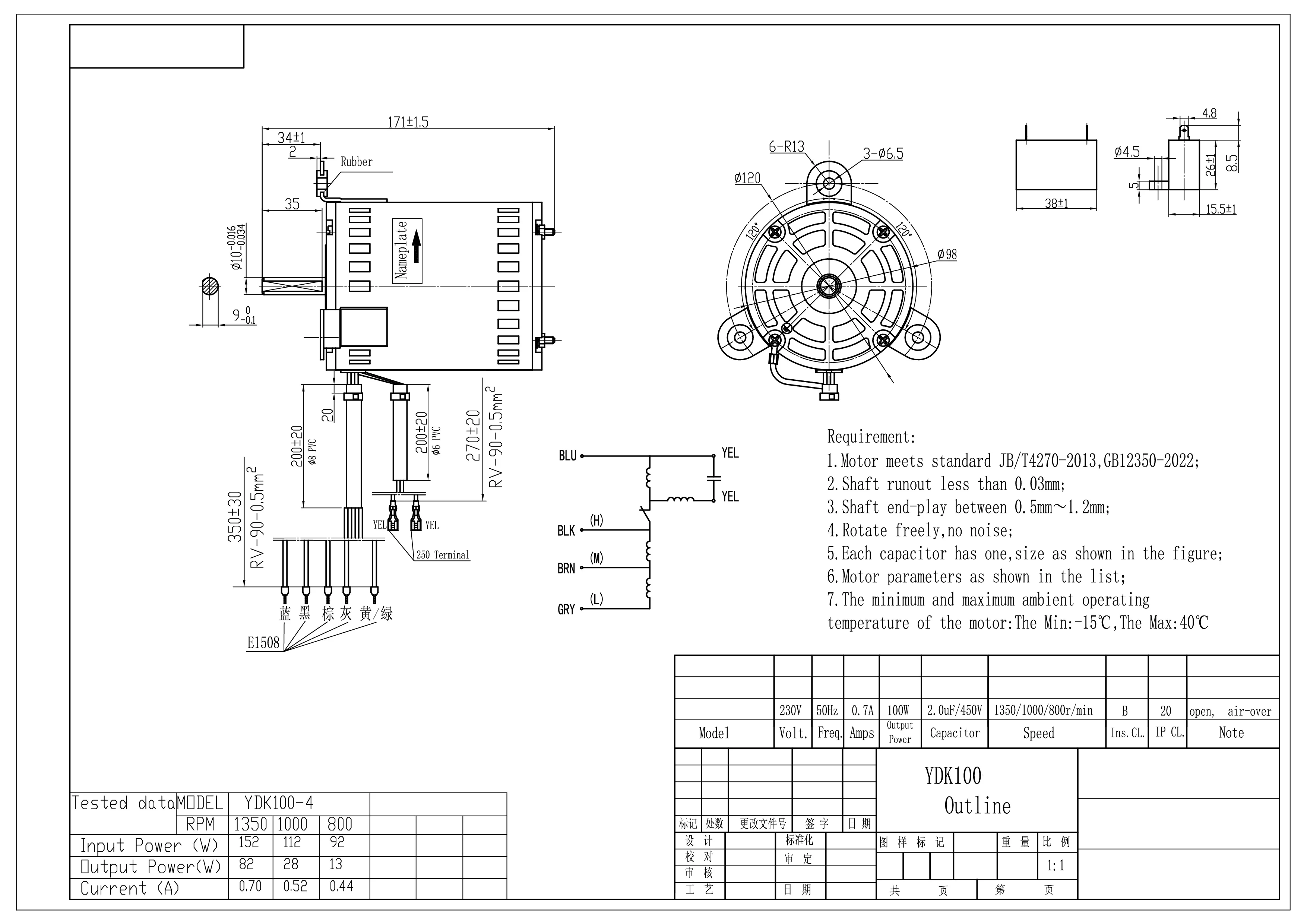
Here the mechanical drawing and electrical schematic details the LWYDK-100-4P-001 three-speed AC motor, essential for mechanical engineers integrating it into the final product housing.
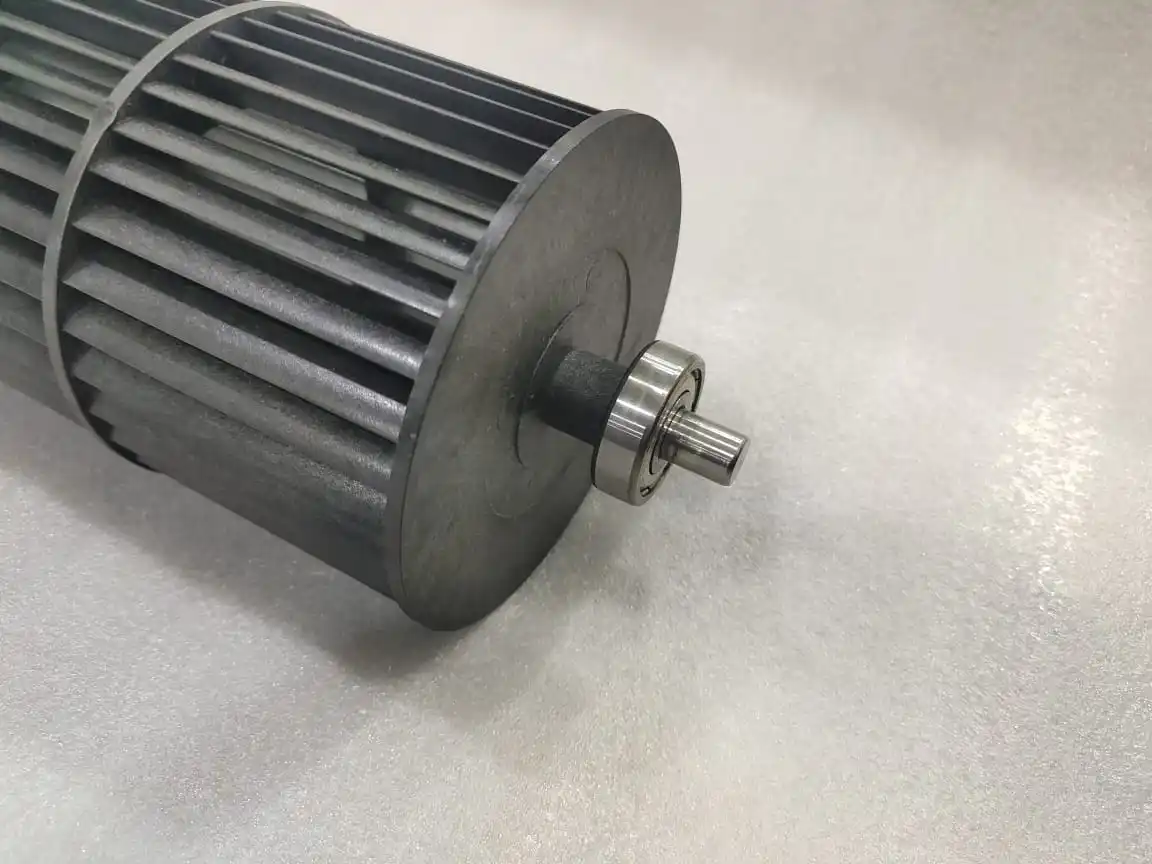
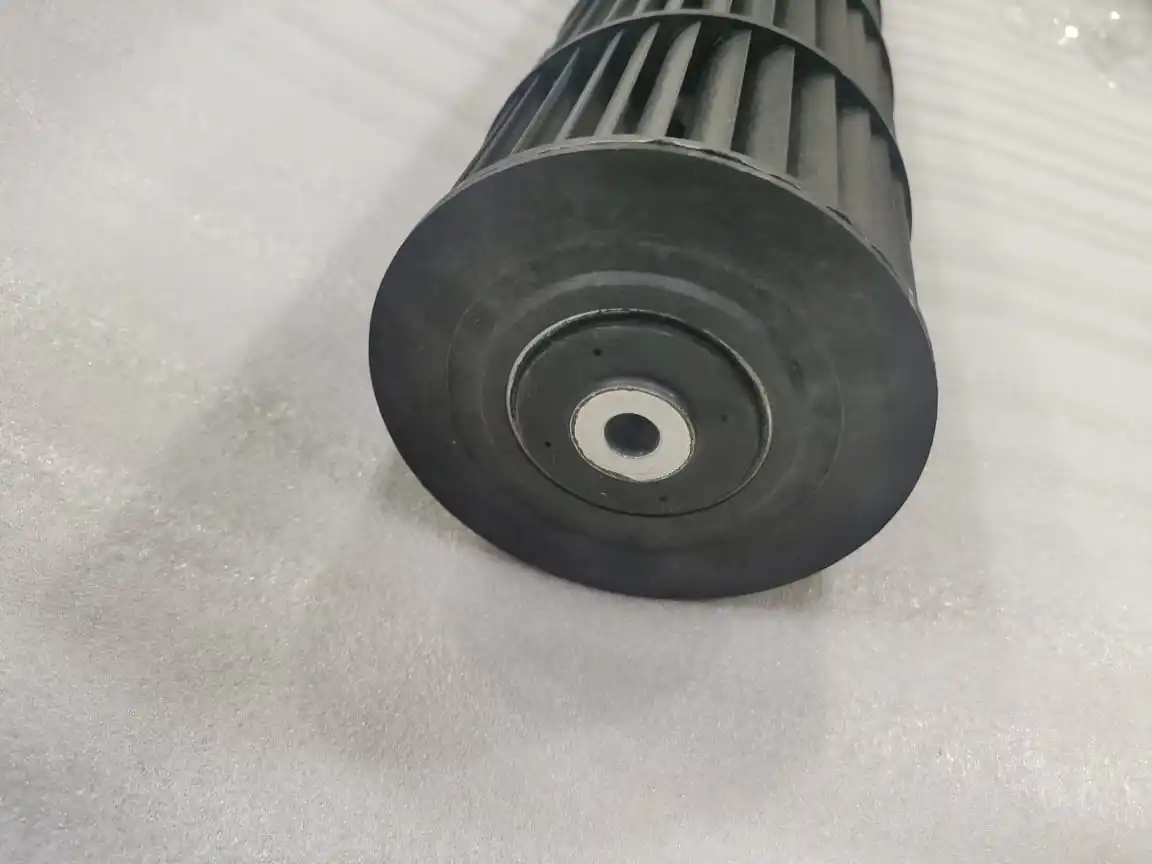
Here the drawing provides precise dimensions, material specifications (AS+GF30%), and critical balancing tolerances for the 862 mm cross-flow impeller, required by quality assurance and design teams.
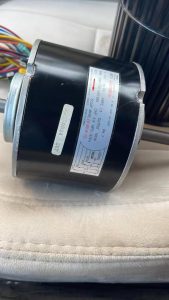
The client’s initial reference for the required 3-speed AC motor.
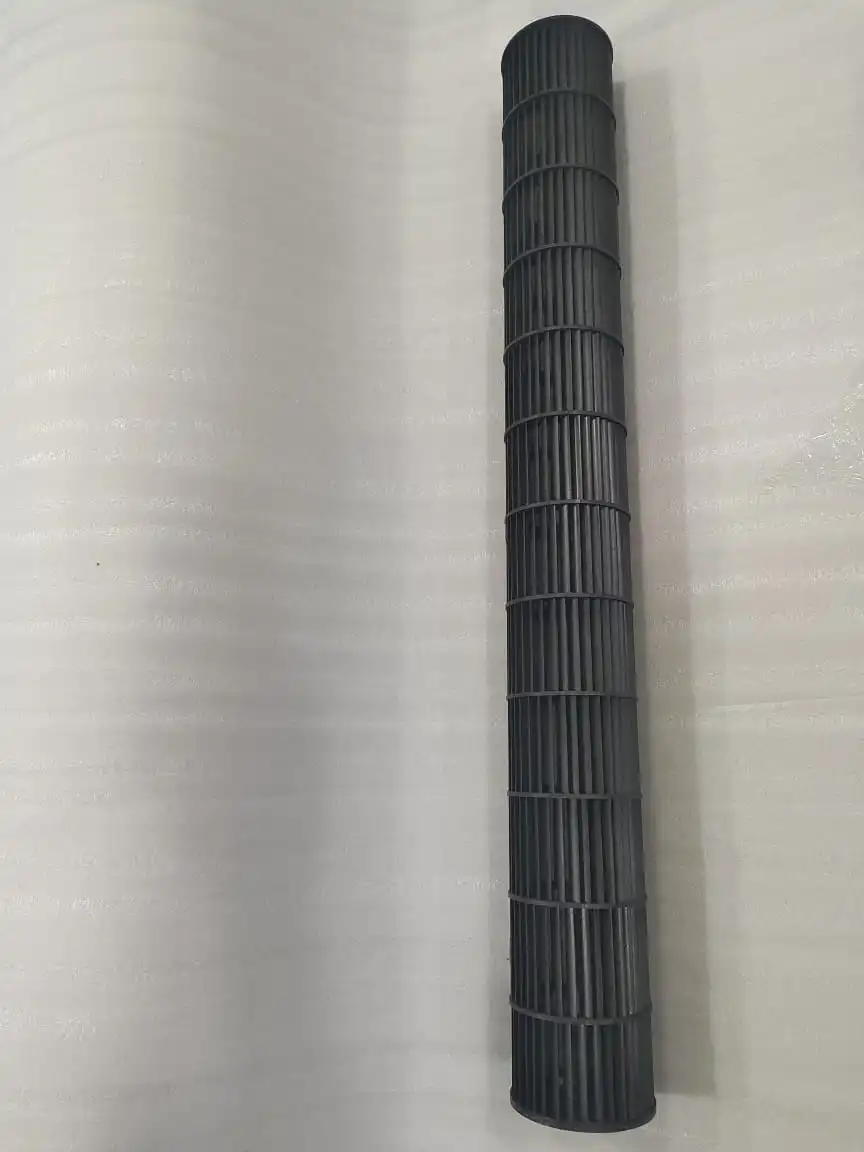
Meanwhile the 862mm AS+GF30% impeller, balanced for low-noise operation.
If you are specifying a multi-speed fan
Three-speed fan power gets specified loosely and then disappoints. So these help.
- Ask for measured power at every tap, not just the rating. A 100W motor draws 100W only at its top setting. Three-speed fan power spans a wide range, and the low figure is usually what determines your product running cost.
- Check the delivered speeds against your nominal. Tapped windings land where the winding puts them, not on a round number. Here the top tap came out at 1250 RPM against a nominated 1350. Design around the tested figure.
- Decide whether you need points or a range. Three taps give three operating conditions. If your product needs to hold an airflow as conditions change, no number of taps will do it and EC is the answer.
- Confirm the mounting before the performance. A three-leg pattern on a specific bolt circle is a hard gate. Check it first, because a fan that performs and does not bolt up is not a candidate.
See our cross flow fan range, the AC cross flow fan section, or speed controllers. Appliance safety follows IEC 60335-1.
Questions about this assembly
Why does power fall so much faster than speed?
Mainly the fan laws. Shaft power rises with roughly the cube of speed, so cutting speed a fifth cuts shaft power to about half. On a tapped AC motor the measured drop is steeper still, because the motor runs on a different winding and the fan unloads as it slows. Take the measured figures rather than calculating from the cube alone.
Why are the tested speeds below the nominated 1350 RPM?
Because tapped windings deliver what the winding produces under load, not a chosen number. We reported 1250, 1150 and 1000 RPM as measured rather than quoting the nominal. Where a specific top speed genuinely matters, the winding can be recalculated, though that makes it a development project.
Can I add a fourth speed?
It means another winding tap, so it is a motor change rather than a wiring one. Where the goal is finer control rather than one more fixed point, an EC motor gives a continuous range for less than a bespoke four-tap winding usually costs.
What does the thermal protection actually cover?
A stalled or obstructed rotor, and sustained overload. It opens the circuit when the winding gets too hot and resets once cool. On an air curtain mounted above a doorway, that turns a jammed impeller into a fan that stopped rather than a winding that burned.
Technical Documentation & Resources
Have a fan requirement like this one?
Send the datasheet you are working against, or simply the duty point. Then our engineers tell you what fits and what does not. Meanwhile custom spec sheets and samples take up to 90 days. Since 1990 we have been building fans for OEMs worldwide.
Browse Related Products:
🏆 ISO 9001 / ISO 14001 / ISO 45001 | CE (TÜV) | UL/ETL | ATEX Zone 21/22 | AMCA 210/211 / ISO 5801 tested